
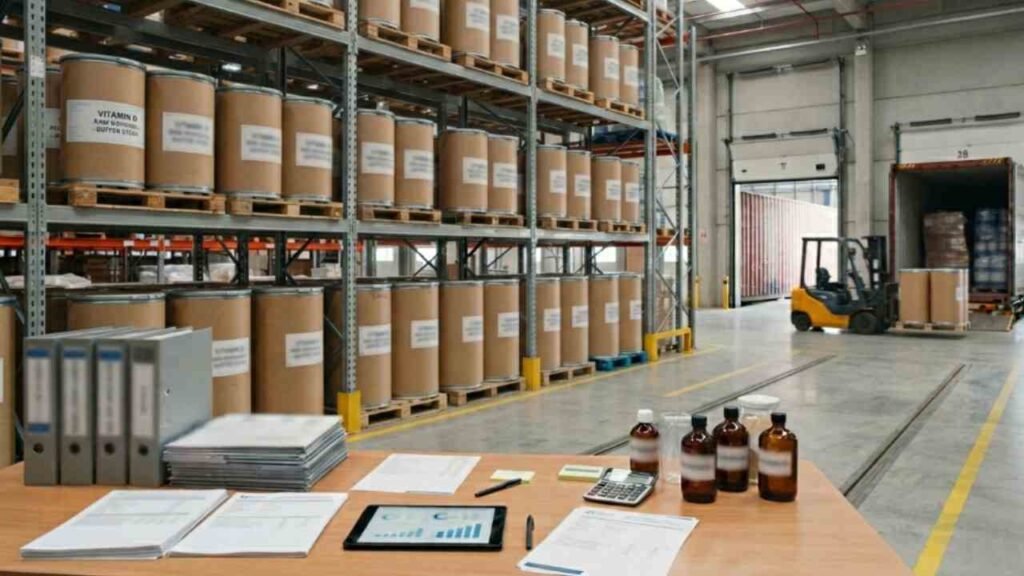
Unexpected raw material shortages and sudden price surges halt manufacturing lines and erase product profit margins. Operating without a secure procurement plan risks major delays. Building a stable supply chain prevents losses.
Businesses can build a stable Vitamin B series supply chain by using multi-regional sourcing, securing long-term fixed-price contracts, holding a two-to-three-month buffer safety stock, auditing factory quality certifications, and partnering with experienced local sourcing experts to handle quality checks and shipping logistics.
Maintaining a continuous supply of chemical ingredients is essential to protect manufacturing outputs and schedule runs. Industrial buyers must use systematic procurement strategies to navigate market fluctuations. Sourcing partners like FINETECH simplify factory checks, oversee production, and manage quality directly in China to secure bulk deliveries. This detailed guide details how to build a resilient Vitamin B series supply chain.
What Causes Supply Chain Risks for Vitamin B Series?
Overlooking critical supply chain risks can leave your business vulnerable to sudden raw material deficits and premium spot prices. Unmonitored weak links disrupt operations. Identifying risk causes secures inventory.
Supply chain risks for the Vitamin B series are caused by extreme geographic production concentration in China, dependency on limited upstream precursor chemicals, high energy costs in fermentation facilities, and unpredictable international logistics bottlenecks that delay border clearances.

Dive Deeper into Upstream and Geopolitical Vulnerabilities
Building a resilient supply chain requires a deep understanding of where disruptions originate. The primary risk in the Vitamin B market is geographic concentration1. Because approximately eighty percent of global bulk B-vitamins are manufactured in China, the entire global market is highly sensitive to local Chinese industrial policies. For example, during national environmental audits or local energy-saving drives, Chinese chemical plants must reduce operating rates or halt production entirely. This sudden reduction in output can cause global spot prices to surge within days.
Additionally, chemical synthesis plants rely heavily on specific upstream precursors, such as picoline for Vitamin B3 or isobutyraldehyde for Vitamin B5. If the supply of these intermediate chemicals is cut, final vitamin production stops immediately. Fermentation-based vitamins like B2 and B12 are also vulnerable to high utility costs. Fermentation is a highly energy-intensive process, making these products sensitive to electricity and natural gas price hikes in both Europe and China. Finally, marine shipping bottlenecks and port congestion can delay deliveries. Sourcing managers must analyze these risks to implement effective safety measures. Sourcing partners like FINETECH help buyers monitor these factors by auditing partner factories and tracking precursor market indicators.
| Identified Risk Area | Primary Root Cause | Sourcing Impact | Mitigation Action |
|---|---|---|---|
| Geographic Concentration | 80% production based in China | Vulnerability to local policy shifts | Implement a dual-sourcing model |
| Precursor Dependency | Tight picoline or acid supply | Production halts at synthesis plants | Monitor intermediate chemical indexes |
| Energy Volatility | High utility rates in fermentation | Inflated manufacturing costs | Shift orders to lower-cost regions |
| Ocean Freight Bottlenecks | Port congestion and routing delays | Late cargo arrivals at destination | Choose carriers with direct sea routes |
How Can Long-Term Contracts Improve Supply Stability?
Buying chemical ingredients entirely on the spot market leaves your operating budgets exposed to sudden, extreme price spikes during rallies. Spot buying drains capital. Securing long-term contracts stabilizes costs.
Long-term contracts improve supply stability by locking in predictable, fixed wholesale prices, guaranteeing priority volume allocations from top manufacturers during periods of market tightness, and protecting businesses from the extreme price swings common in spot-market transactions.

Dive Deeper into Contractual Risk Management
Relying solely on spot-market transactions represents a high-risk strategy for industrial food, feed, and supplement manufacturers. When the market experiences a sudden supply contraction, spot prices surge rapidly. Buyers who do not have pre-arranged agreements are forced to pay premium rates or halt production entirely due to a lack of raw materials. To prevent this, professional buyers utilize quarterly or annual fixed-price contracts with verified suppliers. These contracts establish a predictable cost structure, allowing companies to budget their production runs with confidence.
Beyond price stability, long-term contracts guarantee priority volume allocations. During severe shortages, manufacturers will satisfy the orders of their contracted partners first, leaving spot-market buyers with zero availability. Sourcing partners like FINETECH help B2B buyers establish these stable contractual relationships. By consolidating orders from multiple international clients, sourcing agencies can negotiate favorable contract terms directly with top-tier Chinese factories. This cooperative approach secures steady monthly volume shipments, even during tight market cycles. This contractual backing ensures that buyers receive fresh, high-quality batches on schedule without facing the financial risks associated with sudden spot-market spikes.
| Sourcing Method | Pricing Structure | Volume Guarantee | Sourcing Security Level |
|---|---|---|---|
| Spot-Market Buying | Fluctuating market rates | None (subject to availability) | Low (vulnerable to shortages) |
| Quarterly Contracts | Fixed-rate for 3 months | Guaranteed quarterly allotment | Medium (good for stable cycles) |
| Annual Contracts | Fixed-rate for 12 months | Guaranteed monthly shipments | High (protects against spikes) |
| Partner Frameworks | Negotiated agent deals | Flexible, consolidated volume | Excellent (combines low MOQ & security) |
How Should Companies Manage Vitamin B Series Inventory?
Storing sensitive vitamin powders under improper warehouse conditions triggers rapid moisture absorption, caking, and biological potency loss. Poor inventory management ruins raw materials. Implementing strict controls preserves quality.
Companies should manage Vitamin B series inventory by maintaining a cool, dry warehouse below 15°C, implementing "first-in, first-out" (FIFO) protocols, utilizing high-barrier moisture-resistant packaging, and keeping a consistent two-to-three-month buffer safety stock to prevent manufacturing halts.

Dive Deeper into Warehouse and Stock Protocols
The chemical stability of the Vitamin B series depends heavily on the warehouse environment. Because several B-vitamins, such as Vitamin B1 (thiamine) and Vitamin B5 (D-Calcium Pantothenate), are highly hygroscopic2, they easily absorb moisture from the air. High humidity causes these powders to clump or cake, which prevents uniform mixing in dry food or feed formulations. Therefore, warehouses must maintain relative humidity below sixty percent and keep temperatures below fifteen degrees Celsius. For highly sensitive grades, refrigerated cold storage is recommended to extend active shelf life.
Additionally, stock management must utilize strict "first-in, first-out3" (FIFO) protocols. This practice ensures that older shipments are used first, reducing the risk of expired inventory. To protect against shipping delays, buyers should establish a buffer safety stock of two to three months of production needs. If a container faces customs holds or port delays, this buffer stock keeps the manufacturing lines running without interruption. Sourcing partners like FINETECH ensure that bulk shipments are packed in vacuum-sealed aluminum foil bags with double polyethylene liners. This high-barrier packaging shields the delicate powders from environmental stress during long ocean voyages, preserving quality.
| Vitamin Grade | Storage Hazard | Target Warehouse Condition | Packaging Requirement |
|---|---|---|---|
| Vitamin B1 / B5 | High moisture absorption | Below 15°C, < 60% relative humidity | Vacuum-sealed aluminum bags |
| Vitamin B2 / B12 | Ultraviolet light degradation | Opaque dark storage racks | Dark-colored fiber drums |
| Liquid B-Complex | Low temperature freezing | Controlled 10°C to 20°C | Nitrogen-flushed steel drums |
| Premixed Powders | Particle separation & caking | Cold dry warehouse | Poly-lined thick cardboard boxes |
What Factors Should Be Considered When Choosing Suppliers?
Selecting a supplier based on cheap pricing alone can result in receiving off-spec batches, incorrect shipping documents, and failed product imports. Unvetted suppliers cause financial losses. Verifying multiple criteria secures imports.
When choosing suppliers, buyers should consider active international safety certifications, consistent production capacity, in-house laboratory testing capabilities (HPLC/GC), regional logistical experience, document transparency, and the flexibility of minimum order requirements (MOQs).
Dive Deeper into Supplier Selection Metrics
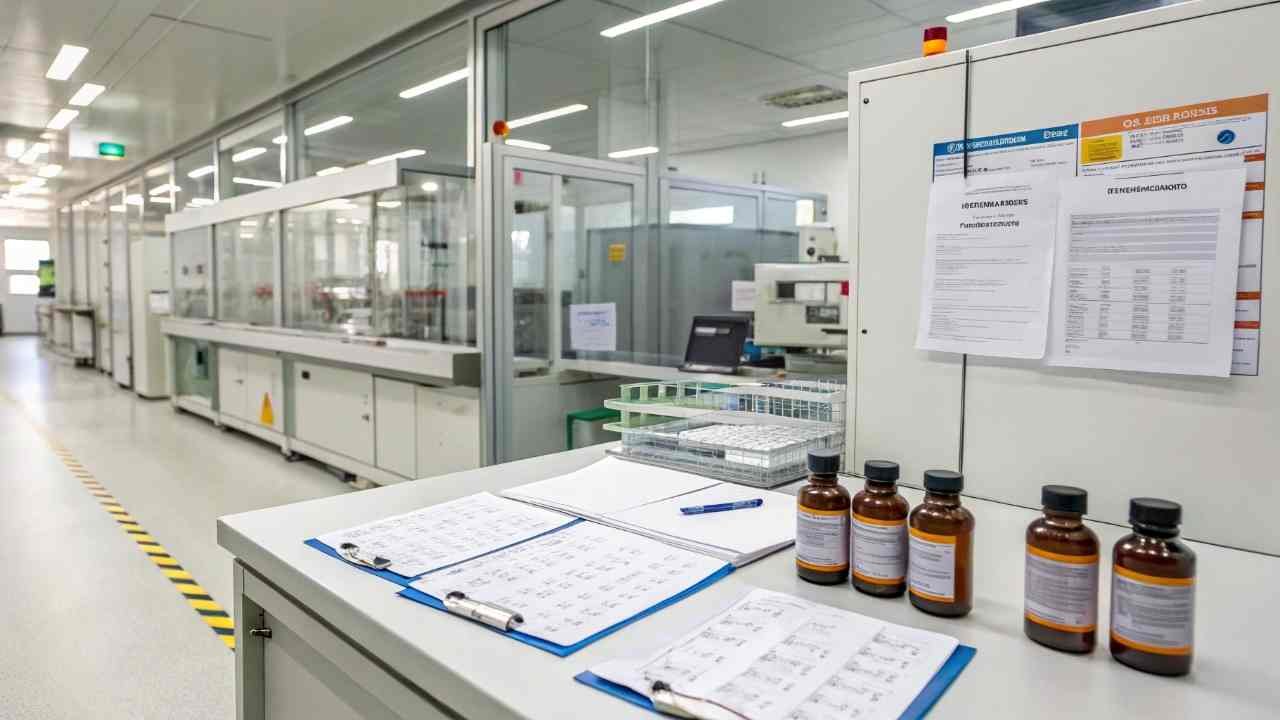
Selecting a trustworthy supplier requires a comprehensive evaluation that goes beyond checking basic pricing quotations. Sourcing managers must evaluate the vendor's quality management systems first. For food-grade vitamins, the supplier must hold active, verified certifications like FSSC 22000 or ISO 22000. For animal feed applications, FAMI-QS4 is mandatory. These certifications prove that the facility follows standardized hazard control protocols. Second, the supplier's laboratory capabilities require inspection. A reliable supplier must operate fully calibrated testing equipment, including High-Performance Liquid Chromatography5 (HPLC) and Gas Chromatography (GC), to verify batch purity in-house.
Third, logistical experience is a critical factor. Vitamin B series ingredients are sensitive to environmental stress, meaning exporters must know how to select carriers with direct shipping routes to minimize transport times. Furthermore, the supplier must provide complete documentation, including batch-specific COAs, allergen statements, and non-GMO declarations, to prevent border customs delays. Sourcing partners like FINETECH assist buyers by conducting thorough on-site audits of Chinese factories. They verify facility certifications, inspect cleanroom packing areas, and check laboratory logs to ensure that B2B buyers purchase materials only from fully compliant, reliable suppliers.
| Sourcing Metric | Required Industry Standard | Operational Importance | Audit Verification Action |
|---|---|---|---|
| Quality Systems | FSSC 22000, FAMI-QS, GMP | Proves standardized plant safety | Check database registration numbers |
| Laboratory Setup | In-house HPLC and GC systems | Ensures precise purity assays | Inspect instrument calibration records |
| Documentation | Batch COAs, allergen sheets | Prevents border customs delays | Cross-reference weights with packaging |
| Logistics Support | Direct-route shipping history | Minimizes transport degradation | Choose carriers with temperature controls |
How Can Buyers Avoid Supply Disruptions in the Vitamin B Series Market?
Relying on a single manufacturing facility can cause your production to halt instantly if that plant faces a sudden closure. Sole-source supply chains are vulnerable. Implementing diversification steps prevents disruptions.
Buyers can avoid supply disruptions by implementing a multi-sourcing model that registers backup factories, keeping buffer safety stocks, monitoring raw material precursor markets, and partnering with experienced local sourcing experts who handle factory checks and quality assurance.

Dive Deeper into Disruption Prevention Strategies
Preventing supply chain disruptions requires a proactive risk-management approach. Sourcing managers should avoid relying on a single manufacturing plant or country for their Vitamin B series requirements. Instead, they must implement a multi-sourcing model. This practice involves auditing and registering backup factories in different regional hubs, such as partnering with suppliers in both North and East China. If one factory faces an unexpected environmental audit, technical failure, or local power regulation, the backup facility can quickly fulfill the orders, preventing manufacturing halts.
Additionally, buyers should monitor upstream precursor chemical markets. Tracking the prices and availability of intermediate materials, like picoline for Vitamin B3, provides early warnings of impending price adjustments. Working with an experienced local sourcing team is a highly effective way to execute these strategies. Sourcing partners like FINETECH streamline factory audits, oversee production, guarantee quality, and secure competitive pricing with low MOQs. This support allows buyers to purchase smaller, fresh batches of raw materials, reducing inventory storage risks while keeping their international supply pipeline consistent, compliant, and cost-effective even during periods of high global market volatility.
| Preventive Strategy | Sourcing Requirement | Main Operational Benefit | Target Supply Chain Risk |
|---|---|---|---|
| Multi-Sourcing Model | Register at least two factories | Alternate output if one plant fails | Local factory environmental closures |
| Buffer Safety Stock | Hold 2-3 months of inventory | Prevents production shutdowns | Ocean shipping and port delays |
| Precursor Monitoring | Track intermediate chemical indexes | Anticipates future price surges | Upstream raw material deficits |
| Sourcing Partners | Work with experts like FINETECH | Simplifies audits and low MOQ | Quality and administrative failures |
Conclusion
Building a stable Vitamin B supply chain requires multi-regional sourcing, buffer stocks, and verified supplier checks. Partnering with a reliable sourcing team keeps your import pipeline highly consistent.
-
Harvard Business Review – Analysis examining global supply chain weaknesses, the risks of heavy geographic concentration, and strategies to build structural resilience. ↩
-
Encyclopedia Britannica – Scientific definition of hygroscopicity, explaining the physical chemistry of moisture absorption and water-vapor equilibrium. ↩
-
Association for Supply Chain Management (ASCM) – Professional inventory analysis discussing the operational risks of obsolete stock and the importance of implementing strict first-in, first-out (FIFO) rotation policies. ↩
-
FAMI-QS – Official portal of the global quality and safety system for specialty feed ingredients, detailing code parameters, compliance, and standard operating audits. ↩
-
ScienceDirect – Analytical chemistry reference outlining High-Performance Liquid Chromatography (HPLC) mechanisms, column separation phases, and active ingredient quantification parameters. ↩