
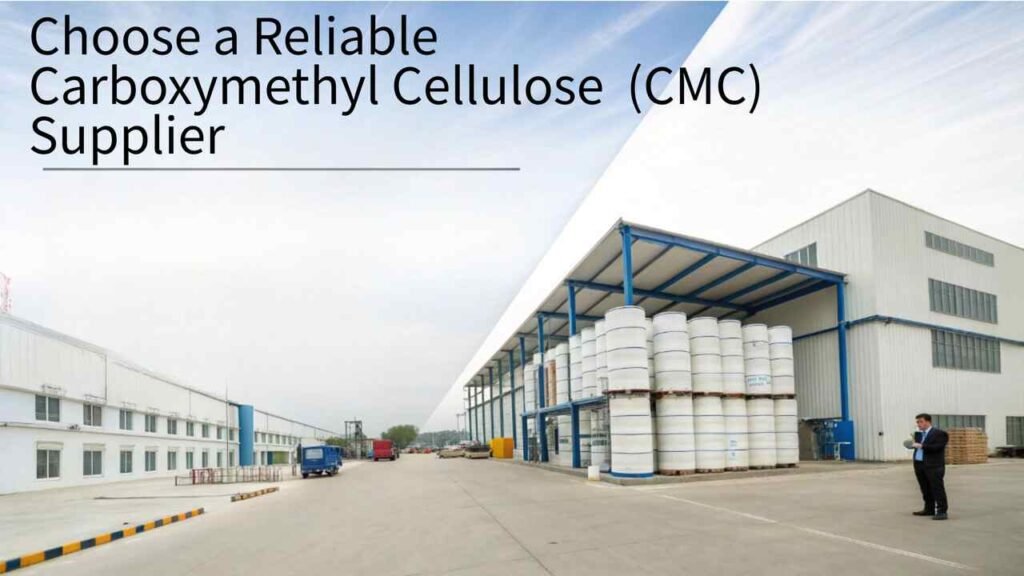
Unstable CMC quality causes production failures and financial losses. Unreliable suppliers damage your reputation and supply chain. Choosing a verified partner ensures consistent product performance and timely delivery.
Reliable CMC suppliers are identified by their industry experience, factory audit results, and official certifications like ISO or HACCP. Buyers must also evaluate communication speed and technical support. These factors confirm the supplier can maintain quality standards and meet international delivery deadlines for wholesale orders.
I manage factory selection and quality oversight for B2B food additive exports. I use the following criteria to verify supplier credibility and protect the interests of my global clients.
What Experience Should a Carboxymethyl Cellulose (CMC) Supplier Have?
New suppliers often fail to meet technical chemical standards. This leads to inconsistent batches and manufacturing waste. Experienced suppliers prevent these errors through proven quality control and application knowledge.
A reliable CMC supplier requires at least five years of export experience. They must demonstrate expertise in food, detergent, or industrial applications. This experience ensures the supplier handles technical specifications, international logistics, and customs documentation correctly for diverse global markets.

Technical Depth and Application History
CMC is a specialized chemical. Different industries require specific viscosity ranges and purity levels. An experienced supplier knows which grade works for dairy and which works for paper coating. I check if a supplier understands the degree of substitution (DS)1 required for salt resistance. If they cannot explain these technical details, they are likely just traders without deep product knowledge. A supplier with years of experience has a history of solving formulation problems for various clients. This technical depth reduces the risk of the buyer receiving an incompatible product.
Logistics and Regulatory Expertise
Exporting chemicals from China involves complex regulations. I verify a supplier’s history with shipping routes to the Middle East, Europe, and Southeast Asia. Experienced suppliers understand the specific document needs for Saudi Arabia or the REACH rules2 for Germany. They know how to secure bags on pallets to prevent damage during sea transit. This knowledge prevents cargo from being held at customs or arriving with moisture damage. A supplier with a long track record has established relationships with reliable shipping lines and can manage delays effectively.
| Experience Level | Technical Knowledge | Logistics Reliability | Risk Level |
|---|---|---|---|
| 1-3 Years | Standard grades only | High risk of errors | High |
| 4-7 Years | Good application data | Familiar with routes | Moderate |
| 8+ Years | Advanced customization | Expert in regulations | Low |
How Important Is Factory Audit for Carboxymethyl Cellulose (CMC)?
Digital photos often hide the reality of a manufacturing site. Choosing a supplier without an audit leads to product safety risks. On-site inspections confirm the actual production capacity and hygiene standards.
Factory audits are the only way to verify production equipment, laboratory accuracy, and hygiene protocols. An audit confirms the manufacturer follows ISO and food safety standards. This step ensures the factory can produce stable CMC batches for large-scale wholesale procurement.

Equipment and Production Capacity
I inspect the condition of the reaction tanks and automation systems during an audit. Modern equipment produces more consistent CMC than manual systems. Automation reduces human error during the chemical reaction process. I also review the maintenance logs3 of the machinery. A well-maintained factory is less likely to experience sudden production stops. This is essential for meeting the delivery deadlines of large-scale B2B orders. The audit also confirms if the factory has the physical space to store raw materials safely away from contaminants.
Laboratory and Quality Systems
A credible supplier must have an active on-site laboratory. I verify that they test every batch for viscosity, purity, pH, and moisture. I check the calibration certificates of their lab equipment. If a factory lacks a professional lab, they cannot guarantee the COA data they provide. Reliable suppliers keep retainer samples from every batch for at least one year. This allows for re-testing if a quality claim arises later. A professional lab setup is a clear sign that the manufacturer takes quality control seriously.
| Audit Area | Key Points | Benefit to Buyer |
|---|---|---|
| Production Floor | Machine age, automation | Batch consistency |
| Quality Lab | Testing logs, calibration | Accurate COA data |
| Warehouse | Humidity control | Clump-free powder |
| Hygiene | Sanitation protocols | Food safety |
What Documents Verify Carboxymethyl Cellulose (CMC) Supplier Credibility?
Uncertified CMC can lead to legal penalties and rejected shipments. A lack of official paperwork indicates high safety and quality risks. Valid documents prove the supplier follows international industrial and safety laws.
Suppliers must provide ISO 9001, ISO 22000, or HACCP certificates. Food-grade CMC also requires HALAL or KOSHER certifications for international trade. Each shipment must include a Certificate of Analysis (COA) and a Material Safety Data Sheet (MSDS) to ensure regulatory compliance.
Management and Safety Certificates
I require ISO 90014 to confirm the supplier uses a standard quality management system. ISO 22000 or HACCP is mandatory for food-grade products. These certificates show the factory is inspected by third-party organizations regularly. For my clients in the Middle East and Southeast Asia, HALAL certification5 is essential for customs clearance. I always verify that these documents are current and issued by authorized bodies. Expired or altered certificates are a major warning sign of an unreliable supplier.
Technical and Legal Paperwork
The Certificate of Analysis (COA) is the primary document for every order. It lists the actual test results for the specific batch being shipped. I compare the COA against the original sample results to ensure consistency. The Material Safety Data Sheet (MSDS) is also required for logistics and safety. It provides instructions on chemical handling and emergency procedures. These documents are necessary for legal import in countries like Russia, Korea, and Vietnam. I also verify the supplier’s business license to confirm their legal right to export chemicals.
| Document Type | Mandatory For | Usage |
|---|---|---|
| ISO 22000 / HACCP | Food applications | Safety verification |
| HALAL / KOSHER | Specific markets | Cultural/Legal compliance |
| COA | Every batch | Quality verification |
| MSDS | All shipments | Safety & Logistics |
How Does Communication Affect Carboxymethyl Cellulose (CMC) Cooperation?
Slow communication causes production delays and missed delivery dates. Misunderstandings about technical specs lead to the wrong product being shipped. Efficient dialogue prevents these operational errors and ensures order accuracy.
Fast and professional communication ensures technical specifications are matched correctly. Reliable suppliers respond to inquiries within 24 hours. Clear discussion about viscosity, mesh size, and lead times prevents errors and ensures the final product meets the buyer's industrial requirements.

Response Speed and Accuracy
In B2B wholesale, a delay in information can stop a production line. I evaluate how fast a supplier provides price quotes and technical data. A reliable partner answers emails or messages within one business day. If a supplier is slow to respond during the sales process, they will be slow when a problem occurs. Professional communication also includes providing clear answers to technical questions. I avoid suppliers who give vague responses about their production capacity or shipping schedules.
Transparency and Problem Solving
Unexpected issues like port congestion or raw material shortages can happen in any supply chain. A reliable supplier communicates these problems as soon as they arise. They provide honest timelines and suggest ways to minimize the impact on your business. Transparency builds long-term trust. I look for partners who provide regular updates on order status without being asked. Good communication allows the buyer to manage their inventory levels and inform their own customers of any changes.
| Metric | High-Quality Supplier | Low-Quality Supplier |
|---|---|---|
| Response Time | < 24 Hours | > 48 Hours |
| Technical Detail | Precise and data-driven | Vague and unverified |
| Order Updates | Weekly or milestone-based | Only when asked |
| Honesty | Transparent about delays | Defensive or silent |
What Signals a Long-Term Carboxymethyl Cellulose (CMC) Partner?
Frequent supplier changes increase procurement costs and technical risks. Inconsistent product quality disrupts your manufacturing and harms your brand. Long-term partners provide the stability needed for successful business growth.
Signals of a long-term partner include batch consistency and proactive support. They provide market updates on raw material prices and offer technical assistance. A partner who maintains standards over several years ensures a reliable supply chain and predictable production costs for the buyer.

Quality Consistency Across Batches
The most critical signal of a long-term partner is product stability. I check if the viscosity and color of the CMC stay the same over several years. A reliable factory controls their raw cellulose source to ensure this consistency. If the product changes with every shipment, the buyer must adjust their formula constantly. This reduces efficiency and increases labor costs. Consistency is the foundation of trust in the food additive industry. I prioritize suppliers who can prove their batch-to-batch stability through historical COA data.
Market Insight and Flexibility
A true partner shares information that helps your business. This includes warnings about price increases for raw materials or changes in shipping costs. This data allows you to buy at the right time and protect your profit margins. I also look for suppliers who are flexible with MOQs or packaging as your business grows. They should view your success as their own. A supplier who treats a small order with the same care as a large one is a good candidate for a long-term collaboration.
| Partnership Signal | Impact | Value |
|---|---|---|
| Batch Consistency | Stable production | Maximum |
| Market Updates | Better cost control | High |
| Technical Help | Faster troubleshooting | High |
| MOQ Flexibility | Market testing ease | High |
Conclusion
Choosing a reliable CMC supplier involves checking experience, audits, and communication. I focus on these standards at FINETECH to ensure quality and timely delivery for every B2B order.
-
Understanding DS is crucial for ensuring the right chemical properties, making this resource invaluable for informed supplier selection. ↩
-
Understanding REACH rules is crucial for compliance in chemical exports to Europe, ensuring your shipments meet legal standards. ↩
-
Learn about the critical role of maintenance logs in preventing production downtime and ensuring operational efficiency. ↩
-
Understanding ISO 9001 helps ensure suppliers maintain a quality management system, crucial for reliable partnerships. ↩
-
Exploring HALAL certification provides insights into compliance for food products in the Middle East, ensuring smooth customs processes. ↩