
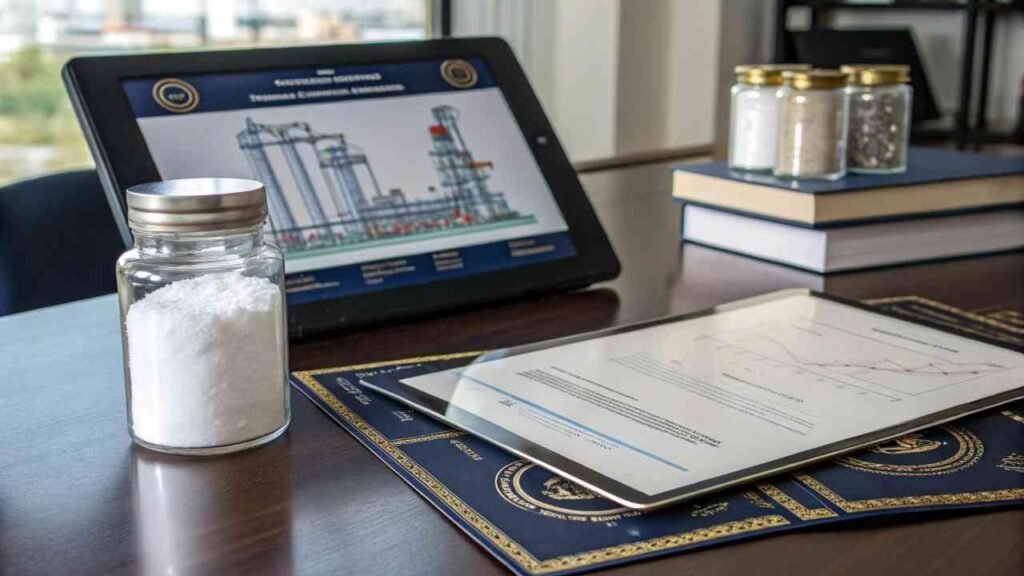
Unreliable Vitamin B6 suppliers cause production delays and quality recalls. These risks ruin your reputation and waste your capital. I provide vetting strategies to ensure your supply chain stays safe.
To choose a reliable Vitamin B6 supplier, verify their manufacturing license and international certifications like ISO 22000 and HACCP. Audit their annual production capacity, check for batch-specific COAs, and evaluate their export history to ensure consistent quality and timely delivery for your wholesale business.
I manage factory selection and quality oversight for my B2B clients at FINETECH. Understanding these technical criteria helps you avoid bad sources and secure top-quality Pyridoxine for your specific business needs.
What Certifications Should Vitamin B6(Pyridoxine) Suppliers Have?
Uncertified vitamins pose health risks and legal liabilities. One bad batch can kill your sales. I show you which certifications provide a real guarantee of safety and purity for your company.
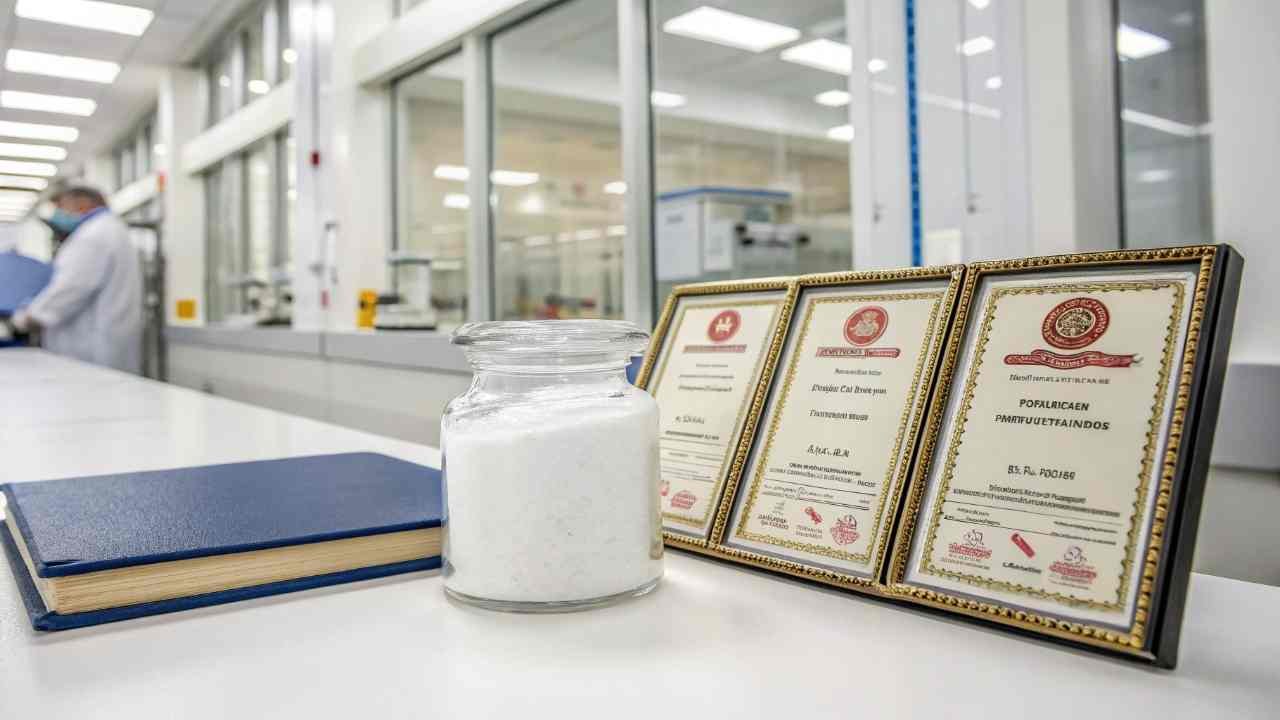
Reliable Vitamin B6 suppliers must hold ISO 22000, HACCP, and GMP certifications for safety and consistency. For international trade, HALAL and KOSHER are essential. High-purity pharmaceutical grades also require USP or BP compliance verified by authorized third-party lab reports.
Global Quality Management Standards
I prioritize factories that have ISO 22000 and HACCP. These are not just papers. They are systems. ISO 22000 ensures the factory manages food safety1 at every level. HACCP means the factory finds and controls risks during chemical synthesis. For Vitamin B6, this is vital because heavy metal contamination is a real risk. I check these certificates myself. I look at the expiry dates and the issuing bodies. A reliable supplier in China always keeps these documents current. These standards give you peace of mind that the product is safe for humans.
Regional and Religious Requirements
I also manage religious certifications. My main export markets include the Middle East and Southeast Asia. For my buyers in Saudi Arabia and Indonesia, HALAL certification is a legal requirement. It proves no forbidden substances were used. KOSHER is also important for the European and American markets. I ensure these certificates are from recognized agencies like MUI or JAKIM. This documentation makes your customs clearance fast. It also helps you sell to more customers. Without these papers, your market access is limited. I oversee this technical file for every client.
Comparison of Critical Certifications
| Certification | Focus Area | Market Requirement | Business Value |
|---|---|---|---|
| ISO 22000 | Safety Management | Global Food Industry | High safety guarantee |
| HACCP | Process Risk | Bulk Wholesale | Prevents contamination |
| GMP | Production Quality | Pharma / Cosmetics | Ensures high purity |
| HALAL | Religious Law | Middle East / SE Asia | Legal market access |
| KOSHER | Religious Law | Europe / USA | Broad customer appeal |
How Important Is Production Capacity for Vitamin B6(Pyridoxine)?
Small factories often stop during market shortages or audits. This leaves you empty-handed and stops your sales. I analyze why production scale is critical for your long-term supply security and pricing.
Production capacity is vital for ensuring supply during market peaks and environmental audits in China. Large-scale producers (2,000+ tons per year) offer more stable pricing and better batch consistency. High capacity allows a supplier to fulfill bulk orders even when global supply is tight.
Scale and Supply Chain Security
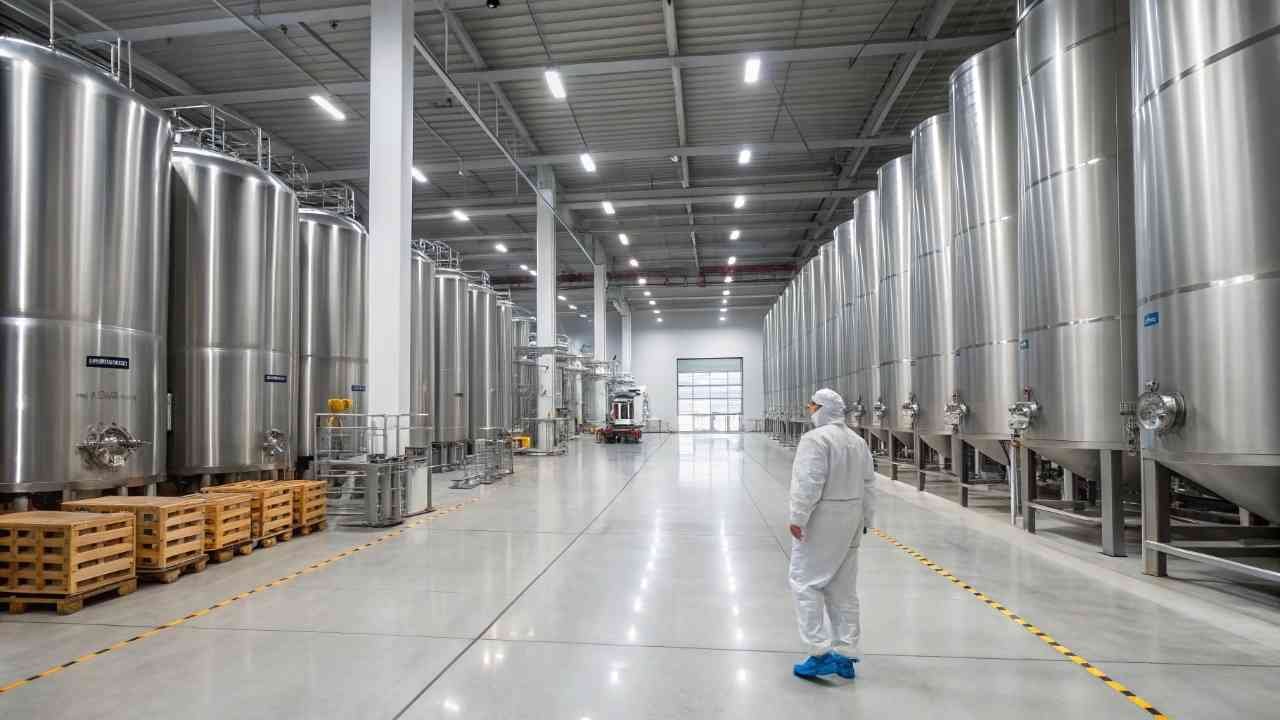
I want you to know that China produces over 80% of the world's Vitamin B6. In this market, scale is power. I visit large factories in provinces like Hubei and Zhejiang. These factories have giant reactors and automated lines. High capacity means the factory can run 24/7. This lowers the labor cost per kilogram. It also ensures that the purity stays the same from drum to drum. Smaller plants might stop and start their machines. Every time they start, the quality can change. I prioritize large partners to give my buyers the most consistent product.
Vertical Integration and Price Stability
Vertical integration is another factor of capacity. Some of the best factories in China produce their own chemical intermediates. This makes them very stable. They do not have to worry about shortages in the chemical market. I help my buyers find these integrated sources. This scale also helps with price. Large factories can lock in energy and material costs for the whole year. I negotiate based on this volume to get you a stable price. High capacity gives you a safety buffer that small traders cannot offer. This security is why large distributors2 trust my selection process.
Supplier Scale vs. Risk Level
| Factory Level | Annual Output | Risk Level | Supply Stability |
|---|---|---|---|
| Global Leader | > 5,000 Tons | Very Low | Maximum market security |
| Large Hub | 2,000 - 5,000 Tons | Low | Very stable production |
| Medium Plant | 500 - 2,000 Tons | Moderate | Subject to power limits |
| Small Producer | < 500 Tons | High | Frequent stops for audits |
How Can Buyers Evaluate Vitamin B6(Pyridoxine) Factories?
Trusting a website photo is a dangerous gamble. You risk receiving off-spec or dirty material. I explain how physical and document audits remove the fear and risk from your Vitamin B6 procurement.
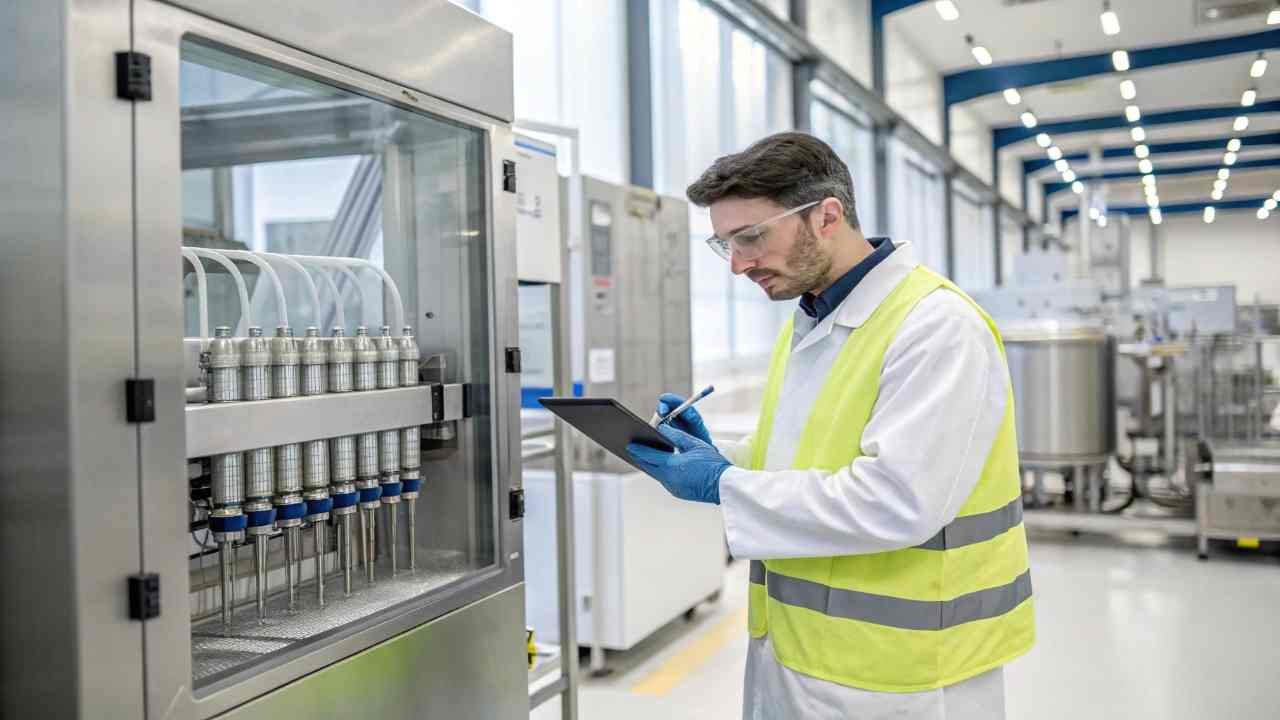
Evaluate factories by requesting on-site or third-party audits via SGS. Check their lab equipment, specifically calibrated HPLC machines for purity testing. Verify their waste treatment facilities to ensure they meet Chinese environmental laws, which prevents sudden government-ordered production shutdowns.
Physical Site Inspections
I always suggest a Pre-Shipment Inspection (PSI) for new partners. You can hire an independent company like SGS. Their inspector goes to the factory. They count the drums and check the labels. They also take random samples from the pallets. These samples are tested in an independent lab. This proves the COA from the factory is honest. I manage this coordination for my clients. A PSI report gives you total confidence before the ship leaves the port. It is the best way to avoid surprises when the container arrives at your warehouse.
Laboratory and Technical Verification
I also perform my own audits. I look at the lab equipment. A reliable supplier must have their own HPLC machine. Without this, they cannot test the assay level accurately. I also check the warehouse. Vitamin B6 is sensitive to light and moisture. The warehouse must be cool, dry, and dark. I look at the "Retainer Samples" room. Factories must keep a sample from every batch for three years. This is a technical requirement for traceability. If a supplier refuses an audit, I do not buy from them. My goal is to be your eyes on the ground in China to ensure safety.
Audit Checklist for Professional Buyers
| Audit Point | Target Standard | Importance |
|---|---|---|
| Lab Equipment | Calibrated HPLC / AA | Critical |
| Packing Area | Clean room environment | High |
| Env. Control | Waste water permit | High |
| Traceability | Batch codes on all drums | Critical |
| Warehouse | Temperature logs | Moderate |
What Documents Should Vitamin B6(Pyridoxine) Suppliers Provide?
Missing documents stop your cargo at customs. These delays lead to high storage fees and lost sales. I provide a complete technical file with every shipment to ensure smooth clearance and compliance for your business.
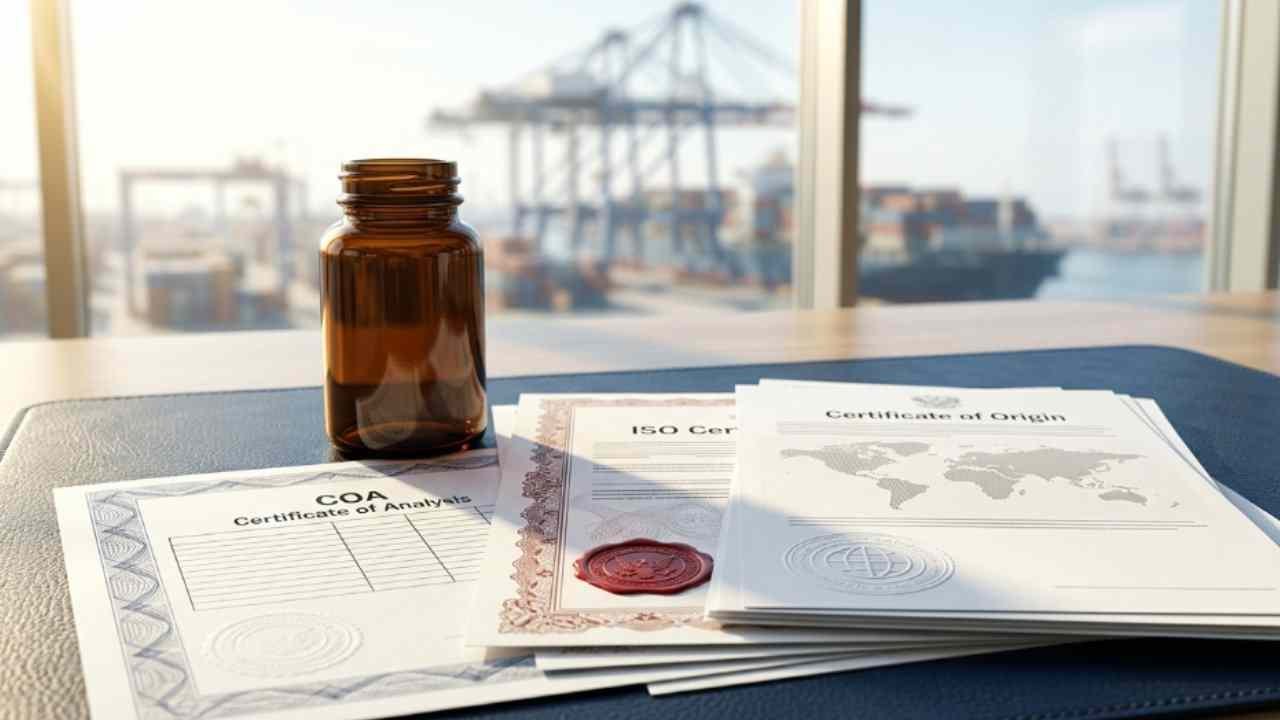
Suppliers must provide a batch-specific Certificate of Analysis (COA), a Health Certificate, and a Material Safety Data Sheet (MSDS). For food use, ISO 22000 and HALAL certificates are mandatory. A Bill of Lading (BL) and a Certificate of Origin are also required for international customs.
Building a Complete Technical File
I see that many exporters forget small papers. This causes big problems. I ensure that every drum of Vitamin B6 has a clear COA. This paper must list the assay level and the heavy metal limits. It must match the batch number on the drum. For my clients in the Middle East, a Health Certificate from the Chinese government is mandatory. It proves the product is fit for human consumption. I also provide the MSDS. This document tells your team how to handle the powder safely. I gather all these technical papers3 into one file for you.
Traceability and Regulatory Papers
Traceability4 is vital for modern food safety. I provide a packing list that shows every pallet and drum. This helps you track your inventory. If a customer has a question, you can find the production log in minutes. I also help with the Certificate of Origin. In some regions, this paper can lower your import taxes. I also provide Non-GMO and Allergen statements. Many large food companies in Germany and Greece need these for their audits. I handle this paperwork so you can focus on selling. My goal is to make the import process as simple as buying from a local supplier.
Mandatory Export Documents Table
| Document Name | Purpose | Importance |
|---|---|---|
| COA | Proves batch quality | Mandatory |
| MSDS | Safety and handling info | Mandatory |
| Health Certificate | Gov. safety proof | Mandatory for Food |
| ISO 22000 | Factory safety standard | Mandatory for Food |
| HALAL / KOSHER | Religious compliance | Market Dependent |
| Cert. of Origin | Customs and tax info | Mandatory |
How Do Long-Term Partnerships Improve Vitamin B6(Pyridoxine) Supply Stability?
Switching suppliers every month creates chaos and quality gaps. You lose your priority during global shortages. I provide a path to build partnerships that protect your annual supply and improve your profit margins.
Long-term partnerships improve stability through annual volume contracts and fixed pricing. They protect you from market surges and ensure you receive priority during global shortages. Shared demand forecasts allow the factory to reserve production slots specifically for your warehouse needs, ensuring a continuous flow of fresh material.

Financial Stability and Priority Supply
I treat my clients as long-term partners. A partnership is a two-way street. I suggest signing annual contracts for 6 to 12 months. This locks in your price. Even if the market price doubles in China, your cost stays the same. This stability allows you to give fixed quotes to your own customers. It is a huge competitive advantage. Also, when global supply gets tight, the factory fulfills the orders for their best partners first. I use my influence with the manufacturers to protect my best clients. This is how you survive a market crisis.
Technical Support and Custom Grades
Long-term cooperation also helps with technical needs5. If you need a specific particle size for your flour premix, I ensure the factory produces it for you every time. We keep retainer samples for your specific shipments for three years. This creates a deep history of quality trust. If you have a problem with a new recipe, our lab team can help you solve it. This level of support is only possible in a strategic relationship. I focus on long-term growth because if you grow, I grow. By working together for years, we create a supply chain that is safe and profitable.
Partnership Benefits Timeline
| Phase | Interaction Type | Strategic Benefit | Competitive Gain |
|---|---|---|---|
| 1 - 2 Orders | Trial Phase | Quality verification | Test the source |
| 1 - 2 Years | Growth Phase | Price discounts | Lower procurement cost |
| 3 - 5 Years | Stability Phase | Annual Price Locks | Budget security |
| 5+ Years | Strategic Partner | Credit terms / Custom grades | Market dominance |
Conclusion
Choosing a reliable Vitamin B6 supplier requires checking certifications, production capacity, trade experience, and audit willingness. I manage these details at FINETECH to ensure your business stays safe, stable, and profitable.
-
ISO (International Organization for Standardization) – Official standards for food safety management systems, ensuring enterprises meet global consumer safety requirements. ↩
-
Investopedia – Education on distribution channels and the role of trade-oriented distributors in the global supply chain. ↩
-
ScienceDirect – A collection of peer-reviewed articles and technical papers regarding the chemistry and application of food additives in various industries. ↩
-
GS1 Global – Global standards for business communication and traceability, helping companies track food products from production to consumption. ↩
-
IFT (Institute of Food Technologists) – A professional hub for technical personnel and food scientists to explore the latest innovations and technical needs in the food sector. ↩