
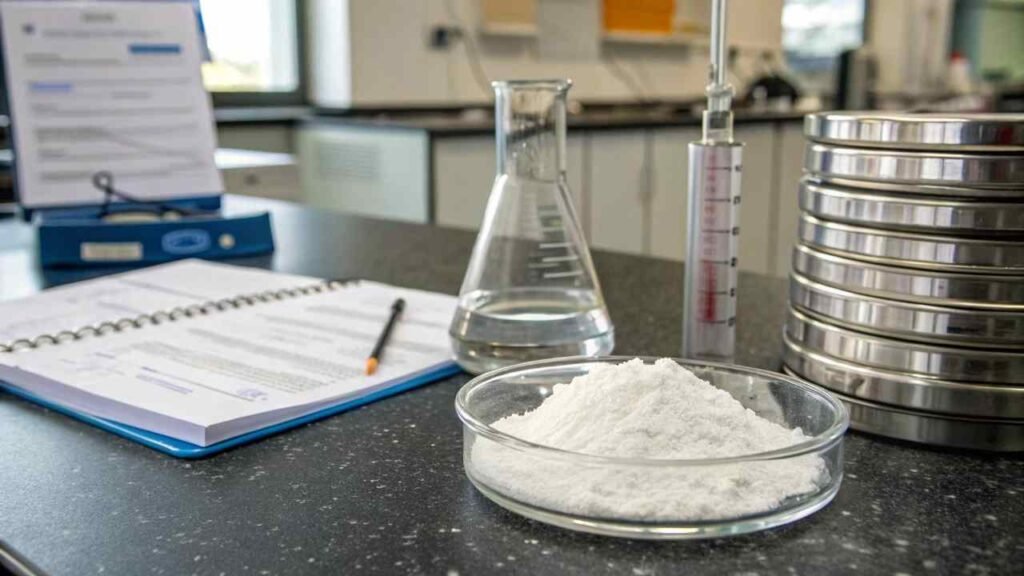
Sourcing sub-standard Acesulfame-K without conducting rigorous chemical purity assays and stability checks results in formulation off-notes, regulatory non-compliance, and severe consumer taste complaints.
Evaluating Acesulfame-K quality prior to purchase requires verifying high purity assays, monitoring synthetic organic impurities, ensuring consistent sweetness through particle size control, verifying hydrolytic and thermal stability, and auditing comprehensive pharmaceutical and food safety documentation.
Successfully manufacturing premium sugar-free foods and beverages requires a disciplined approach to evaluating raw material properties. Sourcing managers must examine physical dissolving profiles and chemical stability parameters to protect their formulations from active potency losses and off-flavor defects. Sourcing partners like FINETECH simplify factory checks, verify production compliance, and secure competitive pricing directly in China to guarantee bulk deliveries. This guide explains how buyers can evaluate the quality of Acesulfame-K before purchase.
What Purity Specifications Should Buyers Check for Acesulfame-K?
Accepting raw sweetener batches without verifying critical chemical limits risks introducing heavy metal contaminations and elevated moisture levels. Precise spec checks protect product integrity.
Buyers must verify that Acesulfame-K meets the standard ninety-nine to one hundred and one percent assay range, with loss on drying below one percent, fluoride under three ppm, and lead under one ppm.
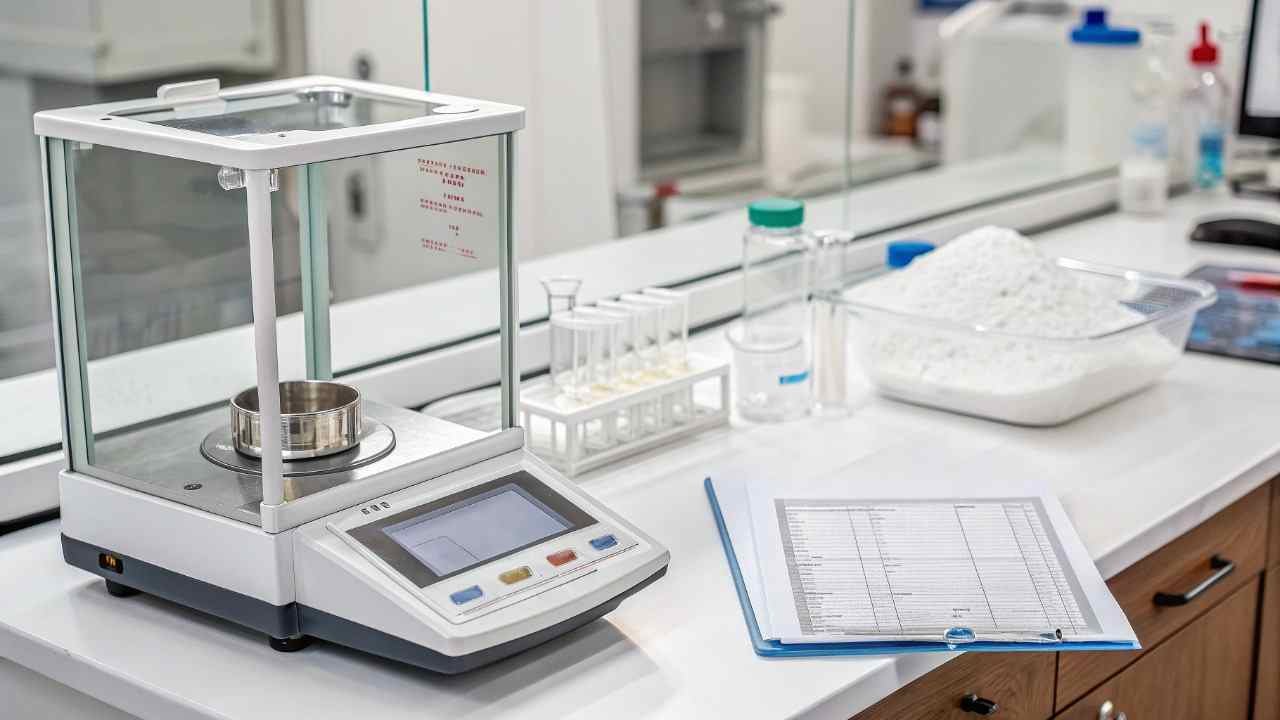
Dive Deeper into Active Assays, Loss on Drying, and Halogen Limits
Evaluating the quality of Acesulfame-K (Ace-K) before executing a commercial purchase requires a meticulous review of its chemical purity specifications. Buyers must first check the active substance assay, which should fall strictly within the ninety-nine percent to one hundred and one percent range on a dry basis, in accordance with the United States Pharmacopeia (USP), European Pharmacopoeia (EP), and Food Chemicals Codex (FCC)1 monographs. Any deviation below ninety-nine percent indicates the presence of unreacted synthesis intermediates or moisture, which dilutes the sweetening power and threatens formulation consistency.
Another critical specification is loss on drying, which measures the residual moisture content of the crystalline powder. This parameter must be kept below one percent, and ideally below zero point five percent, to prevent physical caking during storage and ensure accurate weight measurements during compounding. Furthermore, because fluorine-containing compounds are sometimes involved in specific synthesis pathways, strict limits are placed on fluoride impurities, which must not exceed three parts per million (ppm). Lead contamination must also be strictly controlled below one ppm to satisfy modern heavy metal safety standards. Sourcing partners like FINETECH help buyers by coordinating independent third-party laboratory tests to verify these exact purity metrics prior to shipping.
| Chemical Specification | USP / EP Monographic Limit | Primary Safety / Quality Reason | Testing Analytical Method |
|---|---|---|---|
| Active Assay (Dry Basis) | 99.0% to 101.0% | Verifies sweetening potency | High-Performance Liquid Chromatography |
| Loss on Drying | Maximum 1.0% (at 105°C) | Prevents physical powder caking | Gravimetric thermal drying |
| Fluoride Content | Maximum 3.0 ppm | Limits toxic halogen residues | Ion-selective electrode method |
| Lead (Pb) | Maximum 1.0 ppm | Ensures heavy metal safety | Atomic absorption spectroscopy |
How Are Impurities Controlled During Acesulfame-K Production?
Neglecting synthesis byproducts during raw material checks allows harmful organic impurities like acetoacetamide to slip into food-grade batches. Rigorous production control prevents chemical hazards.
Impurities are controlled during manufacturing by optimizing the reaction between sulfamic acid and acetoacetic acid derivatives, followed by multiple recrystallization cycles and high-efficiency carbon filtration systems.
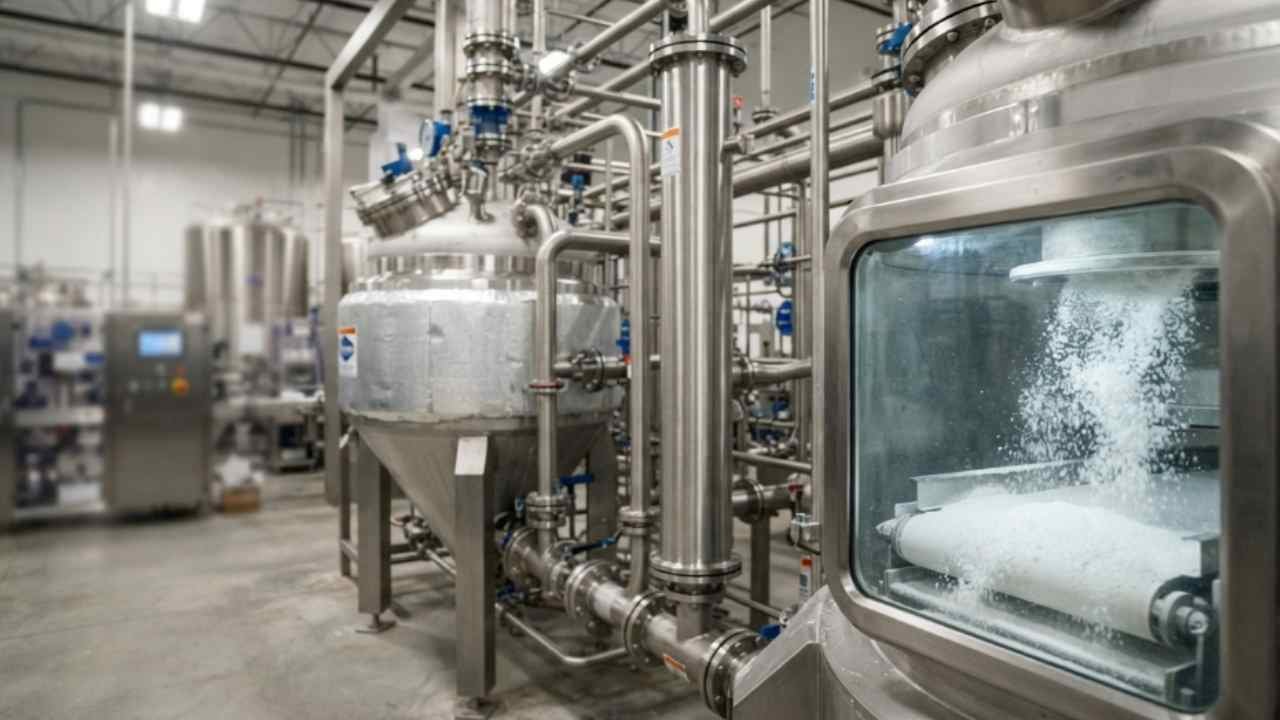
Dive Deeper into Acetoacetamide Suppression, Recrystallization, and Carbon Filtration
During the industrial synthesis of Acesulfame-K2, several chemical precursors and reaction intermediates are utilized, which must be tightly controlled to prevent toxic residues from contaminating the final food-grade product. The standard production process involves reacting sulfamic acid with acetoacetic acid derivatives, followed by cyclization with sulfur trioxide and neutralization with potassium hydroxide. A primary challenge in this chemical pathway is minimizing the formation of acetoacetamide and acetoacetamide-N-sulfonic acid, which are unwanted byproducts that can degrade the safety profile of the sweetener.
To achieve high-tier purity, manufacturers employ state-of-the-art purification steps. After the neutralization phase, the crude Acesulfame-K undergoes multiple recrystallization cycles, where the temperature and cooling rates are carefully regulated to isolate pure potassium salt crystals while leaving organic impurities in the mother liquor. High-efficiency activated carbon filtration is also used to adsorb trace organic contaminants, residual color, and odor-causing compounds. Sourcing partners like FINETECH assist international buyers by auditing Chinese chemical synthesis lines, checking that the manufacturer operates modern, automated filtration systems and maintains strict in-process HPLC controls to keep critical byproducts well below specified limits.
| Potential Impurity | Chemical Origin | Quality Specification Limit | Manufacturing Control Step |
|---|---|---|---|
| Acetoacetamide | Unreacted raw material | Maximum 0.12% | Controlled chemical cyclization |
| Acetoacetamide-N-sulfonate | Cyclization intermediate | Maximum 0.15% | High-efficiency recrystallization |
| Organic Solvents | Processing solvents (DCM) | Below EP/USP residual limits | High-temperature vacuum drying |
| Sulfate (SO4) | Sulfamic acid byproduct | Maximum 0.1% | Activated carbon adsorption |
Why Is Sweetness Consistency Important for Acesulfame-K Applications?
Compounding high-intensity sweeteners with inconsistent crystalline sizes leads to uneven distribution in dry drink mixes, causing sudden bitter, metallic aftertastes. Uniform granulation preserves formula balance.
Sweetness consistency is vital because Acesulfame-K is typically blended with aspartame or sucralose, meaning any variation in purity or mesh size directly disrupts the synergistic sugar-like sensory profile.

Dive Deeper into High-Intensity Sweetener Blending, Mesh Size Uniformity, and Aftertaste Control
Acesulfame-K is a high-intensity sweetener3 that is approximately two hundred times sweeter than sucrose. However, when used as a standalone sweetening agent in food or beverage formulations, it can exhibit a distinct bitter or metallic aftertaste at high concentrations. To overcome this sensory limitation, food technologists almost always use Ace-K in combination with other high-intensity sweeteners, such as aspartame or sucralose. A classic fifty-fifty blend of aspartame and Acesulfame-K provides a synergistic sweetness profile that closely mimics the taste curve of natural sugar, masking the metallic notes of both compounds.
Because of this blending strategy, sweetness consistency across different batches of raw Ace-K is critical for maintaining finished product quality. If the purity or crystalline particle size (mesh size) varies from batch to batch, it can disrupt the dissolution kinetics and blending uniformity in dry powder drink mixes, resulting in uneven sweetening and unexpected bitter notes. Manufacturers must ensure the particle size distribution is highly uniform—typically ranging between thirty to one hundred mesh—to guarantee even distribution throughout the product. Sourcing partners like FINETECH support buyers by conducting pre-shipment sieve analyses and organoleptic taste tests, ensuring the delivered sweetener blends seamlessly without compromising flavor uniformity.
| Formulating Factor | Blending Requirement | Potential Sensory Failure | Quality Sourcing Remedy |
|---|---|---|---|
| Synergistic Blending | 50:50 ratio with Aspartame | Dominant bitter, metallic taste | Verify raw material purity assay |
| Crystalline Size | 30 to 100 mesh range | Segregation in dry powder mixes | Require pre-shipment sieve test |
| Dissolution Rate | Fast solubility in liquids | Delayed sweetening, settling | Choose micro-granular crystals |
| pH Stability | Remains stable in acid | Taste profile decay over time | Audit accelerated aging chromatograms |
How Do Manufacturers Test the Stability of Acesulfame-K?
Formulating liquid soft drinks or baked goods without checking the raw sweetener's thermal and chemical durability results in active degradation and loss of sweetness over time.
Manufacturers test stability through HPLC analysis under accelerated aging conditions, evaluating thermal resistance up to two hundred degrees Celsius and hydrolytic resilience across a broad pH range of three to seven.
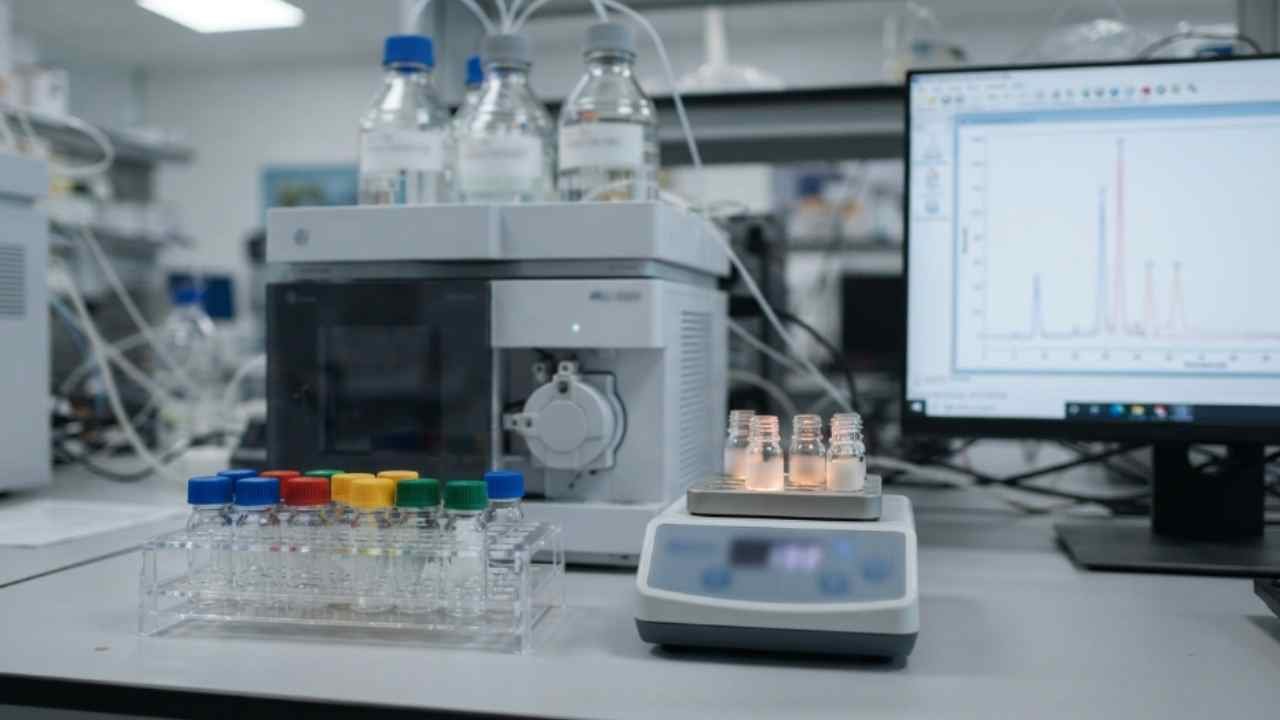
Dive Deeper into High-Temperature Resistance, pH Stability, and HPLC Degradation Tests
A major advantage of Acesulfame-K over other high-intensity sweeteners, such as aspartame, is its exceptional stability under diverse processing conditions. To verify this durability before purchasing, buyers should examine the manufacturer’s stability testing data. One of the primary tests conducted is thermal stability. Unlike aspartame, which breaks down and loses its sweetness at elevated temperatures, Ace-K can withstand temperatures up to two hundred and twenty-five degrees Celsius without molecular degradation, making it highly suitable for baked goods4, pasteurized liquid foods, and hot-filled beverages.
Additionally, manufacturers evaluate pH stability. In carbonated soft drinks, which often have a highly acidic pH between two point five and three point five, the sweetener must remain chemically intact throughout the product's shelf life. Stability is tested using High-Performance Liquid Chromatography (HPLC) to monitor the active assay under accelerated aging conditions (typically forty degrees Celsius and seventy-five percent relative humidity). A stable batch will show zero hydrolytic degradation or byproduct formation even after months of storage in acidic solutions. Sourcing partners like FINETECH help buyers review these stability chromatograms and technical data sheets, ensuring that the procured sweetener will perform reliably in demanding physical processing environments.
| Stress Testing Condition | Industrial Parameter | Expected Stability Outcome | Analytical Verification Tool |
|---|---|---|---|
| Thermal Baking Heat | Up to 225°C for 30 minutes | Complete; zero molecular loss | High-Performance Liquid Chromatography |
| Acidic Beverage pH | pH 2.5 to 3.5 in liquid | Complete; resists hydrolysis | HPLC assay comparison |
| Accelerated Shelf Aging | 40°C at 75% relative humidity | Complete; zero degradation | Active assay retention tracking |
| Light Exposure | Continuous UV exposure | Complete; resists photolysis | Standard UV-Vis spectrophotometry |
Which Quality Documents Should Suppliers Provide for Acesulfame-K?
Sourcing bulk chemicals without receiving verified international health and purity certifications exposes companies to severe customs rejections and heavy regulatory fines. Comprehensive documentation secures supply chains.
Suppliers must provide essential documents, including a batch-specific COA, USP/EP/FCC compliance declarations, ISO and FSSC 22000 food safety certifications, and verified Kosher, Halal, and allergen-free statements.

Dive Deeper into Certificates of Analysis, FSSC 22000, and Regulatory Monographs
To satisfy international food safety standards and ensure smooth customs clearance, buyers must secure a comprehensive set of quality documents from their suppliers. The foundational document is a batch-specific Certificate of Analysis (COA), which lists the results of physical and chemical tests—such as active assay, loss on drying, heavy metals, and particle size distribution—and compares them to USP, EP, or FCC monographic limits. Buyers should verify that the COA is issued by an accredited in-house quality control laboratory and features a clear batch number and production date.
Furthermore, suppliers should provide evidence of robust food safety management systems. This includes internationally recognized certifications such as FSSC 220005, ISO 9001, and Hazard Analysis Critical Control Point (HACCP) certifications. For specialized markets, verified Kosher and Halal certificates, alongside non-GMO and allergen-free declarations, are mandatory. Sourcing partners like FINETECH play a critical role in this documentation audit. They physically verify the validity of these certificates in China, ensuring that the manufacturing plant’s licenses are active, and compile all necessary regulatory paperwork to protect the buyer from compliance delays or product rejections at the port of entry.
| Required Quality Document | Primary Certified Authority | Critical Audit Focus | Sourcing Safety Outcome |
|---|---|---|---|
| Certificate of Analysis | In-house accredited QC lab | Match to USP/EP/FCC monographs | Guarantees chemical compliance |
| FSSC 22000 Certificate | Third-party food safety auditor | Complete food-grade hygiene | Prevents microbial contamination |
| MSDS / SDS Sheet | Regulatory safety agency | Toxicological exposure data | Ensures safe handling and storage |
| Kosher / Halal Papers | Recognized spiritual councils | Traceable raw material origins | Qualifies for niche retail markets |
Conclusion
Evaluating Acesulfame-K quality requires checking the ninety-nine to one hundred and one percent assay limits, analyzing acetoacetamide byproduct control, maintaining mesh size uniformity for synergistic aspartame blending, verifying thermal and acidic stability, and auditing FSSC 22000 and USP quality certifications.
-
This official U.S. Pharmacopeia (USP) portal details food standard development, analytical reference materials, and Food Chemicals Codex (FCC) resources for ingredient safety. ↩
-
This BAKERpedia ingredient guide describes the commercial production, chemical synthesis, and functional baking properties of Acesulfame-K. ↩
-
This official FDA reference page explains how high-intensity sweeteners are regulated, listing approved sugar substitutes, their sweetness intensities, and Acceptable Daily Intakes (ADI). ↩
-
This BAKERpedia guide details processing methods and formulation requirements for sugar-free baking, including the use of heat-stable sugar substitutes. ↩
-
This official FSSC 22000 portal provides Scheme documents and guidelines for establishing internationally recognized, GFSI-aligned food safety management systems. ↩