
Importing unverified arginine series products leads to poor workout powder solubility, heavy metal contamination, and severe custom delays. Unmonitored quality compromises brand reputation. Strict vetting parameters protect formulations.
Evaluating arginine series quality requires checking pharmacopoeia compliance (USP/EP/AJI), verifying specific optical rotation to guarantee L-isomer purity, monitoring moisture and heavy metal limits, and demanding certified manufacturing audits to secure consistent material performance.
Successfully manufacturing high-quality health supplements and pharmaceuticals requires a disciplined approach to checking amino acid purity and physical characteristics. Sourcing managers must examine detailed chemical monographs to ensure product performance and compliance. Sourcing partners like FINETECH simplify factory checks, verify production compliance, and secure competitive pricing directly in China to guarantee bulk deliveries. This guide explains how to evaluate the quality of arginine series products.
What Quality Standards Should Buyers Check for Arginine Series Products?
Procuring arginine compounds without specifying exact pharmacopoeia monographs results in receiving low-grade feed materials instead of high-purity food or pharmaceutical grades. Vague criteria cause quality failures.
Buyers must check standards including active assay levels between 98.5% and 101.5%, specific optical rotation ranges of plus twenty-six to twenty-seven degrees, chloride limits under 0.02%, and tight heavy metal thresholds.
Dive Deeper into Pharmacopoeia Standards and Isomeric Purity
When purchasing L-Arginine base, L-Arginine HCl, or L-Arginine Alpha-Ketoglutarate (AAKG), buyers must verify that the materials satisfy strict international pharmacopoeia standards. The most common benchmarks utilized in the nutrition and pharmaceutical industries are the United States Pharmacopeia (USP)1, European Pharmacopoeia (EP), and Ajinomoto (AJI) standards. The baseline chemical assay for L-Arginine must fall strictly within the range of 98.5% to 101.5% on a dried basis. Because arginine exists in two enantiomeric forms, verifying the specific optical rotation is the most critical parameter to ensure isomeric purity.
The active L-isomer is biologically active, whereas the D-isomer is physiologically inactive. Under USP guidelines, the specific optical rotation2 of L-Arginine must measure between plus twenty-six point three degrees and plus twenty-seven point seven degrees when tested in a hydrochloric acid solution. Any deviation from this range indicates either chemical degradation or contamination with D-arginine. Additionally, buyers must check for maximum moisture limits (loss on drying below 0.5%) and strict heavy metal thresholds, ensuring lead levels remain below 5 ppm and arsenic below 2 ppm. Sourcing partners like FINETECH assist buyers by evaluating these technical specifications directly in China, verifying that every batch matches the target pharmacopoeia monograph.
| Quality Parameter | USP / AJI Standard Limit | Technical Significance | Sourcing Importance |
|---|---|---|---|
| Active Assay | 98.5% to 101.5% | Active amino acid content | Ensures correct nutritional dosing |
| Optical Rotation | +26.3° to +27.7° | Confirms L-isomer purity | Identifies inactive D-isomers |
| Loss on Drying | Maximum 0.5% | Measures volatile moisture | Prevents powder caking in storage |
| Chloride (Cl) | Maximum 0.02% | Measures halogen salts | Crucial for L-Arginine base purity |
How Is the Purity of Arginine Series Tested Before Shipment?
Accepting arginine shipments based solely on manufacturer sheets increases the risk of receiving inactive D-isomers or contaminated batches. Unchecked cargo threatens quality. Analytical pre-shipment testing ensures purity.
Arginine purity is verified before shipment using High-Performance Liquid Chromatography for active assays, polarimetry for specific optical rotation, loss on drying for moisture, and ICP-MS for heavy metals.
Dive Deeper into Chromatographic Assays and Polarimetric Verification
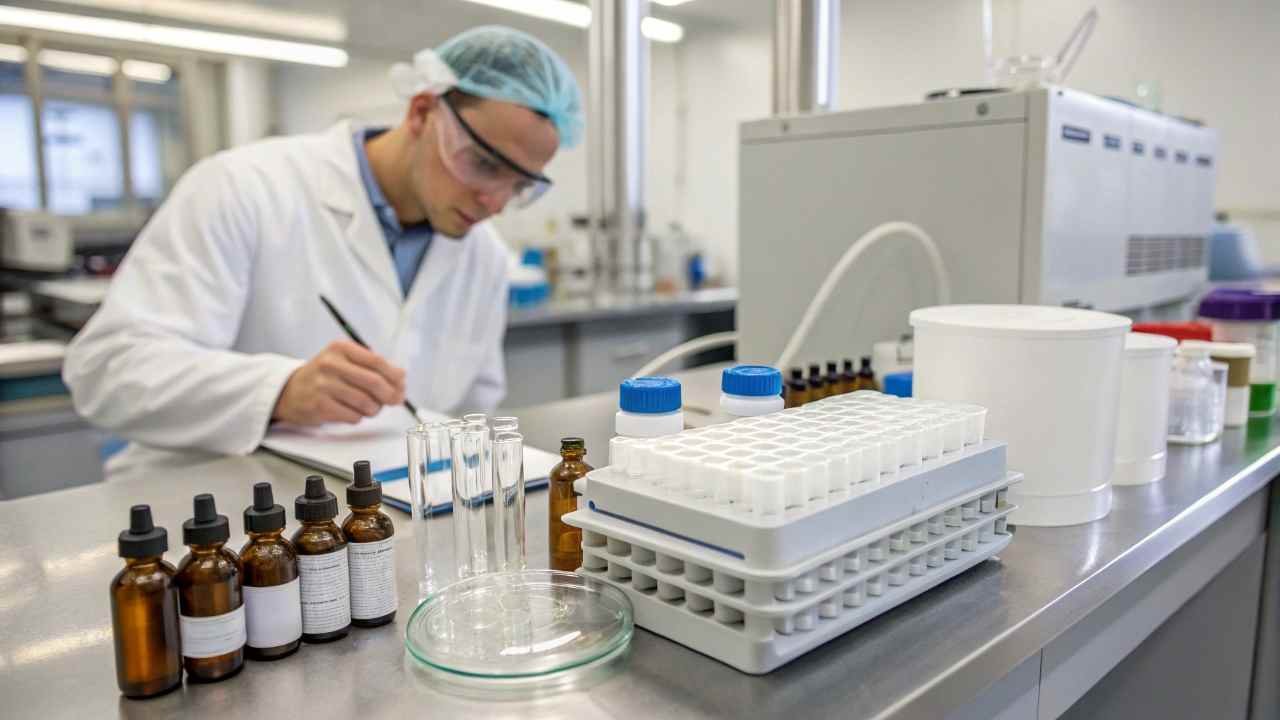
Ensuring that bulk shipments of the arginine series maintain high quality before leaving the factory requires rigorous, instrument-based analytical testing. The primary test executed to measure the active content of L-Arginine and its salt derivatives (such as Arginine HCl) is High-Performance Liquid Chromatography (HPLC) or non-aqueous acid-base titration. These methods isolate the amino acid molecules from processing byproducts, providing an accurate, percentage-based assay. To identify the exact molecular structure and exclude adulterants, laboratories utilize Infrared Absorption Spectrophotometry (FTIR), comparing the sample's infrared spectrum against a certified USP reference standard.
In addition to HPLC, polarimetry is mandatory for validating the specific optical rotation, which directly verifies L-isomer purity and detects the presence of unwanted D-isomers. To check for physical purity and mineral contamination, the laboratory must execute a residue on ignition (sulfated ash) test, which must not exceed 0.1%. For heavy metal analysis, Inductively Coupled Plasma Mass Spectrometry (ICP-MS) is used to detect trace amounts of lead, arsenic, mercury, and cadmium down to parts-per-billion levels. Sourcing partners like FINETECH oversee these pre-shipment analytical checks on the ground, reviewing raw HPLC chromatograms and laboratory logs to ensure that only compliant batches are loaded into shipping containers.
| Analytical Test | Target Parameter | Laboratory Equipment | Expected Standard Result |
|---|---|---|---|
| Chromatographic Assay | Percent chemical purity | High-Performance Liquid Chromatography | 98.5% to 101.5% |
| Optical Rotation | Chiral molecular state | Automatic polarimeter | Matches target monograph range |
| Trace Metal Analysis | Lead, arsenic, mercury | ICP-MS spectrometer | Below 5.0 ppm total metals |
| Molecular Fingerprint | Product identification | FTIR spectrophotometer | Matches USP reference curves |
Which Certifications Should an Arginine Series Supplier Provide?
Sourcing active nutrition ingredients from uncertified chemical facilities can expose your brand to severe regulatory compliance penalties and immediate product recalls. Missing certifications halt sales. Vetted credentials guarantee safety.
An arginine supplier must provide internationally recognized food safety certifications like FSSC 22000, pharmaceutical GMP compliance for clinical grades, non-GMO statements, and valid Kosher and Halal dietary documents.

Dive Deeper into Food Safety Systems and Pharmaceutical GMP Compliance
Vetting a supplier's third-party certifications is an essential step to ensure that the imported arginine series satisfies local food safety regulations and global import laws. For sports nutrition, dietary supplements, and functional food applications, the manufacturing facility must hold active FSSC 220003 or ISO 22000 certifications. These internationally recognized food safety management systems verify that the factory operates under strict Hazard Analysis Critical Control Point (HACCP) protocols, ensuring that the crystalline powder is protected from biological, chemical, and physical hazards during fermentation, crystallization, and packaging.
For medical nutrition or pharmaceutical formulations, the supplier must provide Good Manufacturing Practice (GMP) compliance certificates and active Drug Master Files (DMF). Furthermore, because L-Arginine is produced via microbial fermentation of agricultural starch (such as corn or sugar cane), buyers must demand Non-GMO statements and allergen-free declarations to satisfy clean-label standards. Religious dietary access requires active Kosher and Halal certifications. Sourcing partners like FINETECH simplify this verification process by auditing certificate validity directly with global certification bodies, protecting buyers from falsified documents and ensuring complete regulatory compliance.
| Certification Class | Certificate Standard | Target Market Sector | Sourcing Significance |
|---|---|---|---|
| Food Safety | FSSC 22000 / HACCP | Sports drinks & nutrition | Verifies high manufacturing hygiene |
| Pharmaceutical | GMP / DMF Registration | Clinical formulations | Required for medical injectables |
| Dietary Compliance | Kosher & Halal | Global retail distribution | Allows products into specific regions |
| Clean Label | Non-GMO / Allergen-free | Premium wellness powders | Confirms sustainable crop starches |
Why Is Particle Size Consistency Important for Arginine Series Applications?
Blending uneven arginine powders into sports nutrition mixes leads to ingredient segregation, static electricity build-ups, and inconsistent nutritional dosages. Poor sizing limits processing efficiency. Calibrated granulations ensure uniformity.
Particle size consistency is critical because it prevents ingredient separation in dry powder mixers, minimizes static electricity charge during packaging, and ensures uniform solubility in final consumer drinks.

Dive Deeper into Blend Uniformity and Electrostatic Static Mitigation
Particle size consistency is a highly critical physical parameter that directly influences the manufacturing performance and sensory quality of finished sports nutrition products. In the sports supplement industry, L-Arginine base and Arginine HCl are primary ingredients in dry pre-workout powders and amino acid drink mixes. Arginine base naturally crystallizes as light, needle-like, or fluffy crystals, which are highly prone to developing static electrical charges during mechanical handling and packaging. This static behavior causes the powder to stick to packaging machinery, slowing down production speeds and causing weight variations in the final scoops.
Moreover, inconsistent particle sizes lead to ingredient segregation (the "brazil nut effect") in large blending hoppers. During shipping and handling, finer amino acid particles settle to the bottom of the container, while larger particles rise to the top, resulting in uneven active doses for the final consumer. To prevent these processing failures, manufacturers utilize fluidized-bed granulation4 to produce uniform, granulated arginine with a consistent mesh size (such as 40 to 80 mesh). Sourcing partners like FINETECH assist buyers by arranging sieve analysis tests in China, ensuring that the particle size distribution matches the exact physical requirements of the buyer's blending machinery.
| Sizing Property | Processing Challenge | Technical Solution | Expected Sourcing Outcome |
|---|---|---|---|
| Electrostatic Static | Machine sticking, dust clumping | Fluidized-bed granulation | Fast, automated packaging runs |
| Size Segregation | Uneven active dosing | Calibrated mesh distribution | Uniform dry blending results |
| Slow Dissolution | Gritty mouthfeel in drinks | Micro-milled fine powder | Instant, clear beverage solubility |
| Bulk Density | Variable package fill lines | Controlled crystallization | Consistent tub filling volume |
How Can Buyers Ensure Stable Quality Across Different Arginine Series Batches?
Sourcing raw amino acids through transactional spot buys exposes your brand to high variance in crystallization and sudden moisture fluctuations. Transactional purchasing risks instability. Standardized controls secure consistency.
Buyers can guarantee stable batch quality by sourcing from automated microbial fermentation plants, establishing strict Quality Agreements, and partnering with local sourcing representatives to manage pre-shipment checks.

Dive Deeper into Fermentation Controls and Quality Sourcing Agreements
Achieving consistent quality across different manufacturing batches of the arginine series requires strict process control during upstream production and a structured quality management strategy. Because L-Arginine is synthesized via microbial fermentation rather than direct chemical synthesis, variations in raw starch feedstocks, fermentation temperature, and yeast cell cultures can introduce minor quality variations between batches. These variations can alter the moisture levels, physical color (ranging from white to off-white), and dissolution speed of the finished crystalline powder.
To eliminate these variations, buyers should only source from highly automated fermentation plants that utilize continuous computerized monitoring to control culture parameters. Additionally, buyers must establish a formal, legally binding Quality Agreement5 that specifies acceptable physical and chemical parameters, packaging standards, and dispute resolution protocols. Working with a dedicated local sourcing representative is essential for enforcing these quality agreements. Sourcing partners like FINETECH provide this essential local representation in China. They conduct physical audits of fermentation facilities, evaluate batch-to-batch consistency records, and coordinate pre-shipment composite sampling, helping international buyers secure a reliable, high-purity, and highly consistent supply of arginine series products.
| Consistency Tool | Operational Action | Technical Benefit | Sourcing Value |
|---|---|---|---|
| Automated Culture | Computerized DCS fermentation | Controls starch sugar inputs | Prevents color and assay variations |
| Quality Agreement | Outlines target chemical limits | Establishes testing standards | Eliminates off-spec cargo arrivals |
| Pre-Shipment Checks | Independent laboratory checks | Collects composite samples | Guarantees batch-specific purity |
| Local Representation | Audits plants via local agents | Verifies raw production logs | Minimizes international broker risks |
Conclusion
Evaluating arginine series quality requires checking USP/EP standard compliance, verifying optical rotation, demanding active FSSC 22000 and GMP certifications, checking particle mesh sizes, and utilizing on-the-ground agents to manage batch consistency in China.
-
The official USP Reference Standards portal of the United States Pharmacopeia, defining the industry standards for pharmaceutical active ingredients, dietary supplements, and food ingredients. ↩
-
A comprehensive chemical guide by Master Organic Chemistry illustrating stereochemistry principles, polarimetry, enantiomers, and the determination of specific optical rotation of chiral compounds. ↩
-
The official website of the Foundation FSSC, detailing the certification requirements and system standards for implementing ISO-aligned FSSC 22000 food safety management schemes. ↩
-
A peer-reviewed research study published in MDPI Foods evaluating the effects of fluidized-bed granulation, binders, and moisture-activation parameters on crystalline powder handling, density, and flowability. ↩
-
The official industrial guidance released by the U.S. Food and Drug Administration (FDA) defining roles, CGMP responsibilities, and structural elements of quality agreements in contract drug manufacturing. ↩