
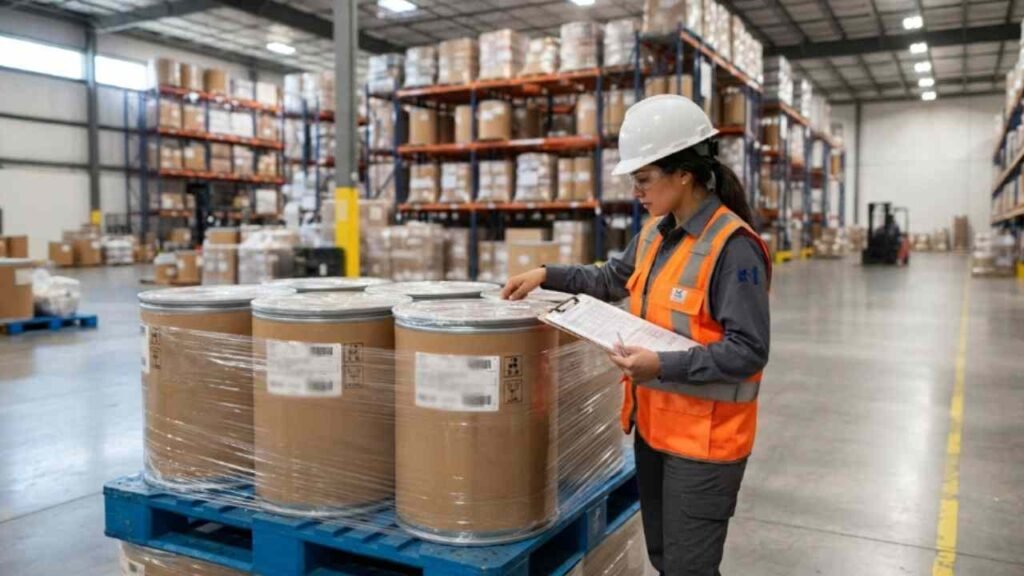
Partnering with unverified chemical suppliers without examining regulatory registrations, manufacturing experience, or IP patent compliance risks custom seizures, product recalls, and severe batch-to-batch quality failures.
Selecting a reliable Acesulfame-K supplier requires evaluating regulatory food safety certifications, comparing scale and process capabilities of major manufacturers, verifying years of synthetic experience to ensure purity, evaluating specialized bulk supply capacities, and establishing long-term strategic procurement partnerships.
Successfully manufacturing premium-grade sugar-free foods and beverages requires a disciplined approach to selecting raw material suppliers. Sourcing managers must examine physical processing capabilities and chemical compliance parameters to protect their formulations from active delivery disruptions and batch-to-batch taste inconsistencies. Sourcing partners like FINETECH simplify factory checks, verify production compliance, and secure competitive pricing directly in China to guarantee bulk deliveries. This guide explains how buyers can select a reliable Acesulfame-K supplier.
What Should Importers Consider When Choosing an Acesulfame-K Supplier?
Neglecting key international import codes and environmental safety registrations leads to immediate customs rejections at global ports. Thorough compliance vetting ensures a secure supply chain.
Importers must prioritize suppliers holding valid European REACH registrations, US FDA facility listings, USP/FCC monographic compliances, and robust food safety system certifications like FSSC 22000 or ISO 22000.

Dive Deeper into REACH Compliance, Food Safety Certifications, and IP Cleared Processes
When selecting an Acesulfame-K supplier, importers must look beyond basic unit cost and examine the manufacturer's regulatory compliance profile. The global distribution of high-intensity sweeteners1 is heavily regulated, requiring strict adherence to food safety and chemical import laws. For importers in the European Union, verifying that the manufacturer holds a valid, active REACH registration is non-negotiable. Without this registration, bulk chemical imports are subject to immediate custom seizures at the port of entry.
Additionally, the supplier must exhibit a robust food safety management framework, evidenced by globally recognized certifications such as FSSC 22000, ISO 90012, and GMP. These frameworks ensure the facility operates under strict hygienic controls, preventing physical or microbial contamination. Furthermore, buyers must verify the supplier's intellectual property (IP) status. Because process patent disputes frequently arise in this sector, importing material produced via an un-cleared chemical pathway can lead to severe legal liabilities and product recalls. Sourcing partners like FINETECH assist importers by pre-screening Chinese factories, verifying their regulatory registrations, auditing their IP compliance records, and securing all necessary safety documentation before contract signing.
| Quality Standard Type | Target Certification | Primary Regulatory Purpose | Sourcing Compliance Value |
|---|---|---|---|
| Chemical Registry | European REACH | Legal entry into EU territory | Prevents customs cargo holds |
| Food Hygiene | FSSC 22000 / HACCP | Eliminates physical contaminants | Guarantees consumer safety |
| Quality System | ISO 9001 | Standardizes batch repeatability | Ensures taste consistency |
| Pharmaceutical Monograph | USP / EP / FCC | Confirms chemical purity bounds | Ensures clean sweetener assay |
How Can Buyers Compare Different Acesulfame-K Manufacturers?
Evaluating suppliers solely on unit price ignoring physical granulation properties and scale causes manufacturing line failures. Structured benchmarking identifies the ideal manufacturing fit.
Buyers should compare manufacturers by evaluating their vertical integration with feedstock precursors, comparing granular versus powder mesh customization options, and analyzing their track record in global patent compliance.

Dive Deeper into Vertical Integration, Custom Sieve Calibrations, and Regional Cost Efficiency
Comparing the major Acesulfame-K manufacturers requires a balanced analysis of their physical processing capabilities, chemical supply chain structures, and scale of operations. The market features a few dominant players, each offering distinct advantages depending on the buyer's target application. Giant conglomerates like Anhui Jinhe Industrial represent the pinnacle of scale and cost efficiency. Their deep vertical integration with key upstream precursors—such as diketene3 and sulfur trioxide—shields them from localized feedstock supply shocks and sets the global price baseline, making them highly attractive for mass-market buyers.
On the other hand, medium-sized manufacturers like Suzhou Hope Technology or Vitasweet may offer greater flexibility in order volumes and personalized customer support. They are often more accommodating when buyers request custom sieve4 calibrations, such as micro-granular thirty-mesh crystals for tablet compressing or fine eighty-mesh powders for rapid liquid beverage dissolution. Buyers must also compare German-based Celanese Corporation, which remains the premium benchmark for European-origin pharmaceutical applications. Sourcing partners like FINETECH help buyers perform these manufacturer comparisons by matching their physical formulation requirements with the ideal supplier profile, securing stable and cost-optimized supply streams.
| Manufacturer Class | Representative Supplier | Primary Strategic Advantage | Target Application |
|---|---|---|---|
| Vertically Integrated Giant | Anhui Jinhe Industrial | Maximum scale, low-cost baseline | High-volume carbonated drinks |
| Flexible Medium Factory | Suzhou Hope Technology | Highly customizable mesh sizes | Custom dry-mix sports powders |
| Specialized Global Brand | Celanese (Germany) | Clean IP, high-purity Sunett | Premium pharmaceutical syrups |
| Custom Blender / Exporter | Certified Trading Partner | Combined multi-cargo shipping | Simplified consolidated purchasing |
Why Is Production Experience Important for Acesulfame-K Suppliers?
Sourcing from newly established chemical lines risks receiving batches with elevated trace organic impurities and inconsistent crystallization. Proven manufacturing expertise ensures chemical and physical stability.
Production experience is vital because mastering the dangerous sulfur trioxide cyclization process requires years of operational safety, directly determining the suppression of bitter acetoacetamide byproducts.

Dive Deeper into Sulfur Trioxide Cyclization, Impurity Control, and Crystalline Masteries
The industrial synthesis of Acesulfame-K is a highly complex and potentially volatile chemical process. It involves reacting raw sulfamic acid with acetoacetic acid derivatives, followed by a dangerous cyclization reaction using sulfur trioxide under strict temperature-controlled conditions. Because of the hazards associated with these chemical reactions, production experience is a vital quality differentiator for suppliers. Newly established chemical plants often struggle to maintain stable reaction yields, leading to batch-to-batch variations in purity and crystalline structure.
Experienced manufacturers have spent decades refining their synthesis pathways, mastering the precise kinetics required to suppress unwanted organic byproducts. Specifically, suppressing the formation of acetoacetamide and acetoacetamide-N-sulfonic acid—which cause persistent metallic and bitter off-notes in finished foods—requires sophisticated, multi-stage recrystallization controls. Furthermore, experienced suppliers possess superior crystallization technologies that ensure uniform crystal growth, reducing the risk of caking and clumping during sea transit and long-term warehousing. Sourcing partners like FINETECH safeguard buyers from the risks of unseasoned factories by auditing the historical performance and engineering experience of Chinese suppliers, ensuring that only highly refined, stable, and clean-tasting Acesulfame-K batches are procured.
| Experience Advantage | Chemical / Physical Action | Manufacturing Outcome | Quality Risk of Inexperience |
|---|---|---|---|
| Byproduct Suppression | Advanced crystallization separation | Zero metallic off-taste | Elevated acetoacetamide levels |
| Safety Engineering | Safe sulfur trioxide handling | Uninterrupted annual supply | Sudden factory safety shutdowns |
| Crystallization Mastery | Controlled cooling temperature | Free-flowing uniform crystals | Caked, rock-hard cargo drums |
| Assay Repeatability | High automated synthesis lines | Stable 99.5% active assay | Inconsistent sweetening power |
What Supply Capabilities Should Professional Acesulfame-K Suppliers Have?
Working with suppliers who lack complex logistics oversight and localized customs support results in delayed maritime shipments and hard-caked cargo. Complete supply capability safeguards delivery schedules.
Professional suppliers must possess rapid shipping capabilities, offer moisture-proof double-PE liner fiber drum packaging, calibrate custom particle mesh profiles, and provide comprehensive trace-purity documentation packages.
Dive Deeper into Pre-Allocation Logistics, Particle Mesh Sorting, and Complete Document Packages
A professional Acesulfame-K supplier must demonstrate supply capabilities that extend far beyond simply producing the chemical compound. First and foremost is the capability to guarantee supply volumes during raw material shortages. A professional supplier should maintain robust inventories of key precursors, such as diketene, enabling them to fulfill high-volume, multi-container contracts even when upstream supply chains are disrupted.
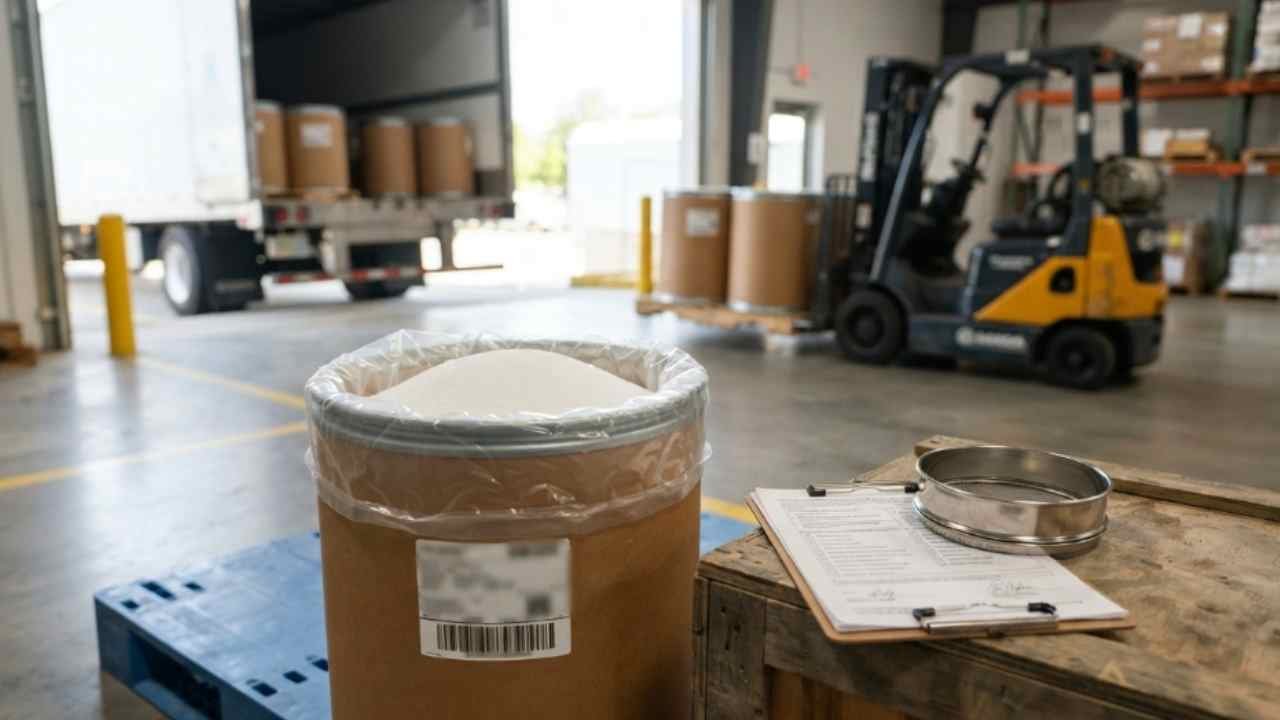
Additionally, logistics proficiency is critical. Because Acesulfame-K is crystalline and sensitive to moisture, suppliers must utilize heavy-duty, moisture-proof packaging—such as twenty-five-kilogram fiber drums5 lined with vacuum-sealed, double food-grade polyethylene bags—to prevent caking during transit. They must also have the ability to sort and supply specific mesh sizes to ensure compatibility with the buyer's automated manufacturing lines. Finally, a professional supplier must provide a complete, traceable document package for every batch, including detailed HPLC assays, particle size distribution reports, heavy metals analysis, Kosher, Halal, and non-GMO statements. Sourcing partners like FINETECH assist buyers by auditing these supply capabilities directly on the ground in China, verifying that the selected supplier can physically deliver clean-tasting, free-flowing, and fully documented raw materials.
| Professional Capability | Technical Parameter | Processing Advantage | Sourcing Checklist |
|---|---|---|---|
| Precursor Stocking | Bulk diketene inventory | Guarantees continuous supply | Audit raw material warehouses |
| Moisture Packaging | Double-PE vacuum heat-seal | Prevents hygroscopic caking | Inspect bag seal thickness |
| Mesh Customization | Sieve sorting (30 to 100) | Maximizes dissolution speed | Verify particle size analysis |
| Document Traceability | HPLC / Heavy metal reports | Accelerates custom clearance | Request batch-specific COA |
How Can Long-Term Cooperation Improve Acesulfame-K Procurement?
Relying on spot-market transactions during global supply bottlenecks leaves buyers vulnerable to extreme pricing spikes and sudden allocation cuts. Structured supplier relationships secure long-term raw material pipelines.
Long-term cooperation optimizes procurement by securing priority volume allocations during precursor shortages, stabilizing contract prices against seasonal hikes, and allowing custom physical crystallization adjustments.
Dive Deeper into Feedstock Shortage Protection, Contract Hedging, and Custom Crystallization
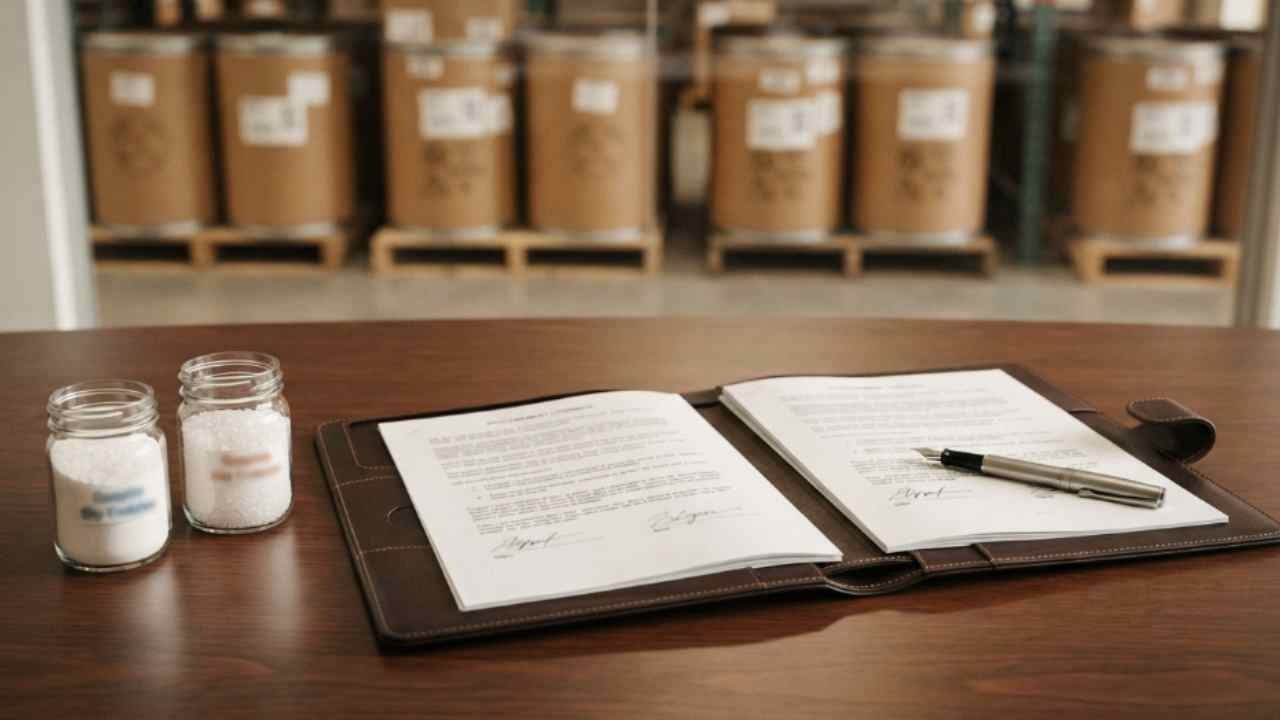
Transitioning from high-risk spot-market transactions to structured, long-term relationships with a trusted Acesulfame-K supplier offers significant operational and financial benefits for food and beverage brands. A primary advantage of long-term cooperation is protection against price volatility. The high-intensity sweetener market is highly seasonal, experiencing price spikes during summer factory maintenance shutdowns and winter environmental emission caps. Establishing a long-term contract allows buyers to hedge against these pricing waves, locking in stable, off-season rates throughout the year.
Additionally, when global feedstock shortages occur—such as bottlenecks in the caustic potash or diketene sectors—manufacturers prioritize their long-term strategic partners, ensuring consistent volume allocations while spot-market speculators face severe supply cuts. Over time, a deep partnership also allows the supplier’s engineering team to customize the crystallization process specifically for the buyer's production machinery, optimizing flowability and dissolving speeds. Sourcing partners like FINETECH facilitate these strategic alliances. By representing buyers directly in China, they manage annual contract negotiations, physically monitor factory inventories, and verify that long-term quality standards are consistently maintained, protecting the buyer's raw material pipeline from unexpected disruptions.
| Cooperative Benefit | Strategic Action | Financial Outcome | Operations Safeguard |
|---|---|---|---|
| Contract Price Hedging | Long-term annual agreement | Stable ingredient costing | Avoids summer peak spot surges |
| Priority Allocation | Strategic partner ranking | Guaranteed container supply | Bypasses raw precursor shortages |
| Custom Engineering | Tailored crystallization rate | Lower processing caking | Reduces factory downtime |
| Localized Auditing | Direct ground-partner checks | Zero administrative overhead | Guarantees FSSC-compliant cargo |
Conclusion
Selecting a reliable Acesulfame-K supplier requires verifying REACH and FDA compliance, comparing vertically integrated giants with flexible custom sieve mills, auditing sulfur trioxide cyclization experience to prevent bitter metallic impurities, requiring moisture-proof PE drum packaging, and securing long-term price-hedging contracts.
-
This official FDA page details safety re-evaluations, acceptable daily intakes (ADIs), and regulatory listings for high-intensity sweeteners in the food supply. ↩
-
This is the official ISO 9001:2015 standard documentation page detailing quality management requirements and certification guidelines. ↩
-
This Future Market Insights market research report covers the global diketene and diketene derivatives industry, outlining growth drivers and applications. ↩
-
This Retsch technical guide outlines test sieve standards, sieve shaker equipment, and screen analysis protocols for bulk ingredient quality control. ↩
-
This Mauser Packaging Solutions portal details industrial-strength fiber drum options, UN certification testing, and moisture-resistant liner structures. ↩