
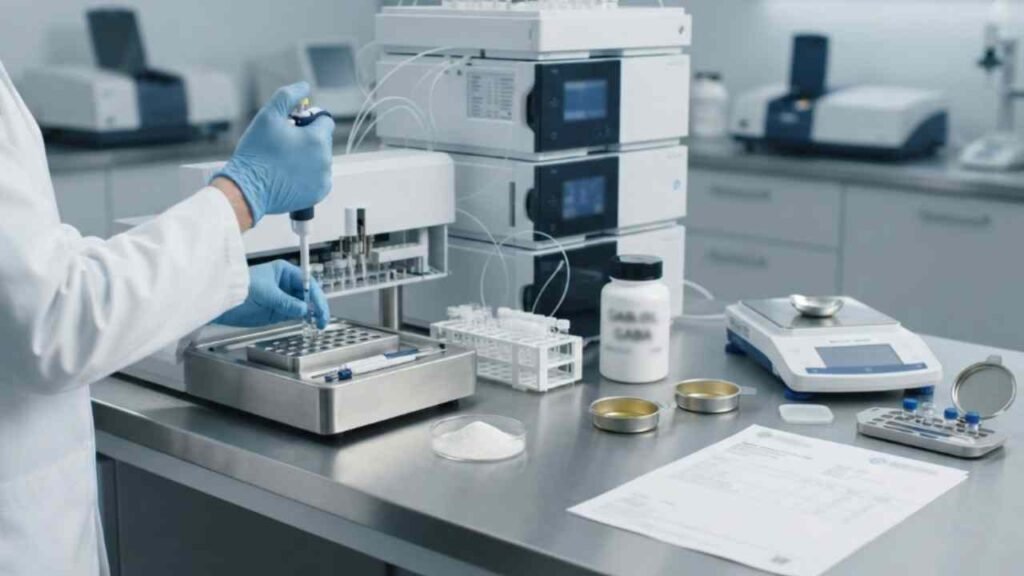
Purchasing unverified GABA leads to trace synthetic contamination, high residual monosodium glutamate levels, and failed regulatory audits for natural label claims. Unchecked quality compromises product efficacy.
Verifying GABA quality requires utilizing advanced HPLC testing, identifying natural fermentation versus synthetic pyrrolidone pathways, monitoring residual glutamic acid impurities, assessing moisture-driven storage caking, and demanding comprehensive ISO and non-GMO certification dossiers.
Successfully launching premium dietary supplements and functional foods requires a disciplined approach to checking raw amino acid quality parameters. Sourcing managers must examine precise chemical testing methods and manufacturing origins to protect their products from adulteration. Sourcing partners like FINETECH simplify factory checks, verify production compliance, and secure competitive pricing directly in China to guarantee bulk deliveries. This guide explains how buyers can verify the quality of Gamma-aminobutyric acid (GABA).
What Analytical Methods Are Used to Confirm Gamma-aminobutyric acid (GABA) Content?
Relying on basic chemical titrations can mask the presence of adulterated or low-purity amino compounds in your cargo. Vague verification methods threaten brand trust. Advanced analytical methods ensure accuracy.
GABA content is confirmed using High-Performance Liquid Chromatography with pre-column derivatization or ion chromatography, alongside Infrared Spectroscopy for molecular identification and paper chromatography for trace contamination detection.
Dive Deeper into Liquid Chromatography and Molecular Identification
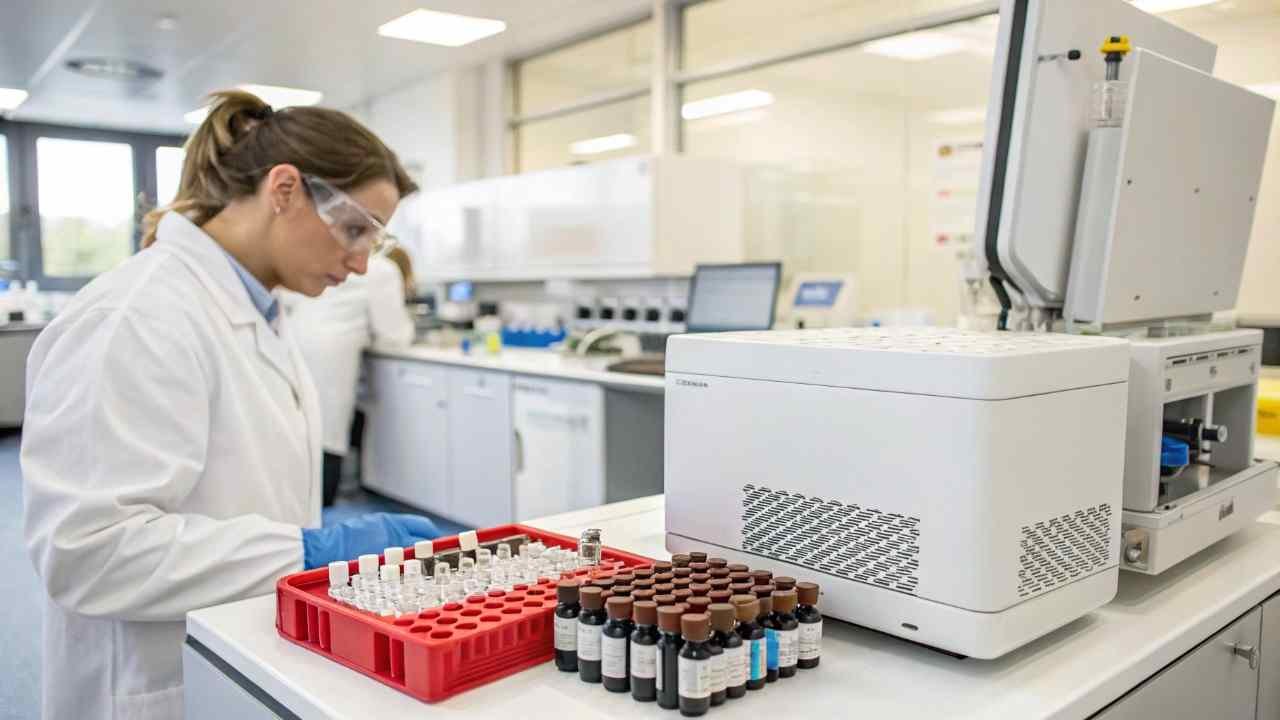
Confirming the exact potency of Gamma-aminobutyric acid (GABA) is essential for maintaining product efficacy and satisfying strict regulatory guidelines. Because GABA lacks a strong ultraviolet (UV) chromophore, basic spectrophotometric analysis is insufficient for accurate quantification. Instead, high-performance liquid chromatography (HPLC) combined with pre-column derivatization—often utilizing o-phthalaldehyde (OPA)1 or phenylisothiocyanate (PITC)—is the industry-standard analytical method. This derivatization reaction attaches a UV-absorbing tag to the GABA molecule, allowing precise ultraviolet detection and peak separation on a reversed-phase column. HPLC accurately isolates GABA from other structurally similar amino acids, such as L-glutamic acid, preventing false-positive results.
To complement HPLC, laboratories utilize Fourier Transform Infrared Spectroscopy (FTIR) to confirm the raw powder's molecular structure. The sample's infrared absorption spectrum is compared directly against a certified USP or reference standard to ensure positive identification. Additionally, paper chromatography or thin-layer chromatography (TLC) serves as an effective secondary screening tool to detect trace ninhydrin-positive impurities. Working with a dedicated local sourcing representative like FINETECH helps buyers verify that third-party testing laboratories utilize these precise analytical methods in China, ensuring that every shipped batch contains a minimum assay of ninety-nine percent pure GABA.
| Analytical Test | Target Parameter | Laboratory Equipment | Industry Standard Result |
|---|---|---|---|
| Active Assay | Percent chemical purity | HPLC with UV/CAD detector | Minimum 99.0% on dried basis |
| Molecular Identification | Molecular structure match | FTIR spectrophotometer | Matches reference standard |
| Trace Impurities | Ninhydrin-positive compounds | Paper chromatography / TLC | No visible secondary spots |
| Melting Point | Thermal purity threshold | Automatic melting point apparatus | Approximately 202°C |
How Does Fermentation Technology Influence Gamma-aminobutyric acid (GABA) Quality?
Sourcing GABA without distinguishing between natural fermentation and petrochemical synthesis can lead to sudden regulatory recalls and failed "natural food" label audits. Unvetted synthesis compromises integrity. Isotopic tracking solves compliance.
Fermentation technology dictates GABA quality because natural microbial conversion using lactic acid bacteria prevents toxic chemical synthesis residues and allows brands to claim organic, clean-label compliance.
Dive Deeper into Microbial Conversion and Natural Isotopic Verification
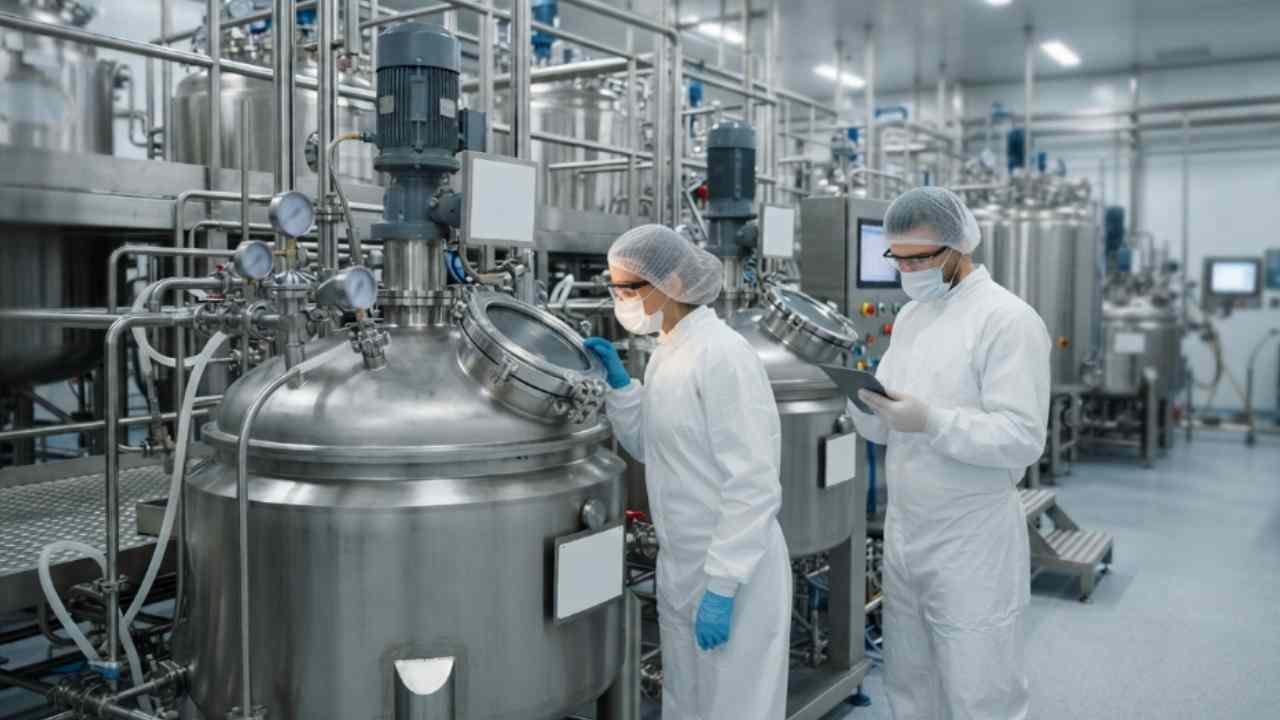
The production technology used to manufacture Gamma-aminobutyric acid (GABA) directly determines its purity, regulatory categorization, and market value. Natural GABA is produced via microbial fermentation, where lactic acid bacteria such as Lactobacillus hilgardii or Lactobacillus plantarum convert a starting substrate of L-glutamic acid (or monosodium glutamate) into GABA using the enzyme glutamate decarboxylase (GAD)2. This fermentation process is highly favored in the food and beverage industry because it avoids the toxic chemical reagents and organic solvents utilized in synthetic chemical production. Natural fermentation yields a clean-label product that is highly bioavailable and easily accepted by health-conscious consumers.
Conversely, synthetic GABA is produced through chemical synthesis using 2-pyrrolidone and other petrochemical precursors. While synthetic routes are often less expensive, they can leave trace amounts of industrial raw materials in the finished product. Many regions, including Japan and various European countries, restrict the use of synthetic GABA in food applications. To verify the origin of GABA, buyers must utilize Carbon-14 isotopic analysis3, which distinguishes between modern, bio-based carbon from natural fermentation and fossil-based carbon from petrochemical synthesis. Sourcing partners like FINETECH assist international buyers by auditing Chinese fermentation plants to confirm biological compliance, protecting brands from mislabeled synthetic materials.
| Production Aspect | Natural Microbial Fermentation | Synthetic Chemical Route | Sourcing & Compliance Impact |
|---|---|---|---|
| Starting Materials | Corn starch / Monosodium glutamate | 2-Pyrrolidone / Petrochemicals | Determines clean-label status |
| Enzyme Catalyst | Glutamate decarboxylase | Industrial chemical reagents | Fermentation avoids toxic catalysts |
| Regulatory Standing | Approved for global natural foods | Often restricted in food products | Vital for market entry compliance |
| Isotopic Profile | Modern bio-carbon signature | Fossil-based carbon signature | Verified via Carbon-14 testing |
What Impurities Should Buyers Monitor in Gamma-aminobutyric acid (GABA)?
Ignoring residual monosodium glutamate or trace solvent impurities in imported amino acids causes bad taste profiles and severe regulatory compliance failures. Unchecked toxins trigger cargo rejections.
Buyers must monitor critical impurities in GABA, including residual monosodium glutamate or glutamic acid, heavy metals, microbial pathogens, and residual solvents used during crystallization processes.

Dive Deeper into Residual Glutamic Acid and Heavy Metal Profiles
To ensure consumer safety and maintain consistent physical properties, buyers must establish strict thresholds for potential chemical and biological impurities within GABA shipments. The most common chemical impurity is residual L-glutamic acid (or monosodium glutamate), which represents the unreacted starting material from the fermentation process. High levels of residual glutamic acid indicate incomplete microbial conversion, which can alter the physical behavior of the powder and cause adverse reactions in sensitive consumers. Ideally, residual glutamic acid should be kept below 0.5% or completely undetected on the certificate of analysis.
Additionally, because fermentation requires massive agricultural inputs, heavy metal contamination is a critical risk factor. Buyers must monitor arsenic, lead, cadmium, and mercury levels using Inductively Coupled Plasma Mass Spectrometry (ICP-MS), ensuring total heavy metals remain below 10 ppm, with lead specifically below 1 ppm. Sourcing managers must also audit the microbial profile of the powder, enforcing strict limits on total plate count (under 1000 CFU/g), yeast and mold (under 100 CFU/g), and requiring zero tolerance for pathogens like E. coli and Salmonella. Sourcing partners like FINETECH manage these safety risks by arranging independent laboratory screenings before cargo leaves the factory, guaranteeing that the raw material meets all international import standards.
| Impurity Category | Specific Target Parameter | Safety Standard Limit | Analytical Equipment |
|---|---|---|---|
| Starting Residue | Free L-Glutamic Acid | Maximum 0.5% (or ND) | HPLC analysis |
| Heavy Metals | Lead, Arsenic, Cadmium | Total under 10 ppm | ICP-MS spectrometer |
| Microbiological | Total Plate Count | Under 1000 CFU/g | Agar plate culture |
| Pathogens | E. coli & Salmonella | Negative in 25 grams | PCR / Selective media |
How Can Buyers Evaluate the Stability of Gamma-aminobutyric acid (GABA) During Storage?
Storing GABA in unvetted packaging exposes the raw compound to moisture absorption, leading to severe clumping and biochemical browning reactions. Poor storage monitoring wastes inventory.
GABA stability is evaluated by measuring moisture gain through loss on drying, monitoring color changes from Maillard browning reactions, and verifying pH stability under accelerated temperature conditions.

Dive Deeper into Hygroscopicity and Thermal Degradation Mechanisms
Gamma-aminobutyric acid (GABA) is a crystalline white powder that exhibits a high degree of stability under dry, cool storage conditions, but it is physically sensitive to moisture and heat. GABA is highly hygroscopic, meaning it readily absorbs water vapor from the surrounding atmosphere. When exposed to humidity during storage or transport, the absorbed moisture causes the powder particles to dissolve slightly at their touchpoints, leading to severe clumping, caking4, and hardening. This physical degradation makes the powder difficult to handle, blend, or dissolve in finished beverage lines.
To evaluate storage stability, manufacturers conduct accelerated stability testing5, exposing the material to elevated temperatures (such as forty degrees Celsius) and relative humidity (seventy-five percent) over several months. In addition to physical clumping, trace amino acids or residual sugars from the fermentation medium can undergo Maillard browning reactions under high-heat storage, causing the pure white powder to turn off-white or light yellow. This color change indicates chemical degradation and negatively affects the appearance of the finished supplement. Sourcing partners like FINETECH assist buyers by evaluating the manufacturer’s packaging configurations—such as requiring double-layered food-grade polyethylene bags with food-grade desiccants—to protect the material from ambient moisture during ocean transport and warehousing.
| Stability Parameter | Degradation Trigger | Physical / Chemical Symptom | Preventive Measure |
|---|---|---|---|
| Moisture Absorption | Ambient relative humidity | Hard clumping and caking | Double PE lining with desiccants |
| Thermal Discoloration | Elevated storage temperature | Maillard browning (off-white) | Store in climate-controlled spaces |
| pH Drift | Trace water contamination | Shifts acid-base balance | Hermetically sealed containers |
| Chemical Assay Loss | Long-term heat exposure | Decrease in GABA potency | Track shelf-life limits closely |
What Quality Documents Should Buyers Request Before Purchasing Gamma-aminobutyric acid (GABA)?
Procuring bulk nutritional compounds without acquiring valid safety dossiers leaves your logistics chains vulnerable to customs holds and regulatory fines. Missing paperwork halts operations. Verified documentation secures imports.
Buyers must request detailed quality documents including a batch-specific Certificate of Analysis, FSSC 22000 food safety certificates, non-GMO statements, and Carbon-14 isotopic analysis reports.

Dive Deeper into Certificates of Analysis and Carbon-14 Isotopic Audits
Securing a reliable, regulatory-compliant supply of Gamma-aminobutyric acid (GABA) requires collecting and verifying a robust set of quality documents from the manufacturer before placing bulk orders. The baseline document is a batch-specific Certificate of Analysis (COA), which must detail the exact HPLC assay percentage (ideally above 99.0%), specific melting point (around 202 degrees Celsius), loss on drying (under 0.5%), and residual heavy metal levels. However, a COA alone is insufficient to guarantee long-term supply safety. Buyers must demand valid food safety management certificates, such as ISO 22000 or FSSC 22000, which prove the facility operates under strict HACCP guidelines.
For premium brands targeting the natural health market, requesting a Carbon-14 isotopic analysis report is essential to prove the GABA is 100% bio-based and produced via natural fermentation rather than synthetic processes. Furthermore, non-GMO statements and allergen-free declarations are required to satisfy clean-label consumer expectations. Sourcing partners like FINETECH streamline this document verification process. They directly audit manufacturing facilities in China, verify the validity of third-party certificates, and cross-reference batch numbers on analytical reports with actual factory logs, protecting buyers from fraudulent documents and ensuring smooth custom clearances.
| Document Type | Crucial Parameter Vetted | Technical Target Standard | Regulatory Significance |
|---|---|---|---|
| Certificate of Analysis | Assay, moisture, heavy metals | HPLC >99.0%, Lead <1.0 ppm | Establishes raw batch quality |
| FSSC 22000 / ISO | Hygiene manufacturing protocols | HACCP compliance | Ensures general food-safety |
| Carbon-14 Isotope Report | Biological vs. fossil carbon | 100% modern bio-carbon yield | Verifies natural fermentation claims |
| Non-GMO Declaration | Agricultural starting source | Certified corn starch origin | Satisfies clean-label claims |
Conclusion
Verifying GABA quality requires confirming HPLC assay potency, verifying natural fermentation via Carbon-14 isotopic analysis, tracking heavy metal and residual glutamic acid impurities, assessing moisture packaging, and collecting third-party compliance certificates.
-
This links to "Implementation of HPLC Analysis for γ-Aminobutyric Acid (GABA) in Fermented Food Matrices" in Food Analytical Methods, which outlines a pre-column derivatization method using o-phthalaldehyde (OPA) for the precise separation and detection of GABA in complex food mixtures. ↩
-
This links to "Glutamate Decarboxylase from Lactic Acid Bacteria—A Key Enzyme in GABA Synthesis" in Microorganisms, a comprehensive review detailing GAD enzymatic properties, biosynthesis pathways, and industrial fermentation parameters. ↩
-
This links to "Identifying Fraudulent Natural Products: A Perspective on the Application of Carbon-14 Analysis" in the Journal of Agricultural and Food Chemistry, illustrating the use of Accelerator Mass Spectrometry (AMS) Carbon-14 testing to identify petrochemical-derived synthetic adulterants in bio-based products. ↩
-
This links to "A review of bulk powder caking" in Powder Technology, which explores the complex mechanical and environmental mechanisms of moisture sorption, liquid bridging, and consolidation that cause bulk powder caking. ↩
-
This links to "Accelerated Stability Testing in Food Supplements Underestimates Shelf Life Prediction of Resveratrol with Super-Arrhenius Behavior" in MDPI Symmetry, validating temperature and humidity-based accelerated stability testing guidelines for predicting the quality and shelf-life of dietary supplements. ↩