
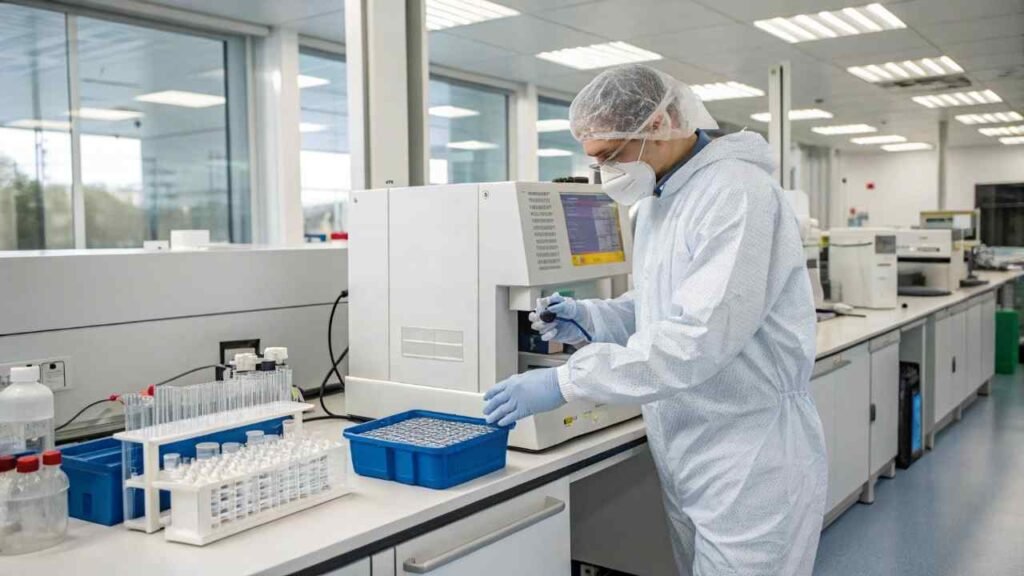
Sourcing unverified bulk taurine leads to heavy metal residues, ammonium contamination, and severe processing blocks during energy drink canning. Unchecked quality compromises production safety. Strict parameters protect operations.
Verifying taurine quality requires examining pharmacopoeia compliance, testing purity using high-performance liquid chromatography and formal titration, checking critical chloride and ammonium limits, calibrating crystal particle size to prevent caking, and demanding certified food safety documentation.
Successfully manufacturing functional beverages and dietary supplements requires a disciplined approach to checking raw amino acid quality parameters. Sourcing managers must examine precise chemical testing methods and physical powder behaviors to protect their formulations from processing failures and safety defects. Sourcing partners like FINETECH simplify factory checks, verify production compliance, and secure competitive pricing directly in China to guarantee bulk deliveries. This guide explains how buyers can verify the quality of taurine.
Which Analytical Methods Are Used to Test Taurine Purity?
Utilizing unverified chemical titrations can mask the presence of trace synthesis byproducts or salt impurities in your cargo. Subjective testing compromises safety. Precise chromatographic validation ensures accuracy.
Taurine purity is verified using High-Performance Liquid Chromatography or Ion Chromatography for assay, Infrared Spectroscopy for molecular identification, and formal acid-base titration to measure amino-sulfonic acid content.
Dive Deeper into Ion Chromatography, Infrared Fingerprints, and Formal Titration
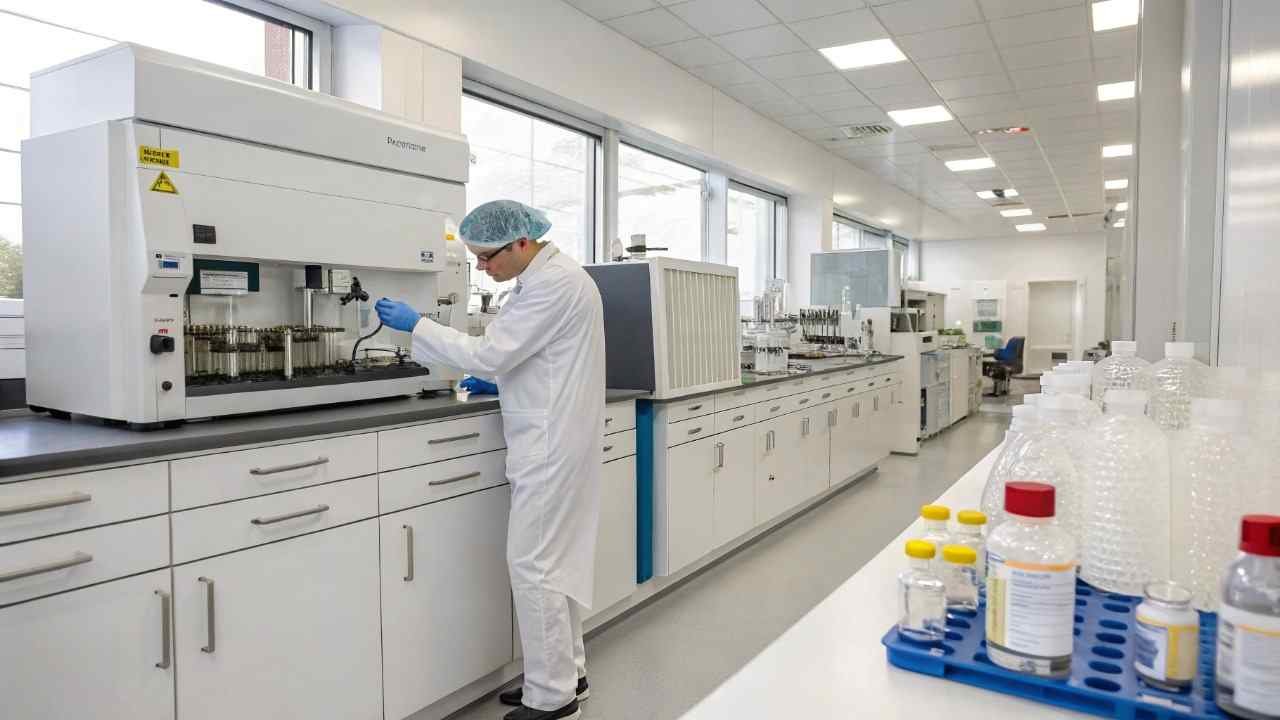
To verify the chemical purity and composition of bulk taurine (2-aminoethanesulfonic acid), analytical laboratories utilize a combination of chromatographic, spectroscopic, and titrimetric methods. Because taurine lacks a strong ultraviolet (UV) chromophore, standard HPLC-UV analysis requires pre-column derivatization to attach a light-absorbing tag to the molecule. Alternatively, modern testing facilities utilize Ion Chromatography (IC) with Refractive Index (RI) or Charged Aerosol Detection (CAD)1 to isolate and measure the active taurine molecule directly, preventing false-positive assays caused by structurally similar amino acid impurities.
To confirm the positive molecular identity of the white crystalline powder, Fourier Transform Infrared Spectroscopy (FTIR) is employed, matching the sample's infrared spectrum against a certified USP or EP reference standard. Quantifying the active zwitterionic sulfonic acid content is often executed via formal acid-base titration. In this method, formaldehyde is added to the aqueous taurine solution to neutralize the basic amino group, allowing direct titration of the sulfonic acid group with standard sodium hydroxide. Sourcing partners like FINETECH ensure that raw material shipments undergo these rigorous laboratory verifications in China, reviewing raw chromatograms and titration data to guarantee that only high-purity, compliant lots are approved for export.
| Analytical Test | Target Parameter | Laboratory Equipment | Industry Standard Result |
|---|---|---|---|
| Purity Assay | Percent active taurine | HPLC / Ion Chromatography | 98.5% to 101.5% on dried basis |
| Molecular ID | Infrared molecular matching | FTIR spectrophotometer | Matches USP reference curve |
| Assay Quantification | Amino-sulfonic acid content | Formal acid-base titration | Meets standard titration limits |
| Heavy Metals | Lead, arsenic, mercury | ICP-MS mass spectrometer | Total heavy metals below 10 ppm |
What Critical Specifications Should Buyers Review Before Purchasing Taurine?
Procuring bulk taurine without verifying strict sulfate, chloride, and ammonium thresholds invites severe customs clearance delays and product recalls. Loose boundaries threaten formulation integrity.
Buyers must review critical specifications before purchasing, including an active assay of 98.5% to 101.5%, loss on drying below 0.2%, residue on ignition below 0.1%, and ammonium limits.
Dive Deeper into Ammonium Byproducts, Sulfate Residues, and Chloride Limits
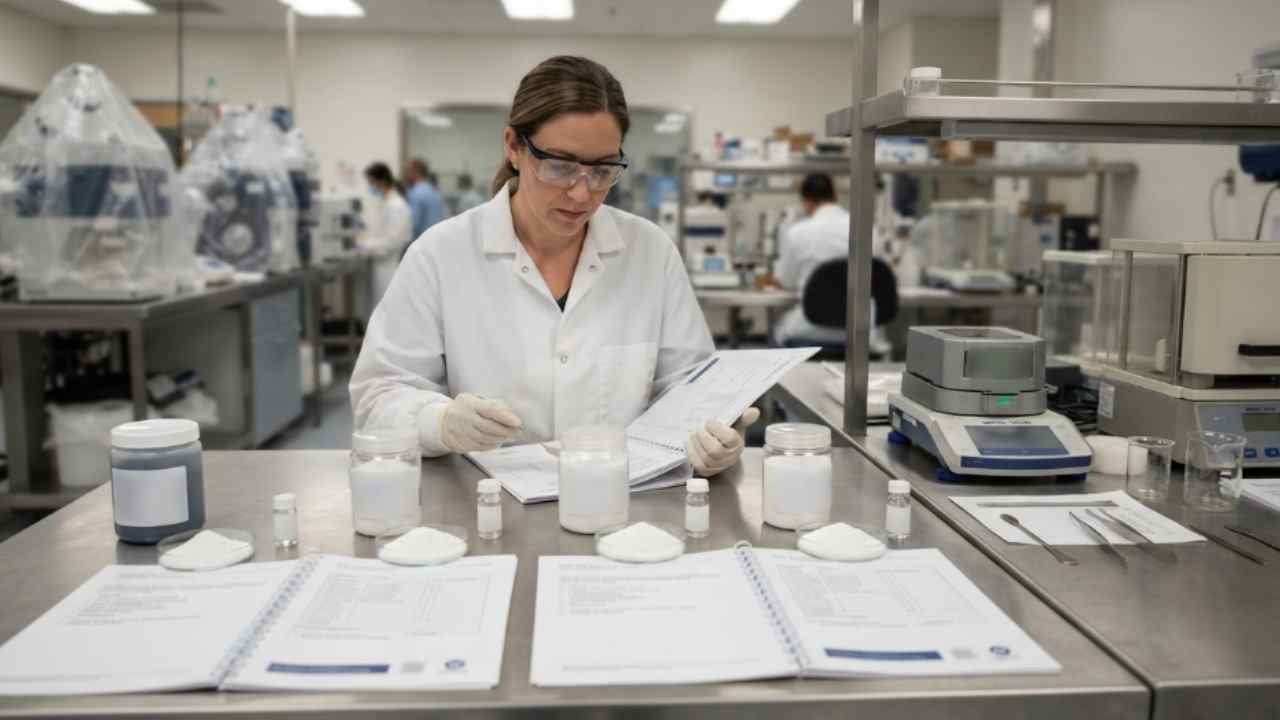
Before finalizing a bulk taurine purchase, procurement managers must conduct a detailed evaluation of the technical specifications detailed on the manufacturer’s Certificate of Analysis (COA). Standard pharmacopoeia monographs, such as the United States Pharmacopeia (USP)2, European Pharmacopoeia (EP), and Japanese Pharmacopoeia (JP), mandate an active taurine assay of 98.5% to 101.5% on a dried basis. However, verifying the limits of processing impurities is equally critical for product safety. Because taurine is commercially synthesized using monoethanolamine or ethylene oxide alongside ammonia and sodium bisulfite, buyers must monitor residual ammonium ($NH_4^+$) and sulfate ($SO_4^{2-}$) levels.
Under USP guidelines, ammonium residues must remain strictly below 0.02% to prevent chemical off-odors and bitter taste profiles in finished beverages. Sulfate and chloride levels must also be tightly controlled, typically below 0.02% and 0.011% respectively, as elevated mineral salts indicate incomplete crystallization or purification. Loss on drying (moisture) must remain below 0.2%, and residue on ignition (sulfated ash) must not exceed 0.1% to prevent raw material caking. Sourcing partners like FINETECH simplify this evaluation by comparing COA data against global pharmacopoeia standards, ensuring that all technical limits are fully met before ordering.
| Quality Parameter | USP Standard Limit | Technical Significance | Sourcing Importance |
|---|---|---|---|
| Active Assay | 98.5% to 101.5% | Overall chemical potency | Prevents under-dosed supplement lines |
| Loss on Drying | Maximum 0.2% | Measures free moisture content | Prevents physical clumping and caking |
| Ammonium ($NH_4^+$) | Maximum 0.02% | Limits synthesis residual byproduct | Prevents chemical off-odors in drinks |
| Residue on Ignition | Maximum 0.1% | Measures inorganic impurities | Crucial for overall chemical purity |
How Can Buyers Identify High-Quality Taurine from Different Suppliers?
Sourcing from unvetted biochemical brokers increases the risk of receiving batches contaminated with toxic heavy metals or residual solvents. Unvetted suppliers jeopardize consumer health. Verified origins secure safety.
Buyers can identify high-quality taurine by qualifying vertically integrated manufacturers that utilize automated ethylene oxide synthesis, verifying trace heavy metal screenings, and conducting independent pre-shipment composite sampling.

Dive Deeper into Ethylene Oxide Synthesis, Heavy Metals, and Sourcing Audits
Identifying high-quality taurine across a competitive global market requires moving beyond basic pricing comparisons to evaluate the manufacturing technology and quality control systems of different suppliers. The vast majority of the world's taurine is produced in China via chemical synthesis3. The most modern and cost-efficient method is the ethylene oxide synthesis pathway, which reacts ethylene oxide with sodium bisulfite to yield sodium isethionate, followed by ammonolysis to produce taurine. This automated, continuous synthesis route delivers a highly consistent crystalline structure and minimizes human contamination.
To identify high-quality manufacturers, buyers should seek vertically integrated producers that manufacture their own raw chemical precursors, which protects the supply chain from raw material shortages. Furthermore, because chemical synthesis utilizes trace heavy metal catalysts, buyers must verify that lead, arsenic, and mercury levels are checked via Inductively Coupled Plasma Mass Spectrometry (ICP-MS), keeping total heavy metals below 10 ppm. Sourcing partners like FINETECH provide essential support on the ground in China. They physically audit manufacturing plants, inspect the automation level of chemical lines, review batch-to-batch consistency records, and coordinate independent pre-shipment composite sampling, protecting international buyers from low-grade or contaminated chemical batches.
| Supplier Metric | High-Quality Standard | Sourcing Risk Vetted | Sourcing Audit Step |
|---|---|---|---|
| Synthesis Route | Automated ethylene oxide | Minimizes human contamination | Verify factory chemical logs |
| Integration | Vertically integrated | Protects from material shortages | Pre-screen feedstock plants |
| Heavy Metals | Lead, Arsenic < 1.0 ppm | Ensures strict consumer safety | Request independent ICP-MS test |
| Traceability | Batch-to-batch tracking | Prevents bulk batch mixing | Match drum codes with shipping logs |
Why Is Crystal Appearance and Particle Size Important for Taurine?
Blending fine active powders without adjusting for humidity causes severe particle clumping and packaging line jams. Unoptimized particle sizes halt processing. Calibrated crystal mesh sizes ensure flowability.
Crystal appearance and particle size are important because standard forty-to-eighty mesh crystals prevent caking and ensure high flowability in canning, whereas fine powders dissolve rapidly but absorb moisture easily.
Dive Deeper into Caking Mitigation, Canning Flowability, and Dissolution Kinetics
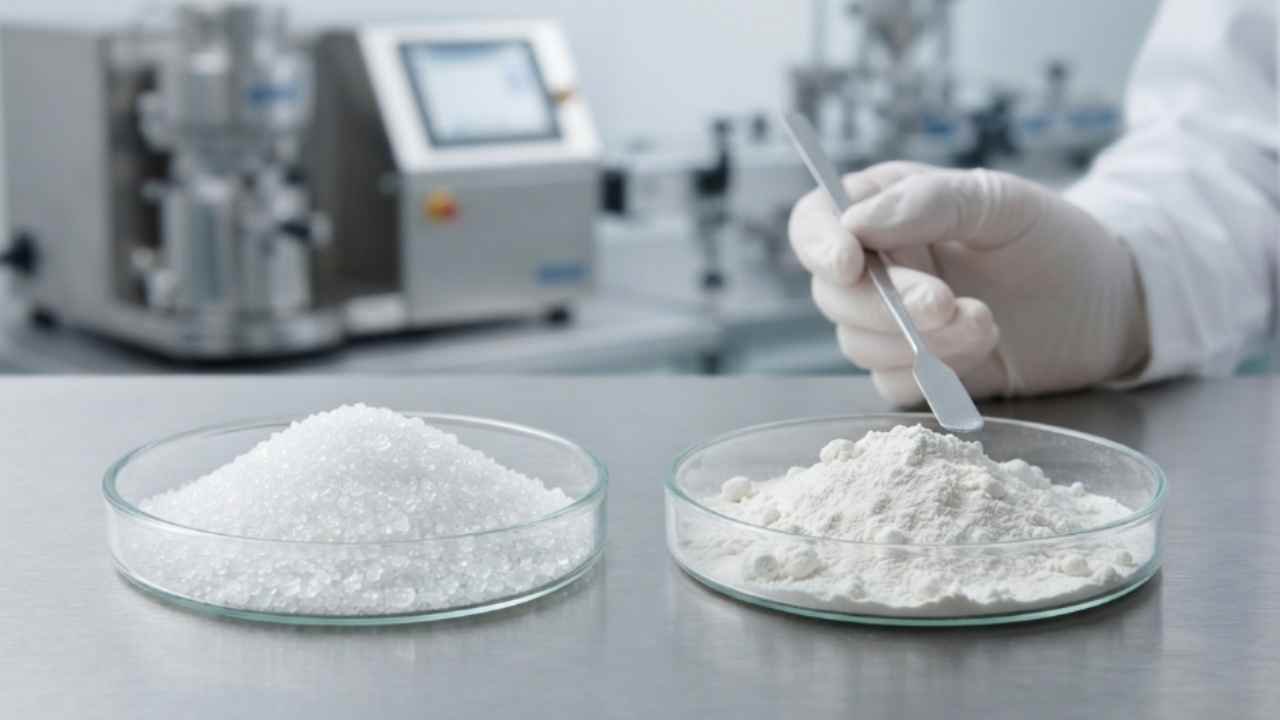
The physical appearance and particle size distribution of taurine are critical parameters that directly influence its performance during food processing, dry blending, and high-speed packaging. Commercially, taurine is supplied in two primary physical formats: standard crystalline needles (typically forty to eighty mesh) and micro-milled fine powder (eighty to one hundred twenty mesh). For high-volume liquid beverage applications, such as the manufacturing of energy drinks or functional waters, the standard forty-to-eighty mesh crystal size is highly preferred.
Standard crystal needles exhibit a high bulk density and an excellent flowability coefficient. This free-flowing profile is essential for high-speed automated canning lines, as it prevents the powder from clumping or jamming in the feeding hoppers, ensuring accurate dosing. Additionally, coarser crystals generate minimal dust in the manufacturing facility. However, standard crystals dissolve more slowly in cold water compared to fine powder. For dry-mix pre-workout powders, infant formulas, or pet food kibble, manufacturers utilize fine micro-milled powder to support rapid dissolution. However, fine powder is highly hygroscopic and prone to caking during transport and warehousing. Sourcing partners like FINETECH manage these processing requirements by coordinating sieve and physical property analyses at Chinese factories, ensuring the supplied particle size matches the buyer's machinery.
| Mesh Size Class | Physical Particle Size | Processing Advantage | Manufacturing Disadvantage |
|---|---|---|---|
| Standard Crystals | 40 to 80 mesh (larger) | High flowability, low static | Slower cold-water dissolution |
| Medium Granules | 60 to 80 mesh | Balanced flow and solubility | Moderate dust in high-speed lines |
| Micro-milled Powder | 80 to 120 mesh (fine) | Rapid dissolution speed | High static charge, clumping risk |
| Ultra-fine Powder | Above 120 mesh (very fine) | Dissolves almost instantly | Severe dusting, caking risk |
Which Quality Documents Should Suppliers Provide for Taurine?
Sourcing bulk amino acids without acquiring verified safety dossiers leaves your logistics pipeline vulnerable to customs holds and regulatory fines. Missing paperwork halts operations. Verified documents protect imports.
Suppliers must provide comprehensive quality documents including a batch-specific COA matching USP/EP monographs, FSSC 22000 food safety certifications, non-GMO statements, and valid Kosher and Halal dietary certificates.

Dive Deeper into ISO 22000, FSSC 22000, Kosher, and Halal Certifications
Securing a reliable, compliant supply of bulk taurine requires collecting and verifying a robust set of quality and safety documents from the manufacturer before placing commercial orders. A standard Certificate of Analysis (COA) is the baseline requirement; however, because taurine is widely formulated into global infant formulas, pet foods, and functional beverages, factories must hold active third-party food safety management certifications. These include FSSC 220004 or ISO 22000, which prove that the facility operates under strict Hazard Analysis Critical Control Point (HACCP) hygiene guidelines.
For products targeting global retail markets, suppliers must provide valid non-GMO statements and allergen-free declarations to satisfy clean-label standards. Furthermore, religious dietary compliance requires active, annually audited Kosher and Halal certificates from recognized certification bodies. For European importers, confirming that the manufacturer holds a valid REACH registration5 is mandatory to avoid customs holds at destination ports. Sourcing partners like FINETECH simplify this document verification process. Based in China, they directly audit facilities, verify the validity of third-party certificates, and cross-reference analytical test reports with actual factory batch records, protecting international buyers from regulatory non-compliance and ensuring smooth custom clearances.
| Document Type | Crucial Parameter Vetted | Technical Standard | Regulatory Value |
|---|---|---|---|
| Certificate of Analysis | Assay, moisture, heavy metals | Meets USP / EP monograph | Confirms physical cargo quality |
| FSSC 22000 / ISO | Food safety & hygiene control | HACCP standard integration | Ensures safe food manufacturing |
| REACH Registration | Chemical import registration | Valid European registration | Required for European customs |
| Dietary Certs | Kosher & Halal compliance | Annual plant inspections | Allows access to global markets |
Conclusion
Verifying taurine quality requires confirming active assays and specific identifications via HPLC and formal titration, reviewing strict ammonium and moisture limits, selecting standard forty-to-eighty mesh crystals to ensure flowability, and collecting certified FSSC 22000 and Kosher documentation.
-
This MDPI review details the development and analytical application of Charged Aerosol Detection (CAD) as an orthogonal, universal detector for quantifying non-chromophoric food components and amino acids. ↩
-
This United States Pharmacopeia portal provides access to monograph resources, quality metrics, and standard guidelines for dietary supplement ingredients. ↩
-
This News-Medical article outlines the history, industrial approaches, and steps involved in the commercial chemical synthesis of taurine. ↩
-
This official FSSC website outlines the food safety system scheme, requirements, and compliance standards for raw material manufacturers and processors. ↩
-
This official European Union business portal explains REACH registration steps, tonnage limits, and compliance responsibilities for chemical importers and manufacturers in the EEA region. ↩