

Sourcing raw high-intensity sweeteners without resolving sensory aftertastes, crystallization differences, and blending ratios leads to flat profiles, metallic notes, and uneven distribution in production batches.
Optimizing Acesulfame-K blending applications requires understanding sweetening synergies with aspartame and sucralose, balancing temporal sweetness profiles, implementing sensory masking strategies to eliminate metallic aftertastes, and calibrating physical mesh sizes for manufacturing processing stability.
Successfully manufacturing premium-grade sugar-free foods and beverages requires a disciplined approach to evaluating raw material properties. Sourcing managers must analyze physical dissolving profiles and chemical stability parameters to protect their formulations from active potency losses and batch-to-batch taste inconsistencies. Sourcing partners like FINETECH simplify factory checks, verify production compliance, and secure competitive pricing directly in China to guarantee bulk deliveries. This guide explains how food manufacturers can optimize Acesulfame-K blending applications.
Why Is Acesulfame-K Often Combined with Other Sweeteners?
Formulating sugar-free foods with isolated high-intensity sweeteners results in a flat, artificial taste. Combining multiple sweeteners unlocks molecular synergy and lowers raw material expenses.
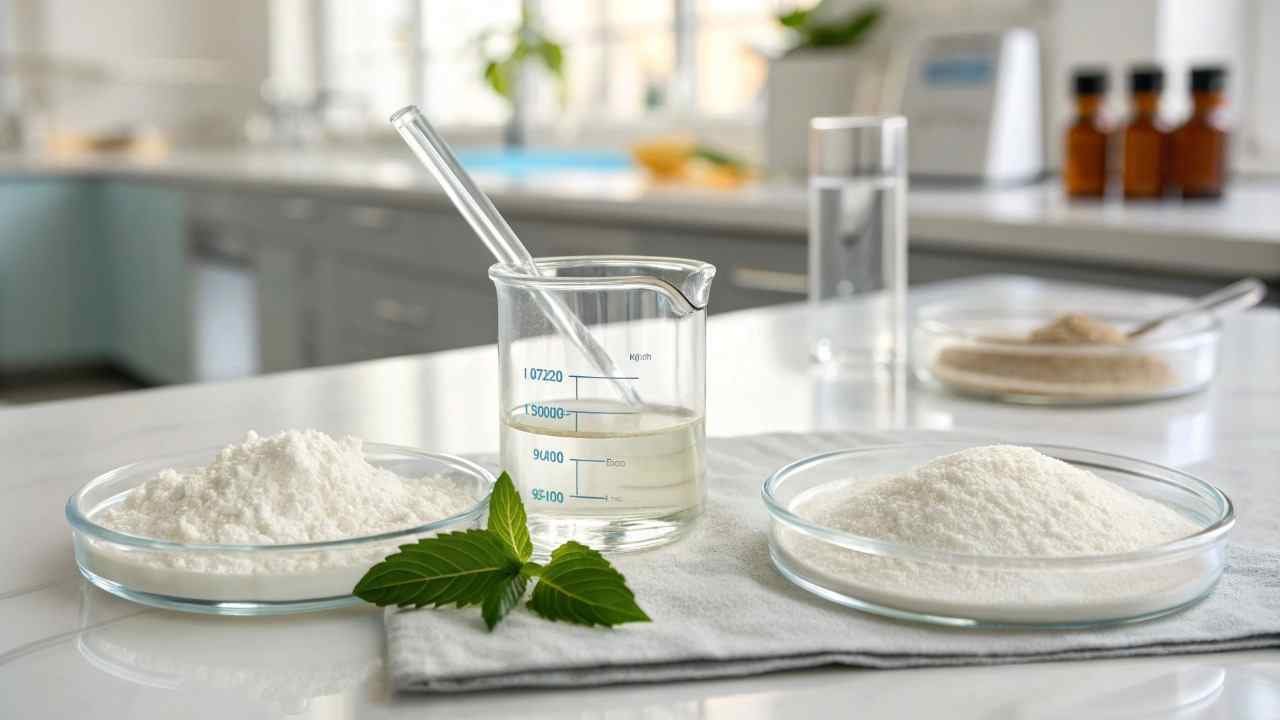
Acesulfame-K is combined with other sweeteners to exploit sweetening synergy, which exponentially boosts the overall sweetness intensity, reduces raw material costs, and masks individual metallic off-notes.
Dive Deeper into Sweetening Synergy, Cost Reduction, and Off-Note Masking
In the field of sugar reduction and non-nutritive sweetener development, formulating a product with a single sweetening agent often yields a flat, uninspiring flavor profile with noticeable sensory drawbacks. To overcome this limitation, food scientists rely on blending multiple high-intensity sweeteners1, a process where Acesulfame-K (Ace-K) plays a vital role. The primary scientific driver behind combining Acesulfame-K with other sweeteners is the phenomenon of sweetening synergy2. When Ace-K is blended with sweeteners like aspartame or sucralose, the resulting sweetness of the mixture is significantly higher than the mathematical sum of the individual ingredients.
This synergistic effect provides a substantial commercial advantage. By utilizing a synergistic blend, food manufacturers can drastically reduce the total weight of sweeteners required in the formulation. This reduction significantly lowers raw material costs while keeping the desired sweetness level intact. Additionally, combining multiple sweeteners helps mask the individual off-notes of each compound. While high concentrations of Acesulfame-K can exhibit a metallic aftertaste, blending it with aspartame effectively neutralizes these notes, creating a clean, balanced sweet profile. Sourcing partners like FINETECH support food manufacturers by securing high-purity, USP-compliant sweetening ingredients directly from verified Chinese suppliers, ensuring consistent quality for synergistic blending applications.
| Sweetener Parameter | Isolated Ingredient Risk | Synergistic Blend Benefit | Sourcing Quality Requirement |
|---|---|---|---|
| Sweetening Intensity | Linear concentration curve | Exponential sweetness curve | High active substance assay |
| Raw Material Weight | Requires high-weight dosages | Drastically reduces weight needs | Loss on drying below 1.0% |
| Sensory Flavor Profile | Sharp metallic aftertaste | Rounded, clean sweetness | Low organic byproducts |
| Formula Formulation | Hollow initial sweetness | Balanced temporal sugar curve | Verified sieve mesh size |
How Does Acesulfame-K Improve Sweetness Balance in Formulations?
Managing the delayed sweetness onset of alternative ingredients leaves a sensory gap at the start of consumption. Infusing fast-acting sweet compounds rounds out the temporal taste experience.
Acesulfame-K balances sweetness by delivering an immediate, upfront sensory onset that mirrors sucrose, bridging the flavor gap before delayed-onset sweeteners like sucralose or stevia activate.

Dive Deeper into Temporal Sweetness Curves, Sucrose Replication, and Taste Onset
Replicating the sensory experience of natural sugar (sucrose3) requires careful management of the temporal sweetness curve. When a consumer eats or drinks a sugar-sweetened product, the sweetness is perceived almost immediately, peaks quickly, and then fades smoothly without lingering. Many high-intensity sweeteners struggle to replicate this specific timeline. For instance, sucralose and steviol glycosides (stevia)4 exhibit a delayed sweetness onset—a noticeable lag before the sweet sensation registers on the tongue—followed by a lingering, heavy sweetness that remains in the throat.
Acesulfame-K is highly effective at correcting this temporal mismatch. It has a rapid, intense sweetness onset, hitting the taste buds almost instantly upon contact, closely mimicking the upfront taste profile of sucrose. By blending Acesulfame-K with delayed-onset sweeteners, formulators can construct a complete, balanced sweetness curve. The Ace-K provides the immediate upfront sweetness punch, while the partner sweetener (such as sucralose) maintains the middle and end notes. This combination eliminates the sensory "hollowness" often felt at the beginning of consuming sugar-free foods. Sourcing partners like FINETECH assist formulation teams by providing customized mesh sizes of Ace-K, ensuring rapid dissolution in liquid lines to deliver a clean upfront taste profile.
| Sweetener Type | Sweetness Onset Speed | Taste Curve Duration | Main Sensory Drawback |
|---|---|---|---|
| Sucrose (Sugar) | Fast and immediate | Short and clean | High calories and glycemic load |
| Acesulfame-K | Extremely fast | Short and sharp | Metallic aftertaste if alone |
| Sucralose | Delayed and slow | Long and lingering | Lacks upfront sensory impact |
| Stevia Extract | Highly delayed | Long and lingering | Bitter, licorice aftertaste |
What Sweetener Combinations Work Well with Acesulfame-K?
Selecting incompatible sweetening combinations for heat-treated dairy or acidic carbonated sodas leads to active degradation. Matching synergistic chemical profiles secures consistent sweet delivery.
Highly compatible combinations include the classic fifty-fifty aspartame blend for soft drinks, the heat-resistant sucralose blend for baked goods, and polyol-stevia matrices for clean-label sugar reduction.

Dive Deeper into Aspartame Synergies, Heat-Resistant Sucralose Blends, and Polyol Integration
Selecting the ideal sweetener combinations depends heavily on the finished food product's processing requirements and target shelf life. The most famous and widely utilized combination is the classic fifty-fifty blend of Acesulfame-K and aspartame. This pairing is the global gold standard for carbonated soft drinks, sports beverages, and tabletop sweetener packets. It provides an exceptionally clean, sugar-like taste curve with virtually zero lingering aftertaste, as the fast onset of Ace-K matches the rounded sweetness of aspartame.
For applications requiring high-temperature processing—such as baking, confectionery, or ultra-high temperature (UHT) dairy pasteurization—blending Acesulfame-K with sucralose is the superior option. Both compounds are highly heat-resistant, maintaining their chemical integrity and sweetening power at temperatures up to two hundred and twenty-five degrees Celsius without undergoing thermal degradation or Maillard browning reactions. In keto and low-carb food lines, manufacturers often combine Ace-K with bulk polyols like erythritol5 or maltitol to reconstruct the missing mouthfeel and bulk of sugar. Sourcing partners like FINETECH streamline the procurement of these diverse ingredients, sourcing high-purity aspartame, sucralose, and polyols directly from certified Chinese manufacturers to ensure seamless raw material integration.
| Blending Combination | Typical Mixing Ratio | Primary Application | Processing Advantage |
|---|---|---|---|
| Ace-K + Aspartame | 50:50 ratio | Carbonated soft drinks | Replicates sucrose sweetness |
| Ace-K + Sucralose | 40:60 ratio | UHT dairy, baked goods | High thermal processing stability |
| Ace-K + Erythritol | 1:99 ratio (with bulk) | Tabletop sugar-alternatives | Rebuilds bulk sugar mouthfeel |
| Ace-K + Stevia | 20:80 ratio | Low-calorie juices | Masks lingering herbal tones |
How Can Manufacturers Reduce Unwanted Aftertaste from Acesulfame-K?
Experiencing lingering metallic sensations after swallowing sugar-free foods degrades the consumer taste experience. Utilizing targeted acidulants and flavor maskers neutralizes chemical aftertastes.
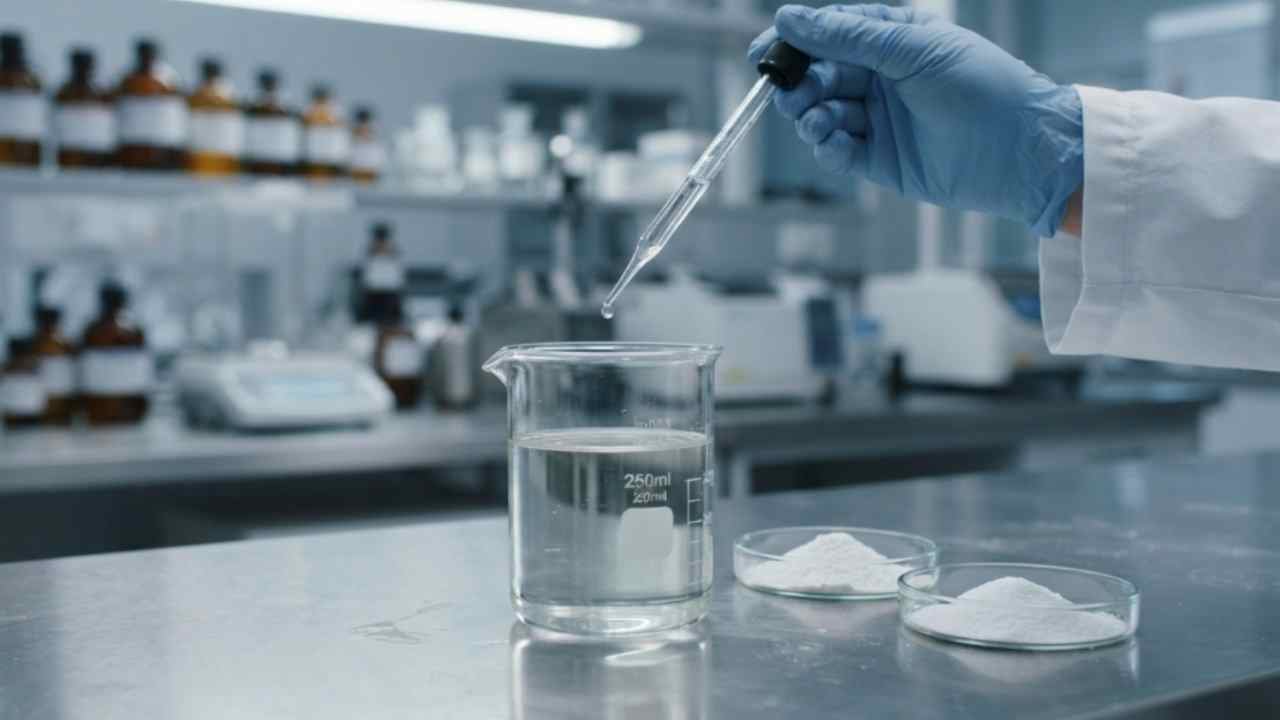
Manufacturers reduce Acesulfame-K’s metallic aftertaste by strictly regulating blending ratios, incorporating trace polyols or fibers to rebuild mouthfeel, and introducing organic acidulants or natural flavor maskers.
Dive Deeper into Masking Agents, Organic Acid Balancing, and Mouthfeel Reconstruction
While blending is highly effective at optimizing sweetness, formulating with Acesulfame-K requires careful management of its natural sensory limitations. At elevated concentrations, the free sulfamide structure of Ace-K can trigger a bitter or metallic aftertaste on the back of the throat. To minimize this unwanted sensory defect, food manufacturers employ several advanced formulation techniques beyond simple sweetener blending.
A primary method is incorporating trace organic acidulants, such as citric acid, malic acid, or tartaric acid. These natural fruit acids stimulate salivary glands and introduce a refreshing sourness that effectively distracts the palate from metallic lingering notes. Additionally, adding trace amounts of mineral salts like sodium chloride or potassium chloride can help round out the sweetness and block bitter taste receptors. Reconstructing the missing mouthfeel of sugar using functional fibers (such as soluble corn fiber or inulin) or polyols also dilutes the perception of the high-intensity sweetener, making the taste more natural. Sourcing partners like FINETECH assist brands by coordinating with flavor chemists and Chinese factories, securing specialized, clean-tasting Acesulfame-K lots that require minimal masking agents to achieve premium sensory profiles.
| Masking Agent Type | Common Compound | Primary Masking Action | Targeted Application |
|---|---|---|---|
| Organic Acidulants | Citric or Malic acid | Stimulates sour palates | Fruit-flavored sports drinks |
| Mineral Salts | Sodium or Potassium chloride | Blocks bitter receptors | Isotonic recovery beverages |
| Functional Fibers | Soluble corn fiber, Inulin | Rebuilds bulk mouthfeel | Low-sugar protein bars |
| Natural Flavorings | Botanical taste maskers | Obscures metallic lingering | Sweet dairy, flavored milks |
What Technical Factors Should Be Considered When Using Acesulfame-K?
Overlooking physical crystalline flowability and solubility kinetics during bulk industrial mixing causes clumping and uneven sweet spots. Monitoring precise technical parameters ensures uniform compounding.
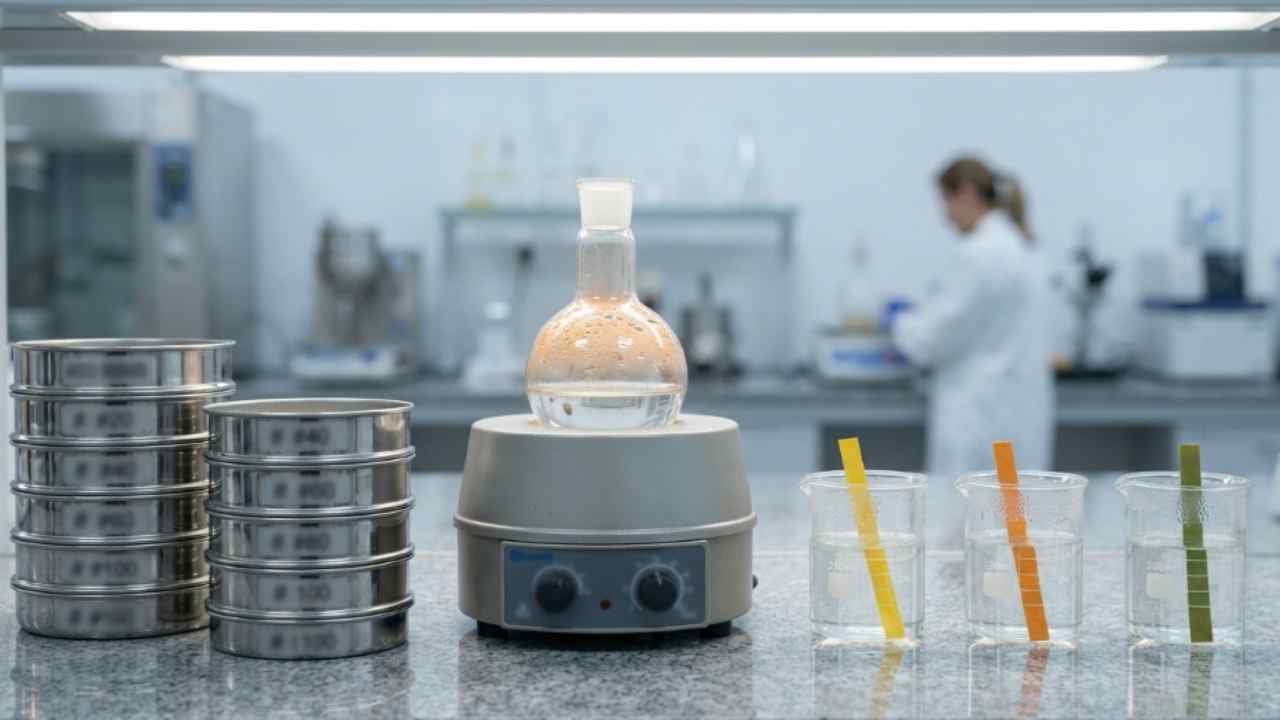
Key technical factors to consider are particle mesh sizing to prevent dry blend segregation, high-temperature thermal resilience during pasteurization, and hydrolytic stability across a broad pH range.
Dive Deeper into Particle Sizing, Thermal Processing, and pH Stability Windows
Achieving consistent, repeatable sweetness in food and beverage production requires strict attention to several key technical processing factors. First and foremost is the physical particle sizing of the Acesulfame-K. For liquid ready-to-drink (RTD) beverages, manufacturers should utilize fine powder formats (eighty to one hundred mesh) to ensure rapid and complete dissolution in cold-water blending tanks, preventing un-dissolved crystal sedimentation. For dry-mix powders, coarser granules (thirty to eighty mesh) are required to prevent particle segregation and mechanical clogging in automated packaging hoppers.
Additionally, manufacturers must monitor thermal and pH conditions. Acesulfame-K is highly resilient, remaining stable across a broad pH range of three point zero to seven point zero, which makes it ideal for highly acidic carbonated soft drinks as well as neutral dairy milks. Its thermal resistance up to two hundred and twenty-five degrees Celsius easily withstands commercial HTST pasteurization or UHT sterilization lines. Sourcing partners like FINETECH protect buyers by executing pre-shipment sieve analyses, verifying that moisture levels remain below zero point five percent, and ensuring all batches comply with strict food-grade USP/FCC monographs, guaranteeing reliable processing performance.
| Technical Parameter | Optimal Processing Range | Stability Performance | Sourcing Quality Target |
|---|---|---|---|
| Crystalline Sizing | 30 to 100 mesh range | Resists gravitational caking | Match specific blending lines |
| Thermal Limit | Stable up to 225°C | Zero chemical degradation | Loss on drying below 1.0% |
| pH Range Window | pH 3.0 to 7.0 | Resists acid-induced hydrolysis | High active substance assay |
| Hygiene Standard | FSSC 22000 compliant | Prevents batch contamination | Lead limits below 1.0 ppm |
Conclusion
Optimizing Acesulfame-K blending applications requires utilizing sweetening synergies with aspartame and sucralose to lower material weights, balancing temporal curves to replicate sucrose's fast onset, applying organic acids or mineral salts to reduce metallic aftertastes, and calibrating physical mesh sizes to maintain stable dry blending and liquid solubility kinetics.
-
This BAKERpedia guide details the functional properties, variations, and regulatory guidelines for non-nutritive, high-intensity sweeteners in food applications. ↩
-
This MDPI scientific review explores the properties, evaluation methods, and molecular receptor-level mechanisms of sweetening synergy in binary and ternary mixtures. ↩
-
This BAKERpedia baking ingredients profile details sucrose (sugar), detailing its physical characteristics, commercial production, and diverse functional roles in food processing. ↩
-
This Tate & Lyle guide explains the application of steviol glycosides in sugar reduction, detailing taste balancing, mouthfeel optimization, and clean-label formulation strategies. ↩
-
This Cargill portal focuses on Zerose erythritol, a zero-calorie bulk sweetener that masks intense sweetener off-flavors and mimics sucrose. ↩