
Late Vitamin B5 shipments stop your production and ruin your schedule. This uncertainty loses you money and customers. I manage every logistics step to ensure your cargo arrives on time.
Suppliers ensure timely delivery by managing production lead times (7-14 days), maintaining strategic safety stock, and booking shipping vessels 3 weeks in advance. Using direct sea routes and express rail for land-locked regions like Russia minimizes logistics delays and keeps your supply chain moving.
I manage factory selection and quality oversight for my B2B clients at FINETECH. I want to explain how we handle the technical side of Vitamin B5 delivery to ensure your business stays successful and safe.
What Is the Typical Lead Time for Vitamin B5 (Pantothenic Acid)?
Unknown lead times lead to empty warehouses and lost sales. This uncertainty stops your business from growing. I provide clear timelines for production and shipping to help you plan your inventory perfectly.
The typical lead time for Vitamin B5 includes 7-10 days for production and quality testing, plus shipping time. Southeast Asian ports take 10-15 days, while shipments to the Middle East and Europe take 30-45 days via sea freight from the port of Qingdao.

Breaking Down the Lead Time Stages
I want you to know that lead time is more than just the ship voyage. It starts the moment you place the order. First, the factory needs 3 to 7 days to prepare the batch and pack the drums. Then, the lab needs 2 days to finish the HPLC purity tests1. I do not allow any cargo to leave without a passed COA. Then, we book a truck to the port of Qingdao or Shanghai. This takes 1 day. The port needs about 3 to 5 days for customs clearance and loading. I manage all the paperwork early to avoid any technical delays at the dock. This stage is where many exporters fail, but I oversee it daily to keep the schedule tight.
The sea voyage is the longest part. For my clients in Indonesia or Vietnam, the time is very short. It only takes 10 to 14 days. For Saudi Arabia or the UAE, it takes 25 to 30 days. For Germany or Greece, it can take up to 45 days. I track the ship's location every week. I give you updates so your warehouse team is ready. You also need to count the time for customs in your own country. This is usually 3 to 5 days. I send the documents via DHL or use telex release to make this faster. By managing every tiny step, I ensure the total lead time is as short as possible. I focus on these logistics facts to help you build a reliable supply chain2.
Estimated Regional Delivery Timelines
| Destination Region | Production & Port | Sea / Rail Voyage | Total Lead Time |
|---|---|---|---|
| Southeast Asia | 10 Days | 10 - 15 Days | ~25 Days |
| Middle East | 10 Days | 25 - 35 Days | ~40 Days |
| Europe (Sea) | 10 Days | 35 - 45 Days | ~55 Days |
| Russia (Rail) | 10 Days | 15 - 22 Days | ~32 Days |
| Korea / Japan | 10 Days | 3 - 7 Days | ~17 Days |
How Is Safety Stock Managed for Vitamin B5 (Pantothenic Acid)?
Market shortages happen without warning in the vitamin industry. This leaves you empty-handed and stops your manufacturing. I maintain strategic safety stock to protect your supply chain from sudden gaps.
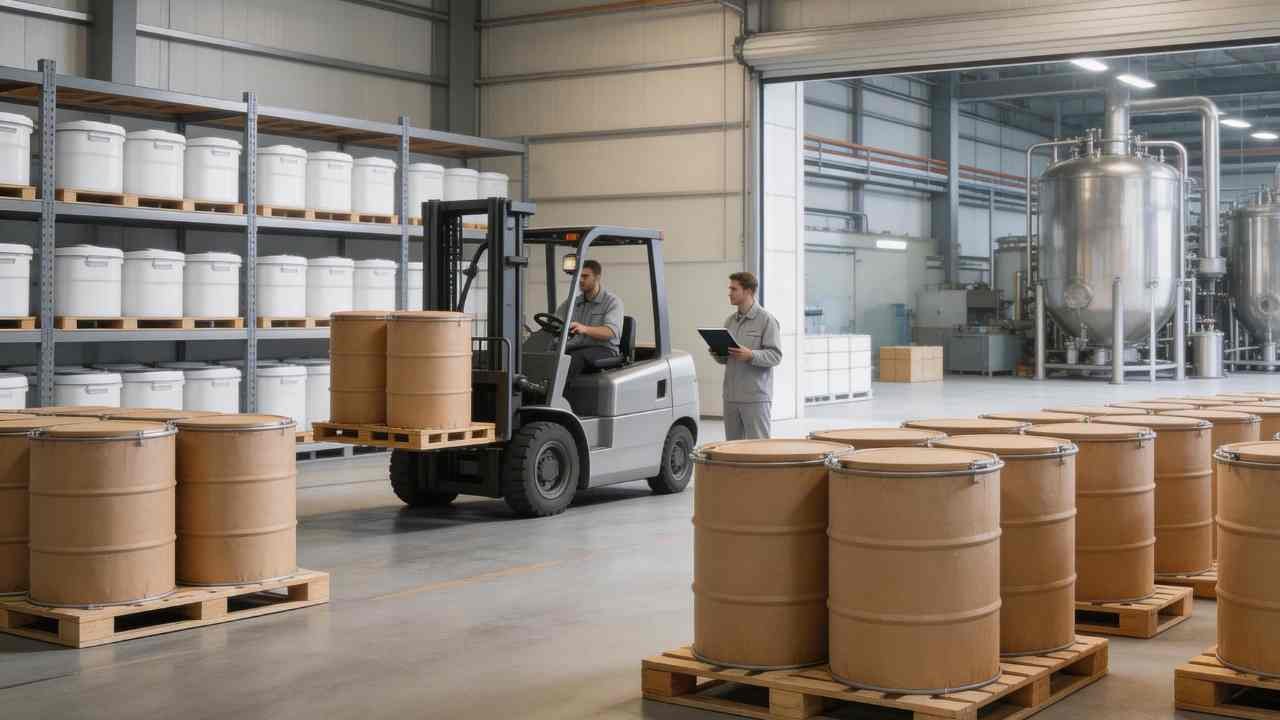
Suppliers manage safety stock by holding 2-3 months of inventory in major manufacturing hubs. This buffer covers unexpected factory shutdowns, environmental audits, or logistics congestion. It ensures a continuous supply of Vitamin B5 for long-term partners even during global market volatility.
The Philosophy of Inventory Buffers
I see that many buyers only buy what they need for today. This is very risky. One port strike or a factory fire can stop your whole business. I manage this risk by keeping safety stock3 in our warehouse. I suggest you also keep a 60-day buffer in your local warehouse. This gives us time to solve any problem in the supply chain. I help my regular clients calculate their reorder points. When your stock hits a certain level, we place the next order immediately. This system removes the stress of buying. It ensures you always have fresh material ready for your production line. I use my location in China to monitor factory stocks for you.
We also diversify the location of our stock. I do not keep all our Vitamin B5 in one warehouse. I use different regions like Shandong and Zhejiang. If one region has a power limit or an environmental audit4, I can still ship from the other. This "regional safety" is a technical requirement for a stable supply chain. I oversee the production dates to ensure the safety stock is always fresh. We use the First-In, First-Out (FIFO) method. This means we ship the oldest batch first and replace it with new production. This oversight ensures your Vitamin B5 always has a long shelf life when it reaches your warehouse. My goal is to make your procurement safe and simple.
Inventory Management Metrics
| Metric | Target Level | Purpose |
|---|---|---|
| Safety Stock | 60 Days of usage | Buffer for logistics delays |
| Reorder Point (ROP) | Lead time + 14 days | Triggers new purchase |
| Stock Freshness | > 30 months left | Maximizes storage life |
| Storage Temperature | < 25°C | Prevents clumping |
| Audit Frequency | Monthly | Checks physical stock levels |
What Shipping Methods Are Available for Vitamin B5 (Pantothenic Acid)?
Wrong shipping choices increase your costs and lead to delays. This hurts your profit and makes you uncompetitive. I help you select the best transport mode for your specific volume and timeline.
Common shipping methods include Sea Freight (FCL/LCL) for bulk orders, Rail Freight for fast land routes to Russia/Europe, and Air Freight for urgent pharmaceutical needs. Each method balances speed and cost to meet specific buyer requirements for Vitamin B5 delivery.

Selecting the Most Efficient Route
I manage sea freight for the majority of my buyers in the Middle East and Southeast Asia. We use 20ft containers for most Vitamin B5 shipments. A full 20ft container holds about 10 to 12 tons of D-Calcium Pantothenate in fiber drums. This is the most cost-effective way to move vitamins over long distances. For smaller wholesalers5, I suggest LCL. This means we share a container with other cargo. I am very careful with LCL. I ensure your Vitamin B5 is not placed next to smelly chemicals. I select the shipping lines that have the best safety records and the fastest direct routes to your port. This reduces the risk of damage or delays.
For land-locked regions like Russia, rail freight is a very strong choice. It is faster than sea freight but much cheaper than air freight. I use the China-Europe Railway for these routes. It takes about 15 to 22 days to reach most major hubs. Air freight is only for emergencies. If your factory is about to stop because you ran out of stock, we can ship a few drums by air. I work with major airlines to get your Vitamin B5 delivered in 5 to 7 days. I oversee the loading at the factory to make sure the drums are palletized correctly. This prevents any movement or damage during the long journey. I handle the technical booking details so you get a smooth delivery every time.
Transport Mode Comparison
| Shipping Mode | Delivery Speed | Relative Cost | Best Use Case |
|---|---|---|---|
| Sea Freight (FCL) | 25 - 45 Days | 1.0 (Baseline) | Bulk Wholesale |
| Sea Freight (LCL) | 30 - 50 Days | 1.8 | Small replenishment |
| Rail Freight | 15 - 22 Days | 2.5 | Russia / Central Europe |
| Air Freight | 5 - 7 Days | 10.0+ | Urgent / Emergencies |
| Multimodal | 20 - 30 Days | 2.0 | Balancing cost and speed |
How Do Suppliers Handle Urgent Vitamin B5 (Pantothenic Acid) Orders?
A sudden shortage stops your factory and loses you customers. You need material now to save your production. I use expedited processing and elite logistics to handle your emergency Vitamin B5 orders.
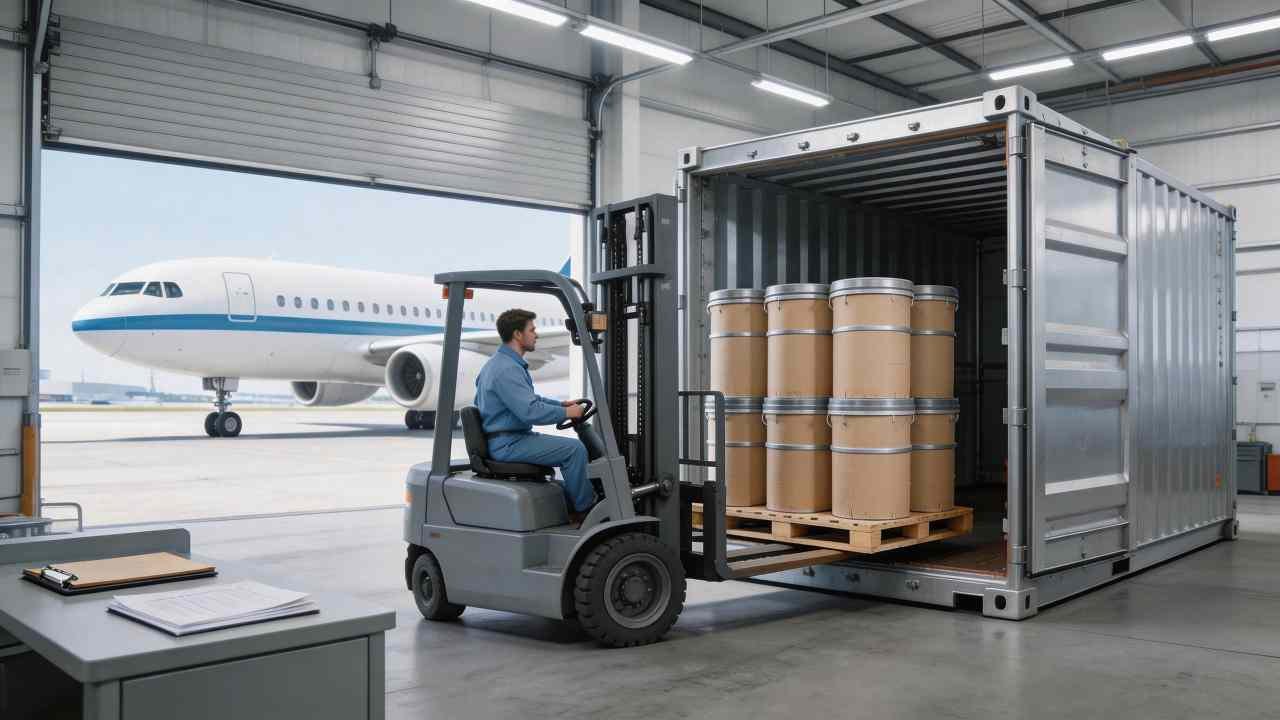
Suppliers handle urgent orders by utilizing ready stock and prioritizing production slots. Expedited air freight delivers goods in 5-7 days, while telex release for documents speeds up customs handover at the destination port. This rapid response prevents manufacturing stops for the buyer.
Rapid Response and Document Speed
I keep a "reserve stock" for my long-term partners. If you have an emergency, I can ship immediately from this stock. This bypasses the 7-day production wait. I also have strong relationships with the factory managers. I can ask them to move your order to the front of the line. This is the benefit of a managed exporter. We have influence that a simple trader does not have. I oversee the quality testing to ensure the rapid batch still meets the USP standard. Then, I book the first available ship or plane. I handle the export filing in one day to get the goods moving. This speed is how I protect your business when things go wrong.
I also use modern shipping tools to save time. I prefer telex release for the Bill of Lading. This means I send a digital message to the shipping line. You do not need the original paper to pick up the goods. This saves 3 to 5 days of courier time. I also use digital COAs and Health Certificates. Your customs agent can check these early. This ensures the goods clear your port in hours, not days. I oversee the loading at the airport or dock to make sure the cargo is secure. I use moisture-absorbing bags to protect the powder even during fast air travel. This end-to-end management is my commitment to your business.
Urgent Order Management Steps
| Step | Action | Time Saved | Benefit |
|---|---|---|---|
| Priority Booking | Use reserved factory slot | 5 - 7 Days | Faster production |
| Ready Stock | Use warehouse buffer | 7 Days | Immediate dispatch |
| Air Freight | Book express cargo | 30+ Days | Shortest lead time |
| Telex Release | Digital doc handover | 3 - 5 Days | Fast port pickup |
| Pre-filing | Early customs entry | 2 Days | No dock delays |
How Can Buyers Avoid Delays in Vitamin B5 (Pantothenic Acid) Procurement?
Reactive buying causes stress, high prices, and empty shelves. This chaos ruins your growth and reputation. I provide a planning framework to help you prevent delays and stay competitive in your market.
Buyers avoid delays by placing orders 8-12 weeks in advance and using annual volume contracts. Providing clear demand forecasts and working with managed exporters ensures priority production. Understanding Chinese holidays like the Spring Festival helps you stockpile material before port closures occur.

Proactive Planning and Forecasting
I suggest you use a systematic ordering plan. Do not wait until your warehouse is empty to call me. You should count the total lead time, which is usually 45 to 60 days. Then add your safety buffer. I help my clients in Saudi Arabia and Indonesia with these forecasts. We look at their sales growth for the year. If your sales are growing by 10%, we increase the orders by 10%. This data-driven way of buying is how you beat your competitors. It keeps your warehouse full and your prices stable. I act as your strategic partner in China. I tell you when to buy extra stock before a holiday or an environmental audit.
I also believe in annual contracts. We can fix the shipping dates for the whole year. For example, we ship one container every two months. This ensures the factory reserves a production slot for you. It also protects you from price spikes in China. You do not have to worry about the market every day. I manage the schedule and the quality for every single shipment. Also, remember the "China factor." You must order extra in October to survive the Chinese New Year in February. Ports and factories close for two weeks. If you do not plan for this, you will have no stock in March. I provide market reports to my regular buyers to help them with this timing.
Annual Procurement Planning Cycle
| Month | Planning Activity | Goal |
|---|---|---|
| September | Review annual usage | Forecast for next year |
| October | Sign annual contract | Lock in price and volume |
| November | Order Q1 safety stock | Prepare for Chinese New Year |
| February | Monitor market dips | Buy extra if price is low |
| May | Quality audit check | Review batch consistency |
| July | Logistics review | Optimize shipping routes |
Conclusion
Timely delivery of Vitamin B5 requires careful lead time management, safety stock, and proactive planning. I manage these logistics at FINETECH to ensure your business stays successful, profitable, and safe.
-
Waters – Technical application notes for laboratory personnel on using HPLC and chromatography to verify chemical purity and safety. ↩
-
SCMR – Trade-oriented resource for managing global logistics and optimizing international supply chain operations for industrial products. ↩
-
InventoryOps – A strategic guide for procurement professionals and buyers on calculating safety stock to prevent supply gaps in the food additive industry. ↩
-
ISO – International standards for environmental management, serving as a benchmark for industrial environmental audits in chemical manufacturing. ↩
-
Investopedia – Defining the role of wholesalers as intermediaries for food enterprises and manufacturers in the global industrial distribution network. ↩