
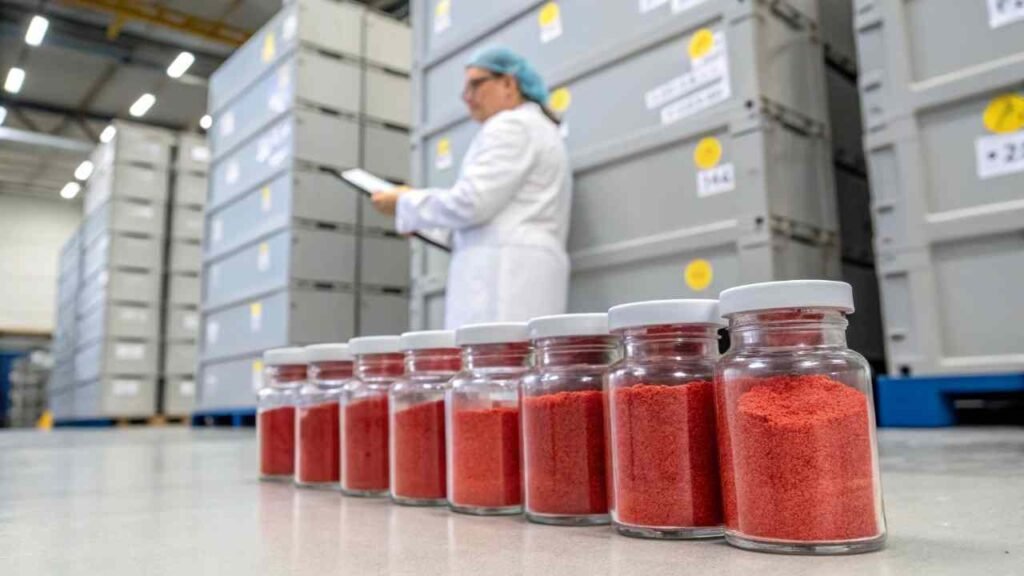
Unstable Vitamin B12 supplies stop your factory lines and drain profits. This uncertainty ruins your reputation. I provide strategic sourcing and inventory plans to keep your production running year-round.
To ensure consistent Vitamin B12 supply, buyers must sign annual volume contracts, maintain a 60-day safety stock, and diversify suppliers across different Chinese provinces. Monitoring seasonal production cycles and using managed exporters for quality oversight further protects against sudden market shortages and price spikes.
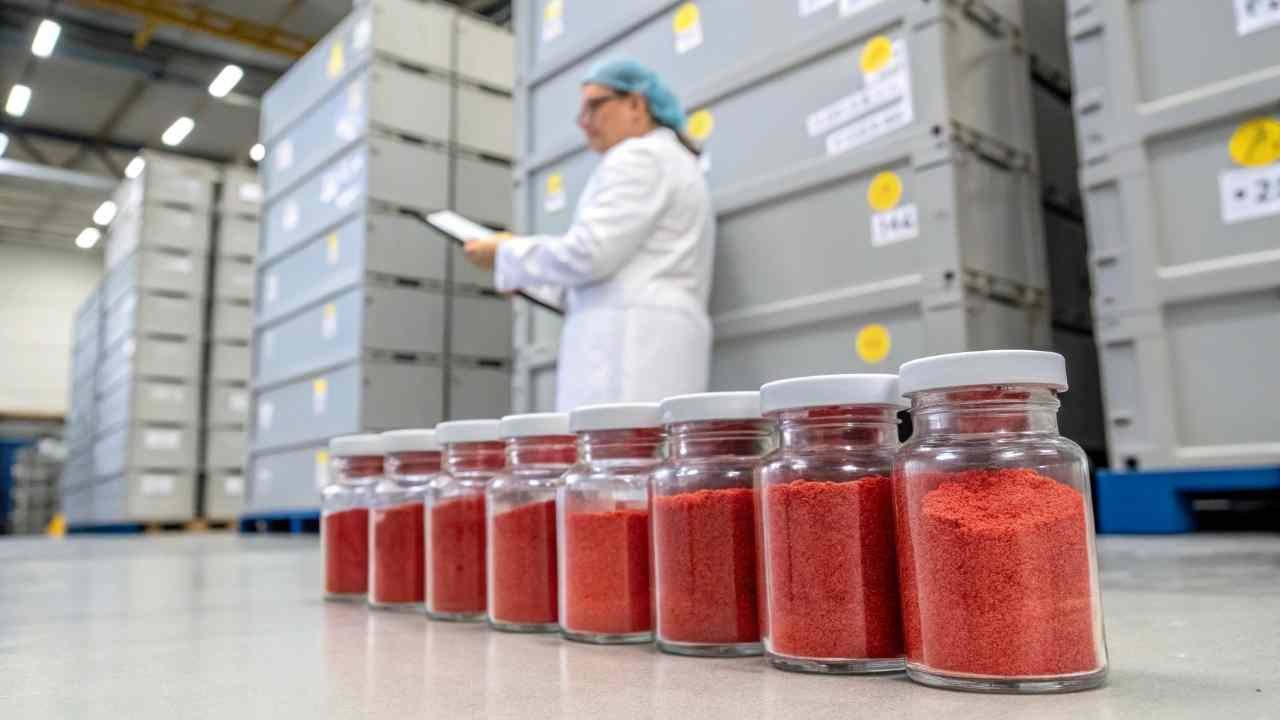
I manage factory selection and quality oversight for my B2B clients at FINETECH in China. I want to share the technical facts about supply chain management to help you secure a safe and competitive supply for your business.
Why do seasonal factors affect Vitamin B12 (Cobalamin) supply?
Sudden Chinese factory shutdowns during winter or holidays leave your warehouse empty. This lack of stock kills your sales. I track seasonal production cycles to protect your yearly supply.
Seasonal factors affecting Vitamin B12 include Chinese New Year logistics stops and winter environmental audits. North China's "Blue Sky" policies often force fermentation plants to reduce capacity from November to March, while summer maintenance periods in July can cause short-term production gaps.

The China Holiday and Audit Cycle
I see that the supply of Vitamin B12 follows a very strict seasonal pattern in China. The first major factor is the Chinese New Year. During this time, the whole country stops for at least two weeks. This includes all factories and ports. If you do not plan your order in November, you will find no stock in February. I monitor this calendar every year for my buyers. I tell them to buy extra stock before the holiday starts. This is a technical fact of the Chinese market. Another factor is the winter environmental audits. In North China, the government wants to reduce smog from November to March. They order chemical and fermentation plants to slow down or stop. This is called the "Blue Sky" policy.
This policy reduces the total output of Cobalamin1 significantly. It makes prices rise in the first quarter of every year. I visit our partner factories to check their production logs. I want to see if they have enough material to survive the winter. Also, many factories stop for maintenance in July. They must clean their giant fermentation tanks to maintain high yields. This takes about two weeks. If you need material in August, you must order in June. I manage this timing for my clients in Southeast Asia and Europe. Understanding these cycles is how I keep your supply chain silent and steady. I act as your strategic office in China to look ahead and avoid these gaps.
Seasonal Supply Risk Assessment
| Month Range | Event | Impact on Supply | Recommended Action |
|---|---|---|---|
| Jan - Feb | Chinese New Year | Port & Factory stop | Ship goods before Jan 10 |
| Mar - Apr | Post-Holiday Restart | Supply returns slowly | Reorder safety stock |
| Jul - Aug | Summer Maintenance | Short-term shortage | Plan 30 days ahead |
| Oct - Nov | Pre-Winter Rush | High demand / Spikes | Lock in Q4 prices |
| Nov - Mar | "Blue Sky" Audits | Reduced capacity | Maintain 60-day buffer |
How to plan inventory for Vitamin B12 (Cobalamin) procurement?
Inaccurate stock levels lead to emergency buying or wasted capital. This inefficiency reduces your market edge. I help you calculate the perfect reorder point to optimize your B12 inventory.
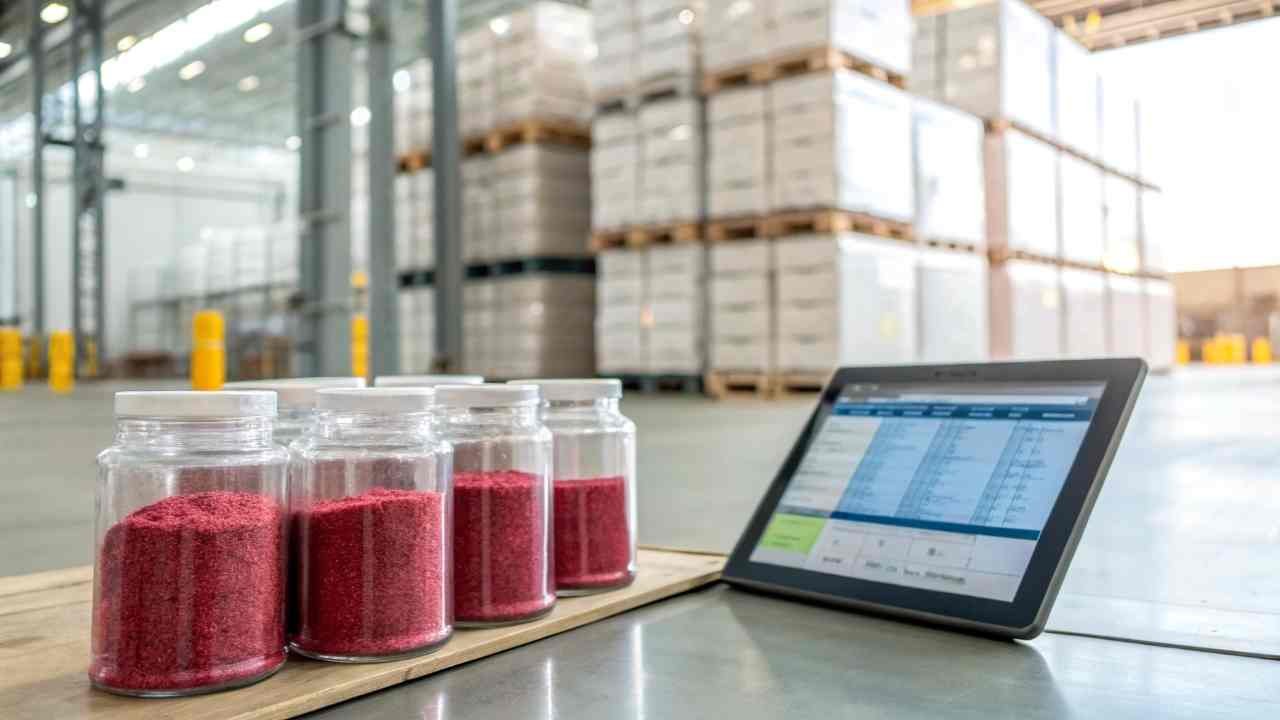
Plan inventory by using the Reorder Point (ROP) formula: (Average Daily Usage x Lead Time) + 60-day Safety Stock. This buffer accounts for the 30-day ocean transit from China and potential customs delays, ensuring you never run out of critical Cobalamin batches.
Calculating the Buffer Zone
I see that many wholesalers struggle because they buy only when they are low on stock. This is a dangerous gamble. Vitamin B12 is a high-value product. If the shipment is late, you lose a lot of money. I suggest you use a 60-day safety stock. This is your insurance. It covers the time it takes to produce the goods in China and the time for sea freight2. A standard ship takes 30 days to reach Europe or the Middle East. Then you need 10 days for customs and inland trucking. I add another 20 days as a buffer for port congestion. This 60-day rule keeps your production safe.
I also focus on "First-In, First-Out" (FIFO) management. Vitamin B12 has a shelf life of 36 months. But it is best to use it when it is fresh. I ensure that every batch I ship has a production date within the last 3 months. I check the labels and the Certificate of Analysis (COA) for every drum. I also manage the storage conditions in the warehouse. B12 must be kept in a dark and cool place. Light will degrade the potency. If you have too much stock, you waste warehouse space and electricity for cooling. If you have too little, you face stockouts. I act as your technical partner to find the balance. Proper inventory planning is the key to stable profit margins.
Inventory Planning Metrics
| Metric | Target Level | Technical Purpose | FINETECH's Role |
|---|---|---|---|
| Safety Stock | 60 Days | Protect against delays | Monitor logistics trends |
| Transit Stock | 30 - 45 Days | Goods on the ocean | Track vessel location |
| Reorder Point | Usage x (LT + Buffer) | Trigger new purchase | Coordinate factory start |
| Batch Freshness | < 3 Months old | Ensure max potency | Check MFG dates in China |
| Storage Temp | < 25°C | Prevent degradation | Audit warehouse specs |
What strategies reduce Vitamin B12 (Cobalamin) supply disruptions?
Port strikes or raw material shortages disrupt your supply chain without warning. This chaos ruins your delivery dates. I provide managed logistics and contingency plans to bypass these common roadblocks.
Reduce disruptions by choosing direct shipping routes and utilizing third-party pre-shipment inspections (PSI). Managed exporters coordinate factory output with vessel schedules, while trade insurance tools like Sinosure provide financial protection against supplier insolvency or non-delivery during market crises.

Managed Logistics and Quality Oversight
I see that "Direct Action" is the best way to stop disruptions. If you buy from a factory and wait at home, you have no control. I stay close to the factories in China. I check their raw material stocks of cobalt salts3. If they are low on cobalt, they cannot make your B12. I find this out before it becomes a problem for you. I also manage the logistics personally. I choose shipping lines with the best record for on-time delivery. I avoid transshipment ports whenever I can. This reduces the risk of your container being left behind in a busy hub like Singapore or Colombo.
Quality disruptions are also a major risk. If you receive a batch with the wrong assay, you cannot use it. This stops your production. I prevent this by using Pre-Shipment Inspection4 (PSI). I hire firms like SGS to take random samples from your drums. They test for purity and microbial safety in an independent lab. This proves the quality is correct before you pay the balance. I also use Sinosure to manage financial risks. If a factory has trouble, Sinosure helps protect your deposit. I act as your technical gatekeeper in China. My goal is to make your procurement process silent and steady. Using these strategies is how professional wholesalers survive market shocks.
Risk Mitigation Tactics
| Risk Factor | Possible Impact | FINETECH's Mitigation Strategy |
|---|---|---|
| Port Congestion | 2-week delay | Use direct vessels / Book early |
| Quality Failure | Product recall | SGS inspection before loading |
| Cobalt Shortage | Price spike / Stop | Annual fixed-volume contracts |
| Insolvency | Lost deposit | Use Sinosure credit insurance |
| Logisics Damage | Contamination | Double PE liners / Heavy drums |
How do long-term agreements stabilize Vitamin B12 (Cobalamin) sourcing?
Volatile spot prices make your yearly budget a guessing game. You pay more than your competitors. I help you lock in annual contracts to stabilize your Vitamin B12 costs.
Long-term agreements stabilize sourcing by fixing prices and reserving monthly production slots for 12 months. This "VIP status" ensures your orders are prioritized during shortages, provides more flexible payment terms (like Net 30), and eliminates the risk of sudden price spikes in the cobalt market.

Moving from Transactional to Strategic Buying
I see that "Spot Buying" is the most expensive way to work. When the market is tight, spot prices double in one week. You have no power to negotiate. But with an annual contract, you are a VIP. The factory reserves a production slot for you every month. Even if they are busy, they must finish your order first. This is a technical requirement for stability. I manage these relationships for my clients in Russia and the UAE. We agree on a "Fixed Price" for the whole year. This allows you to set your local selling prices with confidence. You know your profit margin today for sales you will make in six months.
Annual contracts also lead to better payment terms. Factories like "Contract Buyers" because they are predictable. They will often move from "T/T deposit" to "Open Account" or "D/P" terms. This means you pay after the goods are on the ship. It keeps your capital free for other parts of your business. I check the contract performance every month. I make sure the factory keeps the quality high for every batch. If there is a problem, I use the contract to protect you. Building this long-term trust is a technical asset. It turns a risky supply chain into a stable partnership. This is how I help you lead your local market with better prices and steady stock.
| Feature | Spot Market Buying | Long-Term Contract | Business Benefit |
|---|---|---|---|
| Price Stability | Low (Weekly changes) | High (Fixed for 1 year) | Predictable margins |
| Supply Priority | Low (Queue system) | Very High (Reserved slots) | No stockouts |
| Payment Terms | Rigid (30% deposit) | Flexible (Credit / DP) | Better cash flow |
| Lab Testing | Batch by batch | Standardized protocol | Consistent quality |
| Focus | Saving cents today | Strategic growth | Long-term profit |
What role do multiple suppliers play in Vitamin B12 (Cobalamin) security?
Relying on one factory is a dangerous gamble in China. One fire or audit stops your business. I manage a network of vetted producers to diversify your supply risk.
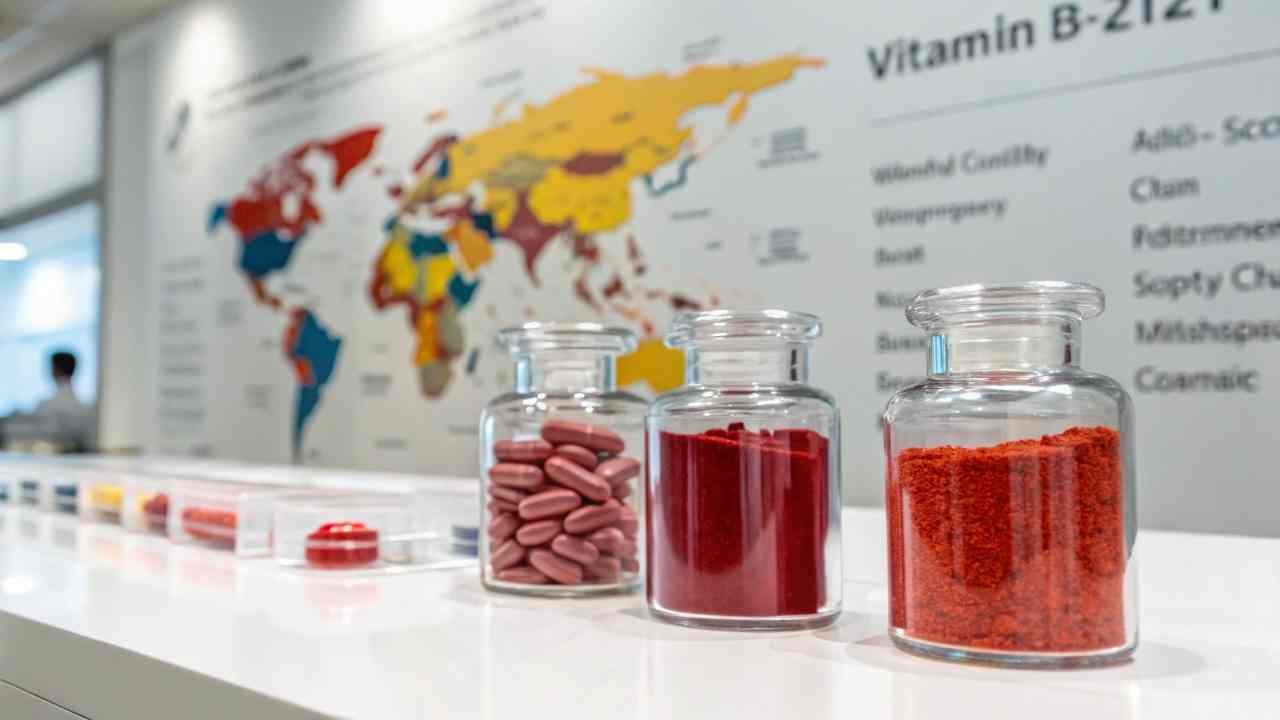
Multiple suppliers provide security by spreading production across different regions. If a factory in Hebei stops due to power cuts, a partner in Ningxia or Jiangsu can fulfill the order. This "Geographic Diversification" is essential for large-scale B2B buyers to maintain continuity.
Building a Resilient Supplier Network
I want you to understand that China is a giant country. Different provinces have different rules. Sometimes Hebei has an environmental audit, but Ningxia does not. If your only supplier is in Hebei, your business is in trouble. I solve this by working with multiple vetted factories in different locations. I audit each one personally. I ensure they use the same fermentation strains5 and purification methods. This means the dark-red crystals from Factory A are exactly the same as Factory B. This technical consistency allows us to switch sources instantly if one factory has a problem. I manage this network so you always have a "Plan B."
Using multiple suppliers also gives us better price leverage. If one factory raises their price too much, I can move the volume to another partner. This competition keeps your costs low. But I always maintain the relationship with all of them. I give each factory a share of the business. This keeps them interested in our success. I act as your strategic office to balance this volume. I also cross-verify their lab results. If Factory A finds a new impurity, I tell Factory B to check for it too. This shared intelligence makes your whole supply chain stronger. Diversity is the ultimate tool for supply security in the volatile food additive market.
| Diversification Type | Action Taken | Risk Mitigated | Business Value |
|---|---|---|---|
| Geographic | Source from 3 provinces | Regional power cuts | Supply continuity |
| Technical | Use 2 fermentation types | Strain failure | Stable output |
| Logistics | Use 2 different ports | Port strikes / Congestion | Faster delivery |
| Financial | Split orders | Supplier insolvency | Capital protection |
| Quality | Shared lab protocols | Batch inconsistency | Process reliability |
Conclusion
Ensuring year-round Vitamin B12 supply requires strategic planning, annual contracts, and diversified sourcing. I manage these technical factors at FINETECH to keep your business procurement safe, stable, and profitable.
-
PubChem – Technical chemical profile of Cobalamin, explaining its molecular structure and biological functions. ↩
-
Maritime Executive – Industry news source providing analysis of global sea freight trends and maritime logistics challenges. ↩
-
London Metal Exchange – Market data platform for cobalt pricing, a primary raw material for B12 production. ↩
-
SGS – Description of professional pre-shipment inspection services used to verify product quality and compliance before export. ↩
-
MicrobeWiki – Technical profile of specific bacterial strains used in the industrial fermentation of Vitamin B12. ↩