
Worried about inconsistent Vitamin E quality? Off-spec products can ruin your formulations, damage your brand, and result in significant financial losses.
You ensure Vitamin E quality by sourcing from suppliers who adhere to global standards (USP/FCC), provide a detailed Certificate of Analysis (COA) with every batch, and hold key system certifications. For ultimate security, use independent pre-shipment inspections and third-party lab testing.
Quality control is the most important conversation I have with my clients. A professional buyer knows that the cost of a bad batch is not just the price of the material — it’s the potential cost of a product recall. A robust quality assurance system acts as an essential insurance policy for your business. Let's walk through the key steps to guarantee quality.
What are the quality standards for Vitamin E?
You see USP, EP, and FCC on data sheets. Do you know which one you need? Using a product that meets the wrong standard is a compliance risk.
The main quality standards for Vitamin E are the internationally recognized pharmacopeias like the United States Pharmacopeia (USP) for pharma-grade, and the Food Chemicals Codex (FCC) for food-grade. These standards define the exact requirements for identity, purity, and safety.
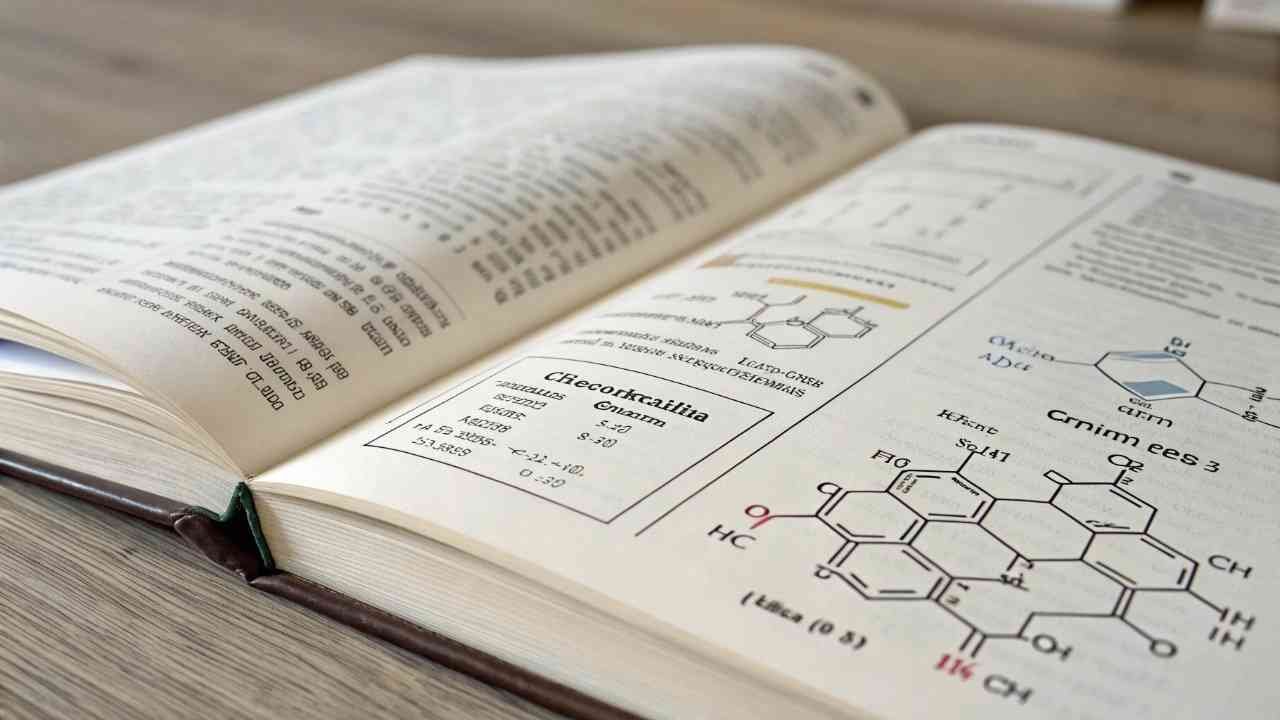
Quality standards provide a clear, common benchmark. Pharmacopeias (USP/EP)1 represent the highest level of quality, required for pharmaceutical use and preferred by premium supplement brands. The Food Chemicals Codex (FCC)2 is the key standard for all food, beverage, and animal feed applications, guaranteeing the product is safe and meets its specified purity for consumption.
Key Quality Standards Compared:
| Standard | Primary Use | Key Guarantee |
|---|---|---|
| USP / EP | Pharmaceuticals, premium supplements | Highest level of purity, suitable for drug formulations. |
| FCC | Food, Beverage, Animal Feed | Guarantees safety and purity for consumption. |
How do suppliers keep Vitamin E pure?
How does a factory transform complex chemicals into the high-purity Vitamin E you require? This purity is not an accident; it is the result of a precise and controlled process.
Suppliers achieve high purity through a three-pillar approach: a precisely controlled synthesis to minimize by-products, a rigorous final purification step like distillation, and operating the entire process within a clean, GMP-compliant environment.
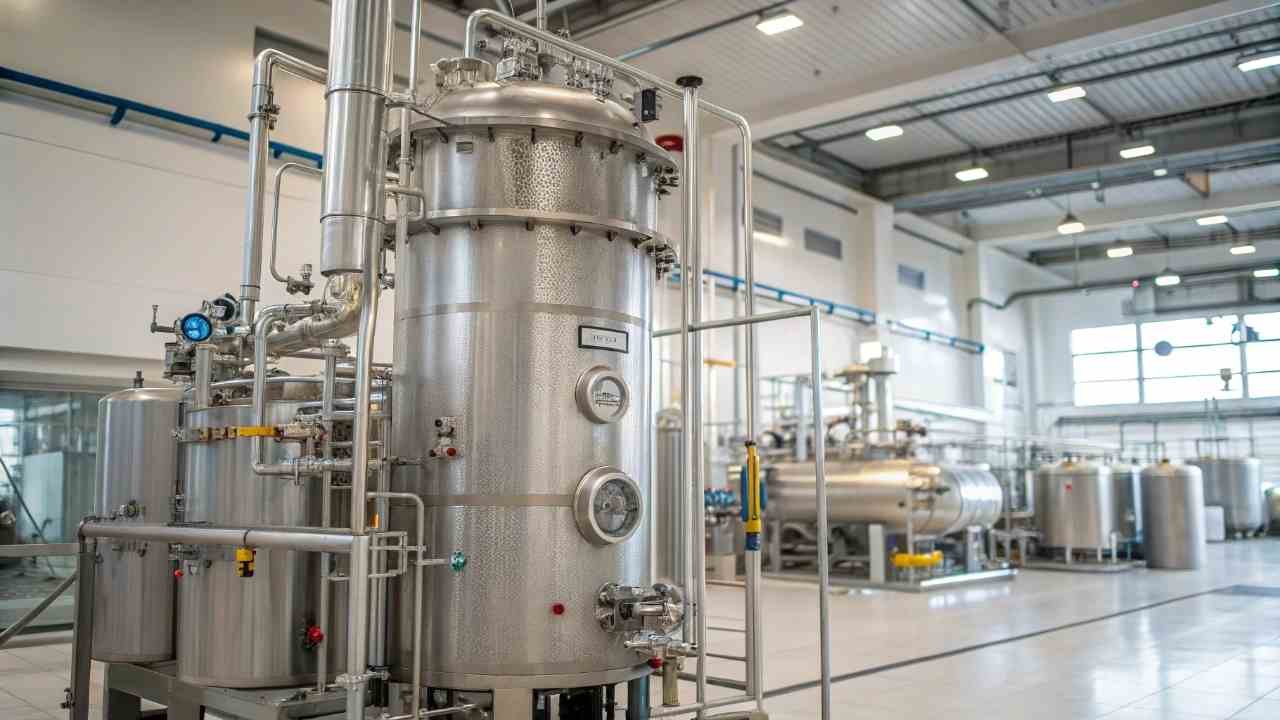
High purity is achieved through three critical steps. First, a controlled synthesis3 minimizes the creation of impurities from the start. Second, a rigorous purification process like high-vacuum distillation physically separates the pure Vitamin E from any remaining impurities. Third, the entire process takes place in a GMP-compliant environment4 with clean rooms and strict protocols to prevent any external contamination.
Purity Control Measures:
| Control Pillar | Method | Purpose |
|---|---|---|
| Synthesis | Precise control of reaction parameters. | To minimize the formation of impurities from the start. |
| Purification | High-vacuum distillation or crystallization. | To physically separate the pure Vitamin E from impurities. |
| GMP Environment | Clean rooms, dedicated equipment, strict protocols. | To prevent external contamination during production. |
Which certificates prove Vitamin E quality?
Your supplier claims their product is high quality. How can you get proof? The right certificates are the official language of quality assurance.
The most crucial document is the batch-specific Certificate of Analysis (COA). Broader proof of quality comes from system certifications like ISO 9001 for quality management and ISO 22000 or HACCP for food safety.

Certificates provide standardized proof of quality. The Certificate of Analysis (COA) is the most important; it is the test report for your specific batch, showing its purity and that it meets all specifications. It must be provided with every order. ISO 9001 proves the factory has a quality management system. ISO 22000 or HACCP proves the factory has a food safety system. These system certificates show the supplier is reliable and professional.
Key Certificates and Their Meaning:
| Certificate | What it Proves | When You Should Receive It |
|---|---|---|
| COA | The specific quality of your batch. | With every single order. |
| ISO 9001 | The factory has a consistent quality system. | Once, kept on file. |
| ISO 22000 / HACCP | The factory has a robust food safety system. | Once, kept on file. |
How do inspections protect Vitamin E buyers?
You have received the certificates, but you are still nervous about a high-value shipment. How can you get independent verification before you pay the final balance?
An independent pre-shipment inspection (PSI) is the ultimate protection. It involves hiring a neutral third party to act as your "eyes and ears" to physically verify the quantity, packaging, and, most importantly, to draw an impartial sample before the goods are shipped.

A pre-shipment inspection (PSI) is your best insurance policy. An inspector from a neutral company like SGS acts as your representative. They go to the factory to verify that the quantity is correct, the packaging is undamaged, and the labeling matches your order. Most importantly, they will draw a random, representative sample5 and seal it. This impartial sample is then sent to you or an independent lab, giving you a true picture of the shipment's quality before you release final payment.
Why test Vitamin E before shipment?
The factory COA looks perfect. Is it really necessary to spend more money on another lab test?
Yes, because pre-shipment testing by an accredited third-party lab provides the ultimate, unbiased verification of the product's quality. It confirms the critical purity and potency before you release final payment, giving you maximum leverage and security.
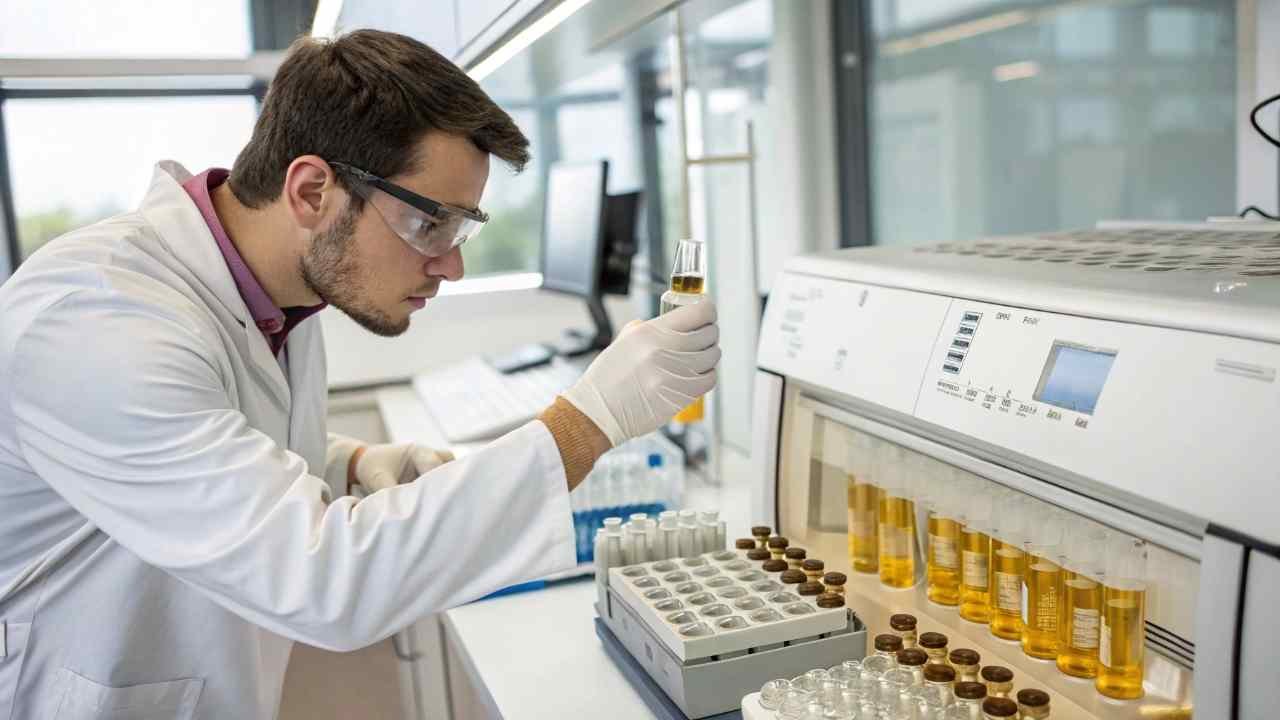
The principle is "trust, but verify with data." A third-party lab test provides unbiased scientific proof of the product's quality. The most important test is for Assay6 (purity/potency), which confirms you are getting exactly what you paid for. The key is that this happens before shipment. If the test reveals a problem, you have the evidence and leverage to resolve it with the supplier before the goods are on a ship, saving you from a much bigger problem later.
Factory COA vs. Third-Party Test:
| Feature | Factory COA | Independent Third-Party Test |
|---|---|---|
| Source | Seller's internal quality control lab. | Accredited, independent laboratory. |
| Purpose | To make a quality claim. | To provide unbiased verification of the claim. |
| Credibility | Good, but there is an inherent bias. | Highest, completely impartial. |
Conclusion
Ensuring Vitamin E quality is a systematic process. It requires demanding clear standards, verifying with certificates, and confirming everything with independent inspections and testing before shipment.
-
Explore this link to understand how Pharmacopeias set quality standards crucial for pharmaceutical safety and efficacy. ↩
-
Discover the significance of the FCC in ensuring food safety and quality for consumers and industries. ↩
-
Understanding controlled synthesis is crucial for grasping how impurities are minimized in production. ↩
-
Exploring GMP compliance will reveal how strict protocols ensure product safety and quality. ↩
-
Exploring this topic will reveal how random sampling ensures the quality of your shipment before payment. ↩
-
Learning about Assay tests will enhance your knowledge of product purity and potency, crucial for making safe choices. ↩