
Frozen capital stops your business growth and limits your inventory. High upfront costs create a massive barrier for scaling your wholesale operations. I show you how flexible payments solve these struggles.
Flexible payment terms improve Isolated Soy Protein trade efficiency by optimizing working capital for importers. Terms like T/T against Bill of Lading (BL) or Open Account (OA) credit allow buyers to receive goods before final payment. This reduces financial pressure and enables larger orders without full capital commitment.
I manage factory selection and oversee production for my B2B clients at FINETECH. I visit Chinese plants to audit their labs because your brand safety depends on technical accuracy. I want to share the technical facts about Isolated Soy Protein (ISP) finance so you can secure your supply chain and protect your profit margins.
What payment methods are commonly used in Isolated soy protein trade?
Using the wrong payment method exposes you to high risk or high bank fees. Choosing a standard method ensures your money stays safe and your cargo moves fast. I explain the standard options.
Common payment methods include T/T (Telegraphic Transfer), usually with a 30% deposit and 70% against the Bill of Lading. Letters of Credit (L/C) provide high security for large orders. Advanced partners also use D/P (Documents against Payment) or Open Account (OA) for wholesale efficiency.

Dive Deeper into Payment Mechanics
I see that "T/T 30/70" is the most common language in my business. You pay a 30% deposit so the factory can buy the raw soybeans and start the extraction process. I act as your strategic office to ensure the factory uses this money for your specific batch. Once production is finished and the cargo is on the ship, the factory sends you a copy of the Bill of Lading1 (BL). You pay the remaining 70%, and then the factory sends the original documents. This is a very safe balance for both sides. I visit the factories to verify the BL details match the physical cargo before you send the final balance. This technical check prevents document errors at customs.
Letters of Credit (L/C) are the second option. Many of my clients in the Middle East and Southeast Asia use this for large containers. An L/C is a bank guarantee. It means your bank only pays the factory if they provide the exact documents required. I check every letter on the invoice and the health certificate to match the L/C. If there is one mistake, the bank will stop the payment. This is a high-security method but it has higher bank fees. I suggest L/C for new relationships or very large government contracts. For my long-term wholesale partners, we often move to D/P or OA. These methods are faster and cheaper because they rely on established trust. I use my presence in China to build this trust between you and the factory.
Comparison of Trade Payment Methods
| Payment Method | Risk Level | Cash Flow Impact | Best For |
|---|---|---|---|
| T/T (Advance) | Highest for Buyer | Poor | Small samples or new leads |
| T/T (30/70 BL) | Balanced | Moderate | Standard wholesale orders |
| L/C at Sight | Lowest for Both | Moderate | Large volume / New partners |
| D/P (Documents) | Moderate | Good | Established trade history |
| OA (Open Account) | High for Seller | Excellent | Long-term strategic partners |
| CAD (Cash Against Docs) | Moderate | Good | Fast sea routes (Southeast Asia) |
How do credit terms support long-term Isolated soy protein partnerships?
Rigid payment rules strain your business and stop you from buying more stock. When the market is busy, a lack of credit can break your supply chain. I describe how credit builds long-term reliability.
Credit terms support partnerships by allowing buyers to pay 30, 60, or 90 days after shipment. This trust-based system allows wholesalers to sell the protein isolate before paying the factory. It ensures consistent ordering patterns and helps both the factory and the distributor grow together sustainably.

Dive Deeper into Credit Evolution
I see that "Credit" is the ultimate goal for a professional importer. In the first year, I usually help you set up standard T/T terms. But after 3 or 4 successful shipments, I act as your technical liaison to request credit from the factory. I show them your payment history and your growing sales volume. This allows the factory to offer you 30-day or 60-day credit. This is not just about money. It is a sign of a "Strategic Alliance." When you have credit, the factory treats your order as a priority. They know you are a stable buyer. I oversee these relationships to ensure both sides follow the timeline.
Scaling is much easier with credit terms. If you have to pay 100% upfront, you can only buy what your current cash allows. But with 60-day credit, you can buy two containers instead of one. You sell the first container in your local market and use that profit to pay the factory. I visit the factory finance offices to negotiate these limits for my clients. I also monitor the protein market prices. If the price of soy is low, I suggest you use your credit to stock up. This technical planning helps you maximize your profit. A long-term partnership means the factory supports your growth because your success is their success. I use my position in China to bridge the gap between your local market and the factory's needs.
| Partnership Phase | Typical Terms | Technical Focus | FINETECH's Role |
|---|---|---|---|
| Phase 1: Initial | 30% Deposit / 70% BL | Quality verification | Audit the first production run |
| Phase 2: Growth | 20% Deposit / 80% BL | Volume consistency | Negotiate better unit prices |
| Phase 3: Established | CAD or D/P | Logistics speed | Streamline document flow |
| Phase 4: Strategic | OA 30-60 Days | Market share expansion | Manage Sinosure credit limits |
Why is trade insurance important for Isolated soy protein transactions?
Financial loss from non-delivery or non-payment can destroy your wholesale business. Unprotected deals carry too much risk in a volatile global market. I explain why insurance is the best safety net for your capital.
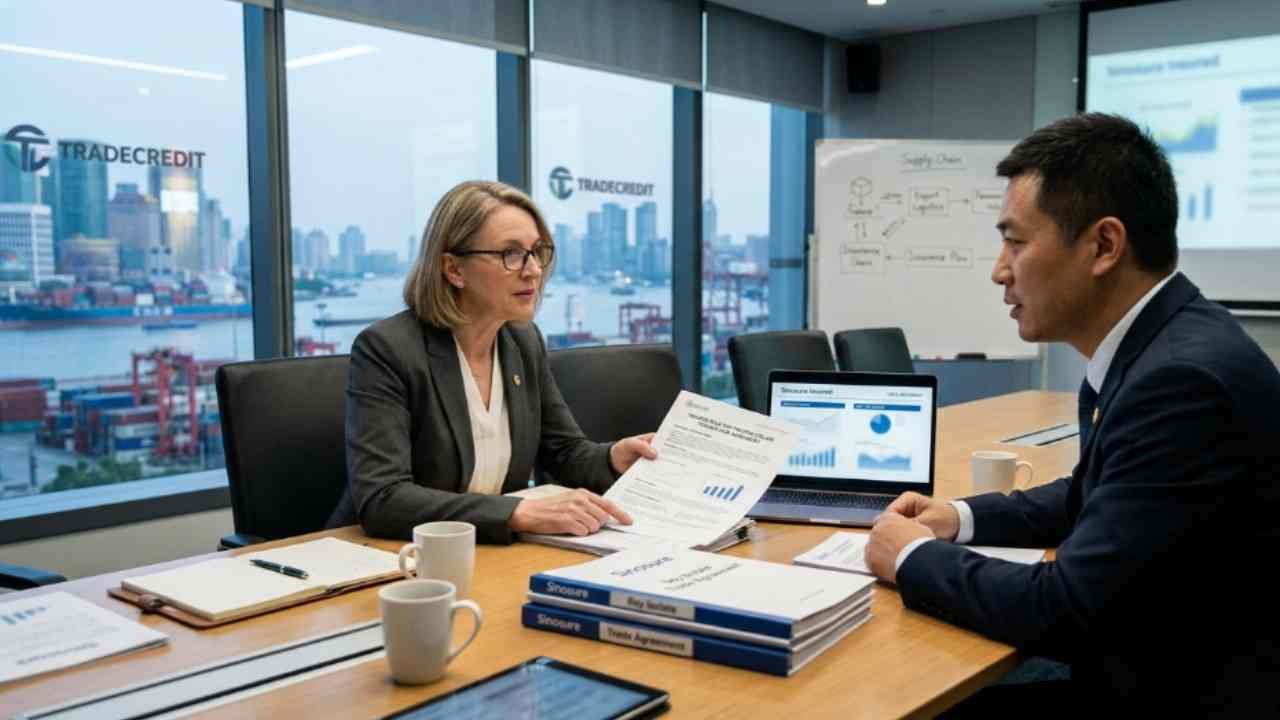
Trade insurance, like Sinosure, protects both the seller and the buyer from default and political risks. It allows factories to offer flexible credit terms to international buyers. This insurance reduces financial uncertainty and ensures that the trade continues even during economic or supply chain disruptions.
Dive Deeper into Risk Mitigation
I see that "Risk" is the main reason factories refuse to offer credit. They are afraid the buyer will not pay. To solve this, we use Sinosure2. This is a Chinese government insurance company. I act as your coordinator to help you apply for a Sinosure credit limit. They audit your company's financial health and trade history. Once they give you a "Grade," they insure the factory's risk. If you have a Sinosure limit of $100,000, the factory can ship $100,000 worth of ISP without an advance payment. They know that if something goes wrong, the insurance will cover it. This is the technical secret behind how large traders move so much volume.
Trade insurance also covers "Cargo Risks" when we use CIF3 terms. I ensure that every container of Isolated Soy Protein is covered by "All Risks" insurance. This protects your money if the ship has an accident or if the protein is damaged by sea water. I visit the logistics agents to check the insurance policies. I want to see that the coverage starts from the moment the bags leave the factory floor until they reach your warehouse. This "Door-to-Door" protection is vital. If a bag tears during loading, the insurance covers the loss. By using both trade credit insurance and cargo insurance, I eliminate the financial dangers of international trade. This allows you to focus on selling while I focus on securing your investment.
| Insurance Type | Who It Protects | What It Covers | FINETECH's Checkpoint |
|---|---|---|---|
| Sinosure (Credit) | Factory / Seller | Payment default risk | Audit buyer credit score |
| Cargo Insurance | Buyer / Importer | Physical damage / Loss | Verify "All Risks" policy |
| Product Liability | End User / Brand | Health safety claims | Check GMP/ISO certificates |
| Political Risk | Both Parties | War / Port strikes | Monitor regional stability |
| Currency Insurance | Buyer | Exchange rate swings | Suggest multi-currency deals |
How can buyers reduce financial risks when importing Isolated soy protein?
Currency swings and price changes can erase your profit overnight. Without a risk strategy, you are gambling with your company's future. I highlight the technical steps to reduce your financial exposure.
Buyers reduce financial risks by fixing annual price contracts and using multi-currency accounts to avoid exchange losses. Verifying supplier credit through third-party audits and using L/C for large orders also protects capital. Diversifying suppliers ensures that one factory failure does not stop your entire business.

Dive Deeper into Financial Safety
I see that "Price Volatility" is the biggest financial risk. The price of soybeans changes every day on the Chicago Board of Trade4. This affects the price of Isolated Soy Protein. To reduce this risk, I negotiate "Fixed Price Agreements" for my long-term clients. We set a price for 6 or 12 months. This protects you from price spikes. I act as your strategic office to monitor the market. If I see that soy prices are going up, I tell you to lock in your contract immediately. This technical foresight saves you thousands of dollars in a rising market. I visit the factories to ensure they have the raw materials to honor these fixed prices.
Another risk is "Quality Failure." If you pay for 20 tons of protein but receive a low-quality batch, your money is lost. I reduce this risk through "Pre-Shipment Inspections." I visit the plant or hire a third party like SGS5 to test the protein assay and microbes before you pay the 70% balance. If the protein is below 90%, we stop the shipment. This ensures your capital is only spent on "Top Quality" products. I also suggest using multi-currency accounts. If the US Dollar is strong, you can pay in RMB or Euro to save on conversion fees. By combining price contracts, quality audits, and smart currency choices, I build a financial shield around your import business.
| Risk Category | Technical Strategy | FINETECH's Action |
|---|---|---|
| Price Spikes | Annual Fixed Contracts | Monitor global soy markets |
| Currency Loss | Multi-currency Payments | Negotiate RMB/USD options |
| Quality Loss | Pre-shipment Audits | Physical lab verification |
| Delivery Delay | Diversified Sourcing | Maintain backup factory list |
| Contract Default | Legal Agreement Review | Audit factory business license |
| Fake Supplier | Physical Factory Visits | Verify facility and equipment |
What payment solutions help importers improve cash flow management?
Poor cash flow management limits your competitive edge and stops you from hiring staff. Frozen capital means you cannot invest in new products. I describe the solutions that keep your money moving.
Solutions like OA 60-day terms, staggered shipping, and LC with deferred payment help importers manage cash flow. These allow buyers to receive and sell the Isolated Soy Protein before the final payment is due. Effective inventory planning also reduces the need for large, expensive emergency stock orders.

Dive Deeper into Cash Flow Strategy
I see that the "Cash Cycle" is the heartbeat of your business. It is the time between paying the factory and receiving money from your customers. My goal is to make this cycle as short as possible. I suggest "Staggered Shipping" to help you. Instead of buying 100 tons in one shipment, we ship 20 tons every two weeks. This means you only have to pay for one container at a time. I act as your logistics coordinator to manage this schedule. This keeps your warehouse full but your bank account active. I visit the factories to ensure they follow this shipping plan perfectly so you never run out of stock.
Deferred payment L/Cs are another great technical tool. This is an L/C where the bank pays the factory 60 or 90 days after the documents are presented. It gives you time to sell the protein isolate to your local food manufacturers. I prioritize these solutions for my large distributors in Europe and Russia. I also help you with "Inventory Re-order Points." By using data to know exactly when to order, you do not keep too much cash tied up in slow-moving stock. I check your sales data and help you plan your imports. This professional management ensures you always have the "Top Quality" protein you need without hurting your liquidity. My presence in China allows me to adjust these plans in real-time as your market changes.
| Cash Flow Solution | Technical Benefit | How FINETECH Helps |
|---|---|---|
| Staggered Shipping | Lower per-order payment | Manage factory exit schedule |
| OA 60-Day Credit | Pay after you sell | Negotiate terms via Sinosure |
| Deferred L/C | Bank-backed credit | Verify all bank documentation |
| Inventory Planning | No overstocking | Analyze market demand cycles |
| Low MOQ Orders | Small capital outlay | Source factories with low MOQs |
| Local Warehousing | Zero lead time | Manage local buffer stocks |
Conclusion
Flexible payment terms and smart financial risk management are essential for efficient Isolated Soy Protein trade. I manage these solutions at FINETECH to ensure your business remains profitable, stable, and ready to scale.
-
Investopedia – Reference guide explaining the Bill of Lading (BL), its legal definition as a document of title, and its role in maritime logistics. ↩
-
Wikipedia – Technical profile of Sinosure (China Export & Credit Insurance Corporation), exploring export credit insurance systems and credit risk management. ↩
-
Investopedia – Explanatory overview of Cost, Insurance, and Freight (CIF) Incoterms, highlighting buyer-seller risk boundaries and shipping insurance mandates. ↩
-
CME Group – Real-time contract specifications, market trends, and pricing data for soybean futures listed on the Chicago Board of Trade (CBOT). ↩
-
SGS – Corporate website detailing global third-party inspection, chemical testing, and quality verification services for food products. ↩