
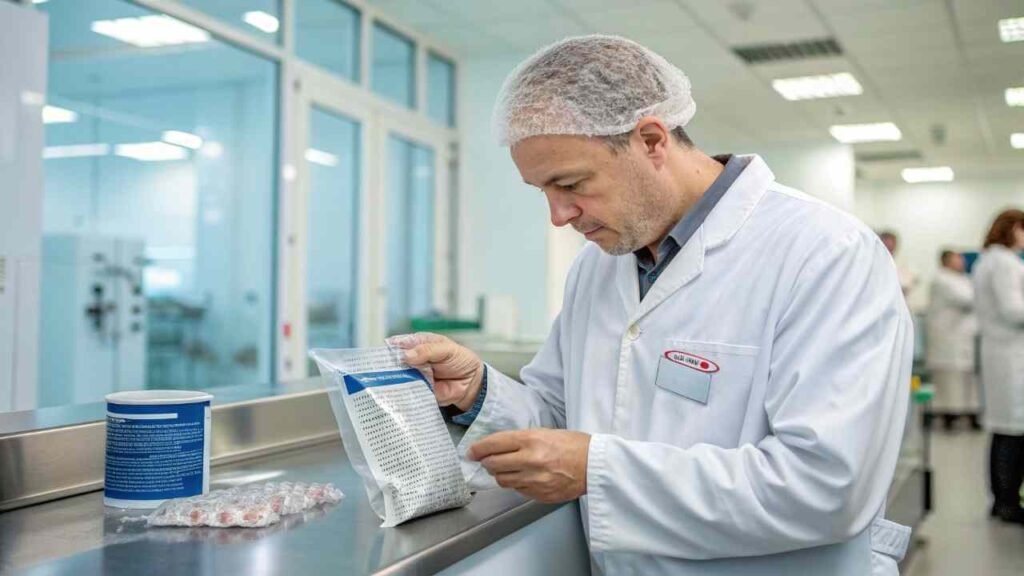
Thinking of buying from a new supplier? Their documents look good, but what if the product is bad? A bad batch can ruin your production and your reputation.
Sample orders support purchasing decisions by allowing buyers to physically verify a supplier's quality claims. Buyers can conduct their own laboratory tests on the sample before committing to a large, high-value purchase order, thereby eliminating the risk of receiving an off-spec product.
The sample is the bridge between talking and buying. For a professional buyer, a supplier's claims mean nothing without proof. The sample provides that proof. It is a critical technical step in the professional procurement process and the foundation upon which trust is built. A confident supplier will always be eager to send a sample for you to test.
What Sample Sizes Are Common for Potassium Sorbate?
You need to test a new supplier, but you are not sure how much product to ask for. Requesting the wrong amount can waste time and slow down your R&D process.
The most common sample sizes are 100-200 grams for initial laboratory analysis and a larger 1-2 kilogram sample for a small-scale pilot production trial. The size depends entirely on the buyer's testing purpose and internal procedures.
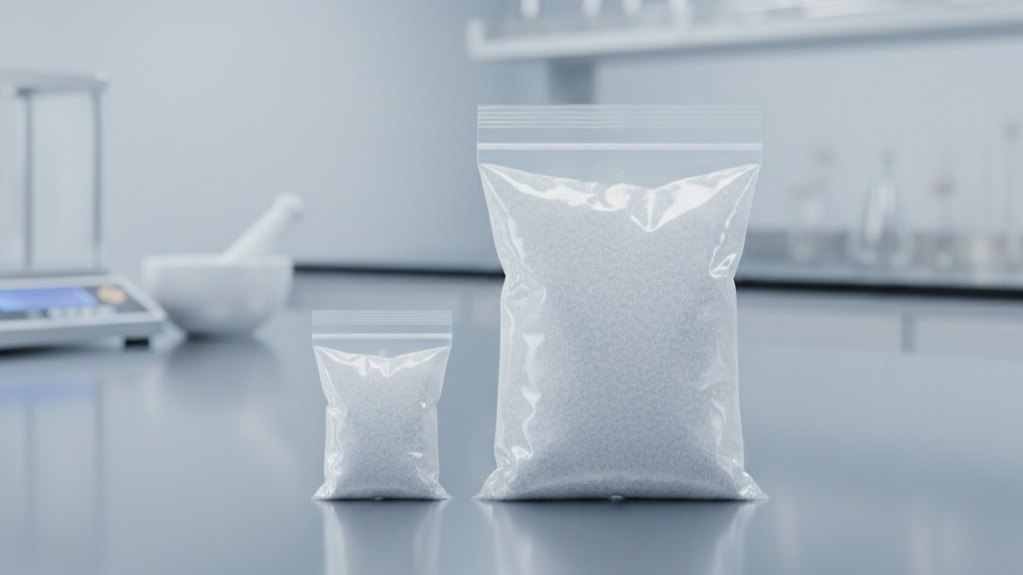
The purpose of your test dictates the size of the sample you need.
The Lab Bench Sample (100-200 grams)
A small sample of 100-200 grams1 is perfect for your QC lab. It provides more than enough material to run a full analytical verification of the product's purity (Assay), solubility, and safety specifications against the supplier's Certificate of Analysis (COA).
The Pilot Production Sample (1-2 kilograms)
A larger sample of 1-2 kilograms2 is for the ultimate test: a pilot production run. This allows you to make a small test batch of your actual product to see how the ingredient performs in your real-world formulation, ensuring it does not affect taste or other key properties.
Sample Size and Purpose Comparison:
| Sample Type | Common Size | Primary Purpose | Key Test Conducted |
|---|---|---|---|
| Lab Bench Sample | 100-200 grams | Analytical Verification | Purity (Assay), Solubility, Heavy Metals. |
| Pilot Production Sample | 1-2 kilograms | Real-World Performance Test | Making a test batch of your final product. |
How Fast Can Potassium Sorbate Samples Be Delivered?
You need to approve a new supplier urgently, but the sample seems to be taking forever to arrive. These delays can throw your entire project schedule off track.
Potassium Sorbate samples are typically delivered in 5-9 days. This includes 1-2 days for the supplier to prepare the sample and documents, plus 3-7 days for international air courier transit via a reliable service like DHL or FedEx.

A professional supplier knows samples are urgent. The process has two stages. First, supplier preparation3 (1-2 days) involves retrieving a fresh sample and preparing all necessary customs documents (COA, MSDS). Second, international transit4 (3-7 days). We only use major couriers like DHL or FedEx for their speed, detailed tracking, and customs expertise, which minimizes delays.
Sample Delivery Timeline Breakdown:
| Stage | Action | Typical Duration |
|---|---|---|
| 1. Preparation | Retrieve sample, package, prepare all documents. | 1-2 Business Days |
| 2. Transit | International air shipping via DHL or FedEx. | 3-7 Business Days |
| Total Time | From request to delivery at your door. | 5-9 Business Days |
What Tests Are Conducted on Potassium Sorbate Samples?
The sample has arrived. Now what? Simply looking at the white powder is not enough. You need a systematic, professional evaluation process.
Buyers conduct two types of tests on Potassium Sorbate samples: first, analytical tests in a lab to verify the purity and specifications on the COA; and second, a practical application test to see how it performs in their own product formulation.

The purpose of testing is to "trust but verify." You need to confirm the supplier's claims with your own objective data.
Analytical Laboratory Testing
Your QC lab should conduct a full analysis, with the most important test being the Assay (Purity)5, typically done via titration. This scientifically verifies that the sample meets the chemical specifications listed on the supplier's COA.
Practical Application Testing
This is the most critical test for a food manufacturer. You must make a small trial batch of your own product using the sample. This is the only way to confirm that the ingredient works in your specific process and does not negatively affect the taste, color, or texture of your final product.
Buyer's Sample Testing Protocol:
| Test Category | Specific Test | What It Confirms |
|---|---|---|
| Analytical (Lab) | Assay (Purity) via Titration | The product meets the claimed potency. |
| Practical (Production) | Making a small trial batch. | The product works perfectly in your formulation. |
How Do Sample Results Affect Potassium Sorbate Orders?
You have completed your tests on the new sample. What happens next? The results of this single test will determine the future of the entire business relationship.
The sample results are the ultimate go/no-go decision point. A positive, successful test verifies the supplier's quality and builds the trust needed to issue a purchase order. A failed test is a clear red flag that stops the deal.
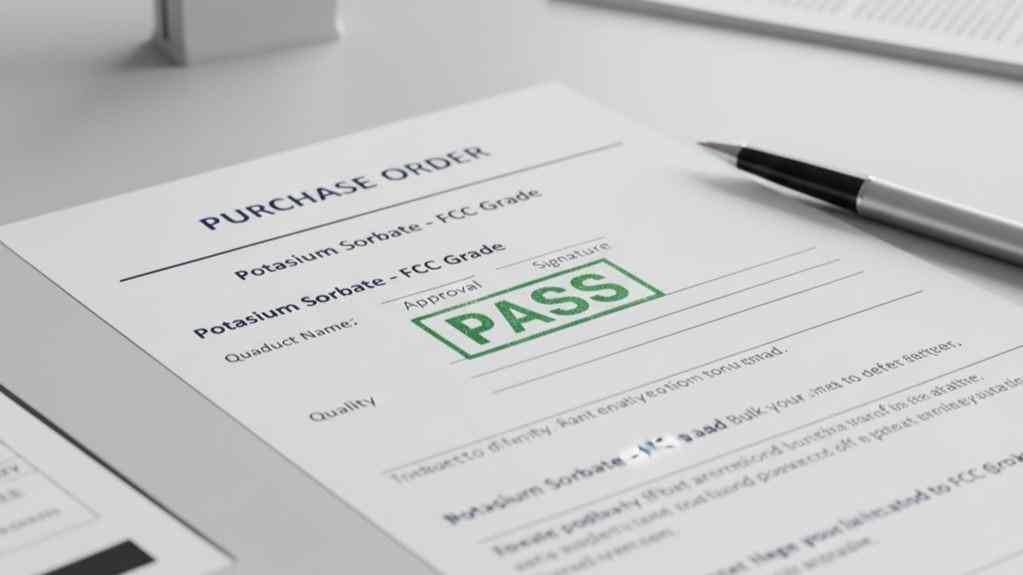
The sample test is a critical gateway with clear consequences.
The Green Light: A Successful Test
A "Pass" result proves the supplier is reliable and their claims are true. It builds the trust needed to move forward. This approved sample also becomes your "quality benchmark" for all future bulk shipments. You can now confidently approve the supplier and issue a trial purchase order.
The Red Light: A Failed Test
A "Fail" result is a success for your procurement process. It is a clear red flag that stops the deal immediately. The small effort of testing has saved you from the massive cost and risk of receiving a full container of bad product.
Sample Test Outcomes and Next Steps:
| Test Result | Meaning for the Buyer | Immediate Next Action |
|---|---|---|
| PASS | The supplier is verified, and trust is established. | Approve the supplier and issue a trial Purchase Order. |
| FAIL | The supplier is unreliable or does not meet standards. | Reject the supplier and stop further communication. |
When Should Buyers Request New Potassium Sorbate Samples?
You have already approved a supplier. Do you need to ask for a new sample before every single repeat order? That would be very inefficient.
Buyers should request new samples only at key strategic moments: when qualifying a brand-new supplier, when evaluating a different grade of product from an existing supplier, or when investigating a suspected quality issue from a previous shipment.

Requesting a sample is a tool you should use strategically, not for every routine order from a trusted partner. There are three key moments when a new sample is necessary:
- When qualifying a new supplier: This is always mandatory.
- When evaluating a new grade: For example, switching from granular to powder form from an existing supplier. The new grade must be tested.
- When investigating a quality issue: If a bulk shipment has a problem, request a pre-shipment sample from the next batch to verify the issue is resolved.
Decision Framework for Requesting a New Sample:
| Situation | Do You Need a New Sample? | Reason |
|---|---|---|
| First order with a new supplier. | YES (Mandatory) | To verify quality and establish a benchmark before committing. |
| Repeat order from a trusted supplier. | NO | Trust is established. Rely on the batch-specific COA. |
| Ordering a new grade from a trusted supplier. | YES | The product has different physical properties that must be tested. |
Conclusion
Sample orders are a fundamental risk management tool. They provide objective proof of quality, build supplier trust, and empower smart, data-driven purchasing decisions for your business.
-
Understanding the importance of sample size in QC can enhance your product's quality assurance process. ↩
-
Exploring the role of larger samples in pilot production can help ensure your product meets all necessary specifications. ↩
-
Understanding supplier preparation is crucial for efficient logistics and timely sample delivery. ↩
-
Exploring best practices in international transit can help ensure smooth and timely delivery of samples. ↩
-
Understanding Assay (Purity) is crucial for ensuring product quality and compliance with specifications. ↩