
Are unpredictable Taurine prices wrecking your budget? This volatility makes it impossible to manage costs and protect your precious profit margins.
Taurine prices directly impact profitability by affecting raw material costs. Volatility, driven by raw material costs and supply/demand imbalances, forces companies to use strategic procurement like contracts and bulk buying to manage expenses and ensure supply stability.
I spend a lot of time discussing market dynamics with my clients. A professional Purchasing Director knows that, for Taurine, a sudden price change is a direct threat to the profitability of an entire product line. Understanding the forces driving the Taurine market is the first and most critical step in taking control of your costs.
What causes Taurine price fluctuations?
Does the Taurine market seem stable, and then suddenly the price jumps? This unpredictability can ruin your financial planning if you do not understand the causes.
Taurine price fluctuations are caused by two primary factors: changes in the cost of petrochemical raw materials, and supply disruptions from the highly concentrated group of major producers. Unplanned factory shutdowns can have an immediate and powerful impact on global prices.
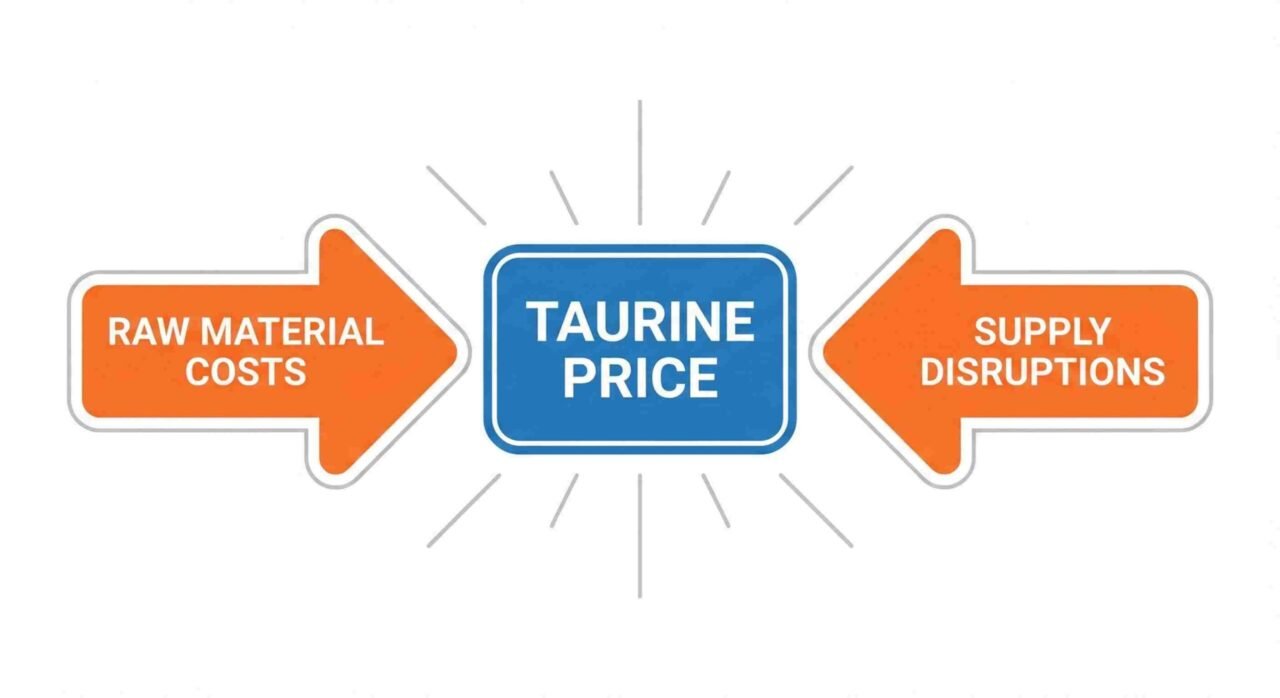
Taurine prices are not random. They are driven by two main forces. First, supply concentration1: the market is an oligopoly, meaning a handful of large companies control the supply. A shutdown at just one of these factories can instantly tighten the market and drive prices up. Second, the cost of raw materials2: the chemicals used to make Taurine are linked to the petrochemical industry, setting a baseline "price floor" for the product.
Price Fluctuation Drivers:
| Driver | Cause | Speed of Price Impact |
|---|---|---|
| Supply-Side Disruption | A sudden factory shutdown or production issue. | Fast (within weeks) |
| Raw Material Costs | A gradual increase in key precursor chemicals. | Slower (over months) |
How do raw material costs influence Taurine prices?
You see the price of crude oil rising, but you might not realize it has a direct connection to the price of your food ingredients. For Taurine, this link is critical.
Raw material costs are a fundamental driver of Taurine's price. The primary production method uses petrochemical-derived precursors like ethylene oxide. When the price of crude oil and these precursors rises, the factory's production cost increases, and this cost is inevitably passed on to buyers.
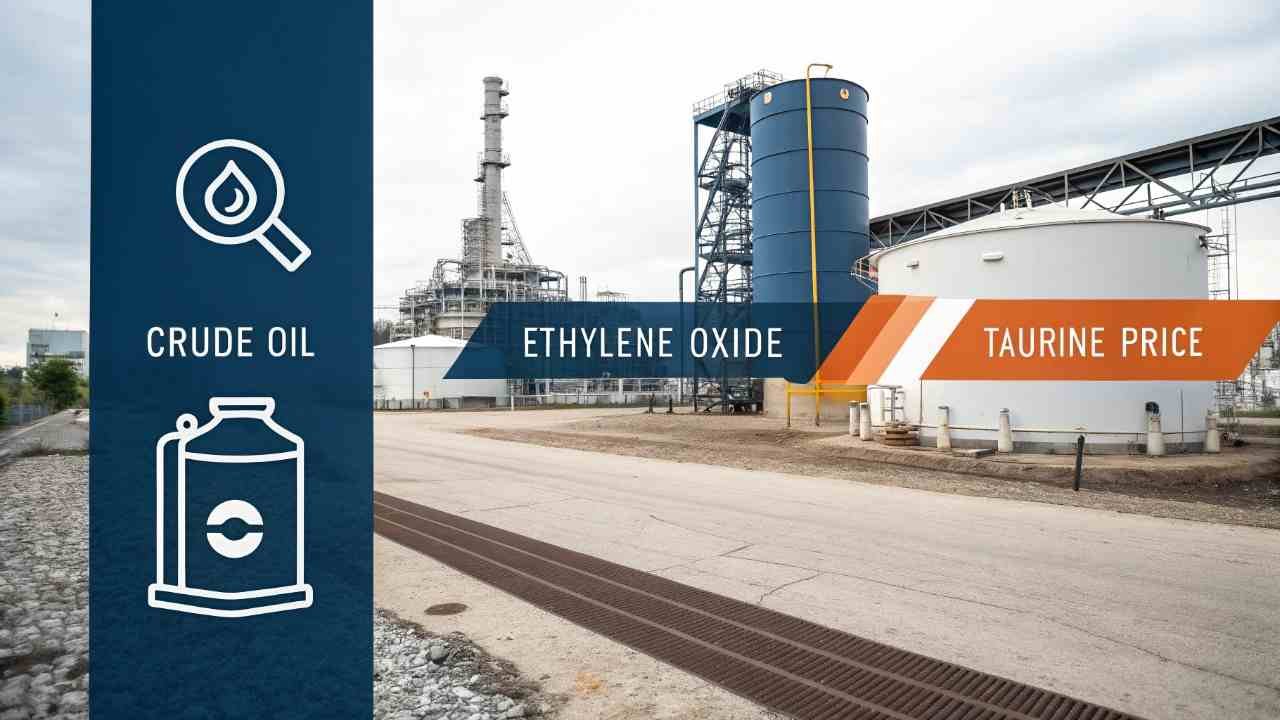
The production story for Taurine starts at an oil refinery. Its key raw materials are derived from petrochemicals, creating a direct cost chain: Crude Oil → Ethylene → Ethylene Oxide → Taurine. A sustained price increase at the start of this chain will inevitably ripple through to the final product. A factory's largest costs are energy and raw materials3; when these inputs become more expensive, the factory must pass that cost on to buyers.
Illustrative Impact of Raw Material Cost Increase on Final Price:
| Cost Component (per kg Taurine) | Normal Market Scenario | High Raw Material Cost Scenario |
|---|---|---|
| Key Raw Materials (e.g., EO derivatives) | $2.50 | $3.50 |
| Final Selling Price (FOB) | $6.00 | $7.00 |
How does global demand affect Taurine pricing?
Are you wondering what supports the baseline price of Taurine? A massive and growing global demand creates a very strong and stable price floor.
Global demand, led by the massive energy drink and pet food industries, creates powerful and consistent upward pressure on Taurine pricing. The continued growth of these sectors, especially in emerging markets, ensures a stable and long-term demand base.
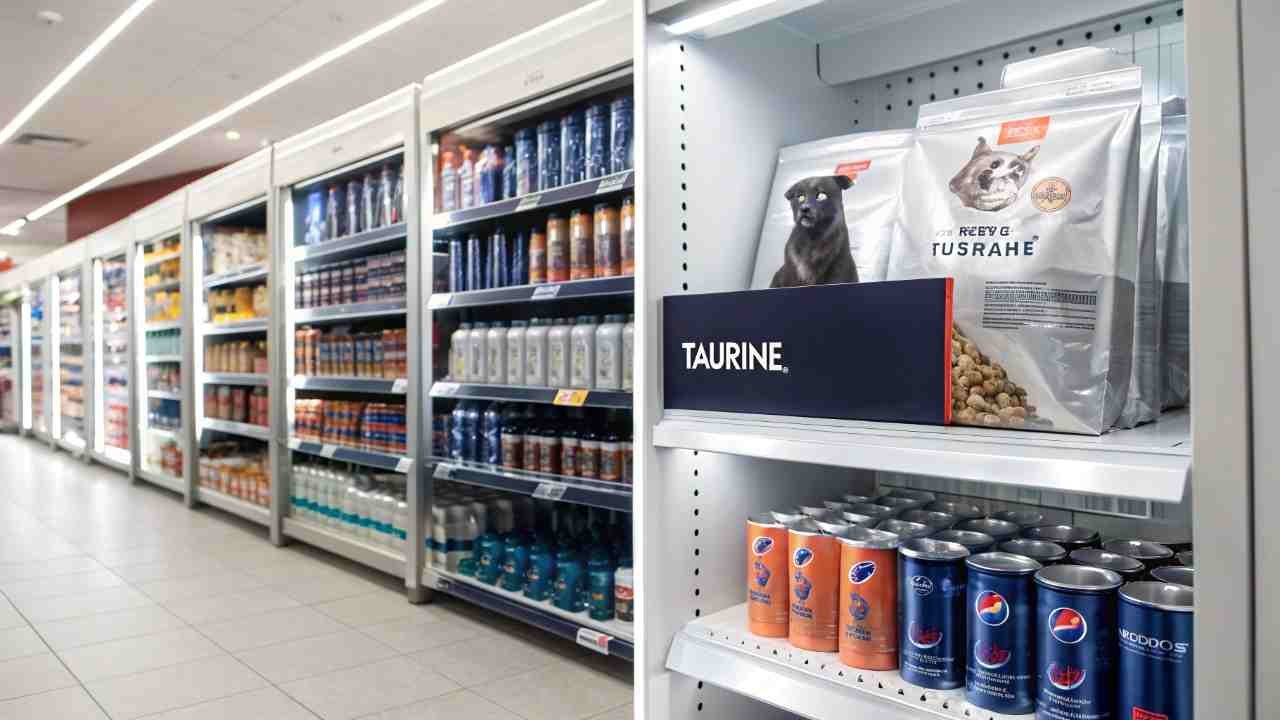
Long-term price trends are strongly supported by global demand. The two main engines are the energy drink industry4, a massive and growing market where Taurine is a key functional ingredient, and the pet food industry, where Taurine is a medically essential nutrient for cats. The consistent growth of these two huge global markets provides a powerful and stable foundation for the Taurine price.
Global Demand Drivers:
| Demand Sector | Key Driver | Impact on Taurine Demand |
|---|---|---|
| Energy Drinks | Global market expansion and continuous innovation. | Massive and growing demand for food-grade Taurine. |
| Pet Food (Cat) | Essential nutrient, "humanization of pets" trend. | Stable, inelastic demand for feed/food-grade Taurine. |
How can buyers forecast Taurine prices?
Do you feel like you are always reacting to price changes after they have already happened? With the right information, it is possible to anticipate market shifts.
Buyers can forecast price trends by monitoring two key leading indicators: the long-term price trend of raw materials like ethylene oxide (EO), and short-term news from major producers regarding planned shutdowns or production issues. A trusted supplier is the best source for this intelligence.

You can predict the market's direction by watching two signals. For the long-term trend, watch raw material prices like ethylene oxide. A sustained rise signals that the baseline cost is increasing. For short-term spikes, watch for producer news5. Announcements of factory shutdowns are a strong indicator of a coming supply squeeze. Your best source for this filtered, actionable intelligence is your strategic supplier partner.
Forecasting Toolkit for Buyers:
| Indicator | Signal Type | What It Helps You Predict |
|---|---|---|
| Raw Material Prices (EO) | Long-Term | The general trend of the baseline production cost. |
| Producer News | Short-Term | Potential for sudden price spikes due to supply tightness. |
| Supplier Intelligence | Strategic | Actionable advice for timely purchasing decisions. |
How to manage Taurine procurement costs effectively?
Are you tired of being a victim of market volatility? A reactive, order-by-order approach is a recipe for high costs and budget uncertainty.
You can effectively manage costs through a strategic, three-pronged approach: signing long-term contracts to fix your price, leveraging bulk purchasing and shipment consolidation to minimize logistics costs, and maintaining a safety stock to avoid buying during price peaks.

You can create stability with a professional procurement strategy. Long-term contracts6 are the best tool; they lock in your price and guarantee supply, giving you complete budget certainty. Shipment consolidation7 allows you to combine multiple ingredients into one FCL shipment, drastically cutting freight costs. Finally, a safety stock acts as a buffer, allowing you to use your own inventory and avoid panic-buying when market prices spike.
Effective Cost Management Strategies:
| Strategy | Primary Benefit | Best For |
|---|---|---|
| Long-Term Contract | Eliminates price volatility, guarantees supply. | Buyers with consistent, predictable demand. |
| Shipment Consolidation | Drastically reduces per-kilogram freight costs. | Buyers who purchase multiple ingredients. |
| Safety Stock | Provides a buffer to avoid buying during peak price periods. | All buyers who want to manage supply risk. |
Conclusion
Taurine price volatility is a challenge. But with market knowledge and strategic procurement, you can effectively manage costs, reduce risk, and secure your supply chain.
-
Understanding supply concentration helps grasp how market control affects prices, crucial for anyone interested in economics. ↩
-
Exploring this link reveals the broader economic factors influencing prices, essential for informed purchasing decisions. ↩
-
Exploring this topic will reveal the critical factors influencing production costs and pricing strategies. ↩
-
Explore this link to understand the dynamics and growth factors driving the energy drink industry. ↩
-
Staying updated on producer news can provide insights into potential supply issues and market volatility. ↩
-
Explore how long-term contracts can secure pricing and supply, ensuring budget stability for your business. ↩
-
Learn about shipment consolidation's role in cutting costs and improving efficiency in logistics. ↩