Unstable production tech leads to supply gaps and high prices. This inconsistency ruins your procurement plan. I explain how technology ensures a steady Erythritol supply for your business.
Production technology affects Erythritol supply by determining the fermentation yield and batch stability. High-efficiency yeast strains and automated control systems increase total output, while advanced purification steps ensure consistent quality. Modern tech allows factories to scale up production and meet rising global demand safely.
I manage factory selection and oversee production for my B2B clients at FINETECH. I want to share the technical facts about production technology so you can understand its impact on your supply chain.
Why is fermentation efficiency critical for Erythritol?
Low fermentation efficiency causes production delays and raises your costs. This inefficiency makes your supply chain vulnerable. I select factories with high-efficiency processes to protect your business interests.
Fermentation efficiency is critical because it determines the conversion rate of glucose to Erythritol. High efficiency means more product from the same amount of raw material. This ensures a stable supply and keeps wholesale prices competitive even when raw material costs fluctuate.
The Science of Yield and Stability
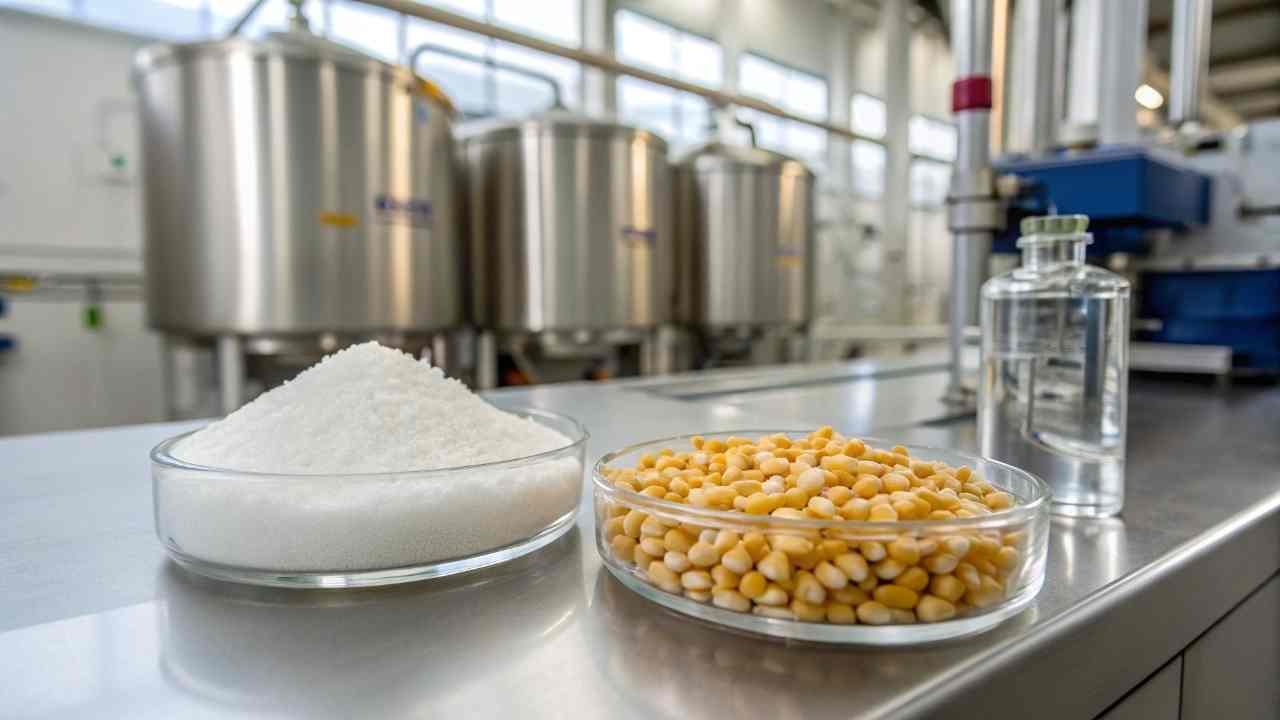
I see that fermentation is the most technical part of Erythritol1 production. We use yeast strains to convert glucose into sweetener. If the yeast is not efficient, the factory wastes raw materials. This waste leads to a lower total supply in the market. I visit factories to check their "Conversion Rates." A top-tier factory should achieve a yield of over 45%. This means for every 100kg of glucose, they get at least 45kg of Erythritol. I prioritize these high-yield producers for my buyers in the Middle East and Southeast Asia. High efficiency also means fewer impurities are created during the process.
Stable fermentation also affects lead times. If a batch fails because the yeast was weak, the factory must start over. This adds 5 to 7 days to your delivery time. I audit the "Strain Management" protocols at our partner plants. They must keep the yeast in a controlled environment to maintain its strength. I also check the "Inoculum" quality. This is the starting yeast culture. If the starting culture is strong, the fermentation is fast and stable. This technical detail is why some factories always deliver on time while others struggle. I act as your technical partner to ensure you only buy from factories with high-level fermentation expertise.
Fermentation Performance Indicators
| Metric | Industry Standard | High-Efficiency Target | Impact on Supply |
|---|---|---|---|
| Glucose Conversion | 38% - 42% | 45% - 50% | Lower cost per ton |
| Fermentation Time | 120 Hours | 80 - 96 Hours | Faster production cycles |
| Batch Success Rate | 95% | > 99% | Reliable delivery dates |
| By-product Level | < 5% | < 2% | Easier purification |
| Yeast Viability | 90% | > 98% | Consistent batch quality |
How do raw materials impact Erythritol output?
Poor raw material quality leads to clogged filters and failed batches. This failure stops your supply cold. I monitor the sourcing of glucose and starch to ensure your Erythritol supply stays steady.
Raw materials impact output by providing the substrate for fermentation. Pure glucose derived from corn starch is the primary requirement. High-quality raw materials lead to higher yields and fewer production stops, ensuring a consistent volume of food-grade Erythritol for the international market.
The Link Between Corn and Sweetener
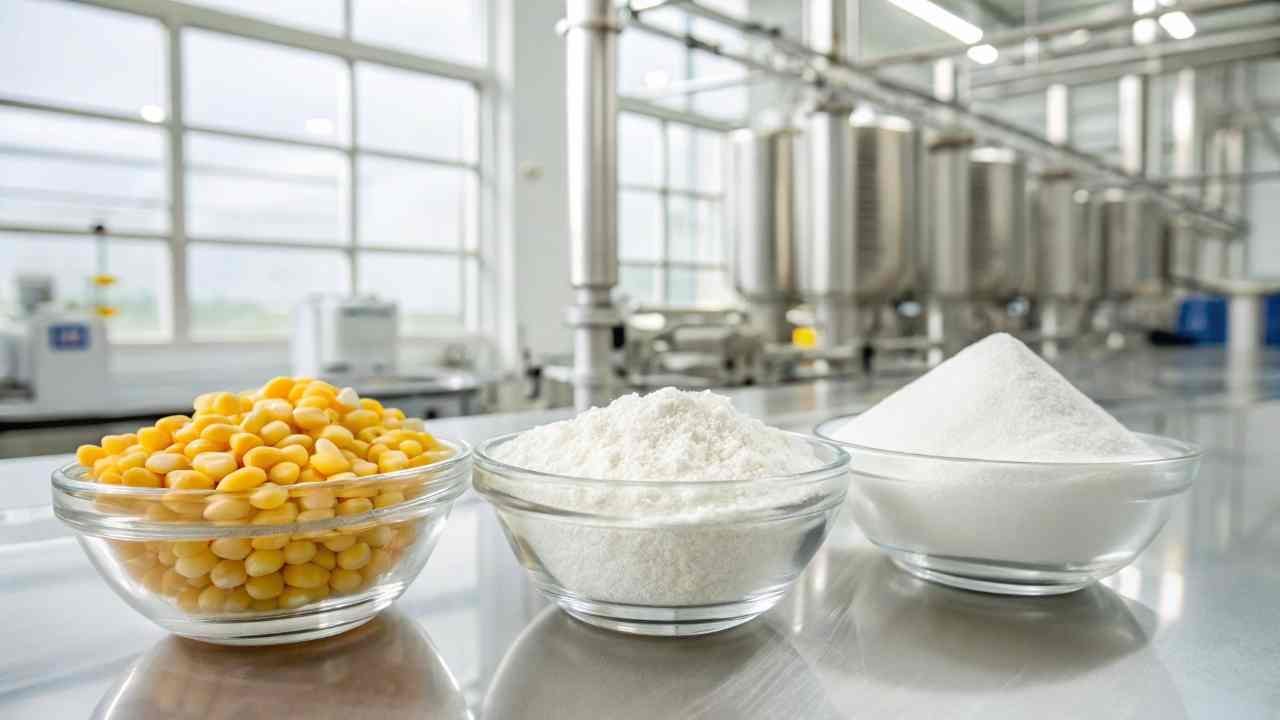
I see that corn is the foundation of the Erythritol industry in China. The process starts with corn starch2. This starch is broken down into glucose through enzymatic hydrolysis. I check the purity of this glucose at the factory. If the glucose contains too many proteins or minerals, the yeast will not grow well. This is a technical fact. I select factories that have their own starch processing lines. This vertical integration gives them better control over the raw material quality. It also protects you from supply shocks if glucose prices rise in the open market.
For my clients in Europe and Korea, I also manage the "Non-GMO" requirement. Most corn in China is traditional, but we still need strict testing. I verify the IP (Identity Preservation) certificates for the corn starch. If the raw material is not clean, the final Erythritol will not pass your lab tests. I also check the water quality used in the factory. Fermentation needs massive amounts of water. The water must be deionized and filtered. If the water has chlorine or heavy metals, it can kill the yeast. I act as your eyes in China to audit these starting materials. Good raw materials are the only way to get a high-purity final product.
Raw Material Quality Standards
| Raw Material | Technical Requirement | Importance | FINETECH's Verification |
|---|---|---|---|
| Corn Starch | > 98% Purity | Yield baseline | Audit starch plant |
| Glucose Syrup | 95% - 99% DE | Yeast food | Check hydrolysis logs |
| Nitrogen Source | Food-grade | Yeast growth | Review supplier COA |
| Process Water | Deionized | Safety / Yield | Check filtration system |
| Enzymes | High Activity | Fast breakdown | Verify MFG date |
What innovations are improving Erythritol production yield?
Outdated technology wastes energy and reduces your profit margins. This inefficiency hurts your competitiveness. I track the latest innovations in China to ensure you get the most advanced and cost-effective Erythritol.
Innovations like genetic strain optimization and continuous fermentation are improving yields. New membrane filtration technology and automated crystallization also reduce waste. these advancements allow factories to produce more Erythritol from less energy and material, stabilizing the global supply chain.
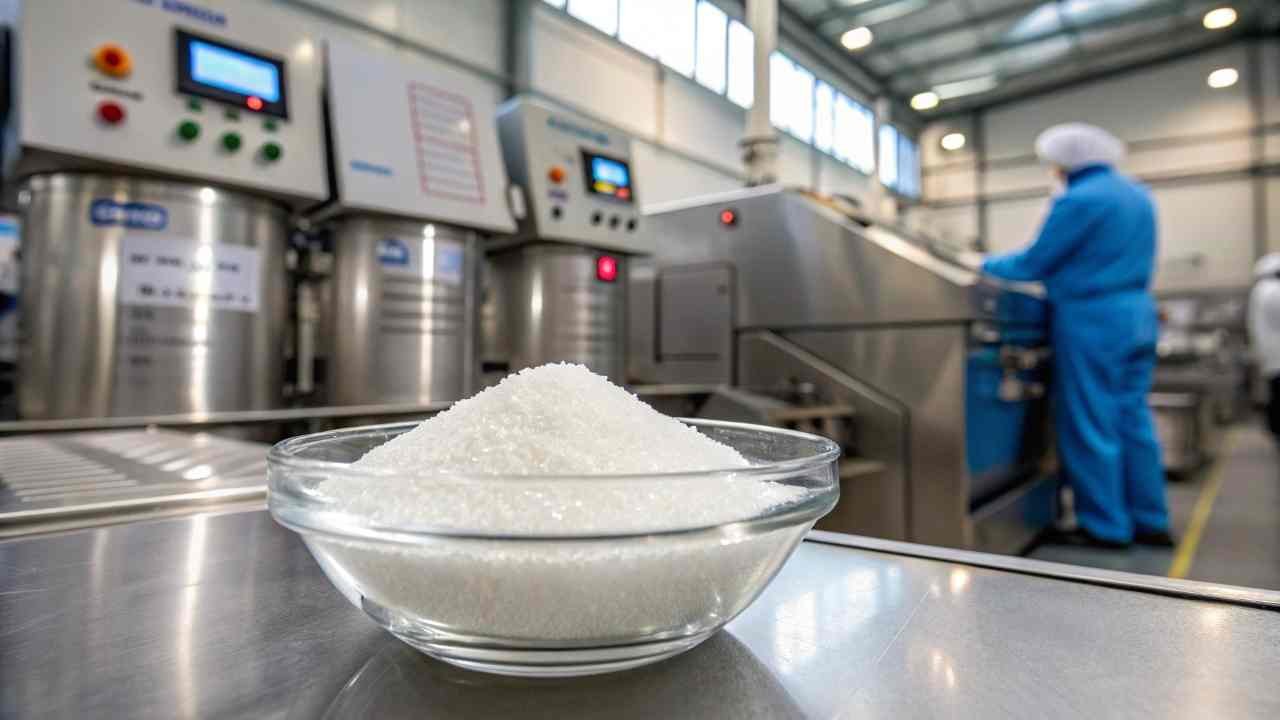
New Technology in the Production Line
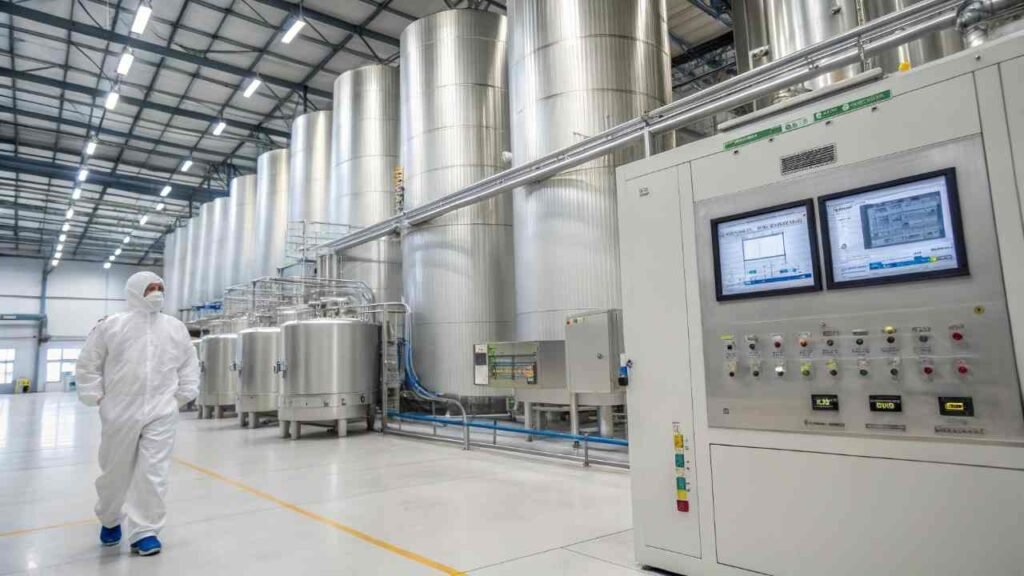
I see that technology is moving very fast in the Chinese food additive sector. The most exciting innovation is "Continuous Fermentation." In the old way, we did one batch at a time. This wasted time for cleaning the tanks. Now, some top factories use a continuous flow. This keeps the machines running 24/7. It increases the total supply significantly. I prioritize factories that use this method for my high-volume buyers. I also look at "Membrane Filtration." Instead of using old-fashioned filters, we use high-tech membranes. This removes cell debris and impurities more effectively. It results in a whiter crystal and higher purity.
Another innovation is "Automated Crystallization." In the past, workers had to watch the cooling tanks. Now, computers control the cooling rate to the exact degree. This ensures the crystals are the same size every time. Whether you need 18-60 mesh or 100 mesh, the technology delivers it perfectly. I visit the control rooms to see these DCS (Distributed Control Systems)3 in action. This technology reduces human error. If a human makes a mistake, the batch is ruined. A computer does not make that mistake. This technical reliability is why I can guarantee the quality of every shipment. I act as your strategic partner to access these technological leaders.
Technological Innovation Impact
| Innovation | Technical Change | Result for Buyer |
|---|---|---|
| Genetic Optimization | Better yeast strains | Lower prices / Higher purity |
| Continuous Process | No downtime | Faster lead times |
| Membrane Tech | Precision filtration | Better taste / Clarity |
| DCS Automation | Computer control | Batch consistency |
| Heat Recovery | Energy recycling | Stable pricing in winter |
| MVR Evaporation | Low steam use | Sustainable supply |
How does technology reduce Erythritol costs?
High production costs force you to raise your retail prices. This lose-lose situation hurts your market share. I focus on cost-saving technologies at the factory level to keep your procurement budget under control.
Technology reduces costs by lowering energy consumption and labor requirements. Automated systems (DCS) reduce man-hours, while MVR (Mechanical Vapor Recompression) evaporation saves on steam and electricity. These savings allow Chinese producers to offer the most competitive wholesale prices globally.
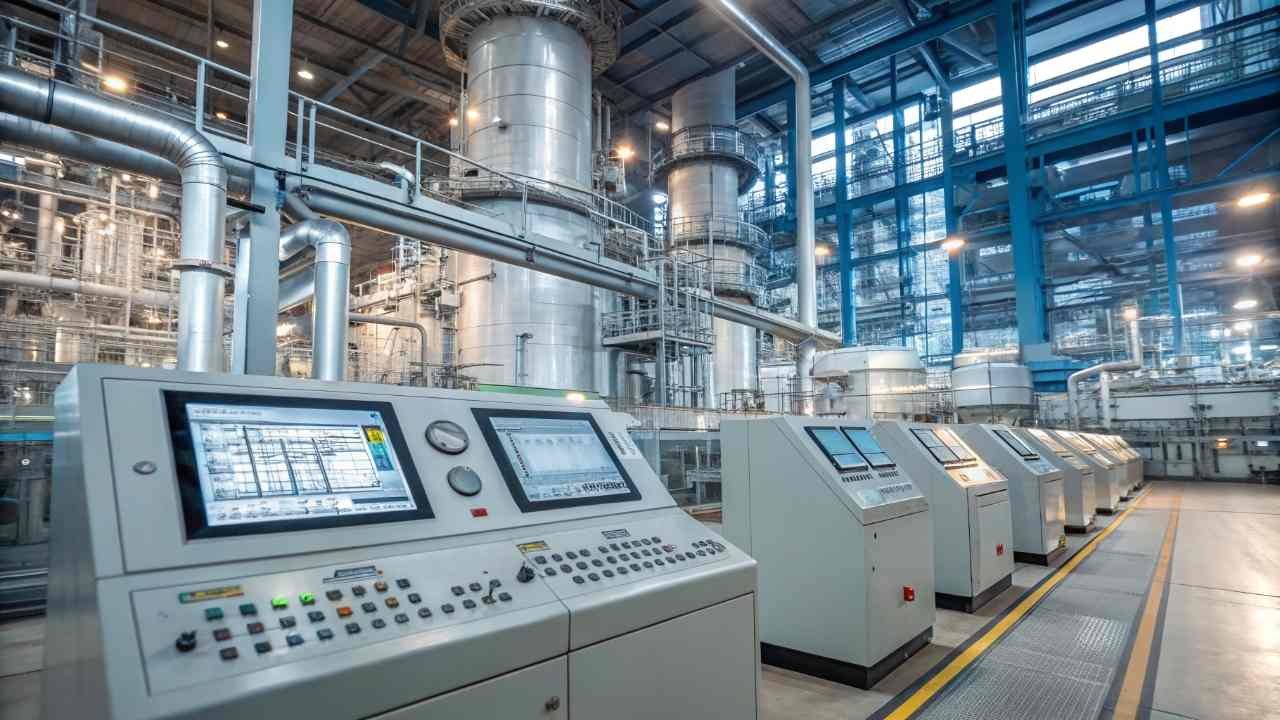
Energy Efficiency and Automation
I see that energy is one of the biggest costs in Erythritol production. We must evaporate a lot of water to get the crystals. I choose factories that use MVR (Mechanical Vapor Recompression)4 technology. Old factories use a lot of steam. MVR uses electricity to recycle the heat. This can lower the energy cost by 30% or more. This is a technical fact that directly changes your invoice. I also look for "Heat Exchange" systems in the fermentation tanks. Fermentation creates heat, which must be removed. Efficient factories use this heat to warm up other parts of the plant. This is smart engineering that saves money.
Automation also reduces the "Labor Cost" per ton. In an old factory, you see many people moving bags and turning valves. In a modern factory, you only see a few technicians in a clean control room. I prioritize these automated plants for my B2B clients. Automation also reduces the cost of "Quality Claims." If a batch is wrong, it is expensive to fix. Automated systems catch problems before they happen. I audit the "FMEA (Failure Mode and Effects Analysis)5" at the plants. This is a technical way to prevent errors. By choosing high-tech factories, I ensure you get a top-quality product at the lowest possible price. Efficiency is the key to profit in the food additive industry.
Cost Reduction Factors
| Cost Area | Tech Solution | Estimated Saving | FINETECH's Role |
|---|---|---|---|
| Steam / Heat | MVR Evaporation | 30% - 50% | Audit utility bills |
| Labor | Full DCS Automation | 20% | Check staff-to-output ratio |
| Waste | Circular Treatment | 10% | Verify waste recycling |
| Electricity | High-efficiency Motors | 15% | Check equipment specs |
| Quality | Online Sensors | Variable | Review rejection logs |
What risks exist in scaling Erythritol production?
Scaling production too fast leads to contamination and batch failures. This chaos ruins your supply security. I identify the risks of expansion to ensure your Erythritol comes from a safe and stable source.
Risks in scaling include microbial contamination in larger tanks and difficulties in temperature control. High-volume production also requires massive capital and raw material security. Managing these risks requires strict GMP standards and advanced cooling technology to maintain purity across thousands of tons.
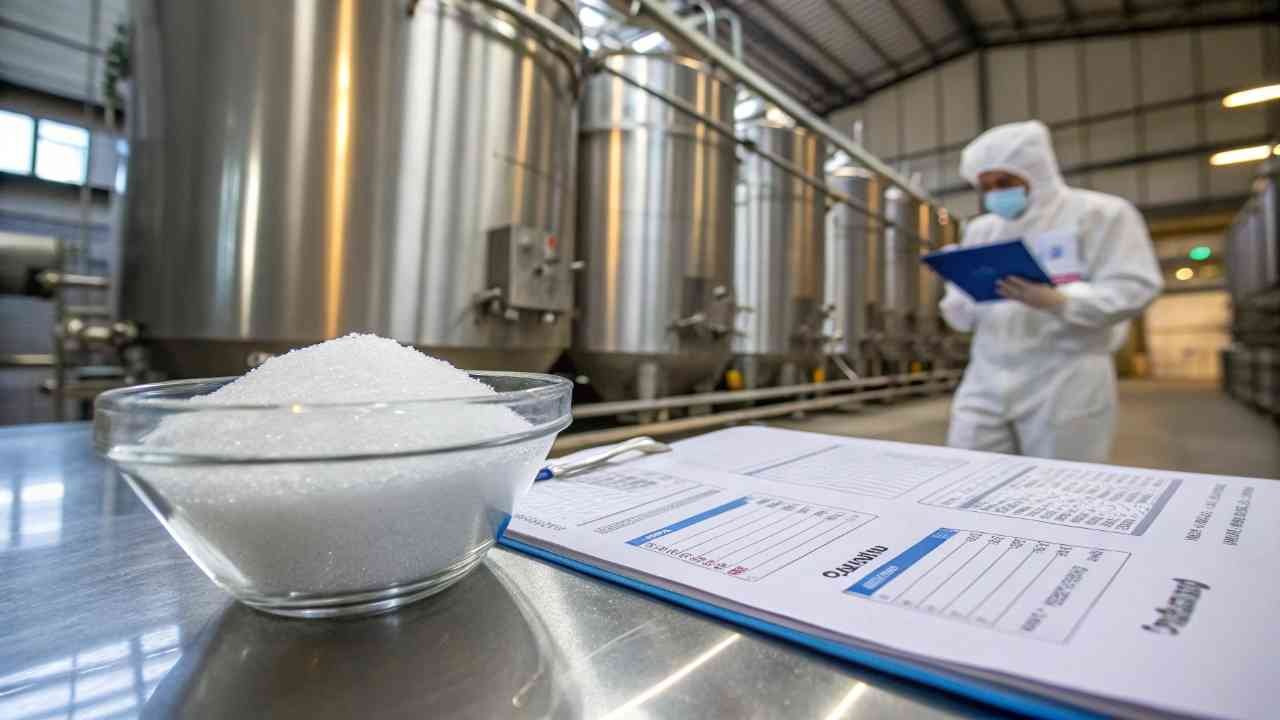
Managing Large-Scale Production Risks
I see that "Bigger" is not always "Better" without the right tech. When a factory moves from 50,000-liter tanks to 200,000-liter tanks, the risks go up. The biggest risk is contamination. In a giant tank, one small bacteria can ruin tons of product. I audit the "CIP" (Cleaning in Place) systems at the factories. These are automated systems that wash the tanks with hot water and chemicals. They must be perfect. I also check the air filtration in the fermentation hall. If the air is dirty, the yeast will be contaminated. This is a technical requirement for safety. I only work with factories that have a clean track record.
Temperature control is another technical hurdle for large tanks. Fermentation creates a lot of heat. If the tank is too big, it is hard to keep the center cool. If the center gets too hot, the yeast stops working. I prioritize factories that use internal cooling coils and high-power agitators. This ensures the temperature is the same throughout the whole tank. I also check their raw material storage. A large factory needs a giant supply of corn starch. If they run out, the production stops. I ensure our partner factories have at least 30 days of raw material on hand. This "Material Security" is how I protect your supply chain from sudden stops.
Scaling Risk Assessment Table
| Risk Factor | Technical Consequence | FINETECH's Protective Measure |
|---|---|---|
| Contamination | Ruined batches / Recalls | Audit CIP and air filtration |
| Heat Build-up | Yeast death / Low yield | Check cooling coil capacity |
| Starch Shortage | Factory shutdown | Verify 30-day raw stock |
| Oxygen Transfer | Slow fermentation | Audit agitation systems |
| Inconsistency | Quality varies by tank | Review cross-batch blending |
| Waste Volume | Env. permit issues | Check WTP (Water Treatment) |
Conclusion
Production technology is the main driver of Erythritol supply, cost, and quality. I manage these technical factors at FINETECH to keep your procurement safe, steady, and profitable.
-
Healthline – A comprehensive guide on the nutritional profile, safety, and health impacts of Erythritol as a sugar substitute. ↩
-
ScienceDirect – Technical research and industrial applications of corn starch as a primary raw material in fermentation. ↩
-
Yokogawa – A deep dive into the architecture and operational advantages of Distributed Control Systems (DCS) in manufacturing. ↩
-
Epcon – Technical explanation of Mechanical Vapor Recompression (MVR) technology and its energy-saving benefits in industrial evaporation. ↩
-
ASQ – An overview of the Failure Mode and Effects Analysis (FMEA) methodology for proactive quality risk management. ↩