
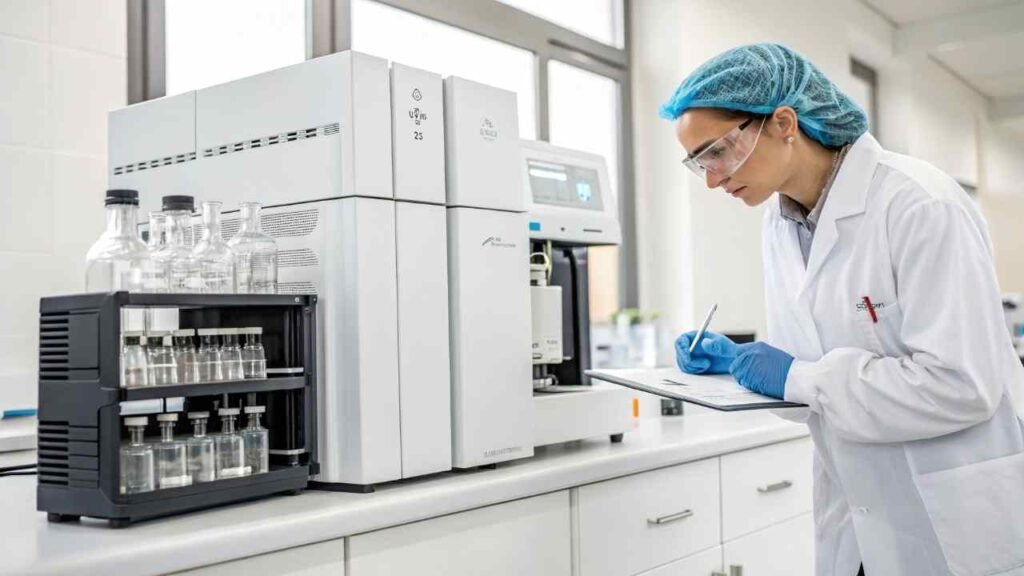
Low-quality Vitamin B6 ruins your product stability and brand trust. One bad shipment leads to expensive recalls and legal fines. I provide strict oversight to ensure your quality stays perfect.
Quality control for Vitamin B6 involves High-Performance Liquid Chromatography (HPLC) for assay purity, infrared spectroscopy for identity, and strict testing for heavy metals. Global trade requires compliance with USP, BP, or EP standards, verified through batch-specific Certificates of Analysis (COA) and ISO 22000 certifications for food safety.
I manage factory selection and quality oversight for my B2B clients at FINETECH. I want to explain the technical facts behind Vitamin B6 quality management to help you protect your business results.
What Testing Methods Are Used for Vitamin B6(Pyridoxine)?
Blindly trusting a label results in production failure. You waste time and capital on impure material. I use advanced laboratory tests to prove every batch is pure and safe.
Vitamin B6 quality is tested using HPLC for purity, FTIR for chemical identity, and atomic absorption for heavy metals. We also perform "Loss on Drying" for moisture control and microbial plate counts to ensure the powder is safe for food and pharmaceutical applications.
Advanced Analytical Methods for Purity and Safety
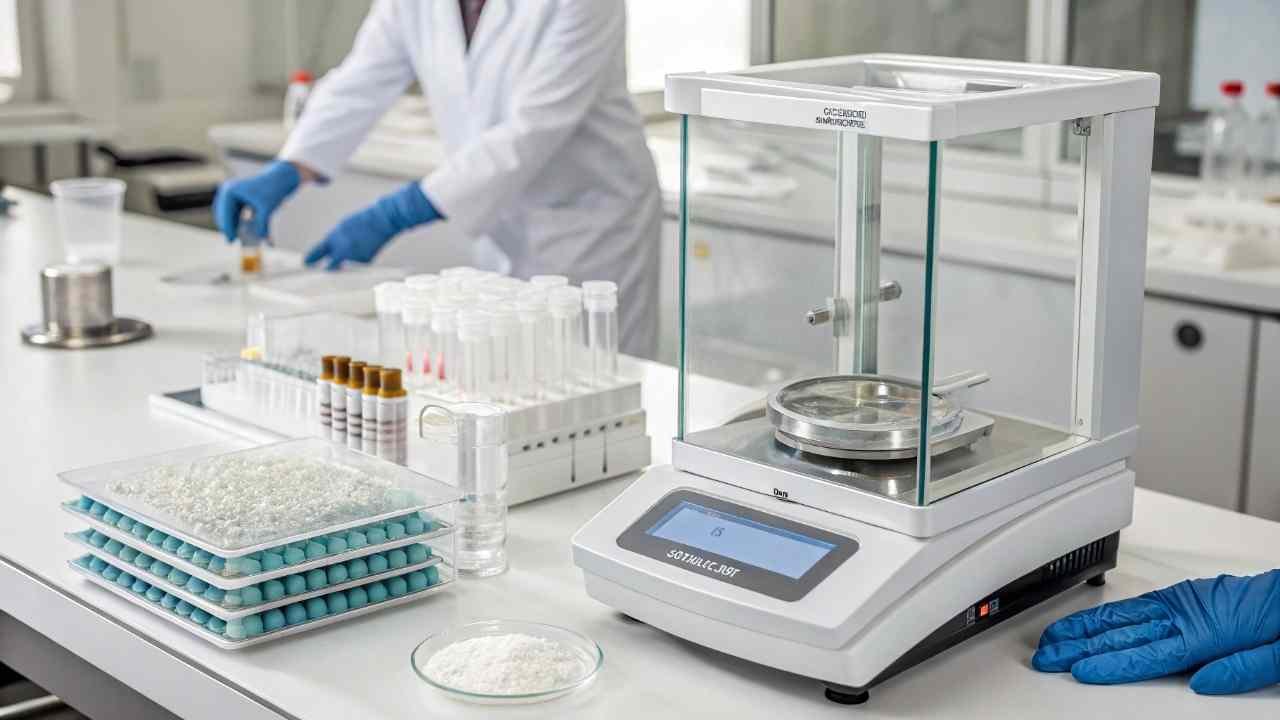
I see that many traders only look at the final assay number. But a professional audit looks at how that number was found. High-Performance Liquid Chromatography (HPLC) is the core tool I use. It separates the Pyridoxine from any other molecules. I review the HPLC chromatograms from the factory lab. If I see extra peaks on the graph, I know the batch is not clean. This machine tells us the exact percentage of active vitamin. Most food-grade B6 must be between 98.0% and 102.0%. I ensure our partner factories calibrate their machines every month. This prevents wrong readings that can hurt your recipe.
Identification is the next technical step. We use Fourier-Transform Infrared Spectroscopy (FTIR). This test creates a "fingerprint" of the chemical. It proves that the white powder is actually Pyridoxine Hydrochloride and not another salt. I also oversee the heavy metal testing. We use Inductively Coupled Plasma (ICP) to find tiny traces of Lead or Arsenic. In the food industry, these must be almost zero. Lead1 must stay below 2 mg/kg for most global markets. I also check the physical properties. We perform a "Loss on Drying" test. This ensures the powder is dry. If it is too wet, it will clump in your warehouse. I only ship material that passes all these filters.
Standard Quality Tests for Vitamin B6
| Test Name | Method | Purpose | Standard Limit |
|---|---|---|---|
| Assay (Purity) | HPLC | Measures active content | 98.0% - 102.0% |
| Identification | FTIR / UV | Confirms chemical identity | Must match standard |
| Heavy Metals (Pb) | Atomic Absorption | Ensures safety | < 2 ppm |
| Loss on Drying | Oven Drying | Prevents caking | Max 0.5% |
| Residue on Ignition | Muffle Furnace | Checks for minerals | Max 0.1% |
| pH Level | pH Meter | Consistency in formula | 2.4 - 3.0 |
What Quality Standards Apply to Vitamin B6(Pyridoxine)?
Using the wrong grade leads to legal bans and health hazards. These errors kill companies. I clarify the technical standards so you always stay compliant in your local market.
Vitamin B6 must comply with USP (United States Pharmacopeia), BP (British Pharmacopeia), or EP (European Pharmacopeia) standards. For food use, FCC (Food Chemicals Codex) is required. These standards define the minimum purity, impurity limits, and specific testing protocols for international trade.

Navigating Global Regulatory Frameworks
I see that different regions have different needs. If you are selling to a food factory2 in Germany, you must have the EP or FCC grade. These grades have very low limits for impurities. For my buyers in the Middle East and Southeast Asia, I usually suggest the USP standard. It is accepted globally. These standards are not just suggestions. They are laws. If your Vitamin B6 does not match the USP book, the customs officers can seize your cargo. I help my clients choose the right standard for their local health department. I ensure our labels match the required international code for your country.
I also want you to understand the "Pharmacopeia" system. Every few years, these books are updated. For example, the USP 43 might have different rules than the USP 40. I monitor these changes at FINETECH. I make sure our factories in China upgrade their testing methods to match the newest version. This proactive work prevents your product from becoming "obsolete." We also check for residual solvents. During chemical synthesis, certain alcohols are used. The international standards set strict limits on how much can remain in the powder. I check the lab logs for these solvents to ensure they are far below the safety limit. This oversight is how I keep your supply chain3 safe and legal.
Comparison of Main Quality Standards
| Standard | Focus Area | Market Usage | Purity Target |
|---|---|---|---|
| USP (USA) | General Pharma/Food | Global Standard | 98.0% - 102.0% |
| BP / EP (Europe) | High-end Pharma | Europe / Russia | 99.0% - 101.0% |
| FCC (Food) | Human Food Safety | Food Fortification | 98.0% - 102.0% |
| CP (China) | Domestic Trade | China Internal | 98.0% - 101.5% |
| JP (Japan) | Local Regulation | Japan / Korea | High Precision |
How Is Assay Consistency Ensured for Vitamin B6(Pyridoxine)?
Inconsistent batches cause irregular results in your food recipes. This lack of uniformity loses customer trust. I oversee production to ensure every drum matches your previous shipment.
Assay consistency is ensured through automated chemical synthesis and multi-point sampling during blending. Factories keep "Retainer Samples" for three years and perform regular HPLC checks to maintain the Pyridoxine Hydrochloride assay between 98.0% and 102.0% for every batch.
Standardized Manufacturing Controls
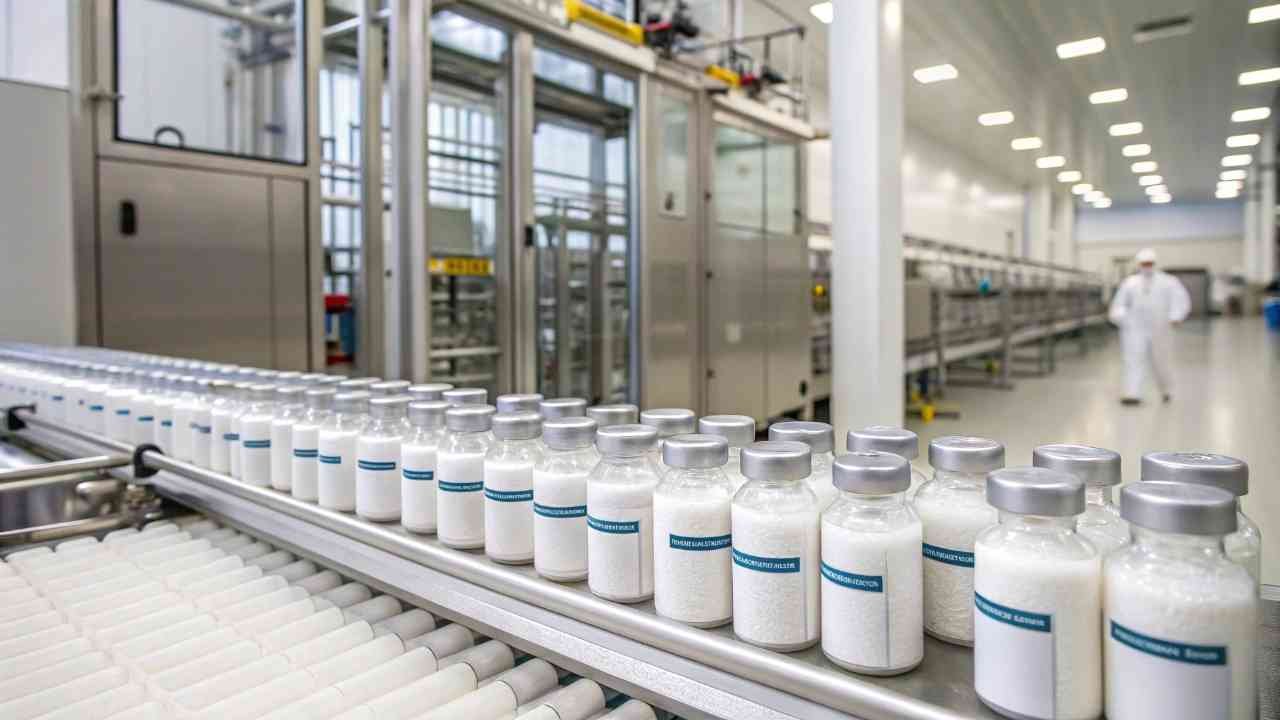
I observe that consistency starts in the control room. The factories I choose use automated systems. These systems monitor temperature and pressure during the chemical synthesis of Pyridoxine. If the temperature changes even a little, the crystal structure can change. Automation removes human error. Also, I check the raw material sourcing. The factory must use the same high-quality intermediates for every batch. If they change suppliers for their raw materials, the final Vitamin B6 might change too. I prioritize factories that produce their own intermediates. This "vertical integration" is the best way to get a uniform product every month.
I also insist on a strict sampling plan. The factory lab must take samples from the top, middle, and bottom of the blender. This is called "multi-point sampling." It proves the whole batch is the same. I do not accept a COA based on just one tiny sample. Plus, we use "Retainer Samples." The factory keeps a sample from your specific batch for three years. If you ever have a quality problem, we can test my sample again. It provides a technical history of your supply. I oversee these details to make sure your production line never has to stop. Consistent assay means your recipes work the same way every time. This reliability is why my clients in Southeast Asia and the Middle East stay with me for years.
Consistency Control Checklist
| Step | Action | Outcome |
|---|---|---|
| Raw Material Check | Verify intermediate purity | Consistent starting point |
| Process Automation | Digital sensors for synthesis | No human error in heating |
| Blending Control | Long-time mechanical mixing | Uniform powder density |
| Multi-Point Test | Sample 3 spots in batch | Proves batch uniformity |
| Retainer Sampling | Store sample for 3 years | Long-term traceability |
| Batch Numbering | Unique code on every drum | 100% traceability |
What Certificates Are Required for Vitamin B6(Pyridoxine) Export?
Missing documents stop your cargo at customs for weeks. These delays result in high storage fees. I provide a complete and verified technical file for smooth clearance.
Mandatory export certificates include ISO 22000, HACCP, and a batch-specific COA. For regional trade, HALAL and KOSHER are essential. Pharmaceutical grades require GMP or DMF. A Health Certificate and MSDS are also required for most global customs clearance.
Building a Complete Technical File
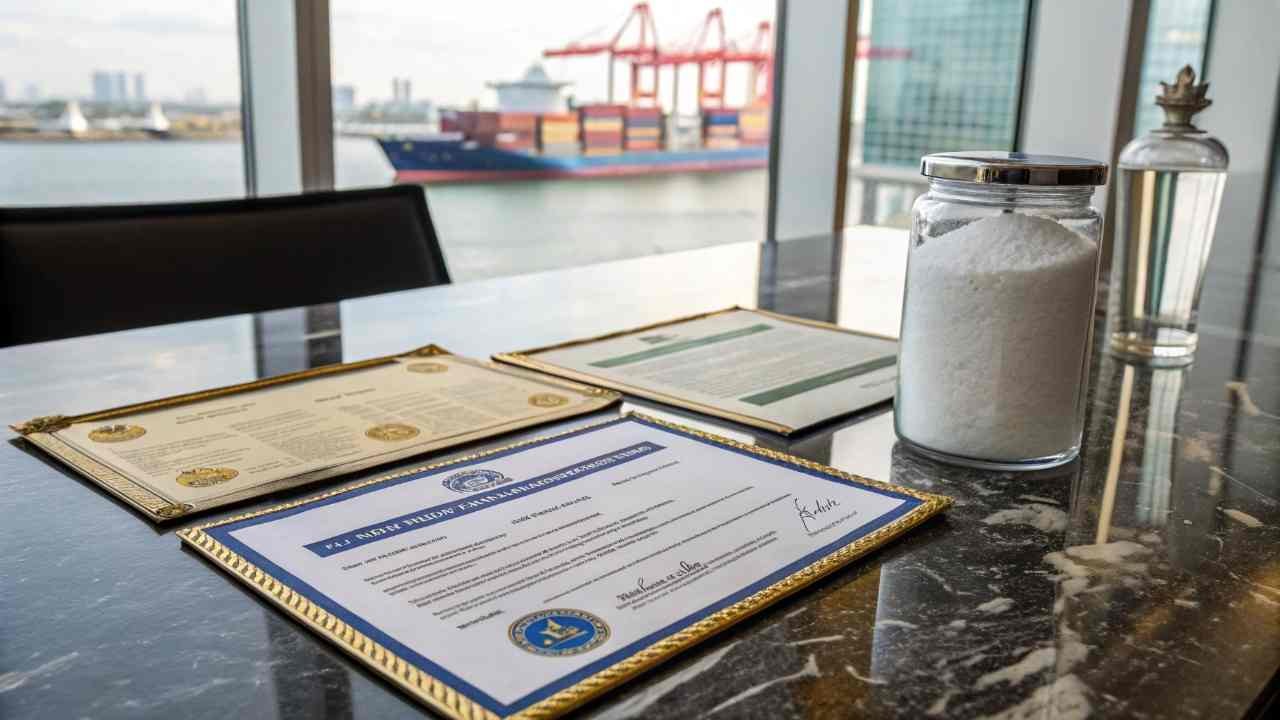
I see the COA (Certificate of Analysis) as the "passport" for your Vitamin B6. Without a perfect COA, the goods cannot move. A professional COA must be batch-specific. It should not be a general paper. It must show the real results from the HPLC and rotation tests. I check every line on the COA before the ship leaves China. I look at the batch number. It must match the number on the drum labels. I also check the expiry date. For Vitamin B6, the shelf life is usually 3 years. I ensure you receive fresh material with at least 30 months remaining. This protects your inventory value.
I also manage the safety management certificates. ISO 22000 and HACCP prove the factory follows hygiene rules. They have a plan to prevent dust or oil from entering the product. I also manage religious certifications. For my buyers in Saudi Arabia, UAE, and Indonesia, HALAL certification4 is a legal requirement. It proves no forbidden substances were used. KOSHER certification is also common for the European market. I verify these certificates with the issuing agencies. This technical check is how I ensure your Vitamin B6 passes any local audit. I gather all these technical papers into one file. I send it to you digitally and include a paper copy with the goods. This transparency is how I help you pass any customs check without delays.
Essential Export Documents Table
| Document Name | Purpose | Importance |
|---|---|---|
| COA (Certificate of Analysis) | Proves batch quality | Mandatory |
| MSDS (Safety Data Sheet) | Safety and logistics info | Mandatory |
| ISO 22000 / HACCP | Food safety management | Mandatory for Food |
| Health Certificate | Government safety proof | Mandatory for Food |
| HALAL / KOSHER | Religious compliance | Market Dependent |
| Packing List / Invoice | Customs clearance | Mandatory |
How Can Buyers Verify Vitamin B6(Pyridoxine) Quality?
Trusting a website photo is a dangerous gamble in trade. You risk receiving off-spec or dirty material. I explain how physical and document audits remove risk from your procurement.
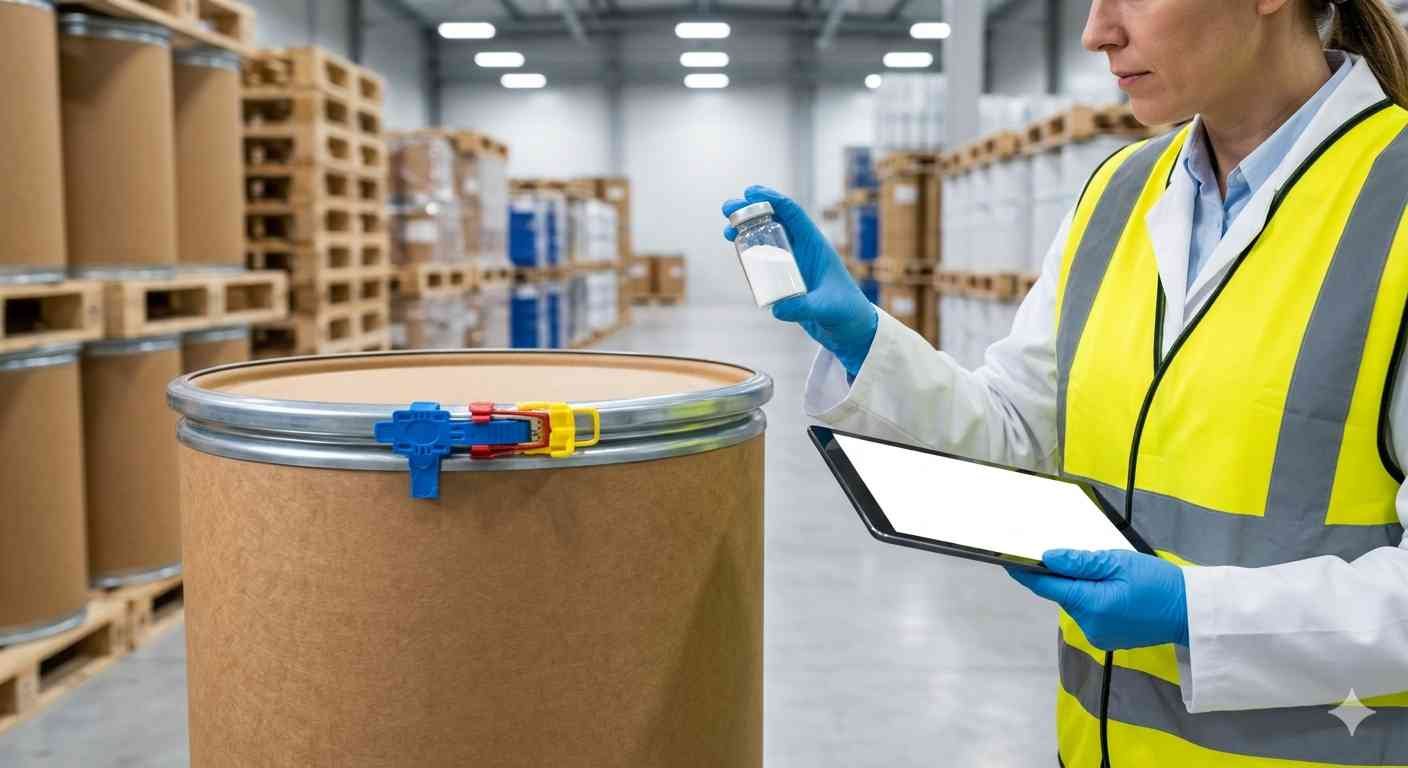
Buyers verify quality by requesting pre-shipment inspections (PSI) via SGS or Intertek. Auditing the factory’s lab logs, checking drum seals, and performing independent third-party tests on random samples ensure the Vitamin B6 meets USP standards before the final balance is paid.
Physical and Document Audit Strategies
I always tell my new partners to start with a Pre-Shipment Inspection (PSI)5. You can hire an independent company like SGS. Their inspector goes to the factory in China. They count the drums and check the labels. They also take random samples from the pallets. These samples are tested in an independent lab. This proves the COA from the factory is honest. I manage this coordination for my clients. A PSI report gives you total confidence before the ship leaves the port. It is the best way to avoid "surprises" when the container arrives at your warehouse in Indonesia or Germany.
I also perform my own audits. I visit our partner factories to see their synthesis tanks and packing rooms. I want to see a "Clean Room" environment for the final packing. If the room is dusty, the vitamin will be contaminated. I also check the lab equipment. A factory must have its own HPLC machine. If they send samples to a local university for testing, it is too slow. I prioritize factories with their own technical team. I also check their export history. I want to see they have shipped to the Middle East or Europe before. This means they understand international rules. My goal is to be your eyes on the ground in China. I handle the difficult audit work so you get a safe product.
Conclusion
Controlling Vitamin B6 quality requires precise testing, adherence to international standards, and strict document verification. I manage these technical details at FINETECH to ensure your business stays safe, profitable, and compliant.
-
WHO - Official health guidelines and safety evaluations regarding heavy metal contamination limits in nutritional products. ↩
-
Food Processing - An industry hub for food enterprises covering manufacturing technology, safety trends, and global market news. ↩
-
SCMR - A trade-oriented resource for procurement professionals focused on global logistics and industrial supply chain management. ↩
-
IFANCA - A global technical body providing information on Halal certification requirements for food additives in trade-oriented markets. ↩
-
Intertek - A professional overview of Pre-Shipment Inspection (PSI) services used by buyers to ensure cargo quality in international trade. ↩