Food oxidation ruins flavor and color, leading to high waste and customer complaints. Sodium Erythorbate stops this decay. It protects your food quality and business profit margins effectively.
Sodium Erythorbate is used as an antioxidant and color stabilizer in the food industry. It is common in meat processing to accelerate curing and maintain color. It also prevents oxidation in beverages, fruits, and vegetables. This extends shelf life while preserving natural flavors and nutritional value.
Understanding these applications helps you select the right grade for your manufacturing needs.
What Foods Benefit Most from Sodium Erythorbate?
Unappealing food color reduces consumer trust and sales. This instability makes products look unprofessional. Sodium Erythorbate provides the stability needed to keep your products looking fresh and pink on the shelves.
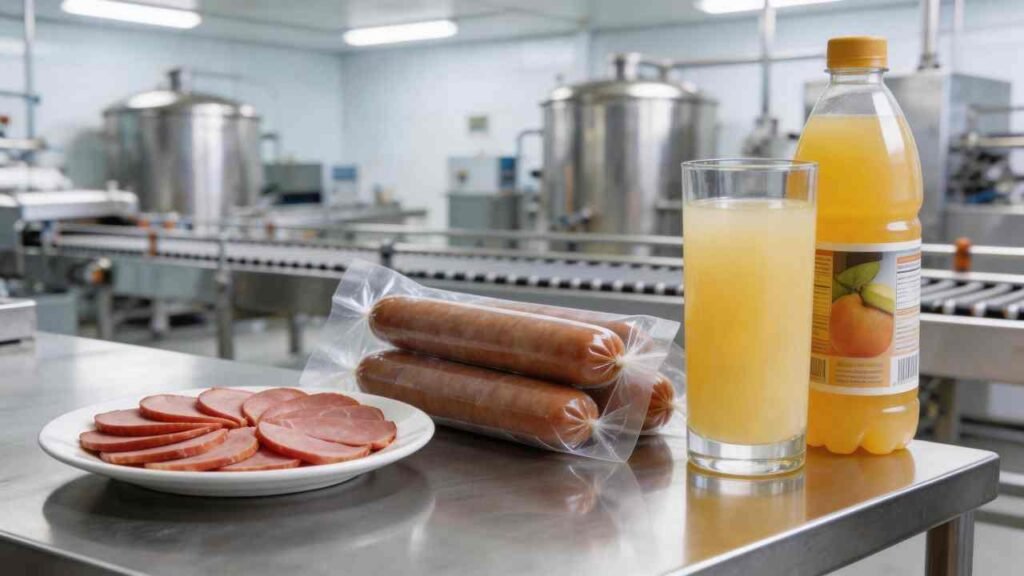
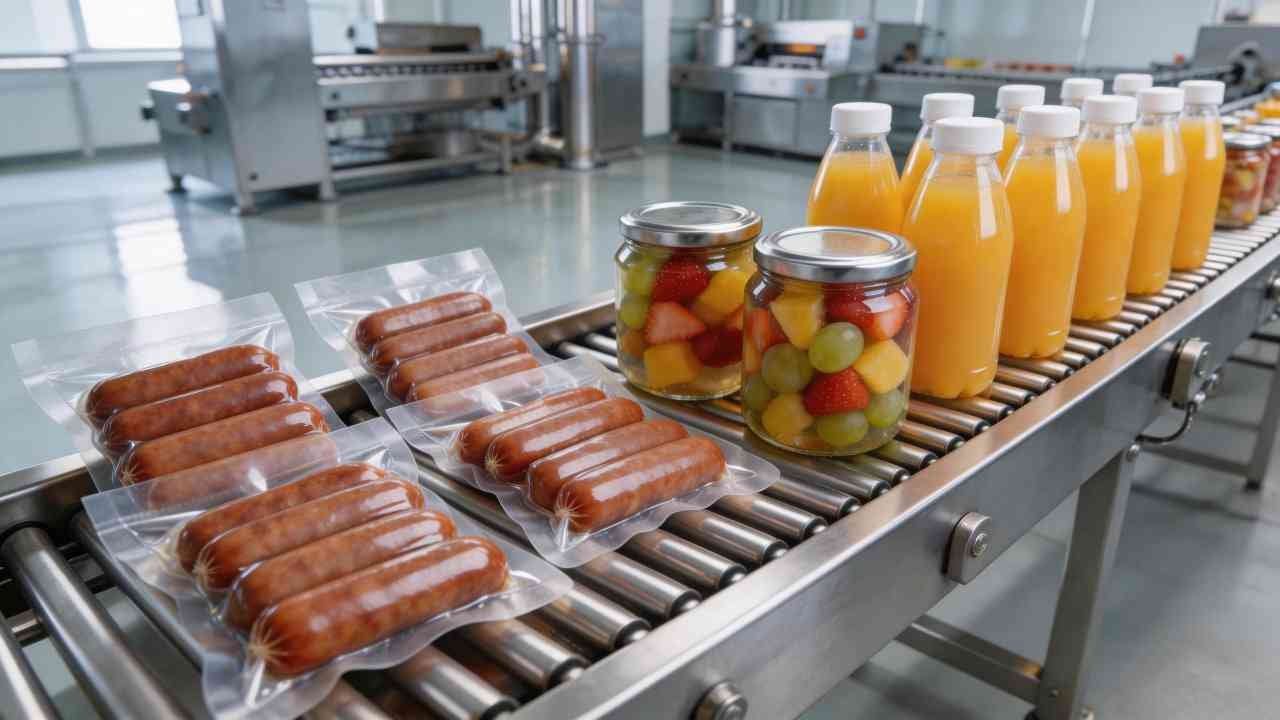
Cured meats like sausages, ham, and bacon benefit most by maintaining their pink color. It is also vital for canned fruits, vegetables, and beverages like juice or beer. These products use it to prevent browning and flavor changes caused by oxygen exposure.
Meat and Poultry Processing
I see the highest demand for Sodium Erythorbate1 in the meat industry. In my experience with buyers in the Middle East and Southeast Asia, this additive is essential for large-scale production. In meat curing, Sodium Erythorbate acts as a reducing agent. It speeds up the chemical conversion of nitrites into nitric oxide. This nitric oxide reacts with meat proteins to form the stable pink color found in ham. Without it, the curing process takes much longer. Also, the color would be uneven and fade quickly under supermarket lights.
Beverages and Canned Goods
Beverage manufacturers in Korea and Germany also use Sodium Erythorbate heavily. In fruit juices, it prevents Vitamin C from oxidizing too fast. This preserves the nutritional value of the drink. In beer production, it removes dissolved oxygen. This stops the beer from developing a stale taste after a few weeks. For canned vegetables like mushrooms, it prevents enzymatic browning. This keeps the vegetables looking natural and fresh for the consumer. I manage the supply for many canned food exporters who need consistent results for their global customers, especially food enterprises2.
Food Benefits Comparison
| Food Category | Primary Problem | Technical Role | Final Result |
|---|---|---|---|
| Cured Meats | Grey or brown color | Color fixation | Stable pink appearance |
| Fruit Juices | Loss of Vitamin C | Antioxidant shield | Preserved nutrients |
| Beer | Stale flavor | Oxygen scavenging | Fresh taste over time |
| Canned Veggies | Enzymatic browning | Oxidation inhibitor | Natural white/green color |
| Seafood | Black spots | Tyrosinase inhibition | Bright and fresh shells |
How Does Sodium Erythorbate Improve Food Shelf Life?
Rapid food spoilage increases disposal costs and reduces distribution efficiency. Without proper antioxidants, your inventory value drops. Sodium Erythorbate extends the safe life of your food products significantly.
Sodium Erythorbate improves shelf life by reacting with oxygen before it can damage food components. It stops fats from becoming rancid and protects pigments. This ensures a consistent taste and nutritional value during long-term storage and international distribution.
Chemical Mechanism of Preservation
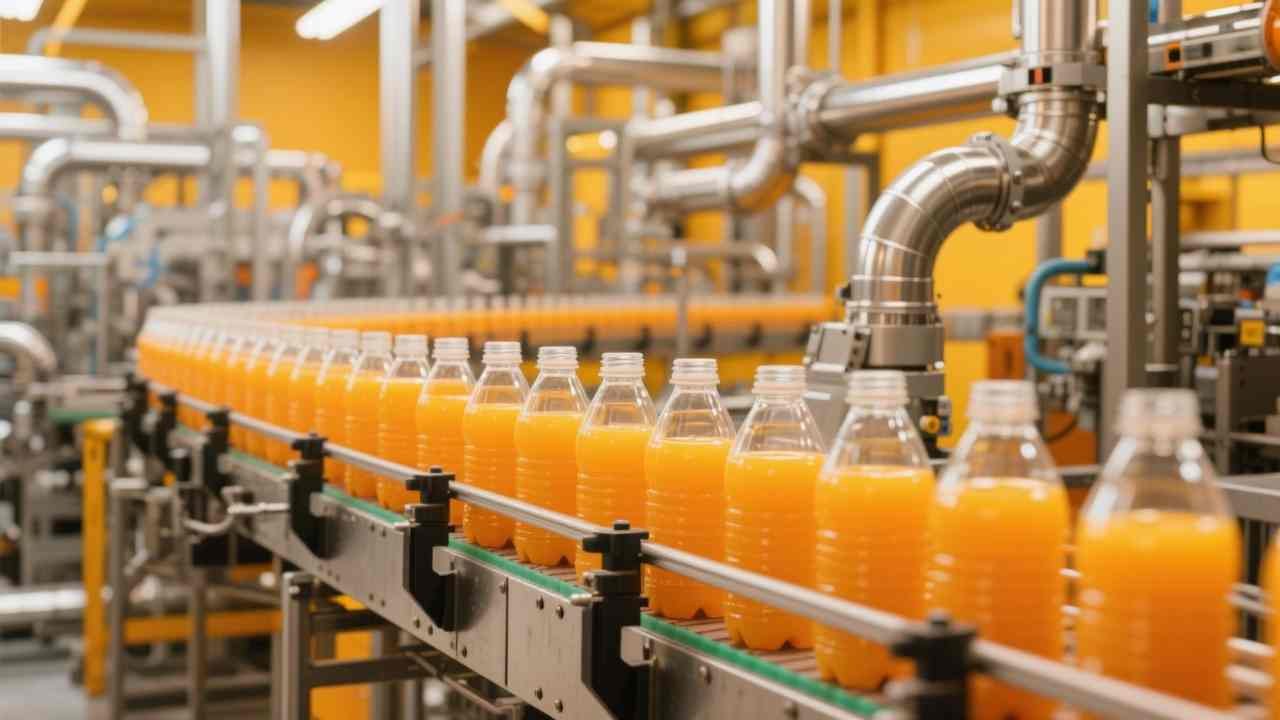
Oxidation is a chemical chain reaction that happens when food meets air. I observe that in beverage production, even small amounts of dissolved oxygen can ruin a batch. Sodium Erythorbate has a high reducing capacity. This means it "sacrifices" itself to react with oxygen first. By doing this, it protects the sensitive fats and proteins in the food. In oily foods, this prevents the "off-flavors" associated with rancidity. I help my clients calculate the right dosage to ensure their products stay fresh from the factory in China to the consumer.
Maintaining Nutritional and Sensory Integrity
Shelf life is not just about how food looks. It is also about how healthy it stays. Many vitamins are destroyed by oxygen. Sodium Erythorbate acts as a shield for these nutrients. Because it is a stereoisomer of Vitamin C, it shares many of the same antioxidant properties but is much more cost-effective. For a wholesaler, this means you can offer a product that keeps food healthy at a lower price point. I always ensure our product purity is above 98.0% to guarantee this performance for my clients in Europe and the Middle East.
Efficiency Factors
| Factor | Mechanism | Business Impact |
|---|---|---|
| Rancidity Prevention | Stops lipid oxidation | Fewer product returns |
| Color Stability | Protects natural pigments | Higher consumer appeal |
| Flavor Retention | Prevents aromatic breakdown | Consistent brand experience |
| Cost Efficiency | Lower price than Vitamin C | Improved profit margins |
How Is Sodium Erythorbate Combined with Other Additives?
Using single additives often fails to solve complex food stability problems. This leads to inconsistent batch results. Combining Sodium Erythorbate with other ingredients creates a synergistic effect for maximum protection.
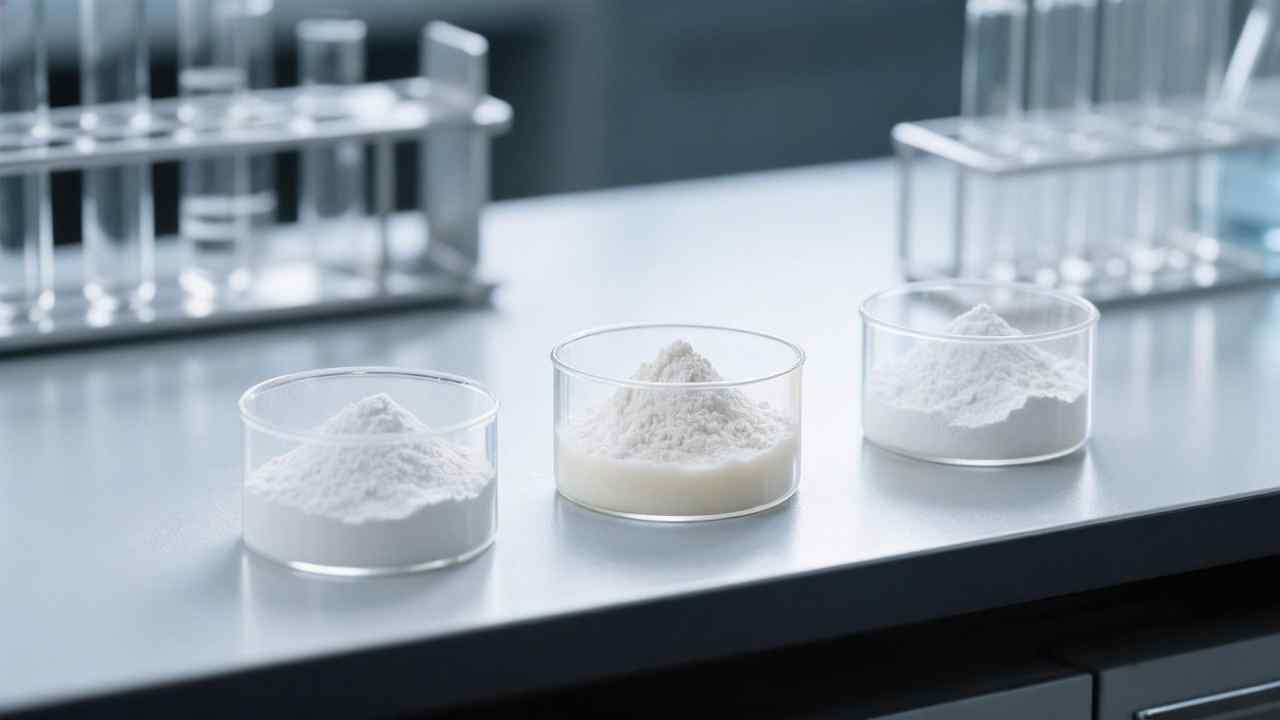
Sodium Erythorbate is combined with nitrites in meat to speed up curing and reduce nitrite residue. In beverages, it is often used with citric acid for acidity control and antioxidant protection. These combinations enhance the overall effectiveness of the food stabilizer system.
Synergy with Curing Salts
The combination of Sodium Erythorbate and Sodium Nitrite is a standard in the meat industry. I help my clients understand that this synergy is not just about color. Sodium Erythorbate reduces the amount of residual nitrite in the final product. This is important for meeting health and safety regulations in regions like the EU. It makes the curing process more efficient and predictable. When I manage factory selection, I look for grades that dissolve at the same rate as common curing salts for perfect mixing.This attention to detail is valuable for food technology professionals3 overseeing production.
Synergy with Acids and Stabilizers
In the beverage and canned fruit industries, we see Sodium Erythorbate used with Citric Acid. Citric Acid controls the pH, while Sodium Erythorbate handles the oxygen. Together, they create an environment where browning is nearly impossible. Also, in some processed food applications, it is used with Carboxymethyl Cellulose (CMC). While CMC provides the texture, Sodium Erythorbate protects the color. This multi-additive approach is what I recommend to large-scale global traders4 who want to provide a complete solution to their customers.
Common Additive Synergies
| Main Additive | Combined with | Industry | Primary Goal |
|---|---|---|---|
| Sodium Erythorbate | Sodium Nitrite | Meat Processing | Color fixation and safety |
| Sodium Erythorbate | Citric Acid | Fruit / Beverage | Browning prevention |
| Sodium Erythorbate | CMC | Sauces / Dressings | Texture and color stability |
| Sodium Erythorbate | Polyphosphates | Poultry | Moisture and color control |
What Quality Requirements Are Needed for Food Applications?
Impure additives introduce toxins into your production line. This leads to legal penalties and product recalls. High standards ensure your food is safe for human consumption and meets all international laws.
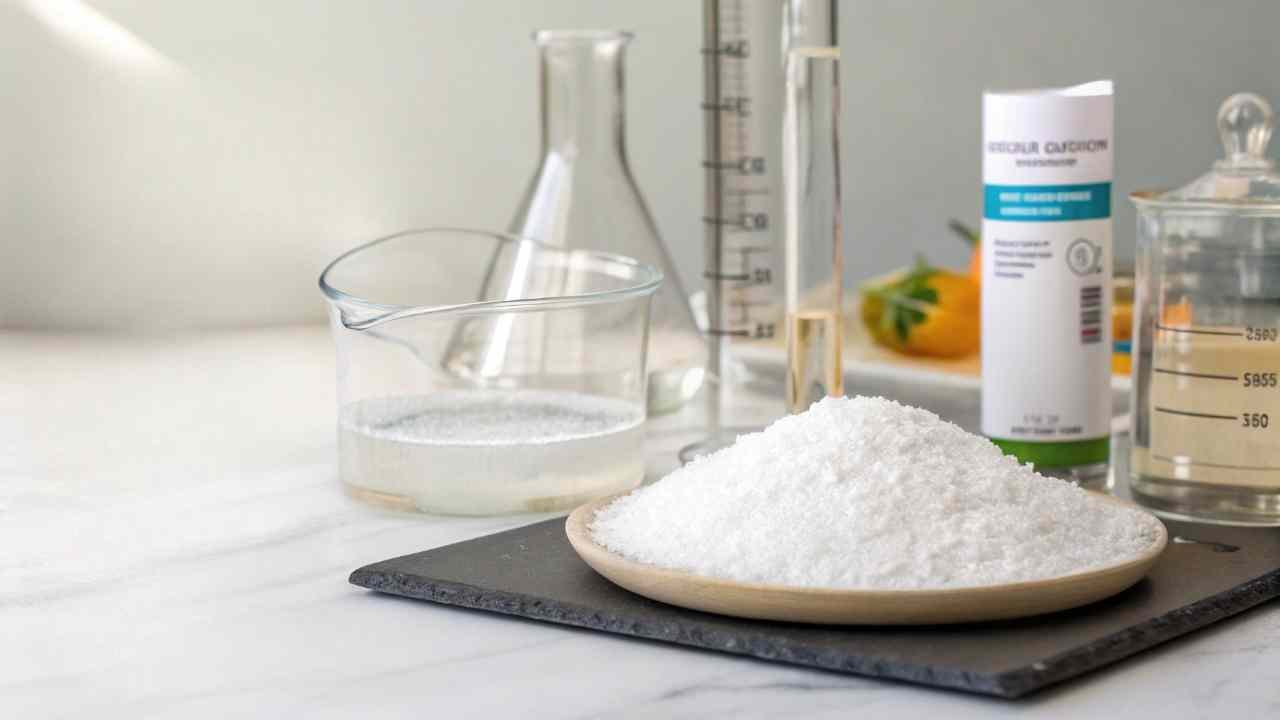
Food-grade Sodium Erythorbate must meet FCC or E316 standards. Key requirements include a minimum 98.0% assay, low moisture (max 0.25%), and strict heavy metal limits. Lead must be below 2mg/kg and arsenic below 3mg/kg to ensure global safety compliance.
Purity and Active Content Verification
I manage the quality oversight for all our exports from China. Purity is the most important factor. If the assay is below 98%, the product is not effective. You would need to use a higher dosage, which wastes money. High purity also means fewer unknown chemical side-products. For my clients in Russia and Germany, we strictly follow the E316 guidelines. This ensures the product is legally compliant with European food safety laws. We provide a full Certificate of Analysis (COA)5 for every batch to prove these numbers.
Heavy Metal and Contaminant Control
Safety is about what is not in the powder. We use advanced filtration to keep heavy metals like lead and arsenic at very low levels. These toxic metals can accumulate in the human body, so the limits are very strict. Also, we check the pH of a 5% solution. It must be between 5.5 and 8.0. If the pH is wrong, it can change the chemistry of your food batch. For our buyers in the Middle East and Southeast Asia, we also provide HALAL and KOSHER certifications to prove the production is clean.
Technical Specification Overview
| Quality Parameter | FCC / E316 Standard | FINETECH Quality | Importance |
|---|---|---|---|
| Assay (Dry Basis) | 98.0% - 100.5% | 99.2% - 99.8% | High (Strength) |
| Loss on Drying | Max 0.25% | 0.10% - 0.15% | High (Clumping) |
| Lead (Pb) | Max 2 mg/kg | < 1 mg/kg | Critical (Safety) |
| Arsenic (As) | Max 3 mg/kg | < 1 mg/kg | Critical (Safety) |
How Do Manufacturers Test Sodium Erythorbate Performance?
Buying additives without testing leads to recipe failures. This ruins your production schedule. Rigorous testing methods allow you to verify the additive's power before you commit to full-scale factory use.
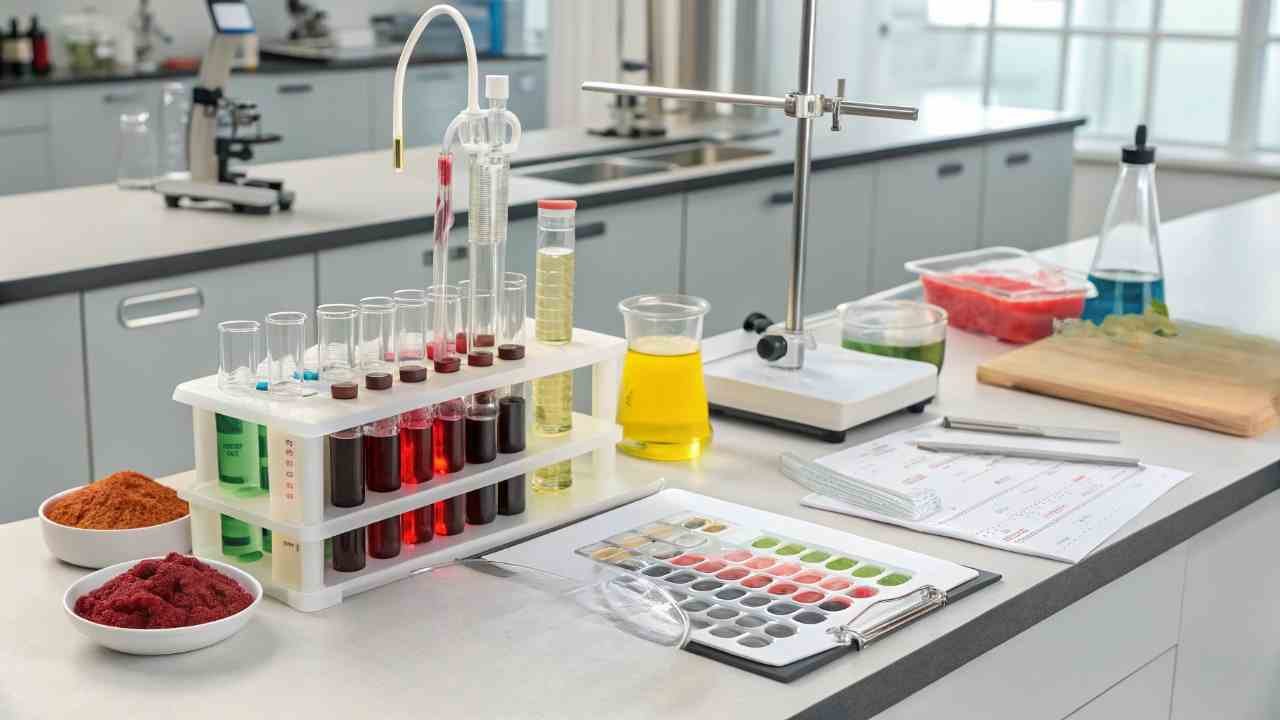
Manufacturers test performance through color stability trials and titration for active content. They also use shelf-life acceleration tests. They observe how the additive reacts in specific food matrices, like meat emulsions or juices, to determine the optimal dosage for maximum color retention.
Lab Testing and Chemical Analysis
In our quality oversight, I see factories using "accelerated aging" tests. They put the food in high-heat or high-light environments. This shows how fast the food oxidizes over time. We also use titration to check the reducing power of the Sodium Erythorbate. This is a technical way to measure how much oxygen the powder can handle. If the results are consistent, the manufacturer can be sure their product will work in the real world. I suggest that wholesalers ask for these performance logs.
Application Trials in Real Food
A lab test is good, but a real food trial is better. We test our Sodium Erythorbate in actual meat mixtures. We look at the color change using a colorimeter. This machine gives a digital number for how "red" or "pink" the meat is. We also test it in fruit juices to see if any sediment forms. These practical tests help us give better advice. For example, if you are a distributor in Vietnam, I can tell you how our product behaves in high-humidity storage. This detail helps you sell with confidence.
Performance Evaluation Metrics
| Test Method | What it Measures | Success Indicator |
|---|---|---|
| Colorimetry | Meat color intensity | High "a" value (redness) |
| Titration | Antioxidant capacity | Stable active levels |
| Visual Audit | Fruit browning | No change in color |
| Sensory Test | Flavor profile | No off-flavors or bitterness |
Conclusion
Sodium Erythorbate is a powerful antioxidant that improves food color and shelf life. I help you select the best grade and ensure stable delivery for your business needs.
-
Encyclopaedia Britannica – Overview of Sodium Erythorbate, its chemical nature, and applications. ↩
-
Food Business News – News and insights on food enterprises and manufacturing trends. ↩
-
Institute of Food Technologists – Professional resource hub for food technology practitioners. ↩
-
United Nations Conference on Trade and Development (UNCTAD) – Trade analysis and resources for global traders. ↩
-
Food Quality & Safety – What is a Certificate of Analysis (COA) and why it matters for food ingredient buyers. ↩