
Environmental regulations and consumer pressure make traditional MSG production risky. You might face supply gaps or brand damage. I show you how green tech secures your future profit.
Sustainability changes the MSG industry through energy-efficient fermentation, waste-to-fertilizer recycling, and eco-friendly packaging. Modern factories use MVR technology to cut steam use and carbon emissions. These green practices ensure long-term regulatory compliance, lower environmental taxes, and meet the growing global demand for ethical food ingredients.
I manage factory selection and oversee production for my B2B clients at FINETECH. I want to share the technical facts about sustainability so you can build a more resilient and modern supply chain.
What makes MSG production more sustainable?
High energy costs and carbon taxes eat your margins. Inefficient factories risk closure by regulators. I explain the green innovations that keep our MSG production both clean and competitive.
MSG production becomes more sustainable through bio-based raw materials like corn and sugarcane, and energy-saving technologies like MVR (Mechanical Vapor Recompression). Efficient water recycling and high-yield bacterial strains reduce resource consumption per ton, lowering the overall carbon footprint of the final food additive product.
Innovations in Green Fermentation Technology
I see that sustainability in the MSG industry starts with the "Engine" of the factory. This engine is the fermentation tank. In the past, factories used massive amounts of coal to produce steam. This steam was used to heat the tanks and evaporate water. Today, the best factories in China use MVR (Mechanical Vapor Recompression). This technology recycles the heat from the steam. It can reduce energy consumption by up to 50%. I visit these plants to check their energy logs. Efficient energy use is a technical fact that directly lowers your wholesale price. If a factory wastes energy, they pass that cost to you. I prioritize factories that invest in these green machines.
Raw material selection is another key factor. MSG is bio-based. It comes from corn or sugarcane. These are renewable resources. I look for factories that use "High-Yield Bacterial Strains." These bacteria are specialized. They eat less glucose but produce more glutamic acid. This means we use less land and less water to produce the same ton of MSG. I also check the water treatment systems. Modern plants use "Closed-Loop1" water systems. They treat the water from the fermentation process and use it again in the cooling towers. This reduces the total water footprint. I act as your strategic partner to verify these technical details. Buying sustainable MSG is not just good for the earth; it is a smart move to avoid energy-related price spikes.
Energy and Resource Efficiency
| Technical Factor | Traditional Method | Sustainable Innovation | Benefit to Buyer |
|---|---|---|---|
| Energy Source | Coal-fired boilers | MVR / Heat recovery | Lower energy surcharge |
| Water Usage | Direct discharge | Closed-loop recycling | Lower environmental tax |
| Bacterial Strain | Standard yeast | High-yield bio-strains | Improved price stability |
| Raw Material | High-waste sugar | Optimized corn starch | Renewable supply chain |
| Waste Heat | Released to air | Recycled for drying | Reduced carbon footprint |
| Automation | Manual control | AI-driven fermentation | Less raw material waste |
How can MSG suppliers reduce waste?
Industrial waste leads to massive fines and environmental lawsuits. This instability threatens your supply chain. I show you how our partners turn production waste into valuable secondary resources.
MSG suppliers reduce waste by implementing a circular economy model. They convert fermentation by-products into organic liquid fertilizers and animal feed. Advanced membrane filtration also allows factories to recover water and minerals, significantly decreasing the volume of wastewater and improving the factory's environmental audit scores.
The Circular Economy in Glutamate Production
I see that waste management is now a profit center for the best MSG factories. In the old days, the liquid left after fermentation was a pollution problem. Now, we use it. This liquid is rich in nitrogen and organic matter. High-tech factories use "Evaporation and Concentration" to turn this liquid into organic fertilizer. I see these fertilizer products being sold to local farmers in China. This is a perfect example of a circular economy. It removes the cost of waste disposal. When a factory reduces waste costs, they can offer more competitive pricing to my B2B clients in the Middle East and Europe.
Suppliers also use "Membrane Filtration2" to recover valuable minerals. This technology acts like a very fine sieve. It catches small molecules that we can use again in the next batch. I audit the waste treatment plants during my site visits. I want to see that zero waste goes into the local rivers. This is not just for the environment. It is a business risk. If a factory pollutes, the government will shut them down during "Blue Sky" inspections. By sourcing from a zero-waste factory, I ensure your supply never stops due to environmental fines. I also check the "Solids Recovery" process. The dead bacteria cells from the fermentation are dried and sold as high-protein animal feed. Every part of the corn is used. This efficiency is why Chinese MSG remains the most competitive in the world.
Waste Stream Management
| Waste Type | Traditional Outcome | Sustainable Solution | Value Created |
|---|---|---|---|
| Mother Liquor | High-BOD wastewater | Organic fertilizer | No disposal fees |
| Bacterial Biomass | Landfill waste | High-protein animal feed | Secondary revenue |
| Steam Condensate | Heat loss | Pre-heating raw materials | Energy saving |
| CO2 Emissions | Released to atmosphere | Captured for industrial use | Carbon credit potential |
| Packaging Scraps | Plastic waste | Recycled PP material | Lower packaging cost |
| Filter Mud | Solid waste | Soil conditioner | Agricultural benefit |
Why do buyers care about sustainable MSG sourcing?
Consumers now demand ethical and green products. If your MSG comes from a dirty factory, your brand value drops. I help you align with global sustainability trends to win.
Buyers prioritize sustainable MSG sourcing to satisfy consumer demand for green labels and to meet strict ESG (Environmental, Social, and Governance) targets. Sustainable sourcing also reduces the risk of supply chain disruptions caused by environmental shutdowns in major production hubs like northern China.
Strategic Benefits of Ethical Sourcing
I see that my largest clients, like big food manufacturers in Malaysia and Korea, now ask for "Sustainability Reports." They do this because their own customers care. If you sell instant noodles, the consumer wants to know that the ingredients are made responsibly. Using sustainable MSG helps you get "Green Label" certifications. This is a technical advantage in the retail market. It allows you to charge a premium price for your finished food products. I act as your strategic office in China to find the factories that provide this data. We look for "Carbon Footprint" certificates for every ton produced.
Risk management is the second reason buyers care. In China, the government is very strict about "Green Production." Factories that do not meet the standards are closed during winter months. This causes a supply shortage and a price spike. If you source from a sustainable factory, you are safe. These factories are the leaders. They have the best permits and the newest technology. They are the last ones to be shut down. I track these environmental policies for my B2B buyers. Sourcing sustainably is the best way to ensure "Year-Round Stability." It protects your brand from the "Dirty Factory" image and protects your inventory from sudden stops. Ethical sourcing is no longer a choice; it is a technical requirement for a modern food business.
Buyer Risk vs. Sustainable Value
| Sourcing Type | Brand Risk | Supply Risk | Market Value |
|---|---|---|---|
| Non-Sustainable | High (Greenwashing risk) | High (Gov shutdowns) | Low (Price-only) |
| Sinosure Vetted | Low (Financial safety) | Moderate | Moderate |
| Sustainable/Green | Very Low (ESG proof) | Very Low (Leader status) | High (Premium brand) |
| Circular Model | Very Low | Very Low | High (Eco-leader) |
| Low-Tech Mill | Very High | Very High | Very Low |
How does eco-friendly packaging affect MSG trade?
Plastic waste is a global crisis. Your customers want less plastic and more recyclability. I explain how new packaging materials are changing the way we ship MSG worldwide.
Eco-friendly packaging affects MSG trade by introducing recyclable kraft paper and biodegradable liners. These materials reduce the carbon footprint of logistics. While they may impact moisture barrier requirements, advanced green coatings ensure the MSG remains dry and free-flowing during long-distance sea transit.
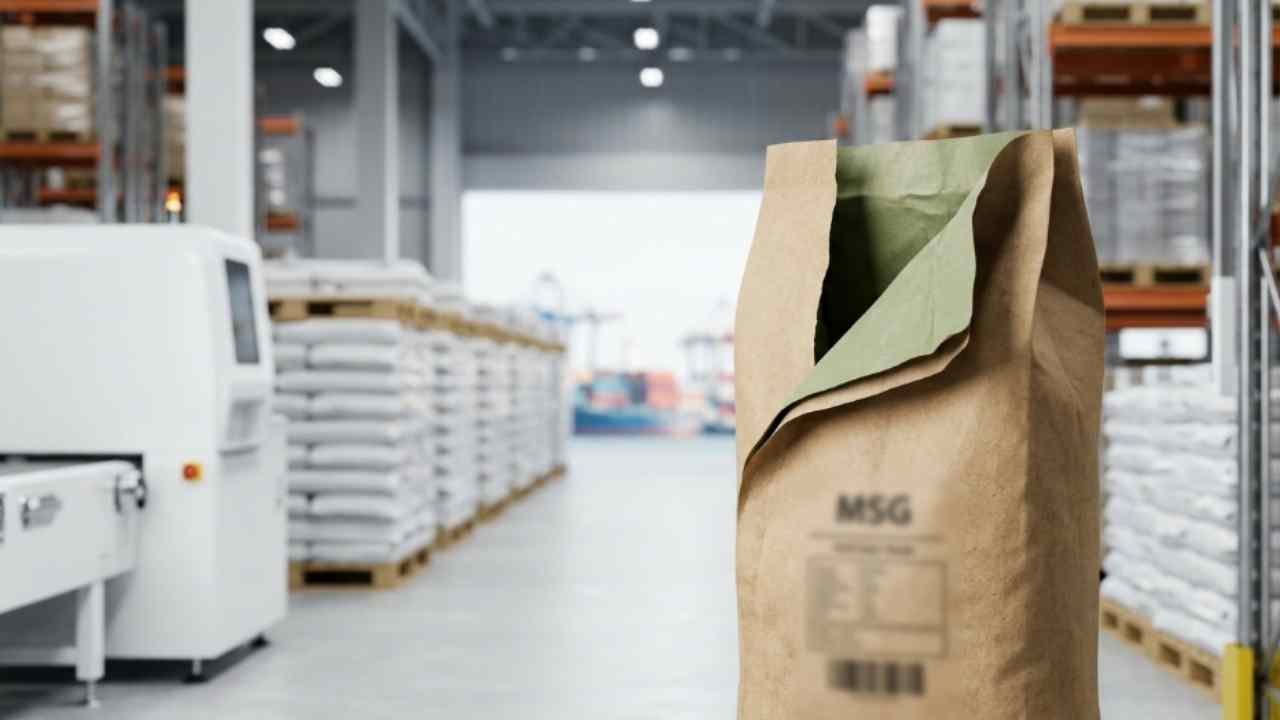
Balancing Sustainability and Moisture Protection
I see that packaging is the biggest sustainability challenge for MSG. We must keep the crystals dry. Traditionally, we use thick plastic (PE) liners. These are hard to recycle. Now, I am working with factories that use "Recyclable PE" or "Bio-based Plastics." These materials look like standard plastic but they break down faster or are easier for recycling centers to handle. For my clients in Europe and Russia, this is a major trend. They want to reduce the "Plastic Tax" they pay on imports. I help them find the technical balance. We test the "Water Vapor Transmission Rate" (WVTR) of these new materials. If the WVTR is too high, the MSG will cake.
We also use more multi-layer kraft paper bags. Paper is renewable and very strong. If we use a bio-degradable inner liner, the whole bag becomes much more eco-friendly. I visit the packaging suppliers in China to check their quality. I want to ensure the paper comes from "FSC Certified3" forests. This means for every tree cut, another is planted. This level of detail is what my B2B buyers in Southeast Asia and the Middle East need. I act as your technical gatekeeper. We make sure the packaging is green, but we never compromise on the safety of the product. Good packaging must protect the MSG for 36 months. Sustainability should not reduce the shelf life.
Packaging Material Sustainability Index
| Material | Recyclability | Carbon Footprint | Moisture Protection |
|---|---|---|---|
| Standard PP/PE | Low | High | Excellent |
| Recyclable PE | High | Moderate | Excellent |
| Kraft Paper (FSC) | Very High | Low | Moderate (needs liner) |
| Bio-based Liner | High | Very Low | Moderate |
| Jumbo Bag (Bulk) | Moderate | Low (per ton) | Good |
| Reusable Pallets | High | Low | N/A |
What certifications support sustainable MSG supply?
Unverified green claims lead to accusations of greenwashing. This destroys your market credibility. I identify the technical certifications that prove your MSG supply is truly sustainable and safe.
Sustainable MSG supply is supported by certifications like ISO 14001 (Environmental Management), RSPO (for sugarcane sources), and BRC (Global Food Safety). Third-party audits and Carbon Footprint certificates also help buyers verify the environmental impact and ethical standards of their MSG production partners.
Technical Standards for Verified Green Supply
I see that certifications are the "Proof" in the B2B world. You cannot just say you are green; you must show the paper. The most important one is ISO 140014. This shows the factory has a technical system to manage its environmental impact. I check these certificates during my factory audits. I also look for "Energy Management" certificates like ISO 50001. This proves the factory is serious about reducing power use. For my clients who use MSG made from sugarcane, I check for RSPO or similar agricultural standards. This ensures the sugar was grown without destroying rainforests.
Social sustainability is also part of the mix. I look for "Sedex5" or "SA8000" audits. These prove that the factory treats its workers fairly and has high safety standards. A sustainable factory is a well-managed factory. In my experience, factories with these certificates also have the best quality control. This is a technical correlation. If they care enough to manage their carbon, they care enough to manage their purity. I act as your strategic partner to collect these documents. We build a "Compliance Folder" for your business. This folder helps you pass audits from your own food-brand customers. It proves your supply chain is clean, ethical, and ready for the future.
Certification Impact on Market Access
| Certification | Focus Area | Technical Benefit | Market Target |
|---|---|---|---|
| ISO 14001 | Environment | Managed waste/emissions | Global standard |
| ISO 50001 | Energy | Lower carbon footprint | Europe / North America |
| Sedex / SMETA | Social / Ethics | Fair labor / Safety | Multinational brands |
| Carbon Label | Emissions | Verified CO2 per kg | Eco-conscious retail |
| BRC / HACCP | Safety | Food-grade integrity | Global food factories |
| FSC (Paper) | Forestry | Sustainable bags | Global retail |
Conclusion
Sustainability makes the MSG industry more efficient and safe. I manage these green factors at FINETECH to protect your brand and ensure a steady, ethical, and profitable supply.
-
Ellen MacArthur Foundation – An educational resource defining the circular economy and the principles of closed-loop resource management. ↩
-
ScienceDirect – Scientific and technical insights into membrane filtration processes used for waste recovery and mineral purification in industrial manufacturing. ↩
-
Forest Stewardship Council – The official guide to FSC labels, ensuring that wood and paper products are sourced from responsibly managed forests. ↩
-
ISO (International Organization for Standardization) – The official standard for Environmental Management Systems (EMS) which helps organizations improve their environmental performance. ↩
-
Sedex – An introduction to the global platform for supply chain transparency and ethical audits that help businesses manage social and environmental risks. ↩