

Sourcing Acesulfame-K without analyzing global manufacturing hubs, factory operating dynamics, IP litigation risks, and single-source dependencies causes sudden supply chain ruptures, price volatility, and patent infringement lawsuits.
Navigating the global Acesulfame-K supply market requires identifying key Chinese and German producers, understanding how massive production capacities drive pricing, monitoring factory operating rates under regulatory constraints, evaluating tariff and IP risks, and implementing diversified sourcing and procurement strategies.
Successfully manufacturing premium-grade sugar-free foods and beverages requires a disciplined approach to managing raw material supply chains. Sourcing managers must analyze physical production capacities and global geopolitical trade factors to protect their formulations from active delivery disruptions and sudden cost inflations. Sourcing partners like FINETECH simplify factory checks, verify production compliance, and secure competitive pricing directly in China to guarantee bulk deliveries. This guide explains how the global Acesulfame-K supply market is changing.
Which Countries Are the Main Producers of Acesulfame-K?
Concentrating procurement solely in unverified regions increases vulnerability to trade barriers and delivery delays. Evaluating global manufacturing geography minimizes structural import bottlenecks.
China is the dominant producer of Acesulfame-K, led by mass manufacturers like Anhui Jinhe Industrial and Suzhou Hope, while Germany remains the primary European manufacturing hub through Celanese Corporation's high-purity Sunett production.

Dive Deeper into Chinese Mass-Production Dominance and German High-Purity Refineries
The global manufacturing landscape for Acesulfame-K is highly consolidated, with production concentrated in just a few key countries. China is the undisputed dominant producer by volume, accounting for more than eighty percent of the global supply. Within China, the market is led by giant chemical conglomerates such as Anhui Jinhe Industrial1, which is the world’s largest producer of Acesulfame-K, Maltol, and other food additives. Other notable Chinese producers include Suzhou Hope Technology, Vitasweet, and Shandong Kaison Biochemical. These factories leverage vast local chemical supply chains, low utility costs, and massive economies of scale to supply highly competitive mass-market sweetener grades globally.
Outside of China, Germany serves as the primary European manufacturing powerhouse. Celanese Corporation2 (originally pioneered by its Nutrinova division in Frankfurt) produces its trademarked Sunett Acesulfame-K brand in Germany using proprietary, high-performance manufacturing processes. This European production hub focuses heavily on high-purity pharmaceutical-grade applications, strict global regulatory compliance, and localized regional supply chains for Western food and beverage giants. Sourcing partners like FINETECH assist buyers by mapping these global manufacturing hubs, helping procurement teams choose between cost-effective Chinese bulk exporters and high-end, European-based compliant suppliers to match their budget and quality standards.
| Key Producing Country | Dominant Manufacturer | Target Sourcing Sector | Sourcing Market Advantage |
|---|---|---|---|
| China | Anhui Jinhe Industrial | Mass-market food & beverage | High cost competitiveness |
| Germany | Celanese Corporation | Pharmaceutical & high-purity | Strict IP & European REACH |
| China | Suzhou Hope Technology | Standard food-grade mixes | Flexible order volumes |
| China | Shandong Kaison Biochem | High-solubility beverage grade | Large-scale capacity buffer |
Why Is Production Capacity Important in the Acesulfame-K Market?
Evaluating raw materials based purely on spot prices without analyzing macro plant capacities leads to unexpected contract defaults during shortages. Scale determines long-term cost stability.
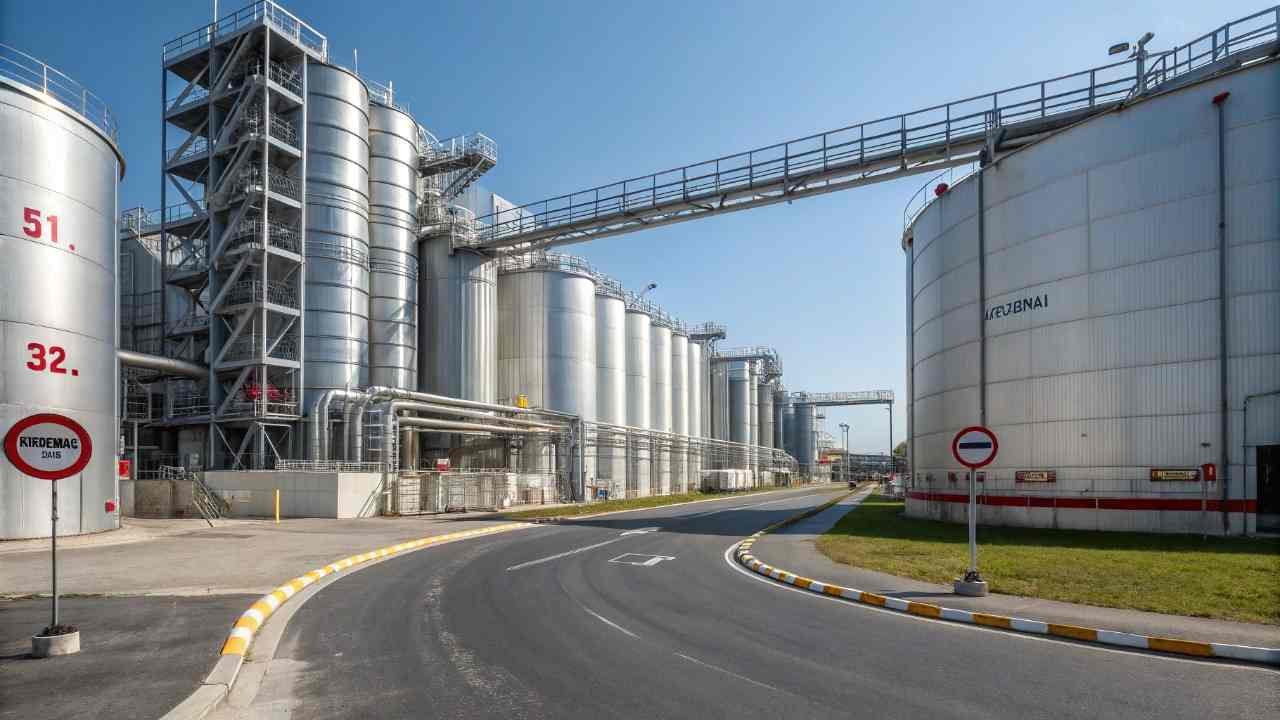
Production capacity is critical because the highly consolidated market relies on giant centralized facilities to achieve economies of scale, set global price baselines, and absorb sudden demand spikes from the food industry.
Dive Deeper into Economies of Scale, Global Price Baselines, and Consolidated Capacities
Production capacity is a primary driver of market dynamics and pricing structures in the high-intensity sweetener3 sector. Because the chemical synthesis of Acesulfame-K involves complex, multi-step reactions using hazardous materials like sulfur trioxide, diketene, and potassium hydroxide, constructing and operating a manufacturing plant requires immense capital investment. Consequently, only large-scale chemical facilities with multi-thousand-ton annual capacities can operate efficiently. Anhui Jinhe Industrial and Celanese command the market precisely because their giant production capacities allow them to achieve significant economies of scale, establishing the global price baseline that smaller factories cannot match.
For global buyers, understanding a manufacturer’s actual capacity is critical for long-term contract stability. If a food brand relies on a supplier with limited capacity, a sudden surge in consumer demand—such as a major beverage brand reformulating a popular soda line from sugar to sugar-free—can easily overwhelm the supplier's output, leading to severe allocation cuts and delivery defaults. Sourcing partners like FINETECH mitigate this risk by monitoring the global capacity expansions of major producers, verifying actual production limits, and steering buyers toward robust manufacturers capable of fulfilling high-volume, multi-container contracts without disruption.
| Manufacturer Name | Estimated Capacity Level | Global Price Influence | Contract Stability Index |
|---|---|---|---|
| Anhui Jinhe Industrial | Market-leading capacity | High (Sets bulk baseline) | Excellent (Massive volume buffer) |
| Celanese Corporation | High (Recently expanded) | Moderate (Niche premium) | Excellent (Direct European line) |
| Suzhou Hope Tech | Moderate capacity | Low (Follows market) | Good (Flexible medium contracts) |
| Shandong Kaison Biochem | Emerging capacity | Low (Follows market) | Fair (Best for spot purchasing) |
How Does Factory Operating Rate Affect Acesulfame-K Supply?
Ignoring physical plant utilization and raw chemical feed constraints causes surprise delivery cancellations and sudden market-wide price spikes. Real-time factory monitoring prevents supply surprises.
Factory operating rates directly dictate Acesulfame-K spot pricing and lead times; environmental audits, raw chemical shortages, and routine maintenance shutdowns instantly restrict market supply and drive up procurement costs.

Dive Deeper into Raw Material Bottlenecks, Environmental Audits, and Market Allocations
While nameplate production capacity indicates a factory's theoretical limit, the actual factory operating rate is what determines the real-time availability of Acesulfame-K on the spot market. Operating rates are highly sensitive to external variables, particularly raw material supply chains and environmental regulations. The synthesis of Acesulfame-K requires precise chemical precursors, including diketene, sulfamic acid, and liquid ammonia. If a precursor plant experiences an accident or localized energy rationing, the primary Acesulfame-K factory must immediately lower its operating rate, reducing the volume of finished product entering the market.
In China, strict government environmental audits4 and carbon-neutral policies frequently force chemical plants to suspend operations or reduce utilization rates during high-pollution seasons. Routine maintenance shutdowns, which typically occur annually and last several weeks, also temporarily restrict supply. When operating rates drop across major Chinese facilities, the spot price of Acesulfame-K rises sharply, and lead times extend from weeks to months. Sourcing partners like FINETECH provide a vital early-warning system for buyers by tracking real-time plant operating rates, environmental inspections, and maintenance schedules in China, allowing procurement teams to build inventory buffers before market supply tightens.
| Factory Operating State | Impact on Spot Pricing | Impact on Lead Times | Sourcing Action Required |
|---|---|---|---|
| High Operating Rate (90%+) | Stable/Soft prices | 2 to 4 weeks (Fast) | Secure spot deals; buy in bulk |
| Environmental Audit Slowdowns | Rising prices | 4 to 8 weeks (Delayed) | Access pre-allocated contracts |
| Precursor Shortage (Diketene) | Sharp price spikes | 8 to 12 weeks (Severe) | Activate dual-sourcing lines |
| Annual Maintenance Shut | Predictable price rise | 6 to 8 weeks (Standard) | Place orders 3 months in advance |
What Supply Risks Should Global Buyers Consider for Acesulfame-K?
Overlooking international trade tariffs and active patent-infringement lawsuits risks introducing seized container shipments and costly litigation liabilities into the supply chain. Vetting regulatory compliance secures cargo.
Key supply risks include anti-dumping tariffs, geographical concentration, and severe intellectual property disputes, highlighted by patent infringement lawsuits against manufacturers importing unauthorized sweetener processes into Western markets.

Dive Deeper into Patent Infringement Lawsuits, Anti-Dumping Tariffs, and Supply Chain Concentration
International procurement of Acesulfame-K involves navigating a complex web of commercial, legal, and trade-related risks. One of the most significant risks in this market is intellectual property (IP) litigation. Celanese Corporation, which holds numerous patents covering process improvements for high-purity Acesulfame-K manufacturing, has historically filed patent infringement lawsuits in both the United States and Europe against major Chinese manufacturers (including Anhui Jinhe, Suzhou Hope, and Vitasweet) and their Western distributors. Importing or distributing Acesulfame-K produced via an infringing process can lead to container seizures at customs and costly legal liabilities for food brands.
Additionally, geopolitical trade barriers, such as anti-dumping duties and tariffs on Chinese chemical imports, can instantly inflate landed costs. Finally, the extreme geographical concentration of the market—where a single province or region in China may produce more than half of the world's supply—leaves buyers highly vulnerable to shipping container crises, port congestion, or localized industrial accidents. Sourcing partners like FINETECH help buyers navigate these complex supply risks by auditing suppliers' IP compliance, ensuring that all imported batches are produced via cleared processes, and advising on tariff mitigation strategies to protect procurement budgets.
| Primary Supply Hazard | Root Cause | Impact on Sourcing Line | Quality Protection Action |
|---|---|---|---|
| IP Litigation Seizures | Patent disputes with Celanese | Customs holds, legal recalls | Verify patent-clear manufacturing |
| Trade Tariffs (Dumping) | Geopolitical trade barriers | Sudden landed cost spikes | Route through compliant origins |
| Geographic Concentration | Chinese market dominance (>80%) | Total line halt if ports lock | Establish regional safety stock |
| Trace Amine Contamination | Poor purification stages | Fishy odor, sensory failures | Require low-TMA chromatography |
How Can Buyers Secure a Stable Acesulfame-K Supply Source?
Navigating highly volatile chemical markets and factory audits without local logistical representation increases the risk of receiving late or legally compromised shipments. Partnering with supply experts secures allocations.
Buyers secure stable supply by establishing a dual-sourcing model that balances European and Chinese sources, verifying patent and IP clearance, and leveraging experienced sourcing partners to lock in long-term contracts.

Dive Deeper into Dual-Sourcing Strategies, IP Clearance, and Pre-Allocation Contracts
To protect their production lines from price volatility and supply disruptions, global food and beverage manufacturers must transition away from high-risk spot-market purchasing toward structured, proactive sourcing strategies. A primary mechanism for securing a stable supply is implementing a dual-sourcing procurement model. By balancing high-volume, cost-effective contracts with certified Chinese producers (like Jinhe) alongside secondary contracts with European-based producers (like Celanese/Sunett), buyers maintain cost competitiveness while establishing a critical geographic safety net.
Furthermore, buyers must conduct rigorous due diligence to verify that their suppliers hold active patent clearances, preventing any risk of legal seizures. Securing early-allocation contracts with manufacturers during low-demand cycles also protects buyers from sudden price spikes. Sourcing partners like FINETECH provide essential representation directly on the ground in China. They physically audit manufacturing plants, coordinate independent pre-shipment laboratory analysis to verify low-odor and low-moisture criteria, confirm that local factories hold active FSSC 220005 and Kosher certifications, and manage transport logistics—ensuring that bulk Acesulfame-K shipments arrive safely and comply with all international trade and patent laws.
| Strategic Action Plan | Operational Step | Procurement Advantage | Sourcing Safety Outcome |
|---|---|---|---|
| Dual-Sourcing Model | Balance Chinese & German lines | Geographical diversification | Mitigates local factory shutdowns |
| IP Clearance Audits | Verify process patent safety | Avoids border custom seizures | Eradicates legal liability risks |
| Pre-Allocation Booking | Sign contracts in low season | Locks in stable price baselines | Bypasses spot market spikes |
| Ground Sourcing Agency | Partner with local auditors | Direct physical factory checks | Secures verified USP/FCC batches |
Conclusion
The global Acesulfame-K supply market is highly concentrated between dominant Chinese mass-producers and high-purity German manufacturers, requiring buyers to actively monitor factory operating rates, mitigate patent infringement and tariff risks, and secure stability through structured dual-sourcing models and local partner representation.
-
Anhui Jinhe Industrial Co., Ltd. official global corporate website detailing their food additive production facilities, product portfolio, and technology. ↩
-
Celanese Corporation official global homepage profiling its specialty materials, acetyl chain products, and industrial manufacturing solutions. ↩
-
Future Market Insights research report analyzing global high-intensity sweetener market size, key drivers, regional dynamics, and supplier capacities. ↩
-
CHEManager Online's analytical report on China's central environmental inspections, detailing how factory closures, emission standards, and audits affect chemical plants. ↩
-
Foundation FSSC official portal explaining Scheme requirements, GFSI-benchmarking, and certification standards for safe food manufacturing. ↩