
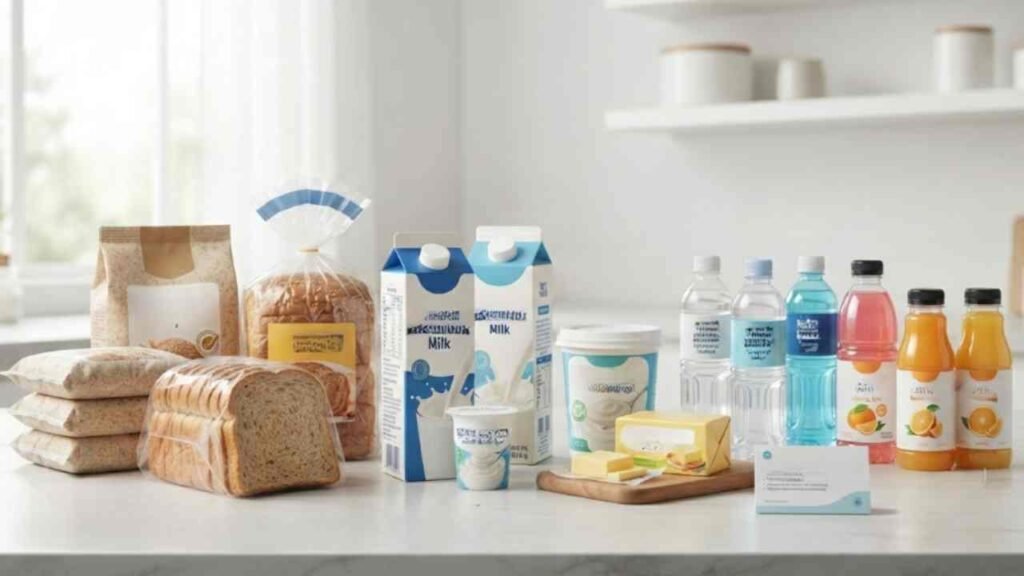
Low nutrient levels in processed foods lead to regulatory non-compliance and poor customer satisfaction. Developing fortified products requires stable, bioavailable ingredients. Applying Vitamin A series solves these formulation issues.
The Vitamin A series is used in food and beverage applications through nutritional fortification of staple foods, dairy products, margarines, and functional beverages. Using specialized water-dispersible beadlets or oil-soluble formulations ensures consistent potency, shelf stability, and compliance with global food standards.
Food and beverage manufacturers must design products that meet daily nutritional needs without altering taste or appearance. Utilizing specialized Vitamin A grades requires deep formulation expertise. Sourcing partners like FINETECH simplify this process by providing top-quality, stabilized Vitamin A variants that survive processing conditions. This analysis explores how the Vitamin A series is applied across various food and beverage sectors.
Which Food Products Commonly Use Vitamin A Series?
Adding sensitive vitamins to dry or wet food matrices often causes rapid nutrient loss. Unstable formulations lead to product failures. Finding the correct application methods prevents these issues.
Vitamin A series is commonly used in staple foods like wheat flour, cooking oils, and sugar, as well as in margarine, infant formulas, and breakfast cereals. These products provide excellent vehicles for public health fortification programs.

Dive Deeper into Staple Food Applications
Staple food fortification1 is one of the most effective ways to address micronutrient deficiencies. Globally, many governments mandate the enrichment of wheat flour, maize flour, and edible vegetable oils with Vitamin A. Because cooking oils and fats are lipids, they are ideal carriers for fat-soluble vitamins. Oil-soluble retinyl palmitate is the preferred form for oil fortification. It dissolves easily and maintains stability during standard storage conditions.
In contrast, dry staple foods like wheat flour and breakfast cereals require water-dispersible powder forms. For these applications, dry Vitamin A palmitate or acetate beadlets are utilized. These beadlets are engineered to match the particle size of the flour, which prevents segregation during transport. Breakfast cereals are fortified by spraying a liquid vitamin mixture onto the cereal after the extrusion process2. This post-processing application protects the heat-sensitive Vitamin A from the high temperatures of cooking and puffing. By carefully matching the vitamin grade to the specific food matrix, manufacturers ensure uniform distribution and reliable shelf-life potency. Sourcing high-quality, standardized grades from reliable suppliers ensures that these staple foods meet legal fortification standards without altering the color or taste of the end product.
| Food Category | Vitamin A Grade Used | Core Application Challenge | Stabilization Method |
|---|---|---|---|
| Cooking Oils | Retinyl Palmitate Oil | Sensitivity to high frying heat | Nitrogen-flushed bulk packaging |
| Wheat Flour | Cold Water Soluble Beadlets | Particle segregation during transit | Particle size matching |
| Breakfast Cereals | Spray-dried powder/emulsion | Thermal degradation in extrusion | Post-processing topical spray |
| Margarine | Retinyl Acetate / Palmitate oil | Homogeneous mixing in emulsion | Dissolution in lipid phase |
How Is Vitamin A Series Used in Nutritional Fortification?
Designing fortified foods without understanding micronutrient stability results in rapid potency loss on supermarket shelves. This degradation leads to consumer complaints. Using proven fortification techniques solves this problem.
Vitamin A series is used in nutritional fortification by adding stabilized retinyl esters to everyday foods. This process restores lost nutrients, enhances nutritional profiles, and satisfies mandatory national enrichment laws, making vital micronutrients easily accessible to large populations.

Dive Deeper into Fortification Strategies
Nutritional fortification can be divided into mandatory programs and voluntary marketing strategies. Mandatory fortification is regulated by national health ministries to combat public health deficiencies. For instance, many developing nations in Africa and Latin America require sugar and vegetable oils to be enriched with Vitamin A. Voluntary fortification, on the other hand, is driven by food brands looking to offer premium nutritional value, such as adding vitamins to plant-based milk alternatives or sports nutrition foods.
Both strategies require a deep understanding of vitamin stability. Vitamin A retinyl palmitate is the most common ester used in fortification because it is chemically more stable than pure retinol. During the fortification process, food technologists must calculate the overage. This means adding a small excess of the vitamin to compensate for natural degradation during shelf life. This overage ensures that the product contains the declared label amount until its expiration date. Manufacturers must also choose between dry beadlets and liquid oils depending on the moisture level of the food. Using advanced microencapsulation technologies is essential to shield the active vitamin from acidic environments, light, and metal ions present in fortified food formulations.
| Fortification Type | Objective | Target Matrix | Preferred Ester Form |
|---|---|---|---|
| Mandatory | Public health intervention | Sugar, salt, cooking oil | Retinyl palmitate oil or powder |
| Voluntary | Premium brand positioning | Plant-based milks, energy bars | Retinyl acetate or palmitate |
| Infant Nutrition | Precise dietary requirement | Dry milk powder formulas | Cold water-soluble beadlets |
What Is the Role of Vitamin A Series in Dairy Products?
Fat reduction in milk removes essential fat-soluble vitamins, lowering its nutritional value. Skimmed dairy products require vitamin restoration to maintain health benefits. Implementing strategic vitamin dairy enrichment solves this deficiency.
The Vitamin A series plays a vital role in dairy products by restoring the natural vitamin content lost during fat-skimming processes. Adding retinyl palmitate to low-fat milk, skimmed milk, and yogurt ensures that consumers still receive essential fat-soluble vitamins.

Dive Deeper into Dairy Fortification Processes
Natural whole milk contains significant amounts of Vitamin A because the nutrient is dissolved in milk fat. However, when dairy processors remove fat to produce skimmed or low-fat milk, they also remove these valuable fat-soluble vitamins. To compensate for this loss, food regulations in many countries mandate the restoration of Vitamin A in skimmed and low-fat dairy products. This process requires adding back retinyl palmitate to match or exceed the natural levels found in whole milk.
Integrating Vitamin A into liquid dairy requires specialized emulsification. Since raw vitamin oil does not mix with water, processors use water-dispersible liquid emulsions or spray-dried beadlets. These are added to the milk before pasteurization3 or homogenization. Homogenization breaks down the vitamin oil into microscopic droplets, allowing them to remain suspended uniformly throughout the liquid milk. Additionally, the vitamin must withstand the thermal stress of pasteurization, such as Ultra-High Temperature (UHT) processing. High-quality stabilized retinyl palmitate grades resist this heat treatment, ensuring the final milk carton retains its nutritional value throughout its refrigeration life.
| Dairy Product | Fortification Goal | Formulation Requirement | Processing Challenge |
|---|---|---|---|
| Skimmed Milk | Restore lost fat-soluble vitamins | Water-dispersible emulsion | Must survive UHT pasteurization |
| Yogurt | Enhance health profile | Acid-stable powder/emulsion | Survival in low pH environments |
| Cheese | Functional value addition | Oil-soluble liquid | Even distribution in curd matrix |
Can Vitamin A Series Be Used in Beverage Formulations?
Oil-soluble vitamins often cause cloudy sediment and unpleasant oil rings in liquid drinks. These physical flaws ruin beverage appearance. Utilizing specialized water-soluble vitamin technologies prevents these formulation issues.
Yes, the Vitamin A series can be used in beverage formulations. By using cold-water-soluble (CWS) powder grades or clear liquid emulsions, beverage manufacturers can easily fortify sports drinks, juices, and functional waters without causing cloudiness or sediment.

Dive Deeper into Beverage Emulsification Technologies
Formulating beverages with Vitamin A represents a unique technical challenge. Because Vitamin A is naturally lipophilic, standard oil forms will float to the surface of water-based drinks. This creates an unsightly oil ring at the neck of the bottle, which consumers find unappealing. To resolve this issue, ingredient manufacturers have developed specialized Cold-Water-Soluble (CWS) spray-dried powders and clear liquid nano-emulsions4. These advanced formulations allow the hydrophobic vitamin molecules to disperse completely and transparently in aqueous solutions.
CWS beadlets utilize a microscopic carbohydrate matrix to encapsulate the vitamin oil. When added to water, this matrix dissolves quickly, releasing ultra-fine particles that remain suspended without causing cloudiness. This is crucial for clear functional waters and energy drinks. In addition to physical stability, chemical protection is essential. Beverages are often exposed to light on store shelves and may have an acidic pH. These conditions accelerate the degradation of Vitamin A. To protect the active ingredient, beverage manufacturers must use opaque packaging or UV-blocking bottles. They also add water-soluble antioxidants, like ascorbic acid (Vitamin C), to the beverage mix to act as synergistic oxygen scavengers.
| Beverage Type | Preferred Vitamin A Grade | Desired Visual Property | Chemical Stabilization Strategy |
|---|---|---|---|
| Functional Water | CWS Nano-emulsion | Complete transparency | Use UV-blocking PET bottles |
| Fruit Juices | CWS Powder / Beadlets | Uniform opacity / cloudiness | Synergistic use of Vitamin C |
| Energy Drinks | Liquid CWS Emulsion | Low viscosity, no sediment | Maintain optimal acidic pH balance |
What Are the Dosage Guidelines for Vitamin A Series?
Incorrect vitamin dosages can lead to regulatory rejections or toxicity concerns in consumers. Finding the right balance between efficacy and safety is critical. Applying standardized dosage guidelines avoids these risks.
The dosage guidelines for the Vitamin A series are based on the Recommended Dietary Allowance (RDA), which ranges from 700 to 900 micrograms of Retinol Activity Equivalents (RAE) daily for adults. Food manufacturers must strictly align their formulations with national maximum limits.

Dive Deeper into Safe Formulation Limits
When formulating fortified foods and beverages, matching the target population's nutritional requirements is vital. Product developers use Retinol Activity Equivalents (RAE) to calculate dosage. One microgram of RAE is equal to one microgram of pure retinol, or 1.15 micrograms of retinyl acetate, or 1.83 micrograms of retinyl palmitate. It is also equivalent to 3.33 International Units (IU). Understanding these conversion factors is essential for accurate product labeling and quality control.
While Vitamin A is crucial for vision and immune health, excessive consumption of preformed Vitamin A can lead to hypervitaminosis A, which causes toxicity. Therefore, food safety authorities, such as the European Food Safety Authority (EFSA)5 and the US FDA, establish Tolerable Upper Intake Levels (UL). For adults, the UL is generally set at 3,000 micrograms RAE (10,000 IU) per day. Food manufacturers must ensure that their fortification levels, combined with normal dietary intake, do not exceed these safety limits. Sourcing teams like FINETECH help B2B buyers navigate these dosage rules by providing exact concentration certificates and formulation advice. This support ensures that the final food products are both highly effective and completely safe for daily consumption.
| Target Group | RDA (Adults / Children) | Tolerable Upper Limit (UL) | Common Fortification Level per Serving |
|---|---|---|---|
| Adult Males | 900 mcg RAE (3,000 IU) | 3,000 mcg RAE (10,000 IU) | 15% to 30% of daily RDA |
| Adult Females | 700 mcg RAE (2,330 IU) | 3,000 mcg RAE (10,000 IU) | 15% to 30% of daily RDA |
| Children (4-8 years) | 400 mcg RAE (1,330 IU) | 900 mcg RAE (3,000 IU) | 10% to 20% of daily RDA |
Conclusion
Vitamin A fortification requires precise ingredient selection, advanced stabilization, and strict dosage adherence. Partnering with a professional sourcing team ensures safe, compliant, and highly stable food applications.
-
World Health Organization (WHO) – Global guidelines manual outlining the safety, implementation, and efficacy of large-scale micronutrient fortification programs for staple foods. ↩
-
MDPI – Review article evaluating the effects of extrusion cooking on nutrient retention, physical characteristics, and overall nutritional properties of food formulations. ↩
-
Penn State Extension – Official educational resource detailing the dairy industry's Grade "A" Pasteurized Milk Ordinance (PMO) guidelines and processing plant specifications. ↩
-
MDPI – Review study highlighting recent advances in nanoemulsion encapsulation systems specifically designed to improve the delivery, digestion stability, and bioaccessibility of fat-soluble vitamins. ↩
-
Wiley Online Library (EFSA Journal) – Official publication of the 2024 scientific opinion revising and establishing the Tolerable Upper Intake Levels (UL) for preformed vitamin A and beta-carotene. ↩