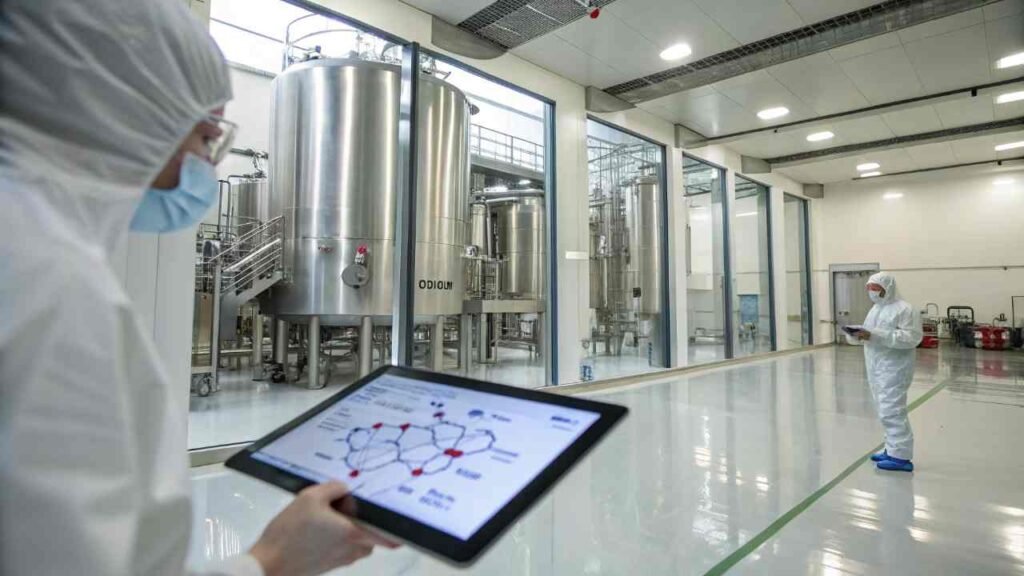
Unstable Vitamin B12 supply chains lead to stockouts and high prices. This ignorance ruins your procurement strategy. I explain the industrial fermentation process to help you choose the best supply.
Vitamin B12 is produced industrially through microbial fermentation because its chemical synthesis is too complex and costly. Specialized bacteria like Pseudomonas denitrificans are grown in large bioreactors. The process includes fermentation, extraction from bacterial cells, purification via chromatography, and final crystallization into a dark-red powder.
I manage factory selection and quality oversight for my B2B clients in China. Understanding these technical production steps is the only way to evaluate your supplier's reliability and pricing for your business.
Why is microbial fermentation used for Vitamin B12 (Cobalamin)?
Chemical synthesis for Vitamin B12 is impossible for mass production. This failure raises prices and limits supply. I show why biological fermentation is the only viable way to source bulk B12.
Microbial fermentation is the only industrial method for Vitamin B12 because the molecule has a complex structure with over 70 atoms and a central cobalt ion. Only certain bacteria naturally possess the enzymes to build this structure, making chemical synthesis commercially impossible for the industry.
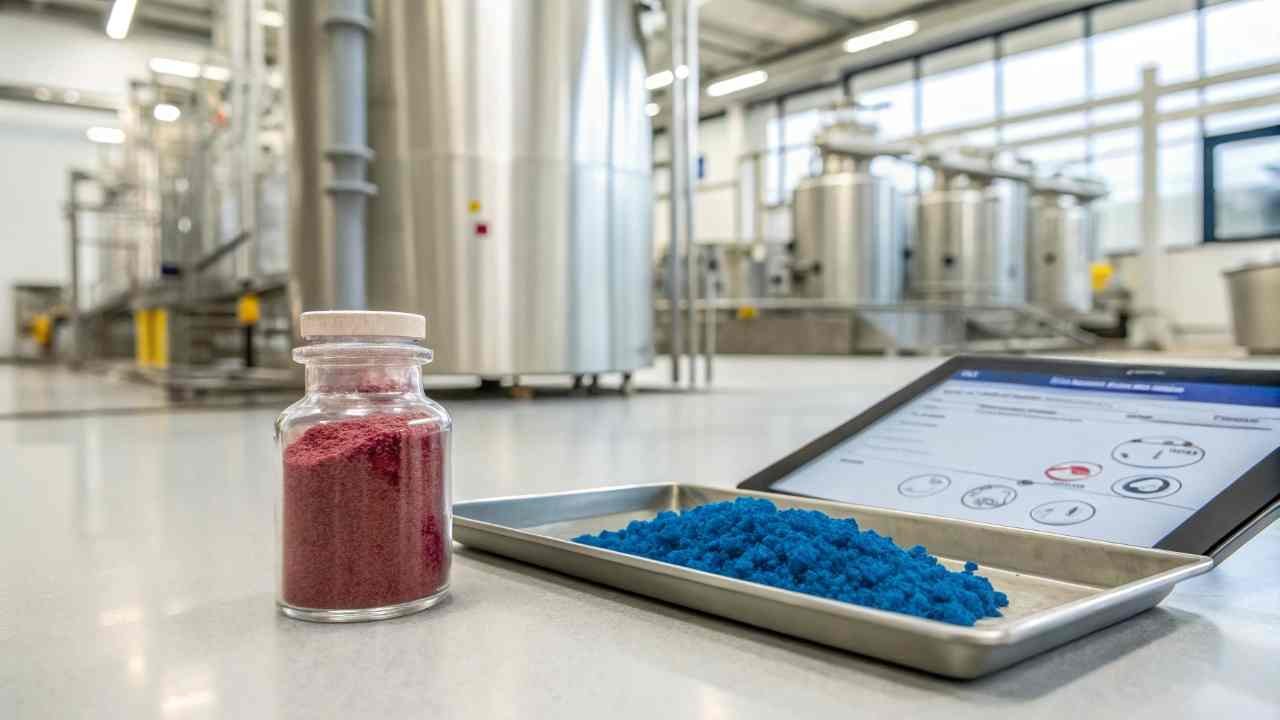
Biological Complexity and Economic Reality
I see that Vitamin B12 is the most complex vitamin in the world. It has a giant ring structure called a "corrin ring." In the middle sits a single cobalt atom. Scientists like Dorothy Hodgkin1 won a Nobel Prize just for finding this structure. I tell my buyers in Europe and the Middle East that humans cannot build this molecule efficiently in a lab. It takes over 70 chemical steps to make it by hand. This makes the cost way too high for food additives or animal feed. Instead, we use nature. Some bacteria have been making this vitamin for millions of years. They do the hard work for us in large tanks.
I visit factories in China to see these fermentation tanks. They are giant stainless steel bioreactors2. Some hold over 100,000 liters. The bacteria use simple sugars and minerals to build the B12 molecule inside their cells. This is a technical fact that drives the market. Because we rely on living organisms, we must keep the environment perfect. We control the air, the food, and the temperature. If the bacteria are happy, the yield is high. This lowers the price for my wholesale clients. If the fermentation fails, the supply drops and prices spike. I monitor these factory conditions to protect your supply chain. Using biology is the only way to get the 99% purity your customers need.
Fermentation vs Chemical Synthesis
| Feature | Chemical Synthesis | Microbial Fermentation |
|---|---|---|
| Structural Steps | Over 70 steps | Single-stage biological |
| Production Cost | Extremely High | Competitive / Industrial |
| Scalability | Laboratory scale only | Thousands of tons per year |
| Environmental Impact | High chemical waste | Organic waste / Biodegradable |
| Commercial Purity | Difficult to maintain | Standard 99% purity |
| Main Producers | None (Commercial) | China / France / Switzerland |
What are the key strains used in Vitamin B12 (Cobalamin) production?
Weak bacterial strains lead to low yields and high prices. This technical failure ruins your budget. I identify the top strains that drive the global Vitamin B12 supply market.
The two primary bacteria used are Pseudomonas denitrificans and Propionibacterium shermanii. P. denitrificans is highly efficient for aerobic fermentation, while Propionibacterium species are used in anaerobic processes. These high-yield strains are the foundation of modern Vitamin B12 manufacturing in China.
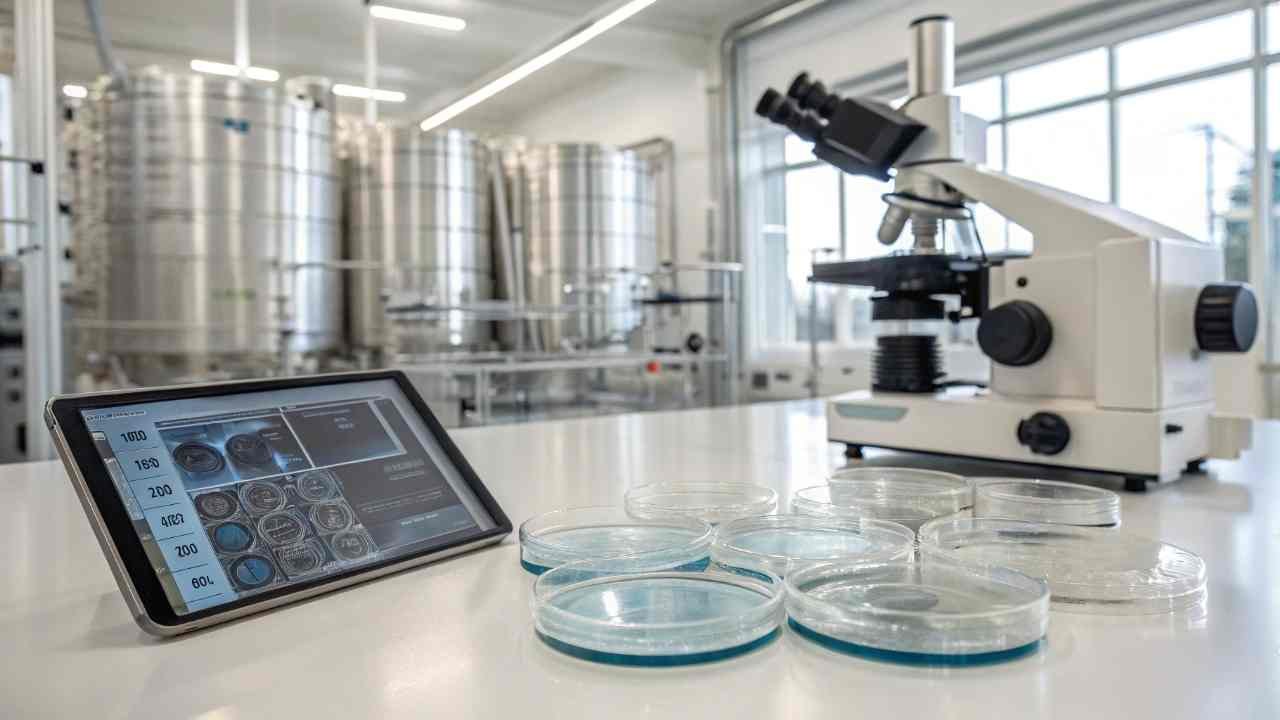
Technical Advantages of Specific Bacteria
I see that the choice of bacteria is a trade secret for many factories. Pseudomonas denitrificans3 is the leader in the industry. It is an aerobic bacteria, so it needs lots of oxygen. Factories use giant stirrers to mix air into the broth. This strain is fast and produces a lot of vitamin per liter. I prioritize factories using this strain for my buyers in Southeast Asia and Russia. It ensures a stable supply of high-purity Cyanocobalamin. The bacteria are often improved through "strain selection." This is not always GMO. It is simply choosing the strongest bacteria that grow the fastest. I check the lab records to ensure our partners use the most modern strains.
Also, Propionibacterium shermanii is a common choice. This bacteria is used for making Swiss cheese, but it is also a B12 factory. It can grow without oxygen (anaerobic). Some factories use a two-step process. First, they let the bacteria grow without air to build the corrin ring. Then, they add a little air to finish the molecule. This is a technical requirement for some production lines. I see that different strains produce different amounts of impurities. I select factories that have the cleanest fermentation profiles. This ensures that the final dark-red powder has no strange smells or colors. The strain determines the cost and the quality. I act as your technical scout to find the best producers.
Comparison of Industrial B12 Strains
| Bacterial Strain | Fermentation Type | Technical Benefit | Main Product Grade |
|---|---|---|---|
| Pseudomonas denitrificans | Aerobic (with air) | Very high yield / Fast | Food / Pharma Grade |
| Propionibacterium shermanii | Anaerobic / Aerobic | Robust / Natural | Food / Feed Grade |
| Bacillus megaterium | Aerobic | Simple nutrient needs | Animal Feed Grade |
| Agrobacterium radiobacter | Aerobic | Good for large scale | Food Grade |
| Sinorhizobium meliloti | Aerobic | Genetic stability | Pharma Grade |
How does fermentation impact Vitamin B12 (Cobalamin) cost?
Inefficient fermentation cycles waste energy and raise your costs. You pay for the factory's mistakes. I explain how fermentation efficiency determines the wholesale price you pay for your additives.
Fermentation impacts cost through batch cycle times, raw material usage, and energy for aeration. Long fermentation cycles (up to 7 days) and high electricity needs for stirring increase costs. Efficient factories use high-yield strains to reduce the price per kilogram for international buyers.
Electricity and Raw Material Drivers
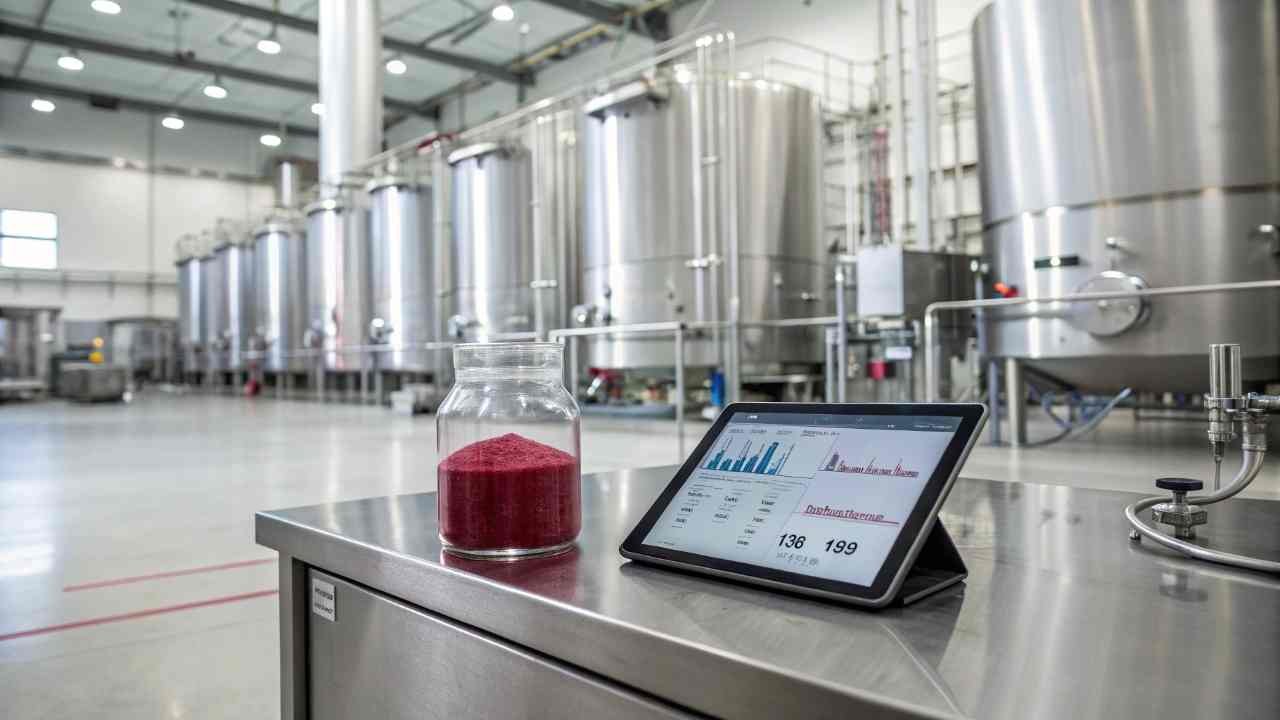
I want you to understand where your money goes. In Vitamin B12 production, electricity is a huge cost. The stirrers in a 100-ton tank must spin for over 150 hours. This uses a lot of power. If the price of coal or gas goes up in China, the price of B12 goes up too. I track these energy trends to give you the best timing for your orders. Also, the bacteria need food. They eat glucose4 (sugar), corn steep liquor, and minerals. I monitor the prices of these agricultural commodities. If corn prices rise, the fermentation broth becomes more expensive. I work with factories that have long-term contracts for their raw materials. This keeps your price stable.
The "yield" is the most technical part of the cost. Yield is how many grams of B12 we get from one liter of broth. If a factory gets 100mg per liter, their cost is much lower than a factory getting 50mg. I visit the factories in Hebei and Ningxia to see their yield data. High-yield factories can offer a more competitive price for bulk wholesale. I prioritize these efficient plants for my clients. Also, the "Batch Success Rate" matters. If a batch gets contaminated, the factory loses everything. This risk is built into the price. I select factories with the best clean-room technology. They have fewer failures, so they can keep their prices low. This is how I manage your procurement budget.
Breakdown of Vitamin B12 Production Costs
| Cost Component | Percentage of Total | Cost Driver | Strategy |
|---|---|---|---|
| Energy (Power/Steam) | 25% - 30% | Stirring and Aeration | Select energy-efficient plants |
| Raw Materials | 20% - 25% | Sugar / Cobalt salts | Track agricultural trends |
| Labor & Overheads | 10% | Automation level | Prioritize DCS automated plants |
| Purification | 20% | Chromatography resins | Ensure multi-use efficiency |
| Waste Treatment | 10% - 15% | Environmental laws | Audit for green compliance |
| Quality Control | 5% | Lab testing / COA | Ensure USP/BP testing |
What purification methods are used for Vitamin B12 (Cobalamin)?
Poor purification leaves toxic residues in your vitamins. This risk causes product recalls and lawsuits. I describe the chromatography steps used to ensure the 99% purity required for your customers.
Purification involves cell lysis, centrifugation, and adsorption chromatography. Since B12 stays inside the bacteria, cells must be broken open to release the vitamin. Multiple chromatography columns using specialized resins isolate the cobalamin, followed by crystallization using solvents like acetone or alcohols.
From Bacterial Cells to Pure Crystals
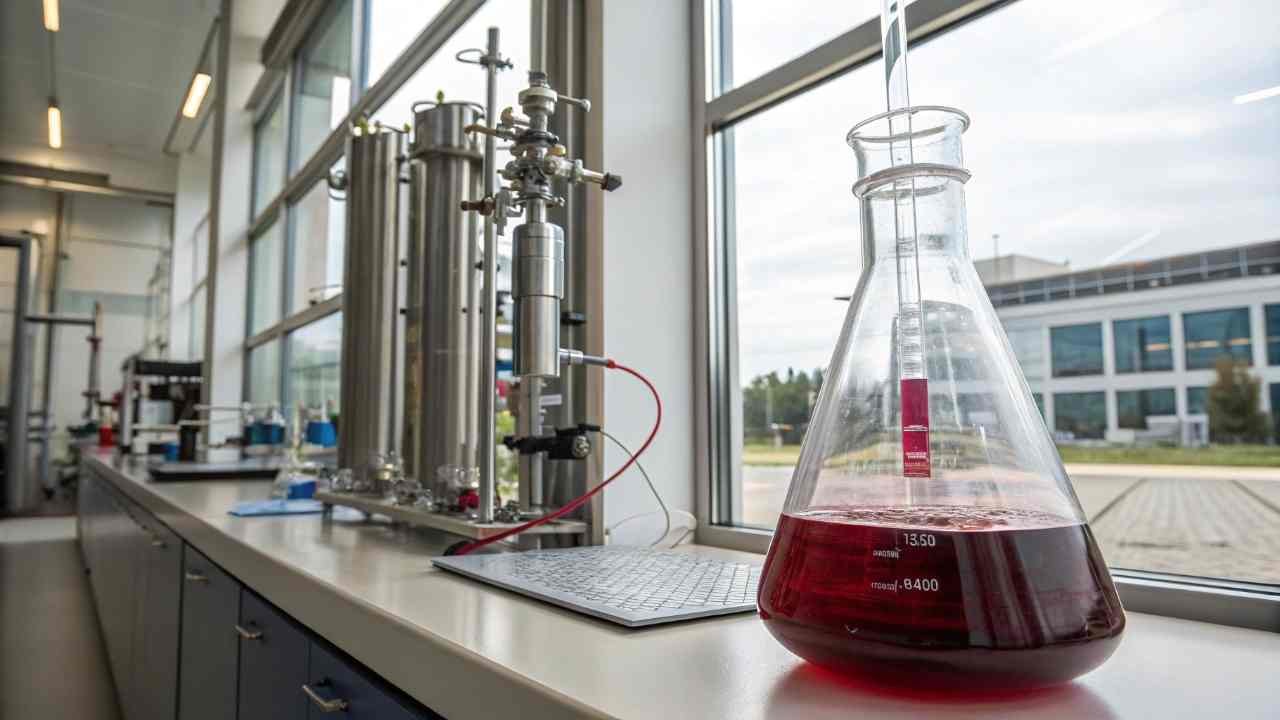
I see that the hardest part is getting the vitamin out of the bacteria. B12 is an "intracellular" product. This means it is trapped inside the tiny bacterial cells. First, the factory must "harvest" the bacteria using giant centrifuges. These machines spin fast to separate the cells from the water. Then, they use heat or chemicals to break the cell walls (lysis). This releases the Vitamin B12 into a liquid. I check the temperature records for this step. If it is too hot, the vitamin can break down. I ensure our partners use gentle extraction to keep the potency high. This is a technical requirement for a 99% assay.
Once the liquid is ready, we use chromatography. This is like a giant filter. The liquid passes through a column filled with special beads (resin). The B12 sticks to the beads, and the waste passes through. Then, we use a solvent to wash the pure B12 off the beads. This is a very precise step. I only work with factories that use "High-Resolution" chromatography. This removes all the heavy metals and bacterial proteins. The final step is crystallization. We add a solvent like acetone to make the B12 form solid crystals. I ensure the factory removes all residual solvents. My buyers in the food industry need a clean product. Proper purification is why our B12 has a bright, dark-red color.
Steps in Industrial B12 Purification
| Step Name | Technical Action | Purpose | Equipment Used |
|---|---|---|---|
| Harvesting | Centrifugation | Collect bacterial cells | Industrial Centrifuge |
| Cell Lysis | Heating / PH change | Release B12 from cells | Reaction Tank |
| Adsorption | Resin Chromatography | Isolate B12 molecule | Chromatography Column |
| Elution | Solvent Wash | Collect concentrated B12 | Solvent Pump |
| Crystallization | Cooling / Solvents | Form solid crystals | Crystallizer |
| Drying | Vacuum Drying | Remove residual liquid | Vacuum Oven / Spray Dryer |
How do production technologies affect Vitamin B12 (Cobalamin) quality?
Outdated machines create inconsistent batches with low potency. This inconsistency ruins your manufacturing recipes. I audit factory technology to ensure you receive top-quality Vitamin B12 every single time.
Advanced DCS (Distributed Control Systems) ensure quality by monitoring PH and oxygen in real-time. Automated chromatography and spray-drying prevent human error and contamination. This technology produces a stable, dark-red crystalline powder that meets USP, BP, or EP pharmaceutical standards for international trade.
Automation and Real-Time Monitoring
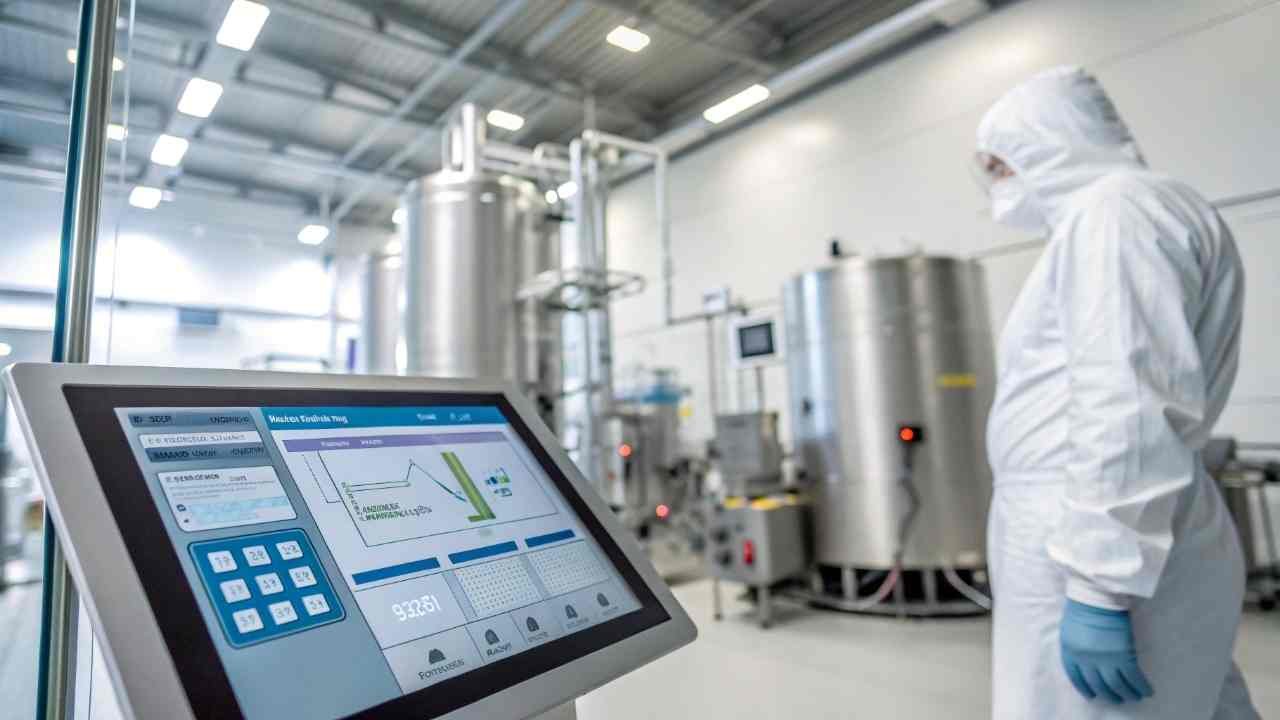
I see that technology is the difference between a good batch and a bad batch. The best factories in China use DCS systems5. This is a giant computer that monitors every sensor in the factory. If the temperature in the fermentation tank moves by 0.1 degrees, the computer fixes it immediately. This is much better than a human worker. I visit the control rooms of our partners to check these systems. Automation ensures that batch #1 is exactly the same as batch #100. This "Batch-to-Batch Consistency" is vital for my clients who make pills or fortified flour. They need the same potency every time.
I also focus on the drying technology. After crystallization, the vitamin is wet. If you dry it too fast with high heat, the crystals can burn. This makes the powder look brown instead of red. I prioritize factories that use vacuum drying or low-temperature spray drying. This preserves the molecule's health. I also check for "In-line Testing." Modern plants have sensors that test the purity while the product is still in the machine. This allows them to catch mistakes early. I only supply material that passes these high-tech checks. Better technology means a longer shelf life6 (usually 3 years) and a more stable assay. This is how I guarantee quality for your wholesale business.
Technology Level vs. Product Quality
| Technology | Old Factory | Modern Factory | Quality Result |
|---|---|---|---|
| Fermentation Control | Manual valves | Full DCS Automation | Stable assay levels |
| Air Filtration | Basic mesh | HEPA / Sterile filters | Zero microbial contamination |
| Purification | Single stage | Multi-column chromatography | No heavy metals |
| Drying Method | Tray drying | Vacuum / Spray drying | Free-flowing powder |
| Lab Equipment | Basic titration | HPLC / ICP-MS | Accurate COA reports |
| Waste Control | Open pools | Integrated WTP | Stable supply / No shutdowns |
Conclusion
Vitamin B12 production requires expert microbial fermentation, precise chromatography, and advanced automation. I manage these technical factors at FINETECH to ensure your business receives a competitive and reliable wholesale supply.
-
Nobel Prize – Biographical information on Dorothy Hodgkin and her pioneering work in X-ray crystallography to determine vitamin structures. ↩
-
ScienceDirect – Engineering and technical overview of bioreactors used in industrial fermentation and microbial cultivation. ↩
-
MicrobeWiki – Academic profile of Pseudomonas denitrificans, the primary microorganism utilized in the commercial production of Vitamin B12. ↩
-
Britannica – Scientific breakdown of glucose as a fundamental carbohydrate and energy source in industrial fermentation processes. ↩
-
Yokogawa – Detailed explanation of Distributed Control Systems (DCS) used to automate and stabilize large-scale industrial production. ↩
-
PharmaGuideline – Technical protocols for stability testing to determine the shelf life and potency of pharmaceutical and nutritional ingredients. ↩