
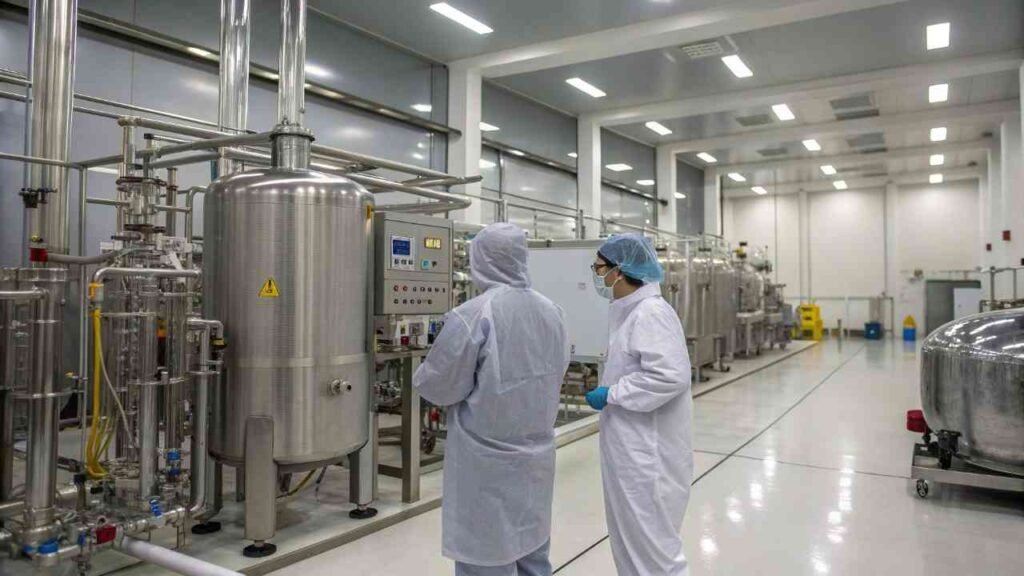
Inefficient Vitamin B5 production leads to high prices and poor quality. This hurts your profit. I explain the industrial process to help you choose the best supply.
Vitamin B5 (D-Calcium Pantothenate) is produced through chemical synthesis using isobutyraldehyde, formaldehyde, and beta-alanine. The process involves creating racemic pantoic acid, resolving the active D-isomer, and reacting it with beta-alanine to form the stable calcium salt used in food and feed.
I manage factory selection in China to find the most efficient producers. Understanding these production steps is the only way to evaluate your supplier's reliability and pricing.
What Raw Materials Are Required for Vitamin B5 (Pantothenic Acid)?
Unstable raw material supply causes sudden price spikes. This ruins your budget. I identify the key chemicals needed to produce high-quality Vitamin B5.
The main raw materials are isobutyraldehyde, formaldehyde, and beta-alanine. Synthesis also requires cyanide compounds and specific resolution agents like quinine or tartaric acid to separate the active D-form from the inactive L-form.

The Upstream Chemical Supply Chain
I see that Vitamin B5 production starts deep in the petrochemical sector. The first step uses isobutyraldehyde and formaldehyde. These are basic building blocks in organic chemistry. Factories combine them to create an intermediate called pantoaldehyde. I monitor the prices of these chemicals in China every day. If the price of isobutyraldehyde rises, the cost of Vitamin B5 follows quickly. I only work with factories that have secure, long-term contracts for these materials. This ensures they do not stop production when the market gets tight.
Also, beta-alanine is a vital raw material. It is an amino acid that provides the "alanine" part of the molecule. The quality of beta-alanine must be very high. If it has impurities, the final Vitamin B5 will not meet USP or BP standards. Plus, we must talk about the "D-isomer." When the factory makes pantoic acid, it is a mix of D and L forms. The L-form has no nutritional value. So, the factory must use a resolution agent to pick out only the D-form. Some factories use specialized chemicals like brucine or quinine for this. I check the sourcing of these agents during my factory audits. A clean supply of raw materials is the only way to guarantee a 99% pure product for your wholesale business.
| Raw Material | Primary Role | Source Industry | Sensitivity |
|---|---|---|---|
| Isobutyraldehyde | Main carbon backbone | Petrochemical | Very High |
| Formaldehyde | Reagent for synthesis | Industrial Gas | High |
| Beta-Alanine | Amino acid component | Chemical Synthesis | High |
| Cyanide Salts | Reaction catalyst | Specialized Chemical | Moderate |
| Resolution Agents | D-isomer separation | Natural / Synthetic | Moderate |
How Does Synthesis Efficiency Affect Vitamin B5 (Pantothenic Acid) Cost?
Inefficient synthesis leads to wasted chemicals and higher unit costs. This reduces your margins. I look for factories with high efficiency to get you better prices.
Synthesis efficiency directly controls the consumption of raw materials. Factories with automated processes and optimized reaction conditions use fewer chemicals to produce more Vitamin B5. This lowers the base manufacturing cost significantly for wholesalers.
Optimizing the Chemical Reaction
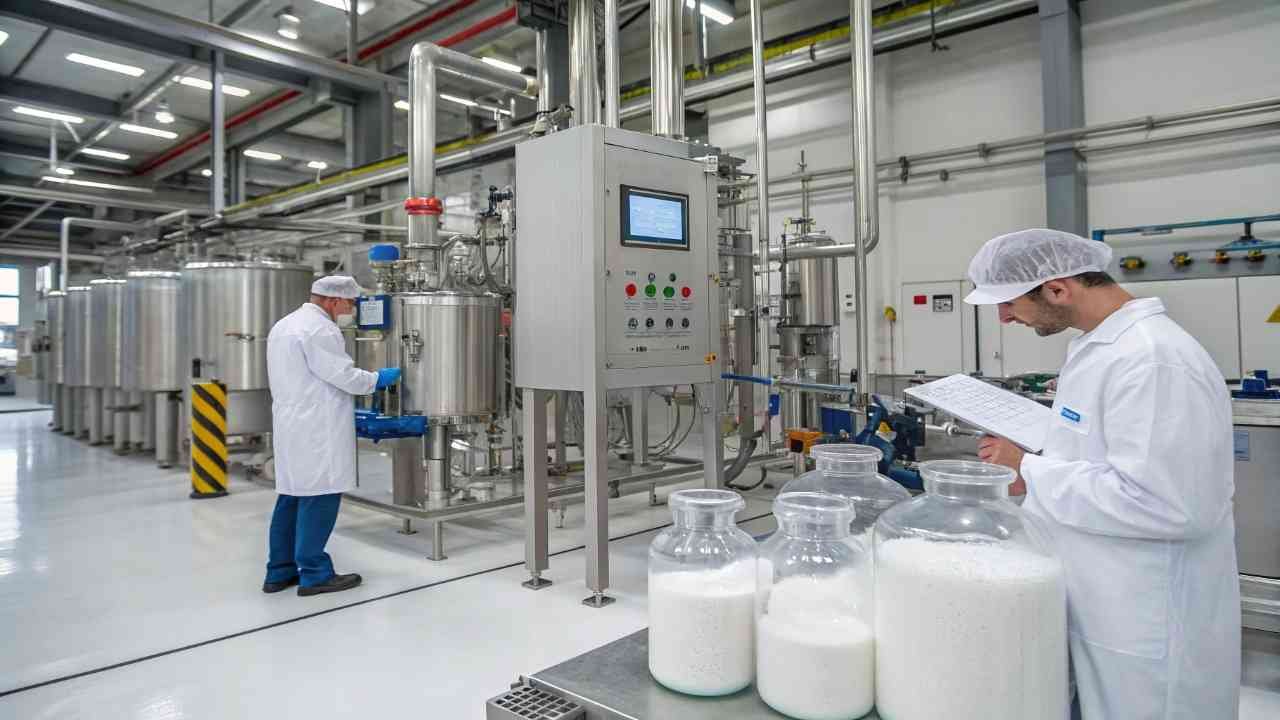
I observe that "efficiency" is the difference between a good price and a bad price. The synthesis of D-Calcium Pantothenate has many steps. In each step, some material is lost. High-efficiency factories use better catalysts. These catalysts make the reactions go faster and more completely. I visit the control rooms of our partner factories in China. I want to see digital systems that monitor temperature and pressure. If the temperature is off by even one degree, the yield drops. This waste increases the price you pay per kilogram. I prioritize factories that invest in modern technology.
Also, energy efficiency is a technical fact. Synthesis requires heating and cooling many times. Large-scale factories use heat-exchange systems to save energy. This lowers their electricity and steam bills. Plus, they recycle their solvents. By cleaning and reusing solvents, they save money on new chemicals. This "circular" production model is very common in the big chemical parks of Zhejiang and Shandong. I help my buyers find these efficient producers. It is the best way to get a stable price even when global costs are rising. My goal is to find the lowest "conversion cost" in the industry. This efficiency protects your profit and makes your supply chain1 more resilient.
| Efficiency Factor | Technical Action | Cost Result | Priority |
|---|---|---|---|
| Catalyst Selection | Use high-activity catalysts | Lower raw material waste | High |
| Heat Recovery | Install heat exchangers | Lower energy bills | Moderate |
| Solvent Recycling | Distillation and reuse | Lower chemical costs | High |
| Batch Size | Use 10,000L+ tanks | Lower labor per kg | High |
| Automation | Digital sensors (DCS) | Consistent batch yield | Very High |
What Environmental Controls Apply to Vitamin B5 (Pantothenic Acid) Production?
Poor environmental control leads to sudden factory shutdowns in China. This leaves you without stock. I audit factories to ensure they meet strict green regulations.
Environmental controls focus on waste water treatment and chemical emission reduction. China enforces strict "Three Simultaneities" laws. Factories must have modern treatment plants to handle chemical byproducts and avoid government-ordered production stops.
Navigating Strict Chinese Environmental Laws
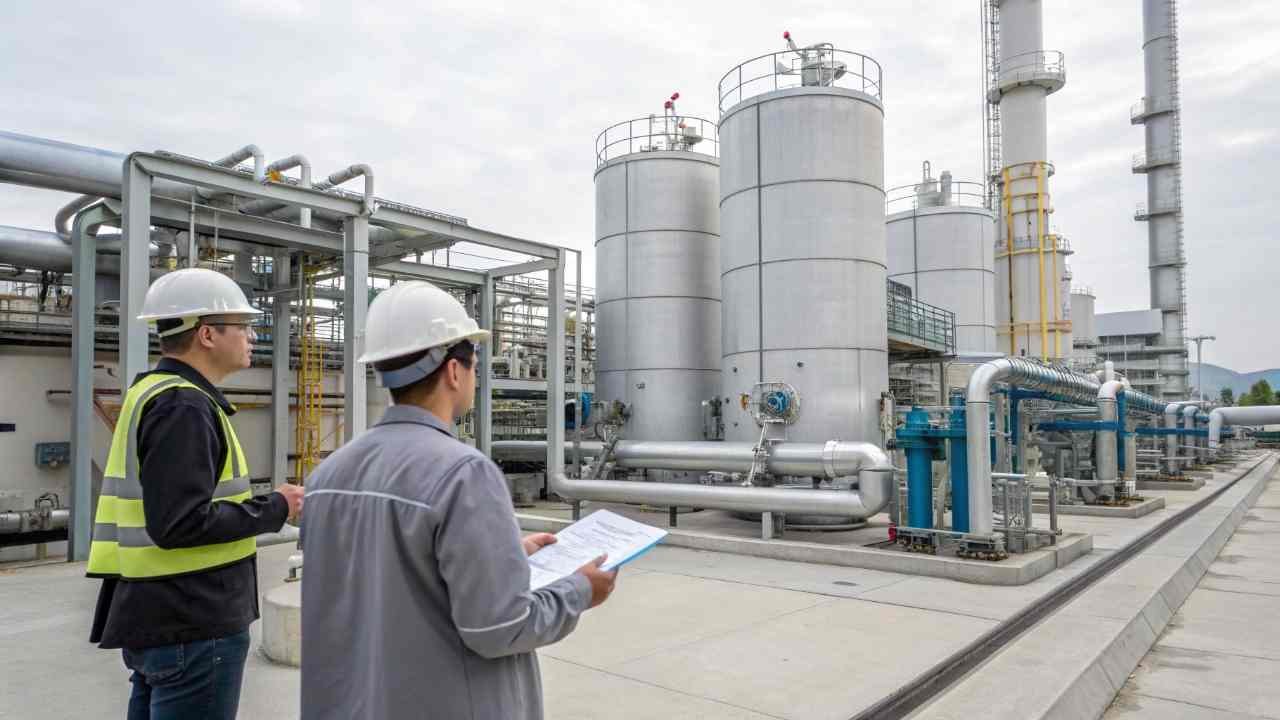
I see that "Green Production" is now a requirement, not a choice. In the past, many small factories ignored the environment. They dumped waste water into rivers. But the Chinese government changed the rules. Now, every factory must have a high-tech waste treatment plant on-site. The production of Vitamin B5 creates a lot of chemical waste. If a factory cannot clean this waste, they are shut down in one day. I only work with factories that have a valid "Environmental Impact Assessment" (EIA). This document proves they follow the law. This oversight is how I protect my buyers from sudden supply disruptions2.
Also, air pollution is a technical concern. Synthesis uses volatile chemicals. The factory must have "scrubbing" systems to catch these gases before they go into the sky. I check these systems during my physical audits. Plus, the government monitors these factories 24/7 with digital sensors. If the sensors see a problem, the factory gets a huge fine. I help my clients choose factories that are located in "Top Tier" chemical parks. These parks have the best shared infrastructure for waste management. It is safer for your business to buy from a large, compliant factory than from a small one that might disappear tomorrow. My focus on environmental facts keeps your supply stable and professional.
| Control Area | Required Technology | Goal | Risk level |
|---|---|---|---|
| Waste Water | COD / Nitrogen treatment | Prevent water pollution | Very High |
| Air Emissions | Gas scrubbers / Carbon | Reduce chemical smell | High |
| Solid Waste | Professional disposal | Zero landfill leakage | Moderate |
| Energy Use | Carbon tracking | Meet government caps | Moderate |
| Noise | Sound shielding | Worker and local safety | Low |
How Do Yield Improvements Reduce Vitamin B5 (Pantothenic Acid) Unit Cost?
Low yields mean higher prices for the same amount of vitamin. This makes you uncompetitive. I find suppliers who use advanced tech to maximize production yield.
Yield improvements reduce the cost of raw materials per kilogram. Better resolution technology and catalyst selection allow factories to convert more starting material into pure D-Calcium Pantothenate, lowering the total unit cost for global trade.
Maximizing the D-Isomer Output
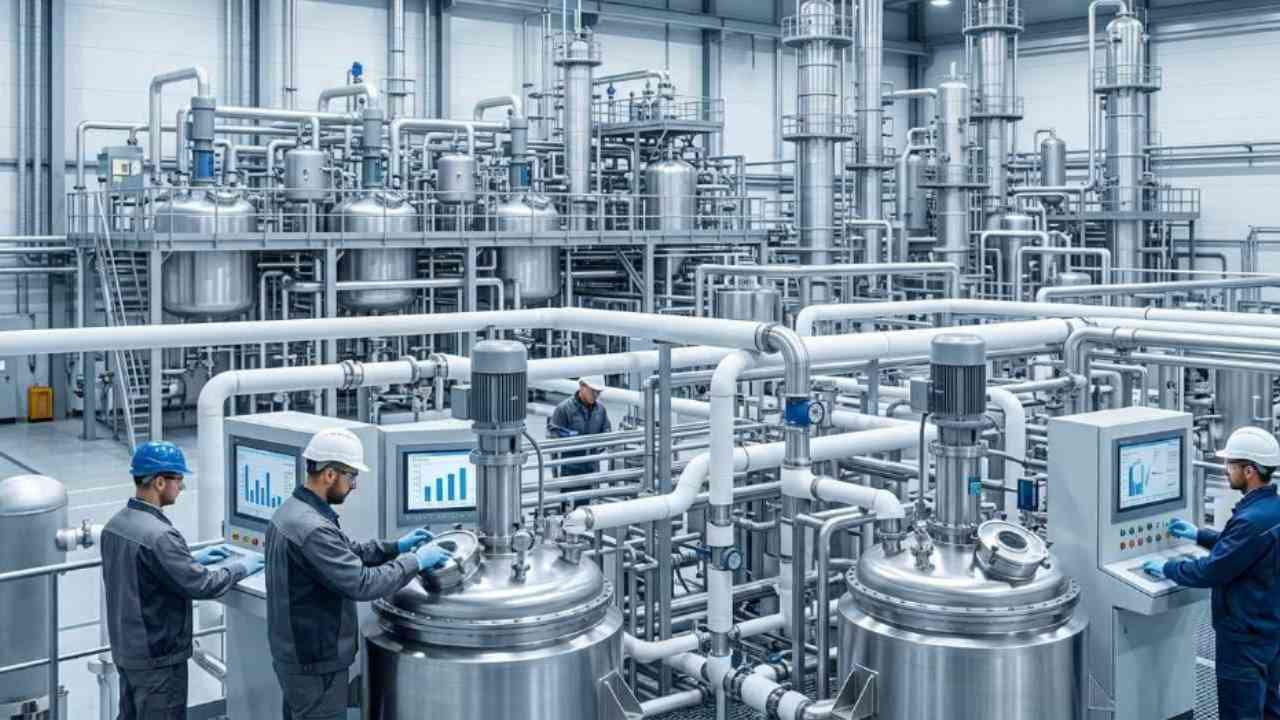
I want you to know that the "Resolution" step is the most difficult. This is where the factory separates the D-form from the L-form. In old factories, they threw away the L-form. This was a 50% waste of raw materials. Modern factories are much smarter. They use "racemization" technology. This process takes the "useless" L-form and turns it back into a mix of D and L. Then they resolve it again. This cycle continues until almost 100% of the material becomes the D-form. This yield improvement is a technical miracle. It is the main reason why the price of Vitamin B53 lower today than 20 years ago.
Also, I look for factories that use "Biological Resolution." Some use enzymes or bacteria to do the separation. This is often more efficient than using chemicals. It produces a cleaner product with fewer impurities. I check the lab results for the "Total Yield" of our partner factories. If a factory has a yield of 90%, their cost is much lower than a factory with 80%. I pass these savings to my buyers in the Middle East and Southeast Asia. Plus, high yield usually means fewer byproducts. This makes the final purification step easier. You get a brighter, whiter powder with a better assay. This technical oversight is how I ensure you get the best value for your wholesale procurement4.
| Resolution Method | Efficiency | Chemical Waste | Cost Level |
|---|---|---|---|
| Chemical (Traditional) | Moderate | High | High |
| Chemical (Recycling) | High | Moderate | Moderate |
| Biological (Enzyme) | Very High | Low | Low |
| Solvent Extraction | Moderate | Moderate | Moderate |
| Membrane Filter | High | Low | Moderate |
How Does Production Technology Impact Vitamin B5 (Pantothenic Acid) Competitiveness?
Old technology leads to high impurities and unstable pricing. This ruins your product quality. I help you source from factories using the newest technology to stay ahead.
Advanced production technology ensures consistent batch quality and lower prices. New catalytic and separation methods allow leaders to dominate the market by offering higher purity and lower costs than smaller, old-tech plants.
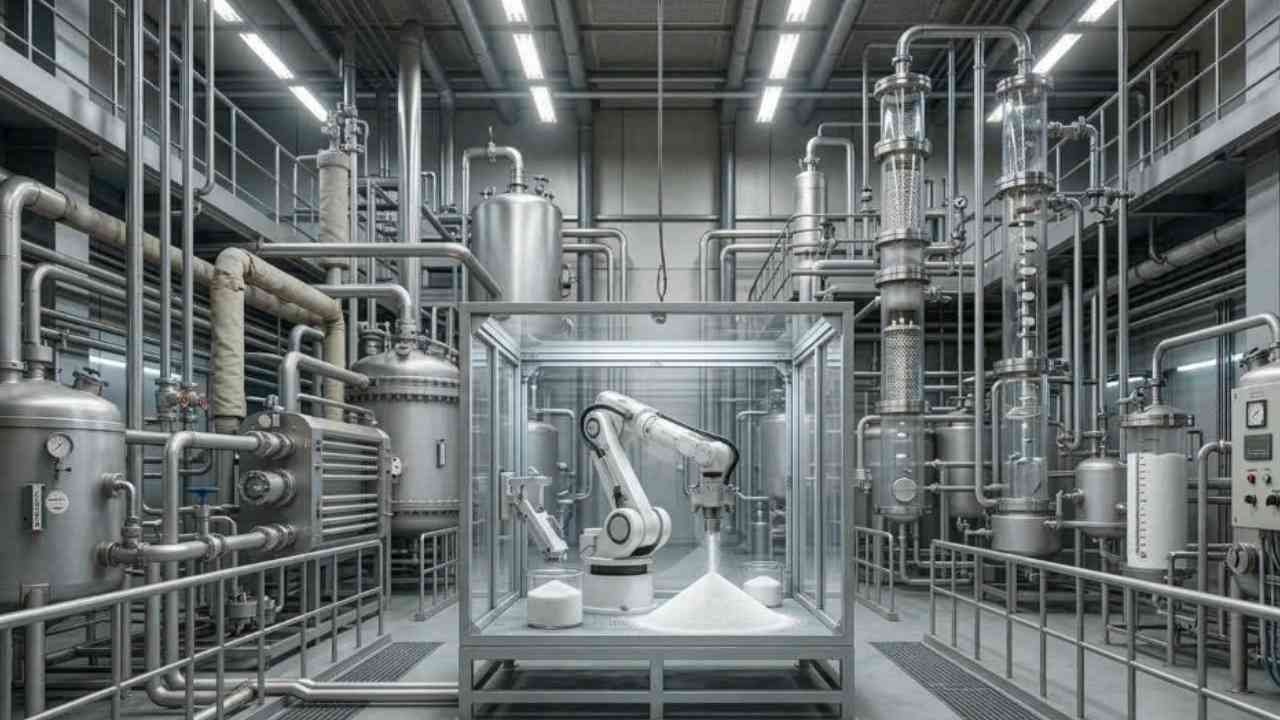
Technology as a Market Barrier
I observe that technology is a weapon in the vitamin market. The big players in China use "Continuous Production" lines. In a traditional factory, they make one batch, clean the tank, and start again. This is "Batch Production." It is slow and uses more energy. But continuous lines run 24/7 without stopping. The raw materials go in one end, and the Vitamin B5 comes out the other. This tech lowers the labor cost and ensures every drum is exactly the same. I prioritize these high-tech factories for my clients in Europe and Korea. It gives them a huge advantage because their material is uniform and low-cost.
Also, digital control is a technical requirement for safety. I look for factories with DCS (Distributed Control Systems). This is a giant computer that runs the whole plant. It monitors every valve and every sensor. If there is a tiny problem, the computer fixes it immediately. This ensures the Assay5 stays at 99.0% for every drum. Older factories rely on human workers to turn the valves. Humans make mistakes. Mistakes lead to off-spec material and delays. I only buy from factories that invest in their future. This tech-driven sourcing is how I help my buyers become market leaders in their own regions. Better technology always leads to a more competitive and reliable supply chain for your business.
| Technology | Benefit | Business Advantage | Priority |
|---|---|---|---|
| Continuous Flow | Lower labor / utilities | Most competitive price | High |
| DCS Systems | Total process control | Consistent quality | Very High |
| Enzyme Resolution | Higher purity D-form | Safer for food use | Moderate |
| Integrated Supply | Makes own intermediates | Supply security | High |
| Automated Packing | No contamination risk | Professional logistics | Moderate |
Conclusion
Industrial Vitamin B5 production requires precise chemical synthesis and strict environmental controls. I manage these technical factors at FINETECH to ensure your business gets the most competitive and reliable supply.
-
Supply Chain Management Review – A specialized resource for trade-oriented professionals to optimize industrial logistics and procurement. ↩
-
Harvard Business Review – Analysis of global supply chain resilience and strategies for buyers to mitigate risk during supply disruptions. ↩
-
PubChem – A comprehensive database providing technical chemical properties and safety data for Vitamin B5 (D-Calcium Pantothenate). ↩
-
CIPS – The professional body for procurement, providing technical guides for buyers on managing industrial wholesale procurement. ↩
-
Waters Corp – Technical application notes for laboratory personnel on using chromatography to determine the precise assay of nutritional ingredients. ↩