
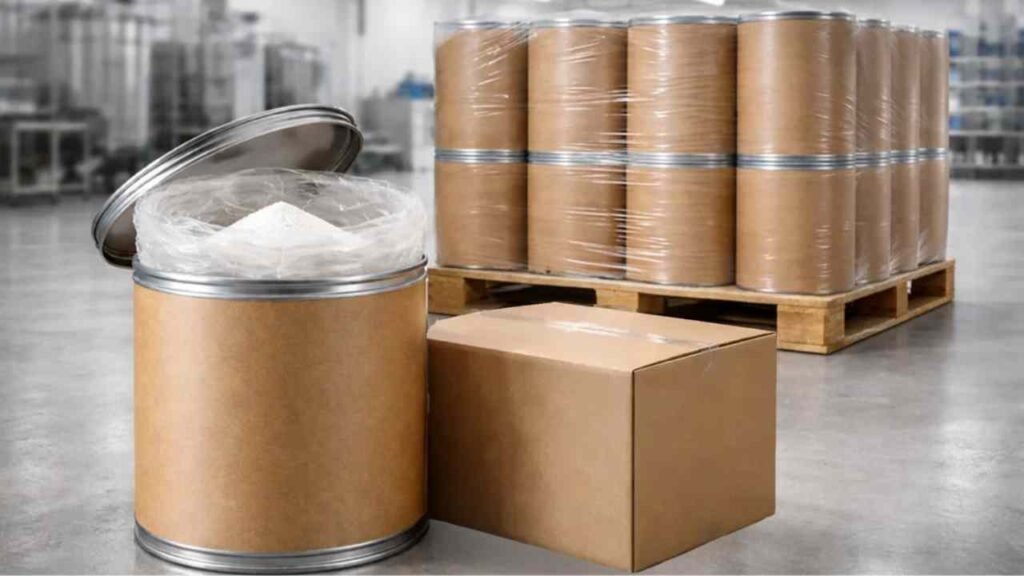
Damaged packages ruin your cargo during long sea voyages. This waste eats your profits and causes delays. I provide standardized, high-strength packaging to ensure your Vitamin B6 arrives safely.
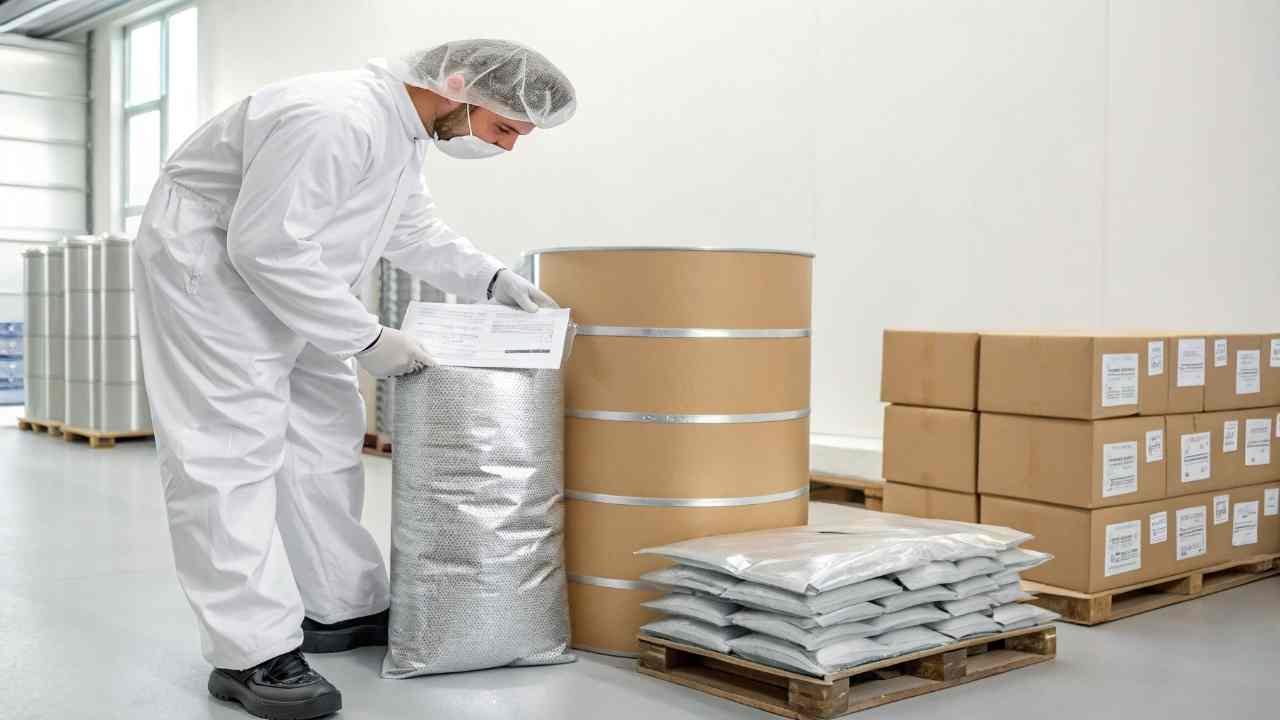
Vitamin B6 is standardly packaged in 25kg fiber drums or cartons with double PE liners. For international export, these are palletized and wrapped in moisture-proof stretch film. This setup protects the sensitive powder from light, moisture, and physical impact during sea or rail transit to global ports.
I manage factory selection and quality oversight for my B2B clients at FINETECH. I want to explain the technical facts about Vitamin B6 packaging to help you protect your inventory and business results.
What Are the Standard Export Packages for Vitamin B6(Pyridoxine)?
Non-standard packages cause confusion in your warehouse. Handling errors lead to accidents and spilled material. I use industry-standard 25kg units to keep your logistics efficient and safe for your staff.
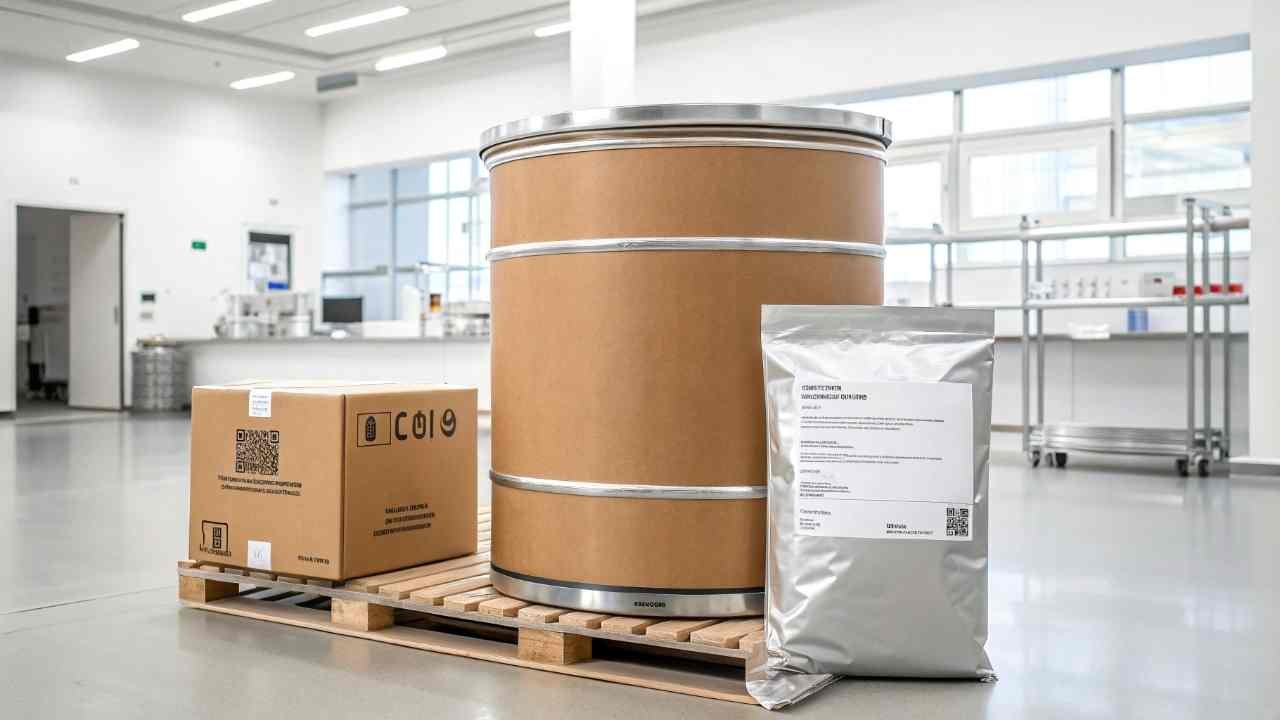
The industrial standard for Vitamin B6 is the 25kg fiber drum. Some wholesalers also use 25kg corrugated cartons for better space utilization. Smaller 1kg or 5kg vacuum-sealed aluminum bags are used for lab trials or specialized pharmaceutical grade requirements in the global market.
Standardizing Units for Global Trade
I see that 25kg is the most popular size for wholesalers1 in the Middle East and Southeast Asia. This size is a technical requirement for many reasons. First, it is the weight that one person can lift safely. Second, it fits perfectly into standard container math. In a 20ft container, we can fit 10 to 12 tons of Vitamin B6. This means about 400 to 480 units. I manage the palletization to ensure we use every centimeter of space. We usually put 18 or 27 drums on one pallet. This makes it very easy for you to count your inventory when the truck arrives.
Cartons are also a good choice. I suggest cartons for buyers who want to save on shipping volume. Cartons are square, so there is zero empty space between them. Drums are round, so they leave gaps. However, drums are stronger. I help my clients in Russia and Germany choose between these two based on their transport route. If you use rail freight, cartons are excellent. If you use sea freight, drums offer better protection against the movement of the ship. I oversee the labeling for all these units. Every drum has a batch number and production date. This transparency is vital for your internal quality audits2.
Comparison of Export Package Types
| Package Type | Net Weight | Shape | Best For | Protection Level |
|---|---|---|---|---|
| Fiber Drum | 25 kg | Round | Sea Freight / Long distance | Very High |
| Corrugated Box | 25 kg | Square | Rail Freight / Space saving | High |
| Medium Box | 10 kg | Square | Small factories | Moderate |
| Trial Bag | 1 kg / 5 kg | Flat | Lab R&D / New product test | High (Vacuum) |
| Bulk Bag | 500 kg | Large | Premix plants (Special order) | Moderate |
How Does Packaging Protect Vitamin B6(Pyridoxine) During Shipping?
Moisture and light destroy Vitamin B6 potency in weeks. Poor seals lead to clumping and chemical breakdown. I oversee a multi-layer barrier system to defend your investment from environmental damage during transit.
Packaging protects Vitamin B6 by blocking UV light and moisture. Fiber drums provide physical strength against stacking pressure. Internal PE liners and heat seals create an airtight environment that prevents oxidation and ensures the powder remains free-flowing and pure throughout the journey.
Multi-Layer Defense Against the Elements
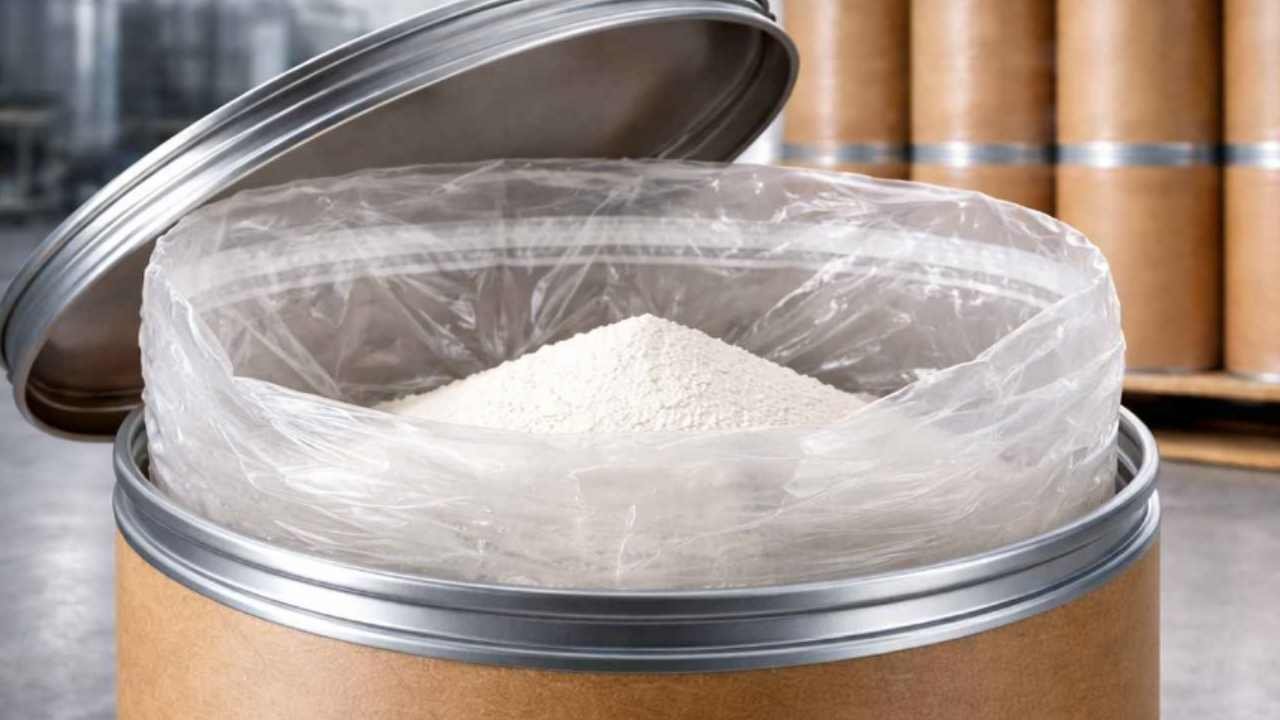
I want you to understand that Vitamin B6 is sensitive. When it is on a ship for 40 days, it faces heat and humidity. I use a "Three-Layer" system to protect it. The first layer is the thick fiberboard of the drum. This blocks almost all light. Light causes Pyridoxine to turn yellow and lose strength. The second layer is the double PE (Polyethylene) liner. These are food-grade plastic bags. I ensure the factory uses a heat sealer for the inner bag. This creates an airtight weld. Air cannot get in, so the vitamin does not react with oxygen.
The third layer is the outer pallet wrap. During the voyage, "container rain" can happen. This is when water drips from the container roof. I instruct our team to use multiple layers of black or clear stretch film. This wrap covers the whole pallet. It keeps the fiber drums dry. Also, I use corner protectors. These are hard cardboard strips on the edges of the pallet. They stop the straps from cutting into the drums. This physical protection ensures that the drums do not leak powder. I visit the loading docks in China to check these details. If the pallets are not stable, they will fall when the ship hits big waves. My oversight prevents these accidents from hurting your profit.
Protective Features and Their Functions
| Feature | Technical Purpose | Risk Prevented | Value |
|---|---|---|---|
| Fiber Drum Wall | Physical barrier | Punctures and crushing | Cargo safety |
| Double PE Liners | Moisture barrier | Caking and clumping | Potency retention |
| Heat Seal | Airtight closure | Oxidation | Assay stability |
| Stretch Wrap | Water resistance | Container rain damage | External dryness |
| Corner Protectors | Structure support | Drum deformation | Easy stacking |
What Packaging Materials Are Used for Vitamin B6(Pyridoxine)?
Cheap materials tear easily, leading to contamination. This risk kills your brand trust and wastes money. I select high-density kraft paper and food-grade plastic to guarantee cargo integrity for your procurement.
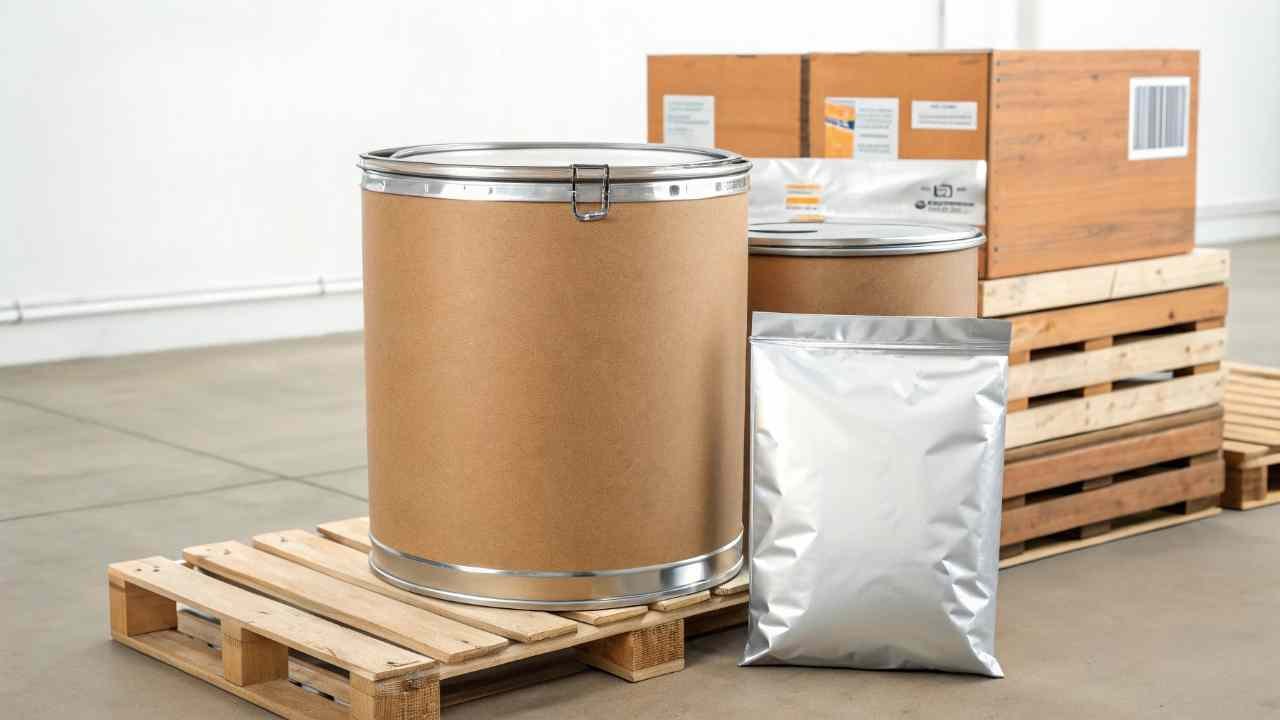
Primary materials include high-density fiberboard for drums, double-layer food-grade PE for liners, and metal locking rings. For high-sensitivity orders, aluminum foil bags are used. Pallets are made of heat-treated wood or plastic to meet international trade regulations like ISPM 15.
High-Density Fiber and Food-Grade Plastics
I see that quality starts with the raw material of the package itself. Our fiber drums are made from high-density kraft paper. This material is very strong but light. It resists humidity better than cheap cardboard. I only work with drum suppliers who have a clean track record. The metal locking ring is also a key part. It must be galvanized to prevent rust. If the ring rusts, the rust can fall into the powder when you open it. I check these rings for every shipment. For the liners, I use virgin PE. This means the plastic is new and has no smell. Cheap recycled plastic can leach chemicals into the Vitamin B6. I avoid these risks.
Pallets are another technical fact. For my buyers in Southeast Asia and the Middle East, I use heat-treated wood. These pallets have the "IPPC" stamp. This is a law for international trade3. It proves the wood has no insects. Without this stamp, your cargo might be rejected at the port. I also offer plastic pallets for food-grade environments. Plastic is easier to clean and has zero dust. I manage the selection of these materials based on your destination rules. I also use industrial-strength tape and straps. These hold the drums to the pallet. I ensure the tension is correct. If it is too loose, the cargo shifts. If it is too tight, it breaks the drum. I focus on these small details to protect your money.
Material Specification Checklist
| Material Component | Target Standard | Requirement | Why It Matters |
|---|---|---|---|
| Fiber Drum | High-density Kraft | New material | Stacking strength |
| Inner Liner | Food-grade PE | BPA-free / Virgin | Zero contamination |
| Foil Bag | Aluminum / Plastic | Multi-layer | Ultimate barrier |
| Locking Ring | Galvanized Steel | Smooth / No rust | Security |
| Pallet | ISPM 15 Compliant | Heat-treated | Customs clearance |
Can Custom Packaging Be Provided for Vitamin B6(Pyridoxine)?
Standard labels often fail local health inspections. This results in heavy fines and cargo seizure. I offer customized labeling and specific sizes to ensure you meet every local regulatory requirement for your business.
Yes, custom packaging is available. We provide private labeling, dual-language printing (Arabic/English), and specific pallet configurations. Buyers can also request smaller bag sizes or vacuum sealing to meet their unique storage or distribution needs in their specific home markets.
Meeting Local Regulatory Needs
I observe that every country has its own rules for labels. For my clients in Saudi Arabia and the UAE, Arabic text is often mandatory. I manage the design of these labels at our factory in China. We can include your logo, your company name, and your local phone number. This is called "Private Labeling." It helps you build your own brand in your region. I also ensure that all mandatory information is present. This includes the Net Weight, Batch Number, Production Date, and Expiry Date. If one of these is missing, the goods stay at the port. I oversee the printing process to ensure zero errors.
Customization also extends to the size and protection. Some buyers in Europe need 10kg boxes instead of 25kg drums. This helps them move the material in small labs. I can arrange these smaller units inside a large master carton. Also, for high-purity pharmaceutical B6, I suggest vacuum sealing. We put the powder in an aluminum bag and suck the air out. This provides the best protection against aging. For my clients in Indonesia, I can provide plastic pallets instead of wood. These are better for their humid warehouses. I act as your partner in China. I find the best solution for your specific warehouse and market. This flexibility is how I help you grow.
Customization Options Table
| Feature | Available Options | Main Benefit |
|---|---|---|
| Labeling | Private Label / Dual Lang | Local compliance |
| Size | 1kg, 5kg, 10kg, 25kg | Easy handling |
| Pallet | Plastic / Heat-treated Wood | Meets local warehouse rules |
| Protection | Vacuum Seal / Black Wrap | Extra shelf life |
| Outer Pack | Drum / Box / Bulk Bag | Logistics choice |
How Does Packaging Affect Vitamin B6(Pyridoxine) Shelf Life?
Oxygen and dampness reduce shelf life from years to months. Expired inventory is a total financial loss. I manage high-quality seals that preserve potency for the full 36-month shelf life of your inventory.
Proper packaging ensures Vitamin B6 maintains its 99% assay level for 36 months. Opaque materials prevent light-induced degradation, while airtight liners stop moisture ingress. This stable environment slows chemical aging and prevents the formation of hard clumps or off-colors during storage.
Preserving Potency Through Airtight Barriers
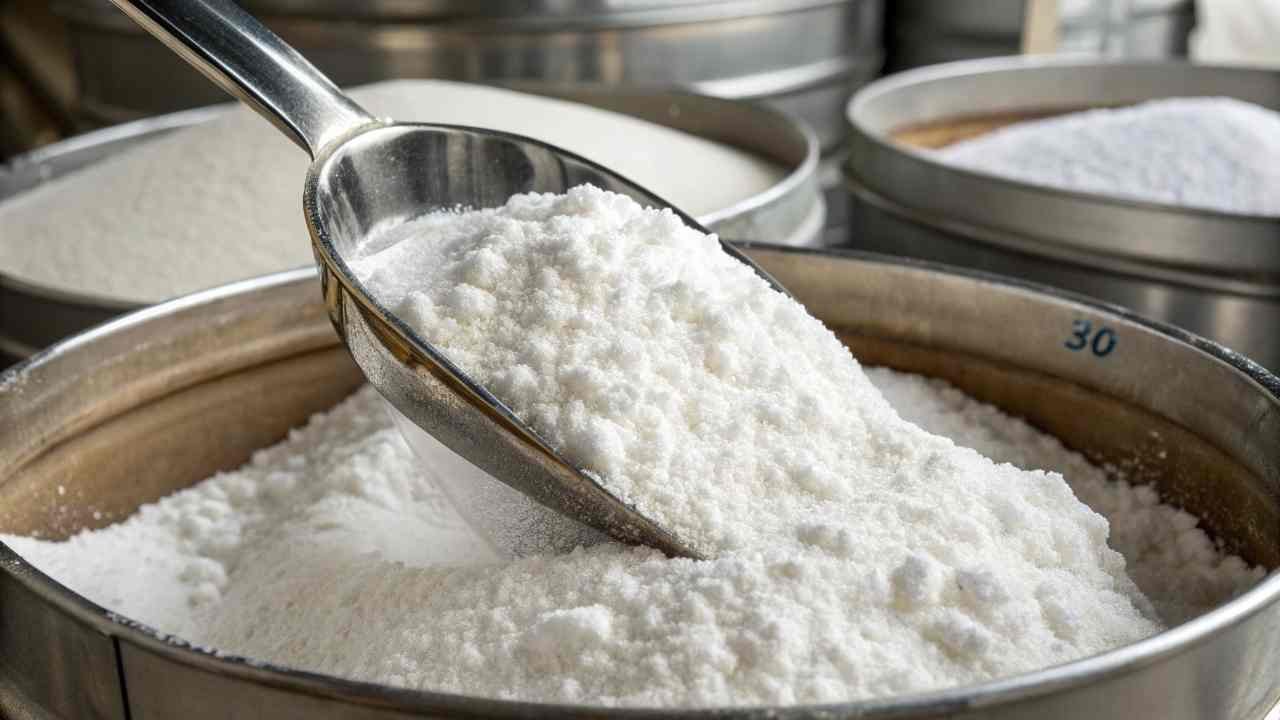
I see that Vitamin B6 is quite stable if you keep it dry and dark. The standard shelf life is 3 years. But this depends entirely on the seal of the package. If air enters the drum, the vitamin starts to oxidize. This lowers the assay level4. I prevent this by managing the sealing quality at the factory. By using double-layer PE liners and a tight metal locking ring, we create a mini-environment for the powder. This environment stays the same even if your warehouse is in a tropical area. I provide a Certificate of Analysis (COA) for every batch. With our packaging, the results on that paper stay true for the full 36 months.
I also suggest that you do not open the drums until you are ready to use them. Every time you open a drum, you let in moisture and oxygen. For large wholesalers, I suggest keeping the drums in a cool, dry place. Heat can travel through the fiberboard walls. Keeping the warehouse below 25°C is a technical requirement for the best results. I also keep "Retainer Samples5" from every batch for 3 years. If you ever have a question about the quality of old stock, we can test my sample. This provides a safety net for your business. I focus on these long-term facts to help you manage your inventory without any waste or financial loss.
Shelf Life Impact Factors
| Risk Factor | Effect on Vitamin | Packaging Solution | Result |
|---|---|---|---|
| UV Light | Chemical breakdown | Opaque Fiber Drum | No color change |
| Humidity | Caking / Clumping | Heat-sealed PE Liner | Free-flowing powder |
| Oxygen | Lowers Assay level | Airtight double bag | High potency |
| Dust / Pests | Contamination | Metal Locking Ring | Clean material |
| Temp Spikes | Faster aging | Fiber insulation | Stable shelf life |
Conclusion
Standardized, high-strength packaging is the only way to ensure Vitamin B6 stays pure and safe during global trade. I manage these technical logistics at FINETECH to protect your business profits and supply chain.
-
Investopedia – A resource explaining the role of wholesalers as intermediaries for buyers and manufacturers in the global supply chain. ↩
-
ISO – The international standard for food safety management systems, essential for conducting internal quality audits in food enterprises. ↩
-
WTO – Information on the Sanitary and Phytosanitary (SPS) Agreement, which governs international trade of food and additives. ↩
-
Waters Corp – Technical application notes for laboratory personnel on using chromatography to determine the assay level of vitamins. ↩
-
Lab Manager – Professional advice for technical personnel on sample management and the importance of Retainer Samples in a QC lab. ↩