
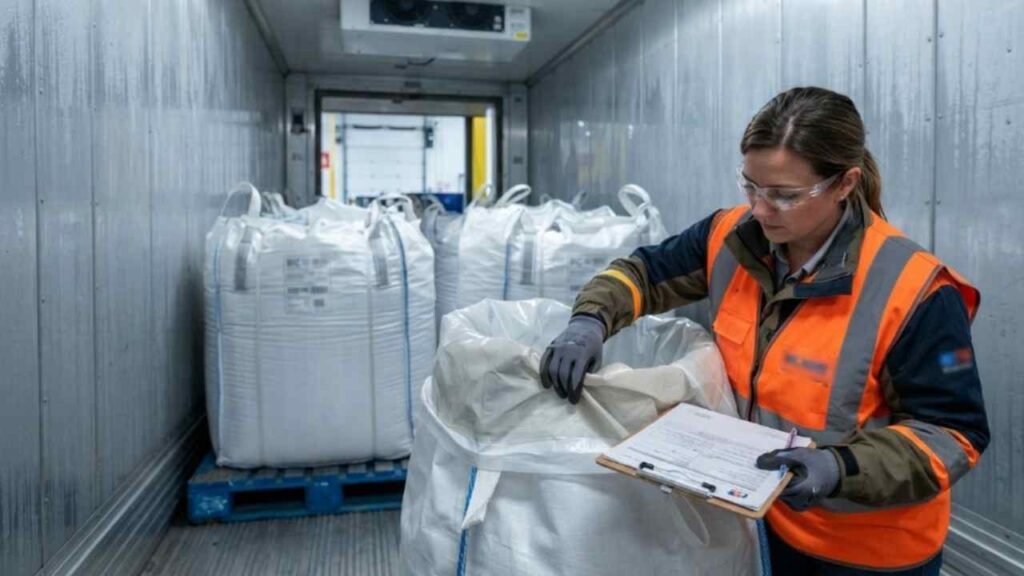
Neglecting specialized transport containers and humidity-controlled warehousing for bulk betaine results in rock-hard, caked drums, chemical active decay, and complete raw material waste.
Storing and transporting bulk betaine successfully requires maintaining low humidity and temperature, shielding the hygroscopic crystals from ambient moisture, using nitrogen-purged hermetic double-PE packaging, specifying temperature-controlled container transit, and utilizing local inspections to check seal integrity.
Successfully manufacturing high-quality health supplements and food products requires a disciplined approach to managing raw material storage and logistics. Sourcing managers must evaluate physical handling conditions and container climate variables to protect their formulations from active potency losses and mechanical caking. Sourcing partners like FINETECH simplify factory checks, verify production compliance, and secure competitive pricing directly in China to guarantee bulk deliveries. This guide explains how betaine should be stored and transported.
What Storage Conditions Help Maintain Betaine Quality?
Storing sensitive crystalline compounds in unventilated, high-humidity warehouses causes rapid material clumping and packaging degradation. Unmanaged storage facilities compromise active ingredient purity.
Optimal storage conditions include maintaining relative humidity levels below thirty-five percent, keeping temperatures strictly under twenty-five degrees Celsius, ensuring constant ventilation, and elevating fiber drums off warehouse floors.
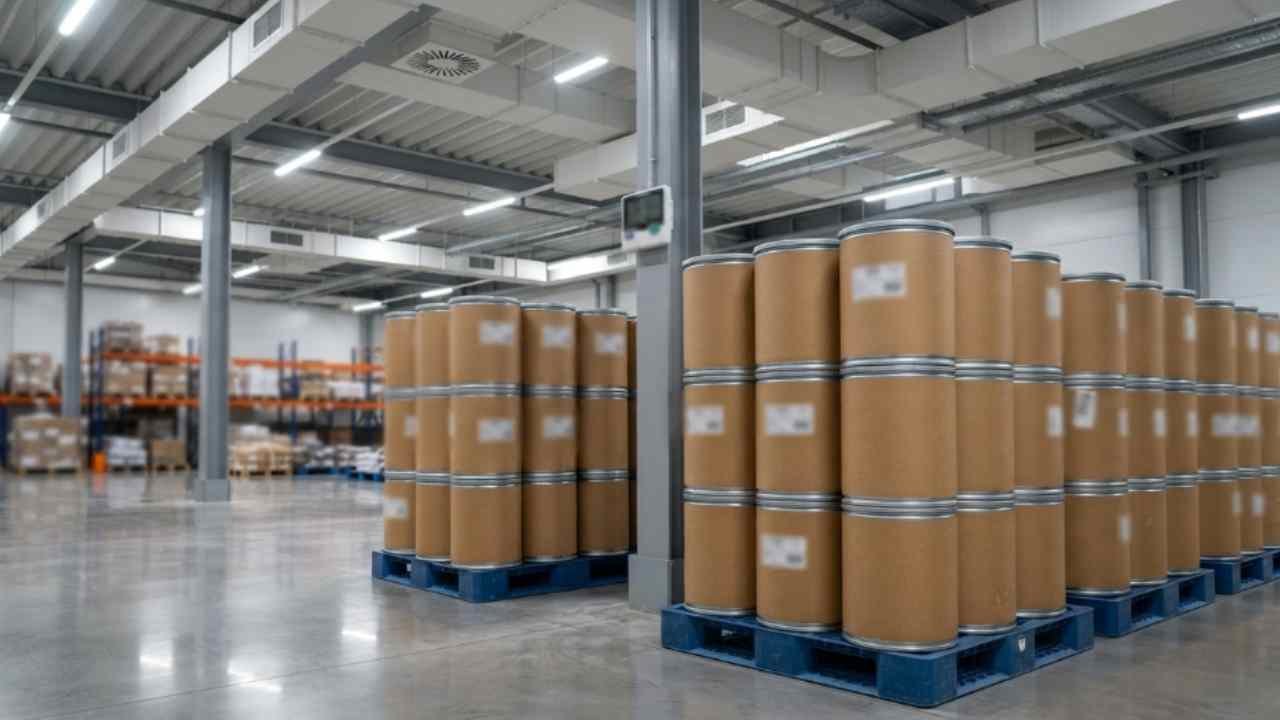
Dive Deeper into Relative Humidity Limits, Temperature Controls, and Warehouse Elevation
To maintain the chemical purity and physical flowability of bulk betaine (especially betaine anhydrous) during warehousing, facility managers must enforce strict environmental controls. Because betaine is highly hygroscopic, the single most critical storage parameter is relative humidity (RH). The warehouse relative humidity must be kept constantly below thirty-five percent, and ideally below thirty percent, using industrial-scale dehumidification systems. If the ambient air humidity exceeds forty percent, water vapor will slowly permeate even thick plastic barriers, initiating the caking process.
In addition to humidity, temperature must be tightly controlled. The optimal storage temperature for bulk betaine is between fifteen and twenty-five degrees Celsius. Storing betaine in environments above thirty degrees Celsius accelerates the molecular kinetics of moisture absorption and can trigger the volatilization of trace residual amines, leading to an unpleasant fishy odor. Drums must never be stored directly on concrete floors, which can leach dampness; instead, they should be elevated on clean plastic or wooden pallets. Sourcing partners like FINETECH assist buyers by auditing the storage conditions of Chinese manufacturers prior to shipment, ensuring that raw material inventories are held in temperature-controlled, dry environments that preserve initial quality.
| Storage Parameter | Recommended Range | Critical Quality Limit | Physical Risk of Deviation |
|---|---|---|---|
| Relative Humidity | Below 35% RH | Must remain below 40% RH | Severe powder clumping and caking |
| Temperature | 15°C to 25°C | Must remain below 30°C | Volatilizes trace fishy amines |
| Pallet Elevation | Elevated off floor | Keep dry, off concrete | Dampness absorption from ground |
| Air Circulation | Constant ventilation | Prevent stagnant damp air | Moisture pockets inside warehouse |
How Can Moisture Affect Betaine During Storage?
Allowing moisture to seep into sealed storage drums triggers immediate physical compaction and active assay degradation. Unchecked moisture absorption ruins powder flowability.
Moisture causes betaine to undergo deliquescence, pulling water vapor from the air until it cakes into solid blocks, drops in active assay, and volatilizes trace fishy-smelling amines.
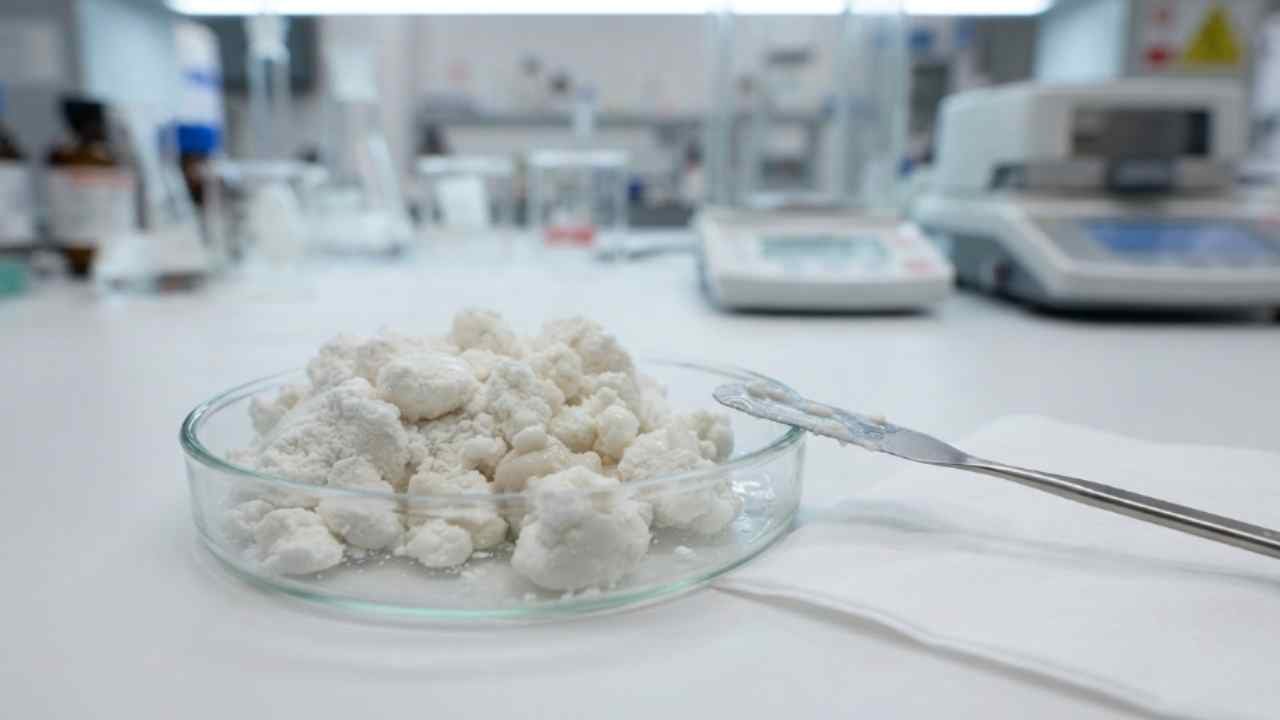
Dive Deeper into Deliquescence, Solid Compaction, and Amine Volatilization Risks
Understanding how moisture interacts with betaine is essential for formulating effective standard operating procedures in the warehouse. Trimethylglycine is not merely sensitive to moisture; it is deliquescent. This means that when the relative humidity reaches a certain threshold, the crystalline powder will absorb so much atmospheric water vapor that it actually dissolves in its own absorbed water, transforming into a sticky liquid paste. Once this thermodynamic process begins, the structural integrity of the crystalline matrix is permanently lost.
Even minor, sub-deliquescent moisture absorption presents severe physical challenges. When the powder absorbs small amounts of water, microscopic liquid bridges form between the individual crystals. As the warehouse temperature fluctuates, this moisture evaporates, recrystallizing the bridges and fusing the free-flowing powder into a solid, compact block. Physically breaking up these caked blocks is mechanically difficult and generates excessive dust, rendering the material unusable for high-speed automated capsulating or tableting machinery. Furthermore, moisture-driven chemical degradation lowers the active anhydrous assay per unit weight, altering the dosage accuracy of finished products. Sourcing partners like FINETECH help buyers avoid these risks by organizing pre-shipment moisture tests, verifying that the batch loss on drying1 remains well below 1.5%.
| Physical / Chemical Effect | Molecular Action | Processing Symptom | Production Impact |
|---|---|---|---|
| Deliquescence | Absorbs water until liquid forms | Powder turns to sticky paste | Ruined raw material inventory |
| Solid Compaction | Crystalline liquid bridging | Crystals fuse to solid blocks | Jams capsule-filling hoppers |
| Assay Reduction | Water molecules dilute weight | Lower active TMG per kg | Inaccurate dosage formulations |
| Amine Release | Moisture breaks down bonds | Releases trimethylamine gas | Highly unpleasant fishy off-odor |
Which Packaging Options Are Best for Bulk Betaine Orders?
Packaging hygroscopic active powders in standard thin plastic bags allows atmospheric moisture ingress over long transit schedules. Porous packaging designs fail. Hermetic barrier systems preserve quality.
The best packaging options are standard twenty-five-kilogram fiber drums lined with vacuum-sealed, nitrogen-purged double food-grade polyethylene bags, or secondary aluminum-foil laminates for maximum moisture barrier protection.
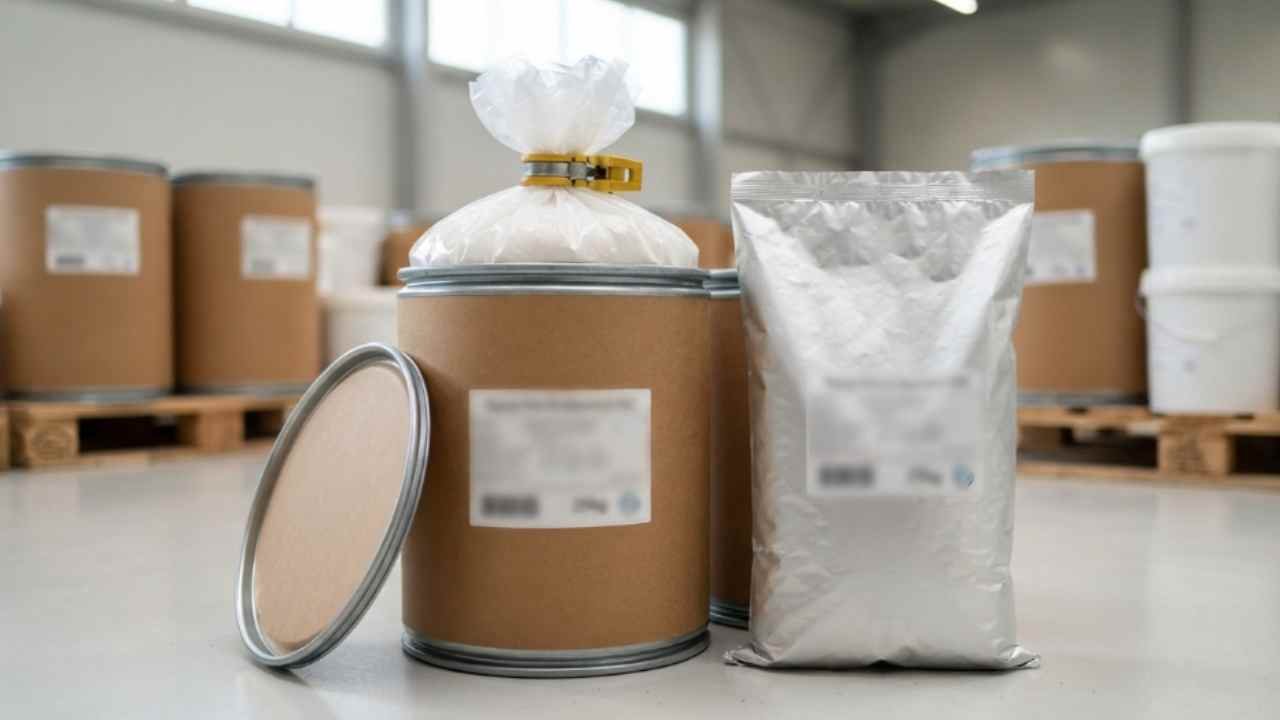
Dive Deeper into Nitrogen-Purged PE Liners, Aluminum Laminates, and Desiccant Blocks
Protecting bulk betaine orders from atmospheric moisture during extended shipping schedules requires selecting highly specialized, multi-barrier packaging configurations. The industry-standard packaging for bulk commercial orders is the twenty-five-kilogram high-density fiber drum. However, the drum itself provides minimal protection against gas and moisture vapor transmission. Therefore, the internal liner system is where the primary defense is established. The betaine must be packed inside double-layer, food-grade polyethylene (PE)2 bags.
For maximum protection, particularly when shipping betaine anhydrous, the inner PE bag should be purged with dry nitrogen gas3 to displace ambient oxygen and moisture before being hermetically heat-sealed. Some high-end manufacturers also offer an outer aluminum-foil laminate bag as a secondary liner, which provides an absolute barrier to moisture vapor and ultraviolet light. Additionally, placing high-capacity silica gel desiccant packs between the inner PE liner and the outer fiber drum acts as a crucial moisture-sink, capturing any water vapor that penetrates the drum wall before it reaches the product. Sourcing partners like FINETECH conduct rigorous pre-shipment packaging audits at Chinese plants, physically checking the thickness of the PE liners and ensuring that the heat-sealing process is executed flawlessly.
| Packaging Component | Standard Material | Protective Mechanism | Sourcing Surcharge |
|---|---|---|---|
| Outer Container | High-density fiber drum | Protects bags from punctures | Standard base packaging cost |
| Primary Liner | Double-layer food PE bag | First moisture gas barrier | Included in bulk specifications |
| Secondary Shield | Aluminum foil laminate bag | Absolute light & vapor barrier | Optional premium protection add-on |
| Inert Gas Flush | High-purity Nitrogen gas | Displaces ambient humid air | Highly recommended for anhydrous |
What Transportation Methods Are Suitable for Betaine Shipments?
Shipping sensitive chemical cargo on hot, uninsulated ocean container decks causes severe thermal degradation and caking. Uncontrolled transit paths ruin cargo. Temperature-regulated logistics secure cargo.
Suitable transportation methods include utilizing climate-controlled refrigerated containers (reefers) for maritime transit, specifying below-deck stowage on vessels, and using dry, enclosed trucks for inland delivery.
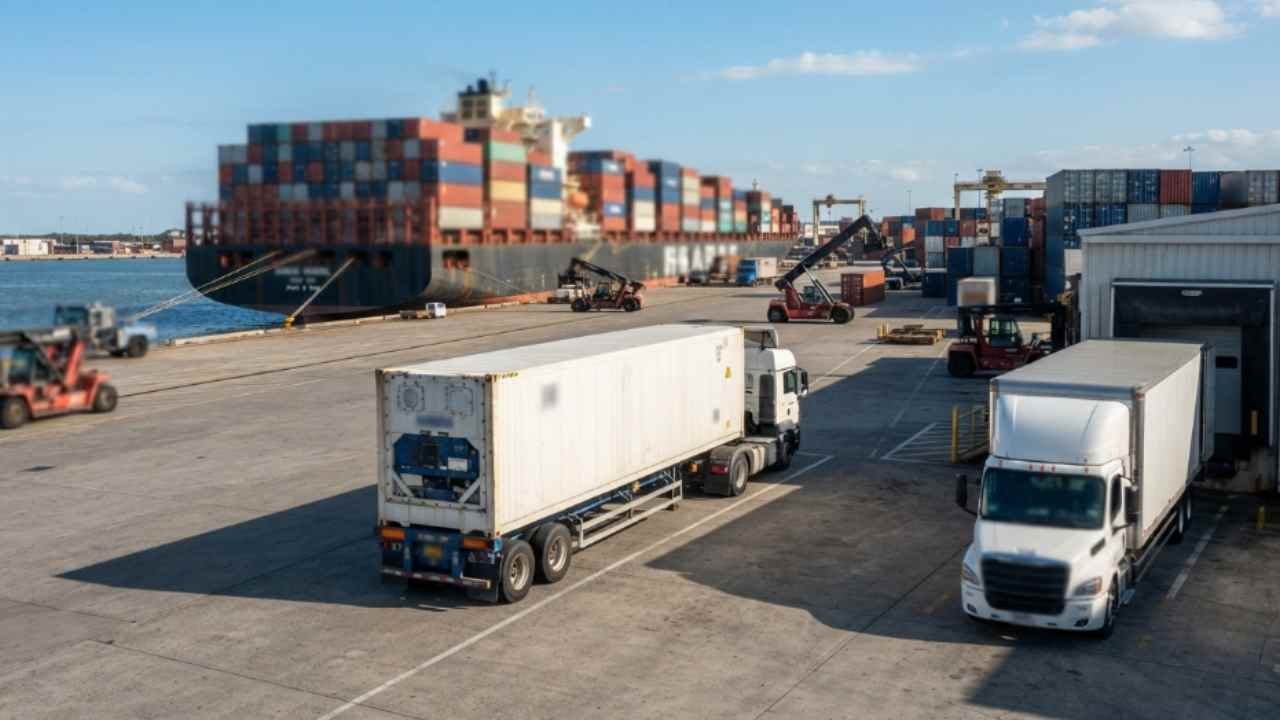
Dive Deeper into Reefers, Container Rain Mitigation, and Cool-Stowage Bills of Lading
Transporting bulk betaine across international ocean shipping lanes presents severe environmental challenges that can compromise product quality before it arrives at the destination port. During a typical maritime voyage, ocean containers are exposed to extreme temperature fluctuations. During hot days, the internal temperature of a standard dry container can soar above sixty degrees Celsius, while cold nights cause rapid cooling. This thermal cycle triggers a phenomenon known as "container rain4," where moisture inside the air condenses on the container roof and drips down onto the fiber drums, soaking the packaging and initiating clumping.
To mitigate these transport hazards, logistics managers should specify climate-controlled shipping methods. The most reliable method is utilizing refrigerated containers, or reefers, kept at a constant fifteen to twenty degrees Celsius throughout the voyage. If reefers are budget-prohibitive, buyers should instruct their shipping lines to apply thermal insulation blankets inside standard containers and explicitly note "below deck" or "cool stowage" on the Bill of Lading to prevent the cargo from being placed on the hot upper deck of the vessel. Sourcing partners like FINETECH manage these complex maritime logistics, coordinating with freight forwarders in China to ensure that temperature-sensitive betaine is packed and stowed correctly.
| Shipping Option | Vessel Stowage Type | Temperature Control | Moisture Risk Level |
|---|---|---|---|
| Refrigerated Container | Temperature-monitored deck | Constant 15°C to 20°C | Lowest; zero container rain |
| Standard Container | Below-deck cool stowage | Insulated from direct sun | Moderate; requires dry blankets |
| Standard Container | On-deck exposed stowage | Extreme heat (up to 60°C) | High; severe container rain risk |
| Inland Closed Truck | Enclosed box truck | Air-circulated, insulated | Low; fast regional delivery |
How Can Buyers Protect Betaine from Caking or Quality Loss?
Executing large bulk-bag purchases without having immediate manufacturing capabilities exposes opened inventories to rapid atmospheric caking. Unstructured inventory management compromises material usability.
Buyers protect betaine by using nitrogen-flushed packaging, optimizing batch orders to avoid oversized sacks, conducting pre-shipment sealing checks, and partnering with experienced local quality inspectors.
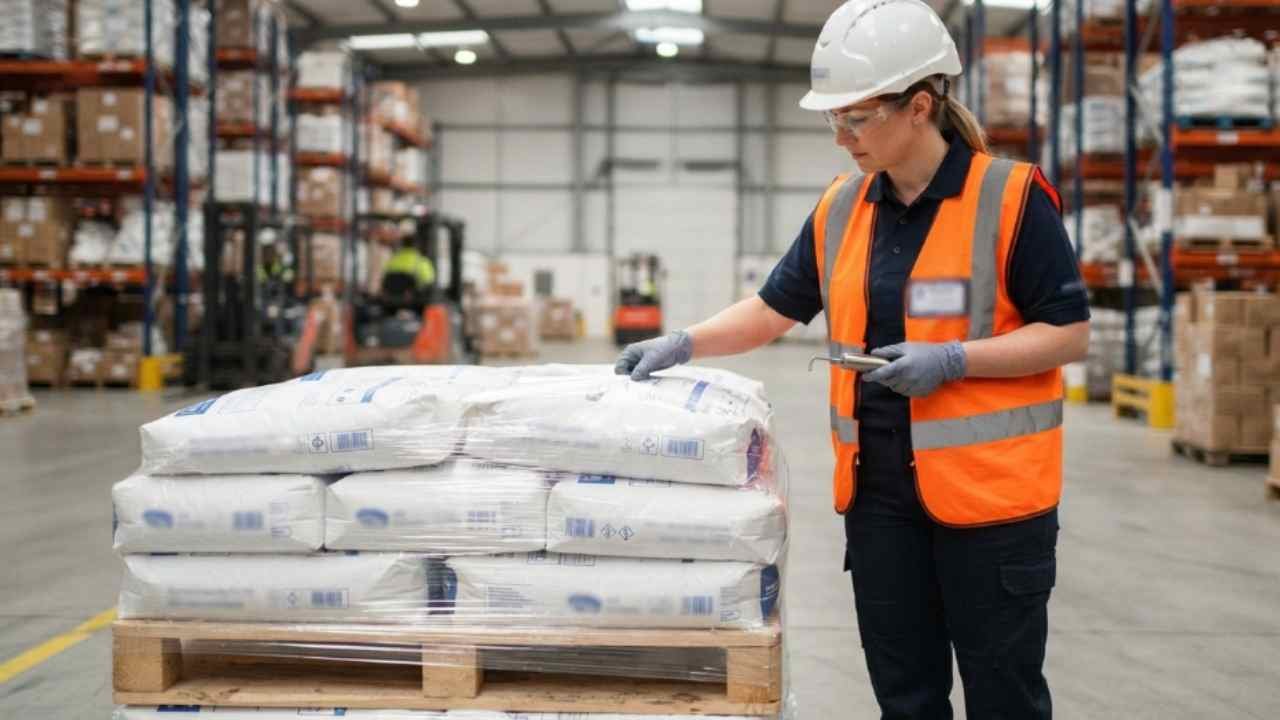
Dive Deeper into Sieve Analysis, Order Size Balancing, and Pre-Shipment Ground Inspections
Securing a high-quality betaine shipment and preventing downstream processing failures requires buyers to implement a proactive, multi-layered quality protection strategy. The first step involves optimizing the purchase order size. Sourcing managers should avoid purchasing oversized packaging, such as one-metric-ton (1 MT) jumbo bulk bags, unless their manufacturing plant is equipped to utilize the entire volume immediately. Once an oversized bag is opened, the remaining betaine is exposed to ambient cleanroom humidity, initiating rapid physical caking and rendering the remaining inventory difficult to process.
Instead, standardizing on twenty-five-kilogram drums allows manufacturers to open only what is required for immediate production, keeping the remaining stock sealed under protective conditions. Additionally, buyers must require the supplier to perform a pre-shipment sieve analysis5 to verify a uniform particle-size distribution, as uniform crystals are naturally less prone to packing. Sourcing partners like FINETECH provide critical ground-level protection in China. They physically inspect the drum seals, verify that the double-polyethylene liners are hermetically sealed and nitrogen-purged, and audit the container loading process to ensure the cargo is secure, shielding buyers from receiving caked, degraded, or non-compliant raw materials.
| Quality Protection Action | Manufacturing Operational Value | Logistics Benefit | Sourcing Safety Outcome |
|---|---|---|---|
| Sieve Calibration | Uniform mesh size (40-80) | Resists gravitational packing | Smooth physical powder flow |
| Drum Size Standard | Open only 25 kg drums | Protects un-opened warehouse stock | Prevents cleanroom humidity damage |
| Nitrogen Purging | Displaces internal container air | Bypasses chemical amine decay | Maintains standard odorless cargo |
| Ground Inspections | Physically checks drum seals | Confirms airtight PE liners | Stops moisture leakage in transit |
Conclusion
Storing and transporting bulk betaine successfully requires maintaining relative humidity under thirty-five percent, keeping temperatures below twenty-five degrees Celsius, packing in nitrogen-purged double PE liners, specifying refrigerated reefer containers below deck, and auditing packaging integrity before shipping.
-
This official United States Pharmacopeia (USP) resource outlines monograph guidelines and compendial quality standards, including the official Loss on Drying (<731>) parameters used to verify raw material volatile matter limits. ↩
-
This Bag Supply Company technical guide reviews the durability, moisture resistance, and cost-effectiveness of industrial polyethylene (PE) bags for protecting sensitive powdered materials. ↩
-
This Linde industrial resource explains the application of nitrogen gas and modified atmosphere packaging (MAP) in food preservation to displace oxygen, arrest oxidation, and maintain freshness. ↩
-
This Wisepac logistics guide explains the thermodynamic causes of container rain during sea transit and details effective cargo condensation prevention measures. ↩
-
This Mettler Toledo guide details step-by-step methods, workflows, and regulatory standards for conducting sieve analysis to determine grain size distribution in bulk solids. ↩