
Poor Vitamin B3 storage ruins your product potency and profit. This waste causes expensive production delays and financial loss. I provide the storage facts to keep your inventory safe and stable.
To maintain Vitamin B3 quality, store it in a cool, dry, and dark place. Keep temperatures below 25°C and relative humidity under 60%. Use airtight containers like fiber drums with PE liners. This prevents caking and ensures the 99% purity level lasts for its full shelf life.
I manage factory selection and quality oversight for my B2B clients at FINETECH. I want to explain the technical storage rules for Vitamin B3 to help you protect your inventory and business results.
What Is the Shelf Life of Vitamin B3 (Niacin)?
Expired vitamins fail nutritional tests and lead to product recalls. This damage ruins your brand reputation and wastes money. I check every production date to ensure you receive the longest shelf life possible.
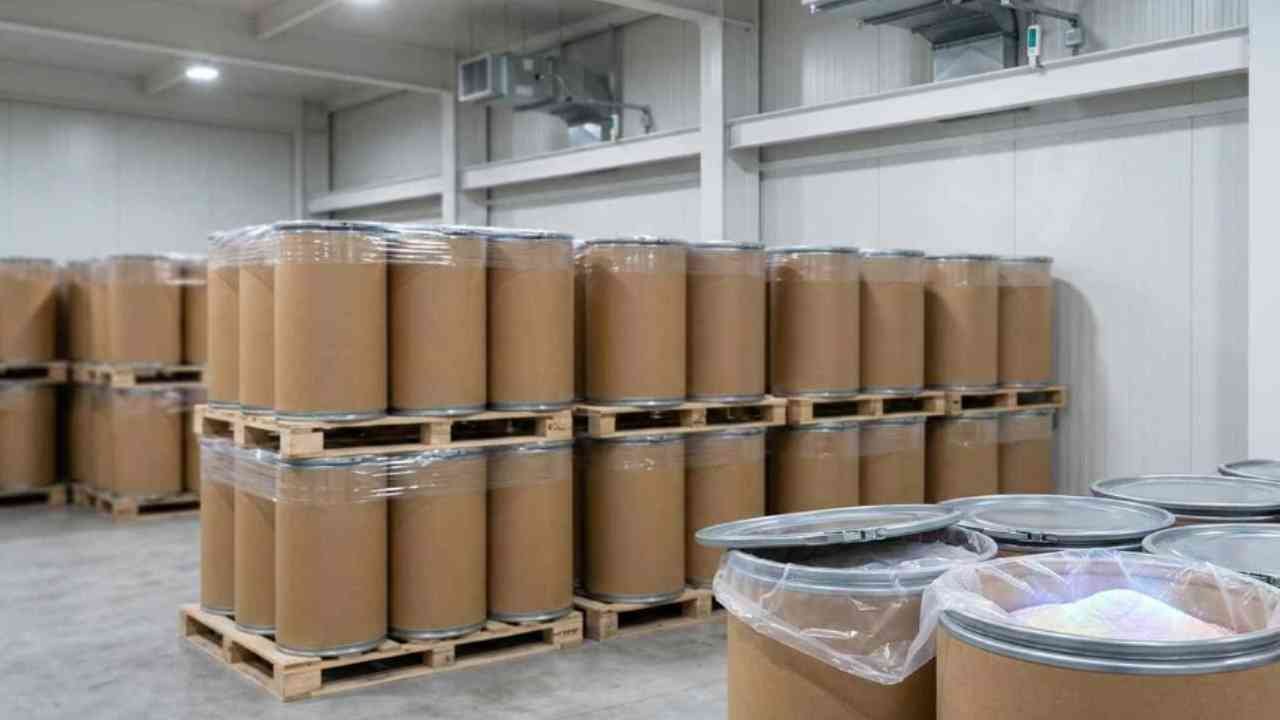
Vitamin B3 (Niacin and Niacinamide) typically has a shelf life of 36 months from the date of manufacture. This duration depends on keeping the original packaging sealed. Once you open the drum, the shelf life drops if the powder is exposed to high moisture or heat.
Understanding Chemical Stability and Expiry
I see that Vitamin B3 is one of the most stable vitamins in the B-complex group. It is a robust molecule created through chemical synthesis. Because it is not a delicate fermented product like some other vitamins, it can last for three years without losing much potency. I monitor the production cycles at our factories in China to ensure the goods I ship are always fresh. If you buy "old stock" from a trader, you might only have 12 months left. I always provide a Certificate of Analysis (COA) that shows the exact manufacturing date. This transparency helps you plan your sales and production without any surprises.
But you must understand that "36 months" is not a guarantee if your storage is poor. I use a "Retainer Sample" system for my clients. I keep a small sample of your specific batch in my office for three years. If you ever have a quality question, we can test my sample against your stock. I see that stable storage keeps the assay1 level above 99.0% for the whole three years. If the assay drops to 97%, the product fails the USP or BP standard. I help you track these dates so you always use the best material for your food or pharma recipes. This attention to detail is how I protect your supply chain.
Key Factors Influencing Shelf Life
| Factor | Impact on Shelf Life | Technical Reason |
|---|---|---|
| Sealed Packaging | Extends to 36 months | Prevents oxygen and moisture ingress |
| High Temperature | Reduces to < 12 months | Speeds up chemical degradation |
| High Humidity | Causes clumping | Moisture triggers physical changes |
| Direct Sunlight | Potential yellowing | UV light can break down some crystals |
| Opened Drum | Reduces significantly | Exposure to warehouse contaminants |
What Storage Conditions Are Recommended for Vitamin B3 (Niacin)?
Heat and damp air degrade Vitamin B3 crystals quickly. This waste increases your procurement costs and ruins your batch. I show you how to set up your warehouse for maximum product protection and safety.
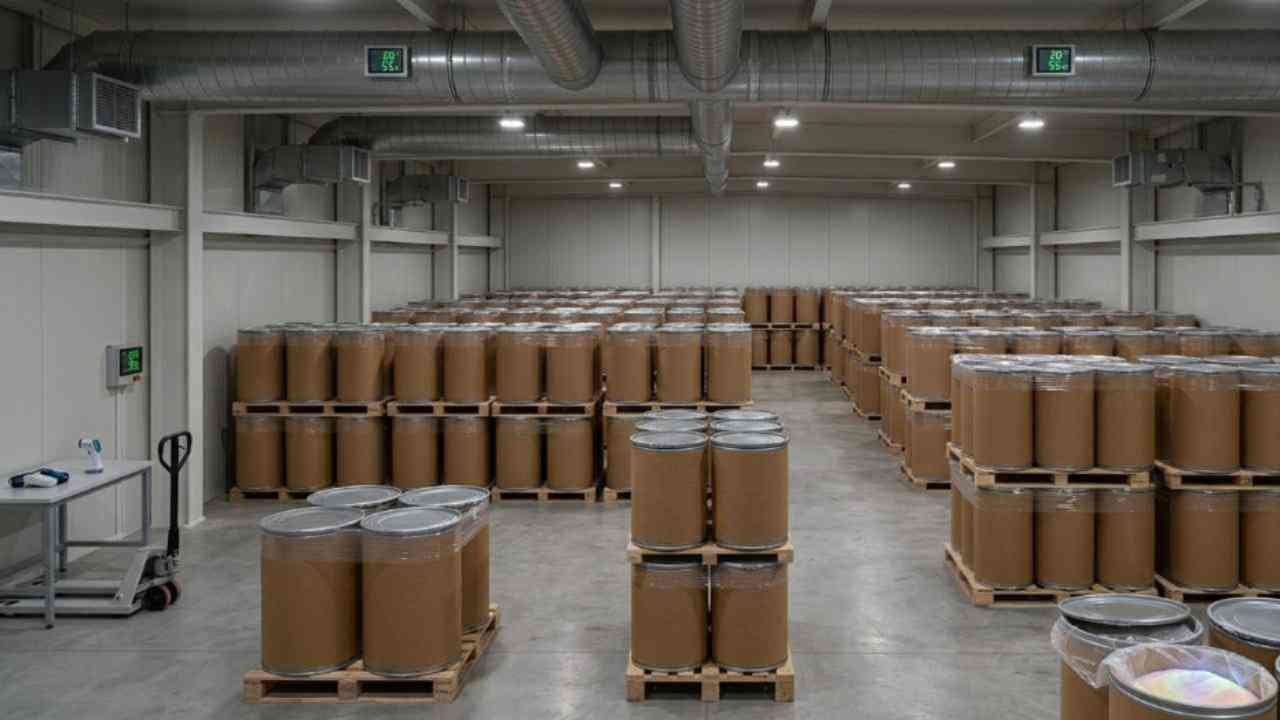
Recommended storage for Vitamin B3 is a temperature between 10°C and 25°C. Humidity must stay below 60%. The area should be clean, well-ventilated, and away from direct sunlight. Stacking pallets correctly ensures airflow and prevents physical damage to the fiber drums.
Temperature and Climate Control
I see different challenges in the regions I serve. For my buyers in the Middle East, like Saudi Arabia and the UAE, the main enemy is heat. If your warehouse2 hits 40°C, the Vitamin B3 can lose its free-flowing property. For my clients in Southeast Asia, like Indonesia and Vietnam, the enemy is humidity. I recommend using a climate-controlled warehouse if possible. If you do not have air conditioning, you must have strong fans. Good ventilation removes hot air and prevents "dead spots" where moisture builds up. I manage the logistics3 to ensure the container is not sitting in the sun at the port for too long.
Physical Storage and Stacking
The way you stack your drums also matters for quality. I always tell my clients to keep the drums on pallets. Do not put them directly on the concrete floor. Concrete can hold moisture that moves into the bottom of the drum. I ensure our factories use heat-treated wooden pallets that meet international standards. Also, do not stack the pallets too high. If the bottom drums are squeezed too much, the powder inside can compact. This makes it hard for your workers to pour. I suggest a maximum of two pallets high. This layout protects the fiber drums from breaking and ensures your staff can handle the 25kg units safely.
Ideal Storage Metrics Table
| Metric | Ideal Range | Risk if Exceeded |
|---|---|---|
| Temperature | 10°C - 25°C | Potency loss / Assay drop |
| Relative Humidity | < 60% | Caking and clumping |
| Light Exposure | Dark / No direct sun | Chemical breakdown |
| Ventilation | Constant airflow | Heat and moisture buildup |
| Stacking Height | Max 2 pallets | Crushed drums and compacted powder |
How Does Moisture Affect Vitamin B3 (Niacin)?
Clumped Niacin powder clogs your mixing machines and ruins your recipe. This physical damage stops your factory and wastes your time. I manage the packaging process in China to block moisture from reaching your goods.
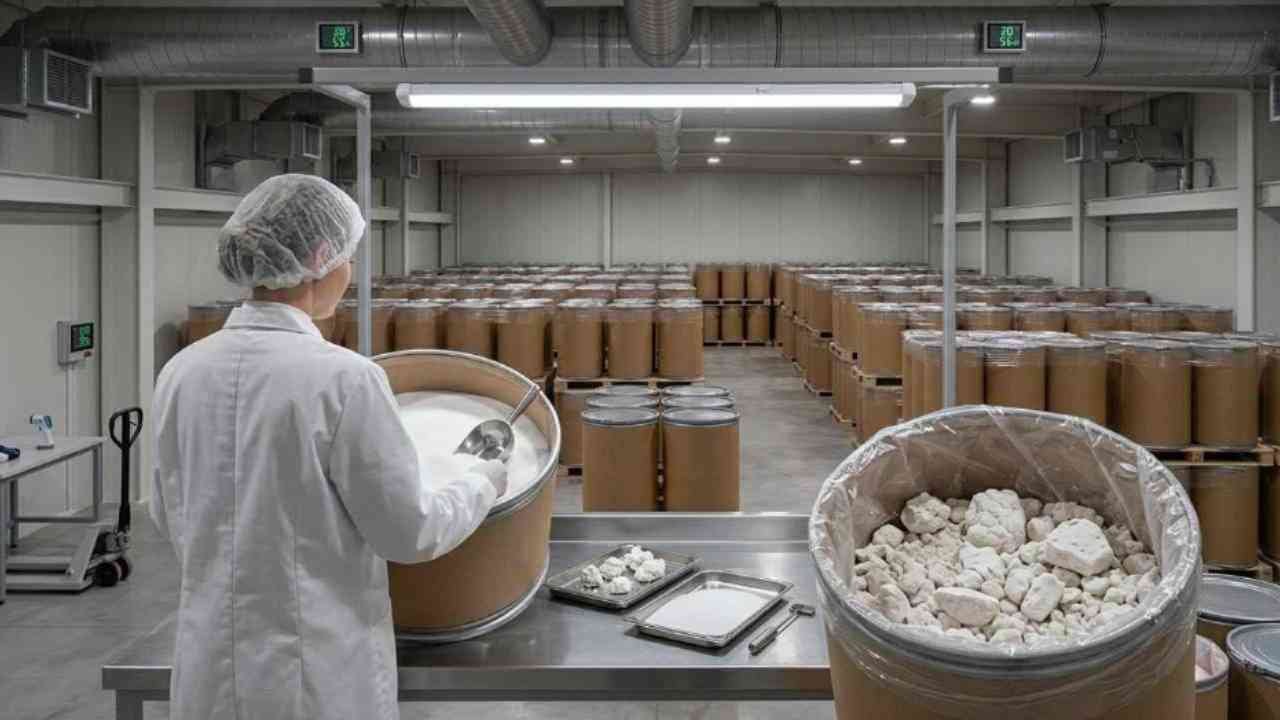
Moisture causes Vitamin B3 powder to cake and form hard lumps. This "caking" makes the product difficult to weigh and mix. High moisture levels can also lead to microbial growth, which makes the food additive unsafe for human consumption and regulatory compliance.
The Science of Caking and Clumping
I want to explain why moisture is so dangerous. Vitamin B3 crystals can absorb tiny amounts of water from the air. This makes the surface of the crystals sticky. They bind together and form hard rocks. In my experience, caked powder is a nightmare for food manufacturers. It does not dissolve evenly in your liquids or flour mixes. This leads to "hot spots" where one part of your food has too much vitamin and another part has none. I prevent this by using double-layer PE liners inside every drum. I ensure the liners are thick and heat-sealed at the factory. This locks the moisture out.
Microbial and Safety Risks
Also, moisture is the "fuel" for bacteria and mold. Vitamin B3 is a nutrient, and if it gets damp, microbes can start to grow. This is why "Loss on Drying" (LOD) is a key test on my COA. I ensure the LOD is always below 1.0%. If the powder is too wet when it leaves the factory, it will surely have problems during the 30-day sea voyage. I check these lab results before I book the ship. For my buyers in the food and pharma industries, microbial safety is a mandatory requirement. By keeping the product dry, I ensure it passes your local health inspections every time. Clean, dry powder is the only way to stay competitive.
Humidity and Moisture Impact Table
| Moisture Level | Physical Result | Usage Impact |
|---|---|---|
| < 0.5% | Free-flowing powder | Perfect for automated mixing |
| 0.5% - 1.0% | Normal / Acceptable | Standard usage |
| 1.0% - 2.0% | Minor clumping | Needs sifting before use |
| 2.0% - 5.0% | Hard caking | Clogs machines / High waste |
| > 5.0% | Wet / Contaminated | Unsafe for food use / Reject |
How Can Improper Storage Damage Vitamin B3 (Niacin)?
Damaged vitamins lead to low potency in your final food products. This failure results in legal fines and lost customer trust. I identify storage risks early to help you protect your brand quality and profit.
Improper storage causes chemical degradation, assay drops, and physical contamination. Extreme heat lowers the active vitamin content. Exposure to strong odors can spoil the flavor profile. Punctured drums allow dust and pests to enter, making the entire batch unusable for food processing.

Chemical Potency and Assay Drops
I see that "heat stress" is a hidden danger. You might not see the damage with your eyes, but the lab will find it. If Vitamin B3 is stored in a hot container at a port, the chemical structure can slowly degrade. This means your "99% pure" product might drop to 97% or 96%. If your recipe depends on a specific dose, your final food product will fail its nutritional claim4. I have seen buyers get fined because their energy drinks did not have enough vitamins. I manage the supply chain to avoid these heat zones. I choose shipping routes that are direct and use warehouses that are shaded and cool.
Contamination and Odor Absorption
Also, Vitamin B3 can absorb strong smells from the environment. I never ship vitamins in the same container as chemicals like perfumes or solvents. If your warehouse stores Niacin near strong-smelling goods, the powder will take on that smell. This is a disaster for food manufacturers. No one wants an energy drink that smells like a warehouse floor. I also check the physical integrity of the fiber drums. If a drum is dented or has a loose lid, dust and insects can get inside. I oversee the loading process to ensure every drum is sealed perfectly. This "zero-defect" goal is how I help my clients maintain their high quality.
Common Storage Mistakes and Results
| Storage Mistake | Immediate Result | Long-Term Damage |
|---|---|---|
| Leaving drums open | Dust and moisture entry | Contamination and caking |
| Storing near chemicals | Odor absorption | Product cannot be used in food |
| No ventilation | Heat buildup | Potency loss / Assay fail |
| Rough handling | Punctured PE liners | Spillage and moisture damage |
| Direct sun exposure | Surface yellowing | Customer rejection of batch |
How Can Buyers Manage Vitamin B3 (Niacin) Inventory Safely?
Old stock sitting in your warehouse is a financial time bomb. Expired or damaged material wastes your capital and inventory space. I provide a systematic inventory guide to keep your supply fresh, active, and profitable.
Manage Vitamin B3 inventory using the First-In, First-Out (FIFO) method. Track all batch numbers and production dates for full traceability. Perform monthly warehouse audits to check for drum damage. Keeping a 60-day safety stock buffer ensures you never run out during global shipping delays.

Implementing the FIFO System
I always suggest the FIFO (First-In, First-Out) method to my wholesalers. This is the only way to manage vitamins correctly. When a new shipment arrives from China, put it at the back of your warehouse. Use the older stock first. Every drum I ship has a clear batch number and production date on the label. I provide these same numbers on the COA and the Invoice. This makes it easy for your team to track the age of your stock. I see that companies with a strict FIFO system have almost zero waste. It ensures that your customers always receive the freshest material with the longest shelf life.
Traceability and Audit Readiness
Traceability5 is a technical requirement for modern food safety. If your customer has a problem, you must be able to find the exact batch records. I keep digital copies of every COA for my clients. If you lose your paper, I can send you a new one in minutes. I also suggest you do a physical audit every month. Walk through your warehouse and check the seals on the drums. Look for any moisture on the floor. I help my clients in regions like Russia and Southeast Asia set up these simple audit checklists. By being proactive, you prevent small problems from becoming big losses. A safe inventory is a profitable inventory.
Inventory Management Checklist
| Task | Frequency | Purpose |
|---|---|---|
| Temp/Humidity Log | Daily | Ensures conditions stay in range |
| FIFO Check | Weekly | Prevents old stock from expiring |
| Visual Inspection | Monthly | Checks for drum damage or leaks |
| Batch Reconciliation | Monthly | Matches physical stock to records |
| Reorder Point Check | Weekly | Prevents stockouts during delays |
| Quality Testing | Every 6 months | Verifies assay of older stock |
Conclusion
Proper Vitamin B3 storage ensures quality, potency, and safety for your food manufacturing business. I manage these technical details at FINETECH to keep your procurement profitable, secure, and reliable.
-
Waters Corp – Technical application notes for laboratory personnel on using HPLC and other methods for precise vitamin and additive testing. ↩
-
MHL News – Industry resource for food enterprises providing insights into modern warehousing standards and safety protocols. ↩
-
Flexport – A trade-oriented logistics guide explaining ocean freight and global supply chain management for bulk buyers. ↩
-
EFSA – Official portal explaining the regulations and safety standards required for a nutritional claim on food products. ↩
-
GS1 – Global technical standard for trade orientation that ensures end-to-end visibility and safety in the food supply chain. ↩