
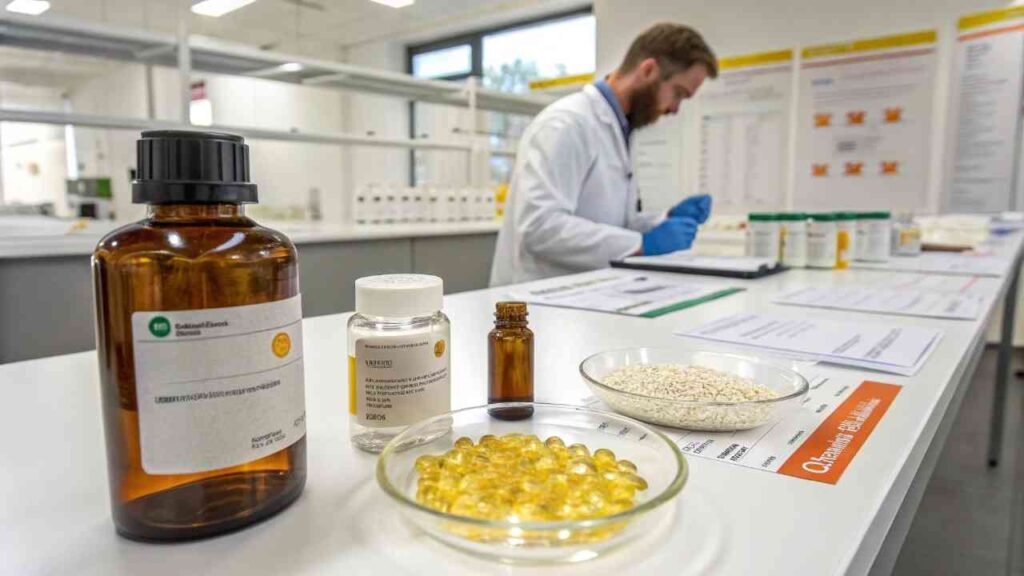
Selecting the incorrect form of Vitamin E causes rapid product oxidation and active potency degradation during processing. Mismatching formats ruins quality. Evaluating industrial grades prevents manufacturing failures.
The Vitamin E series is utilized in oil, powder, microencapsulated beadlet, and crystalline formats. Natural d-alpha and synthetic dl-alpha oils suit liquid lipids and softgels, dry spray-dried powders fit solid tablets, and mixed tocopherols serve as active shelf-life antioxidants.
Manufacturing success requires matching the correct physical form of a nutrient with its specific processing environment. Technical buyers must evaluate solubility and stability profiles to prevent financial losses. Sourcing partners like FINETECH simplify factory checks, verify production compliance, and secure competitive pricing directly in China to guarantee bulk deliveries. This analysis outlines how different Vitamin E series forms meet specific industrial needs.
What Is the Difference Between Oil and Powder Vitamin E Series?
Using oil-soluble vitamins in dry powder blends causes active ingredient clumping and uneven dose distribution in final products. Incompatible formats ruin batches. Distinguishing oils and powders solves this.
The differences lie in their solubility and physical structure. Vitamin E oil is a concentrated lipid, best for softgels and dairy. Vitamin E powder is a microencapsulated formulation, typical at 50% potency, optimized for dry blends, hard tablets, and animal feed.

Dive Deeper into Physical States and Application Compatibility
The fundamental division in the Vitamin E series is between liquid oils and dry, free-flowing powders. Vitamin E oil is a highly concentrated lipid. It typically consists of pure d-alpha-tocopherol, synthetic dl-alpha-tocopherol, or their esterified acetate versions. These oils are naturally hydrophobic. They are highly soluble in organic solvents and vegetable oils but cannot mix with water without an emulsifier. This makes the oil form ideal for fat-based processing, such as manufacturing gelatin softgels, lipid-based cosmetics, margarine, and fat-containing dairy products.
To make this fat-soluble vitamin usable in dry formulations, manufacturers produce Vitamin E powders. This form is created by microencapsulating1 the active oil droplets inside a protective carbohydrate or protein matrix, such as starch, gelatin, or gum arabic. The mixture is then spray-dried into free-flowing powders, typically standardized at fifty percent active potency (500 IU/g). Some powders are formulated as cold-water-soluble (CWS) granules that disperse clearly in liquid beverages. Sourcing managers must select the physical form that matches their blending machinery. Sourcing partners like FINETECH assist buyers by evaluating these distinct physical grades in China, ensuring that the selected raw materials match the exact mechanical requirements of their production lines.
| Physical Form | Standard Concentration | Primary Solubility | Key Processing Application |
|---|---|---|---|
| Concentrated Oil | 96% - 98% (or 1000+ IU/g) | Oil-soluble (hydrophobic) | Softgel encapsulation & lipid cosmetics |
| Standard Powder | 50% (500 IU/g) | Dry-blend dispersible | Hard tablets & dry feed premixes |
| CWS Powder | 50% (500 IU/g) | Cold-water-dispersible | Functional beverages & infant formulas |
| Crystalline Succinate | 1185 IU/g to 1210 IU/g | Insoluble in water | High-compression multi-vitamin tablets |
Which Vitamin E Series Forms Are Best for Food Fortification?
Utilizing unstable vitamin forms in human foods leads to rapid nutrient degradation and bad odors during warehouse storage. Compromising on stability damages brand trust. Selecting food-grade forms preserves quality.
The best forms for food fortification are d-alpha-tocopheryl acetate oil for lipid-rich foods like infant formula and dairy, and allergen-free, starch-based cold-water-soluble (CWS) Vitamin E powders for dry-mix beverages and cereal products.

Dive Deeper into Food-Grade Formulation and Dietary Rules
Food fortification2 requires strict adherence to international safety standards and consumer dietary preferences. When selecting Vitamin E for human foods, manufacturers must evaluate both physical stability and raw material certifications. For fat-rich food products like cooking oils, infant formula, margarine, and liquid dairy, food-grade d-alpha-tocopheryl acetate oil is preferred. The acetate ester protects the active vitamin from oxidation during heat processing, while the natural d-alpha origin satisfies consumer demands for clean-label, bioavailable ingredients.
Conversely, for dry-mix beverages, clear juices, and breakfast cereals, starch-based cold-water-soluble (CWS) powders are necessary. Standard gelatin-coated powders are unsuitable for vegetarian, Kosher, or Halal-certified food products because the gelatin is derived from animal tissues. To meet these dietary restrictions, buyers must specify non-animal, modified starch-coated powders. Sourcing partners like FINETECH assist food processors by conducting thorough on-site factory audits in China. They verify that the manufacturing plants possess active food safety certifications (FSSC 220003) and utilize non-GMO, starch-based carriers. This thorough checking ensures that the imported vitamins are allergen-free, satisfy regional religious laws, and clear international customs without delays.
| Food Category | Optimal Vitamin E Form | Coating / Carrier | Key Compliance Requirement |
|---|---|---|---|
| Liquid Dairy | d-alpha-tocopheryl acetate oil | None (direct lipid blending) | High-purity, non-GMO status |
| Infant Formula | Starch-based CWS powder | Modified food starch | Low trace heavy metal limits |
| Breakfast Cereals | High-stability dry powder | Gelatin or food starch | Heat resistance during baking |
| Dietary Drinks | Cold-water-dispersible CWS | Acacia gum or dextrin | Residue-free dissolving in liquids |
What Are the Applications of Mixed Tocopherols in Vitamin E Series?
Relying on synthetic chemical preservatives in clean-label food products can trigger regulatory warnings and exclude health-conscious consumers. Synthetic additives reduce sales. Using mixed tocopherols solves this.
Mixed tocopherols are utilized primarily as highly effective natural antioxidants to extend the shelf-life of food products, edible oils, pet foods, and cosmetics by inhibiting lipid auto-oxidation and preventing rancid odors.

Dive Deeper into Natural Antioxidant Preservation
Mixed tocopherols represent a specialized segment of the Vitamin E series. Unlike pure d-alpha-tocopherol, which is prioritized for its biological vitamin potency in the human body, mixed tocopherols contain a natural blend of alpha, beta, gamma, and delta tocopherols. This natural combination is extracted from vegetable oil distillates and is optimized for its antioxidant properties. Gamma and delta tocopherols possess superior hydrogen-donating capabilities, making mixed tocopherols highly effective at neutralizing free radicals and stopping the chain reaction of lipid auto-oxidation.
In the industrial food sector, mixed tocopherols are widely used to preserve the freshness of high-fat foods, including nuts, baked goods, snacks, and edible oils. They serve as a clean-label replacement for synthetic chemical antioxidants like BHA or BHT4, allowing brands to satisfy consumer preferences for natural ingredients. Additionally, the premium pet food industry consumes large volumes of mixed tocopherols to stabilize animal fats and extend the shelf life of kibbles. Sourcing partners like FINETECH assist international buyers in securing high-purity mixed tocopherol oils (such as 50%, 70%, or 90% concentrations). They audit factories to confirm active isomer ratios, ensuring that clients receive highly effective natural preservatives that meet strict food safety regulations.
| Application Target | Required Form | Primary Mechanism | Industrial Preservative Benefit |
|---|---|---|---|
| Snack Foods | Mixed tocopherols powder | Neutralizes lipid free radicals | Replaces synthetic BHA and BHT |
| Edible Oils | 70% Mixed tocopherols oil | Delays oxidation chain | Extends liquid oil shelf life |
| Pet Kibble | Spray-dried mixed powder | Protects meat fats from decay | Maintains fresh taste for pets |
| Cosmetic Creams | 90% Mixed tocopherols oil | Inhibits oil-phase rancidity | Prevents color change in creams |
How Do Different Forms Affect Stability of Vitamin E Series?
Shipping sensitive vitamin oils in standard containers across hot maritime routes causes rapid active potency decay and ruined shipments. Unprotected chemical structures degrade quickly. Evaluating stability properties prevents inventory losses.
The stability of Vitamin E depends on its esterification. Free tocopherols are highly unstable and oxidize rapidly when exposed to air and light. Esterified forms, such as tocopheryl acetate, are highly stable and resistant to thermal and oxidative degradation.

Dive Deeper into Ester Protection and Auto-Oxidation
Preserving active chemical potency throughout the supply chain requires selecting the correct molecular form of Vitamin E. Free tocopherols, including natural d-alpha-tocopherol and mixed tocopherols, contain a reactive hydroxyl group on their chromanol ring5. This chemical structure allows them to act as active antioxidants by donating hydrogen atoms. However, this same reactivity makes free tocopherols highly sensitive to atmospheric oxygen, ultraviolet light, and high processing temperatures. When exposed to the air, free tocopherols oxidize quickly, turning dark brown and losing their biological value.
To solve this instability issue, chemical manufacturers perform esterification. By reacting the free tocopherol with acetic acid or succinic acid, they block the reactive hydroxyl group, forming Vitamin E acetate (tocopheryl acetate) or succinate. These esterified forms are highly stable. They do not react with oxygen or degrade during high-heat processing like spray-drying or feed pelleting. This stability ensures that the raw material retains its active vitamin potency during long-term storage and ocean transit. Sourcing partners like FINETECH help buyers navigate these stability profiles. They inspect manufacturing processes in China, ensuring that clients receive stabilized ester forms packed under nitrogen gas to prevent premature degradation.
| Chemical Form | Oxygen Stability | Thermal Resistance | Primary Nutritional Purpose |
|---|---|---|---|
| Free Tocopherol | Low (auto-oxidizes) | Moderate | Direct antioxidant preservation |
| Tocopheryl Acetate | High (ester-protected) | Excellent (heat-resistant) | Nutritional enrichment & feed |
| Tocopheryl Succinate | Very High (crystalline) | Excellent (stable solid) | Compressed tablets & hard capsules |
| Microencapsulated | Very High (coated shell) | High (shielded matrix) | Water-dispersible food fortifier |
How Can Buyers Select the Right Vitamin E Series Grade?
Purchasing cheap, unverified vitamin specifications can lead to production line blockages and failed final product quality assays. Inefficient sourcing methods waste company funds. Establishing a clear selection plan ensures buying success.
Buyers can select the right Vitamin E grade by defining their application purpose (nutritional vs. antioxidant), reviewing processing temperatures, checking dietary certifications (Kosher, Halal, Non-GMO), and partnering with local sourcing specialists to audit factory quality systems.

Dive Deeper into Strategic Sourcing and Compliance Vetting
Selecting the correct Vitamin E series grade requires a systematic evaluation of technical parameters and supplier credentials. Sourcing managers must begin by identifying their primary formulation objective. If the goal is to prevent food rancidity and extend shelf life, mixed tocopherols are the correct choice. If the goal is to enrich nutritional value, alpha-tocopherol or tocopheryl acetate should be selected. Buyers must then evaluate their production processing conditions, choosing heat-resistant beadlets for high-temperature extrusion or liquid oils for direct lipid blending.
Next, checking dietary and safety certifications is essential to avoid import rejections at foreign customs. Buyers must verify whether their target markets require Kosher, Halal, Non-GMO, or pharmaceutical-grade GMP certifications. Sourcing partners like FINETECH simplify this complex vetting process for B2B buyers. They handle factory audits, check cleanroom logs, verify active certificate registration numbers, and manage direct logistics with low MOQs. This comprehensive support allows buyers to purchase smaller, fresh batches of raw materials, reducing inventory storage risks while keeping their international supply pipeline consistent, compliant, and highly cost-effective even during periods of high global market volatility.
| Sourcing Step | Key Vetting Action | Why It Matters | Expected Sourcing Outcome |
|---|---|---|---|
| Define Purpose | Choose active antioxidant vs. nutrition | Determines d-alpha or mixed use | Selects correct functional isomer |
| Assess Processing | Identify heat, pressure, and state | Prevents active ingredient decay | Matches powder beadlets to dry mixes |
| Verify Compliance | Audit Kosher, Halal, & Non-GMO IP | Satisfies regional import laws | Prevents customs border rejections |
| Supplier Audit | Use partners like FINETECH | Confirms consistent factory GMPs | Secures low MOQ and safe delivery |
Conclusion
Selecting the correct Vitamin E form preserves product quality and extends shelf life. Partnering with a dedicated sourcing team ensures consistent, compliant, and highly cost-effective import pipelines.
-
MDPI Pharmaceuticals – A peer-reviewed scientific overview of spray-drying microencapsulation of natural bioactives, explaining the protective matrices and stabilization of sensitive vitamins. ↩
-
World Health Organization (WHO) – Global overview of food fortification practices, recommendations, and public health guidelines. ↩
-
Foundation FSSC – Official website and details of the FSSC 22000 Food Safety System Certification scheme. ↩
-
U.S. Food and Drug Administration (FDA) – Official press release regarding the finalization of the food chemical safety post-market assessment program and the reassessment of synthetic antioxidants like BHT. ↩
-
National Institutes of Health (NIH) PubChem – Chemical database entry explaining the molecular structure and classification of tocopherols, emphasizing the role of the chromanol ring. ↩