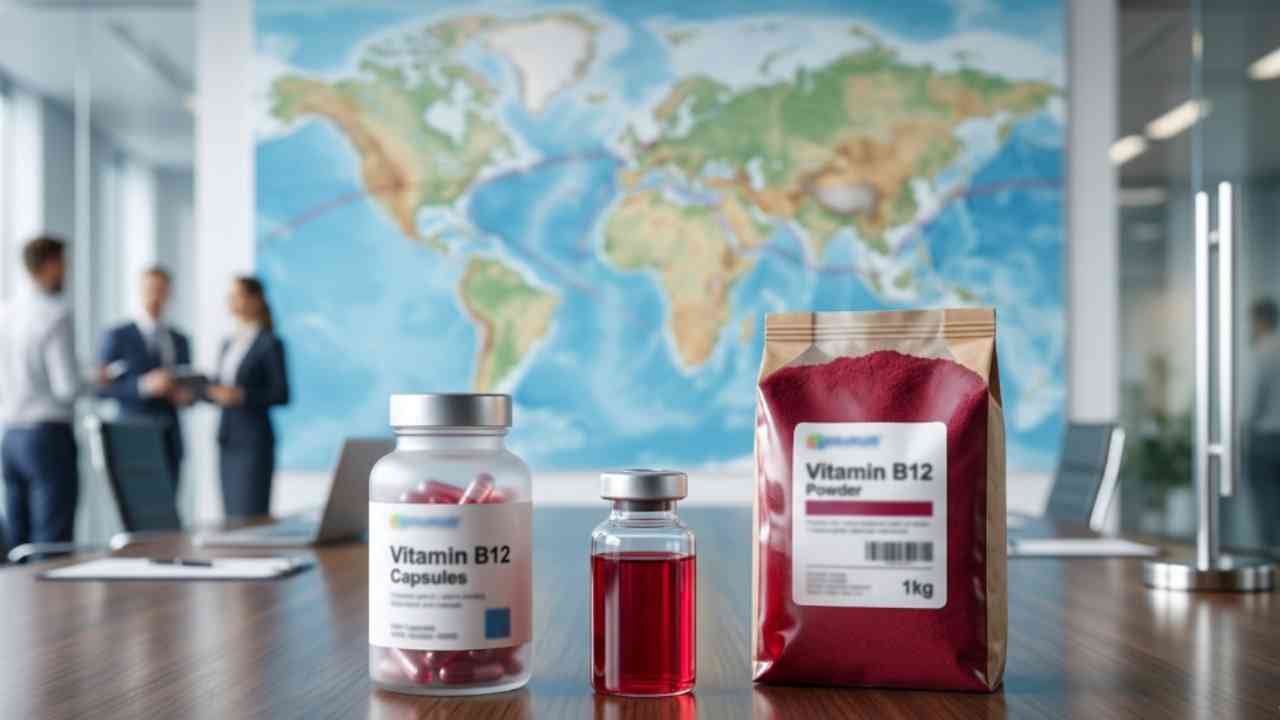
Missing the right Vitamin B12 market leads to high costs or low demand. This mistake drains your capital. I identify the best export regions to grow your business profits.
The key export markets for Vitamin B12 include North America, Europe, and Asia-Pacific. North America leads in dietary supplements, while Europe focuses on high-purity pharma-grade. Asia dominates both production and consumption in the animal feed and food fortification sectors globally.
I oversee factory selection and logistics for my B2B clients in China. Understanding these regional markets is the only way to pick the right grade and secure your supply chain.
Which regions import the most Vitamin B12 (Cobalamin)?
Ignorance of global demand trends causes inventory waste. This failure hurts your cash flow. I explain which regions drive the most B12 imports for your procurement planning.
North America, specifically the United States, is the largest importer for dietary supplements. Europe follows closely for pharmaceutical applications. The Asia-Pacific region, led by China and India, imports massive volumes for the animal feed industry and growing plant-based food sectors.
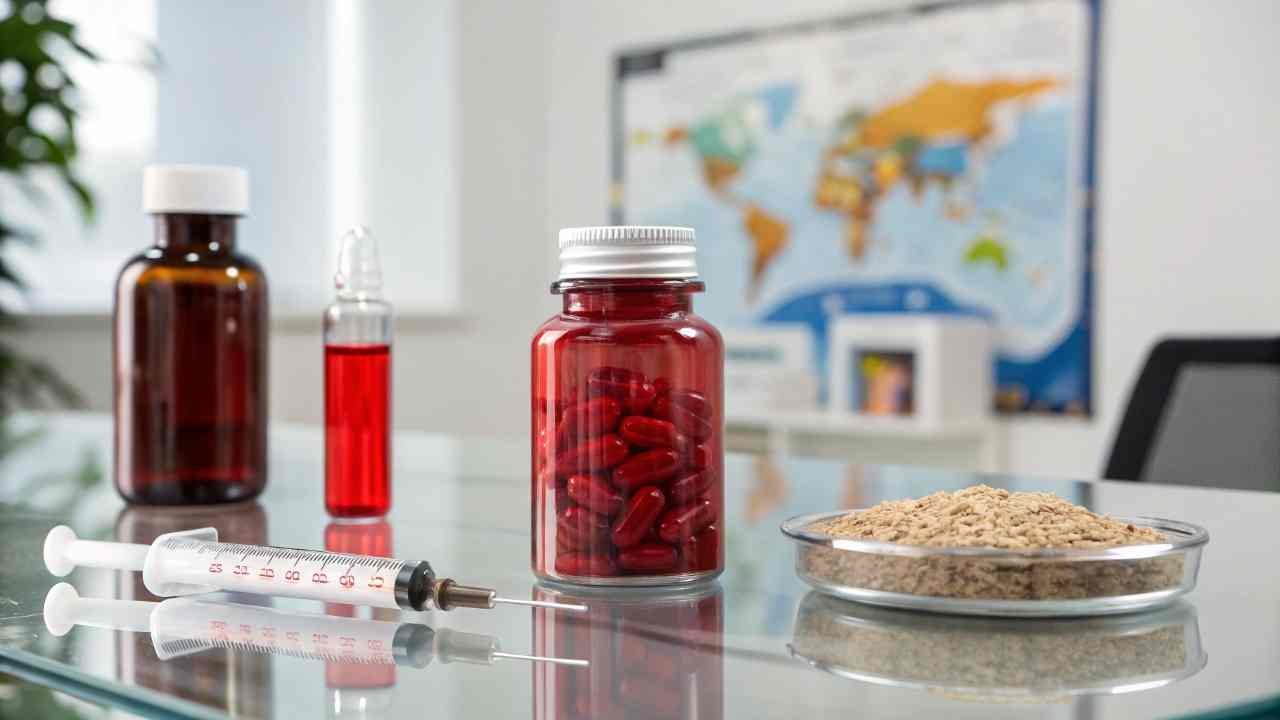
Global Demand Distribution
I see that demand for Vitamin B12 is not even across the globe. The United States has a giant wellness industry1. People there buy many supplements every day. This makes the US a top destination for pure Cyanocobalamin. In Europe, countries like Germany and France need B12 for their advanced pharmaceutical products. They require ultra-pure grades for injections and tablets. I see this trend clearly when I ship to my clients in Europe. They always ask for the highest assay levels and strict impurity profiles.
The Asia-Pacific region is a different story. It is the hub for global livestock. Pigs and chickens need B12 to grow correctly. This drives massive imports of feed-grade dilutions, such as 1% or 0.1% B12. Also, countries like Indonesia and Vietnam are adding B12 to flour and rice. I monitor these fortification2 programs in Southeast Asia. They create a stable and long-term demand for food-grade material. The Middle East is also growing. Markets like Saudi Arabia and the UAE are importing more for their local food production. I prioritize these regions because their demand for quality is rising.
Regional Import Focus Table
| Region | Primary Application | Preferred Grade | Import Volume |
|---|---|---|---|
| North America | Supplements / Energy Drinks | USP Grade (Pure) | Very High |
| Europe | Pharma / Clinical Use | EP / BP Grade | High |
| Asia-Pacific | Animal Feed / Rice | Feed Grade / 1% | Extremely High |
| Middle East | Flour Fortification | Food Grade | Moderate / Growing |
| Russia | Feed / General Food | Mixed Grades | High |
Why is North America a major Vitamin B12 (Cobalamin) market?
Entering the North American market without the right grade leads to rejection. This risk stops your expansion. I identify why this region is critical for your B12 sales strategy.
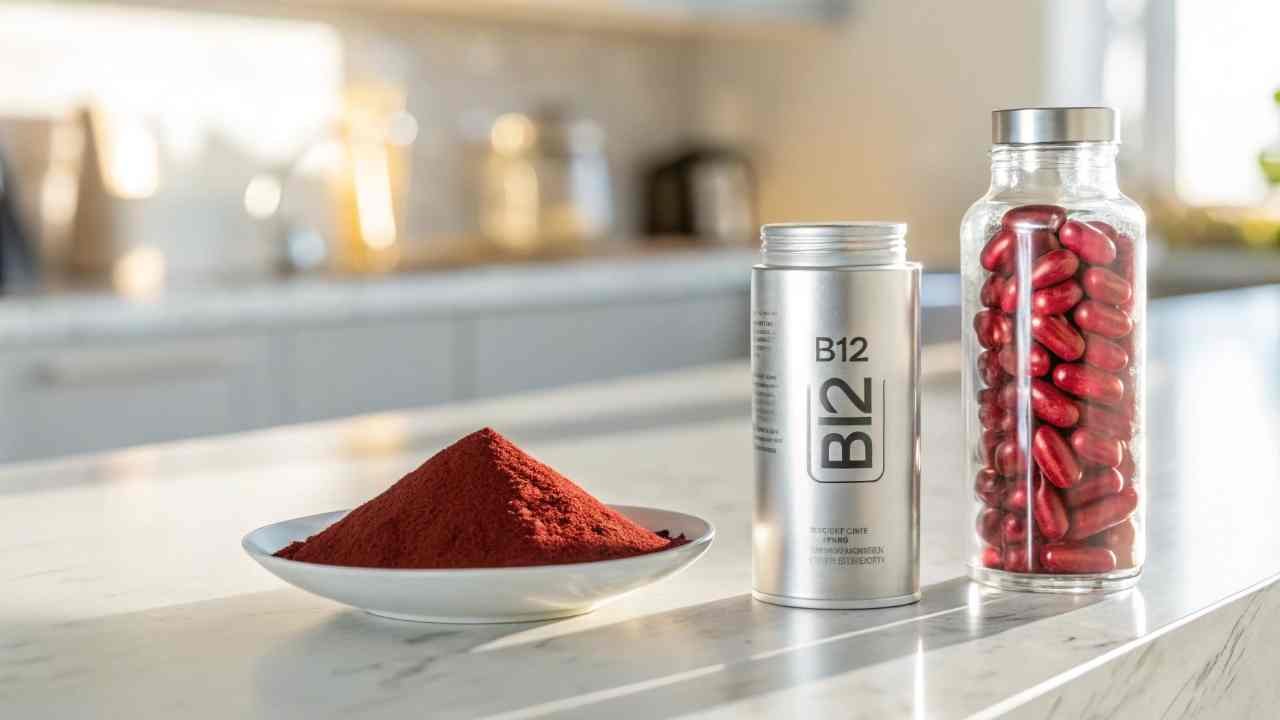
North America is a major market due to high consumer spending on dietary supplements and energy drinks. Strict FDA standards and a large vegan population drive the need for high-purity USP-grade Cyanocobalamin for wellness products and functional food fortification.
Supplement Culture and Veganism
I observe that consumers in the US and Canada focus heavily on health. They take B-complex vitamins daily to boost energy. This is a technical fact for our B2B trade. The rise of veganism is also a giant driver in this region. Plants do not have B12 naturally. So every plant-based milk or meat alternative needs fortification. I source high-purity crystals for these manufacturers in North America. They need a product that dissolves perfectly and has no smell. If the quality is low, the whole batch of milk is ruined.
Plus, the energy drink market in North America is massive. Brands like Red Bull or Monster use B12 as a key ingredient. They buy in large volumes. I help my clients match the mesh size for these liquid products. Fine powder is a requirement here. If the powder is too lumpy, it stays at the bottom of the bottle. This causes a quality claim. I visit the factories in China to ensure the sieving process is perfect. This oversight is why my North American buyers stay with me. They trust the physical properties of the powder.
Regulatory Barriers and Compliance
The FDA is very strict about what enters the US. You cannot just ship any material. It must meet USP (United States Pharmacopeia) standards. I audit my partner factories in China to ensure their lab results match these requirements exactly. I look at heavy metals and microbial counts. If Lead is over 2 ppm, the US customs will reject it. I act as your gatekeeper to pass these hurdles. I also manage the documentation for FSVP (Foreign Supplier Verification Program). This is a technical requirement for US importers. Proper labels and batch records are a must.
US Market Grade Requirements Table
| Technical Parameter | USP Standard Requirement | FINETECH's Control Method | Risk if Failed |
|---|---|---|---|
| Assay (Purity) | 97.0% - 102.0% | HPLC Test | Label claim failure |
| Lead (Pb) | < 2 ppm | Atomic Absorption | FDA Rejection |
| Total Plate Count | < 1000 cfu/g | Microbial Plating | Spoilage / Safety |
| Identification | Matches Reference | IR / UV-Vis | Counterfeit risk |
| Loss on Drying | Max 12.0% | Drying Oven | Caking / Clumping |
How does Asia dominate Vitamin B12 (Cobalamin) production?
Relying on a single production hub is risky. One factory shutdown stops your cargo. I show how Asian dominance in B12 production impacts your global supply and pricing.
Asia, specifically China, produces over 70% of the world's Vitamin B12. Low production costs, advanced fermentation technology, and secure raw material chains for cobalt make China the global hub. This dominance ensures competitive pricing and massive capacity for international wholesalers.
The Chinese Fermentation Hub
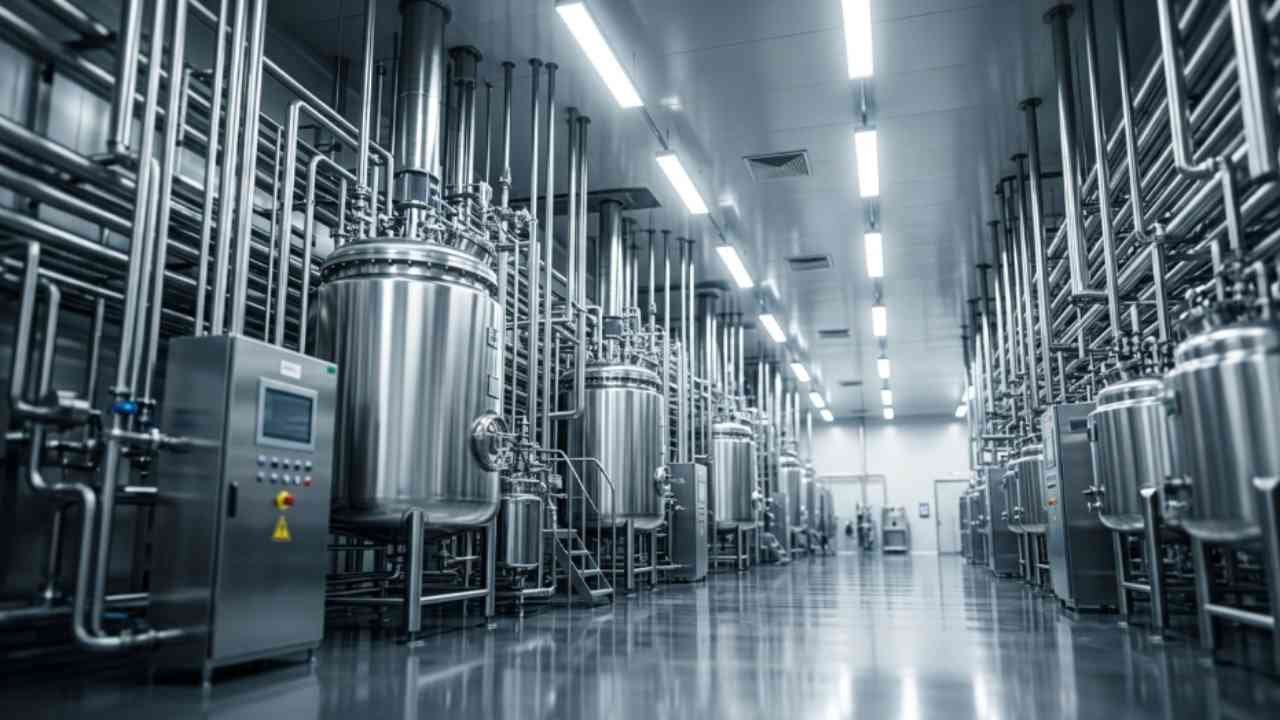
I see that China has the best infrastructure for B12 in the world. The production process is a biological one. It uses bacteria in giant tanks. China has the space and the energy for these massive factories. I visit these plants in Hebei and Ningxia provinces. They have bioreactors3 that hold 100,000 liters. This scale lowers the cost per kilogram. This is why I can offer competitive prices to my clients in Southeast Asia and the Middle East. If you buy from Europe, the price is often 30% higher because they have smaller tanks.
Also, Chinese factories have improved their bacterial strains. They get more vitamin out of every liter of broth. This is a technical fact of yield. Higher yield means lower waste. I monitor these technology upgrades in the plants. I prioritize factories that use automated DCS systems. These computers control the oxygen and PH levels 24/7. This ensures that every batch is the same. When a factory is this efficient, the global price stays stable. Asia is not just a producer; it is the price setter for the whole world. I act as your strategic partner to access this capacity.
Raw Material Integration
China also controls the supply of cobalt4. Cobalt is the central atom in the B12 molecule. Most cobalt from Africa is processed in China. This vertical integration makes the supply chain very stable. I only work with factories that have long-term cobalt contracts. This protects you from price spikes. If a factory does not have its own cobalt supply, they might stop production when prices rise. I check these supply agreements during my audits. This is how I ensure your cargo ships on time. China's control of raw materials is a giant advantage for my B2B buyers.
Top Production Advantages in Asia Table
| Advantage Factor | Technical Reason | Benefit to Buyer |
|---|---|---|
| Economies of Scale | 100,000L Bioreactors | Lowest wholesale price |
| Energy Cost | Stable industrial power | Reliable lead times |
| Raw Materials | Cobalt processing hub | Price protection |
| Technology | Automated DCS systems | Batch consistency |
| Logistics | Near major ports (Qingdao) | Fast export shipping |
What regulations affect Vitamin B12 (Cobalamin) exports to Europe?
Ignoring European rules leads to massive fines and blocked containers. This administrative failure ruins your profit. I identify the mandatory certificates to keep your European shipments safe.
Exports to Europe are governed by EFSA for food and EMA for pharmaceutical use. Mandatory certifications include GMP for manufacturing, FAMI-QS for animal feed, and REACH for chemical safety. Following the BP or EP standards is also required for clinical and medical applications.
Purity and Safety Standards
I see that Europe has some of the toughest rules in the world. For food additives, the purity must be perfect. I ensure our COAs (Certificate of Analysis) show all impurities. In Europe, they check for residual solvents like acetone or methanol. If the level is too high, they will not let it in. I select factories that use vacuum drying to remove these solvents completely. I also check the heavy metal limits. Europe follows the EP (European Pharmacopoeia) standards. They are often stricter than other regions. I act as your technical partner to ensure every batch passes these tests.
Plus, the feed industry in Europe is very regulated. You must have FAMI-QS. This is a safety system for the whole feed chain. I only source feed-grade B12 from factories that hold this certificate. If a factory loses its FAMI-QS, I stop working with them immediately. This protects my buyers in Greece and Germany. I also monitor the "Ethical Sourcing" rules. European buyers now want to know about the environment. I check the waste water treatment in the factories. If a factory pollutes, the government will close it. This would stop your supply. I only work with "Green" factories to ensure your supply is safe.
Document Traceability and Logistics
Traceability is a technical requirement for Europe. Every 25kg drum must have a unique batch number. This number must link back to the exact day of production. I manage these documents for my clients. I also verify HALAL and KOSHER papers. Many European food brands sell to global markets. They need these religious certificates for their export business. I ensure the papers are not expired. I also handle the REACH5 registration for chemical safety. This is a must for any bulk chemical entering the EU. I oversee all these details so your container moves through the port without any questions.
EU Compliance Checklist Table
| Certification | Application Area | FINETECH's Verification |
|---|---|---|
| GMP | Pharmaceutical / Food | Physical site audit |
| FAMI-QS | Animal Feed | Check validity date |
| REACH | Chemical Import | Verify registration number |
| ISO 22000 | Food Safety | Review hazard control logs |
| HALAL / KOSHER | Religious markets | Match batch to certificate |
| Health Cert | Customs clearance | Issued by GACC China |
How to expand into emerging Vitamin B12 (Cobalamin) markets?
Missing out on new markets gives your competitors the advantage. This lost opportunity hurts your growth. I share strategies to enter emerging B12 markets in the Middle East and Southeast Asia.
Expanding into emerging markets requires local certifications like HALAL and low MOQ options. Markets in the Middle East and Southeast Asia are growing fast due to population growth and meat consumption. Building trust through on-site audits and providing small-batch testing helps secure these new buyers.
Middle East and Southeast Asia Potential
I see a lot of growth in Saudi Arabia and Indonesia. These regions have more people now. They are eating more meat and more processed food. This means more B12 is needed for animal feed and food fortification. I prioritize these markets for my business at FINETECH. I provide HALAL certificates from MUI or JAKIM. This is a technical must for these regions. If you do not have HALAL, you cannot sell to 80% of the customers there. I visit the factories to ensure they do not use any animal-derived media in their fermentation. This is how I guarantee the product is 100% compliant.
Also, many of these countries are starting "Energy Drink" trends. Young people there want performance drinks. This is a huge opportunity for food-grade B12 suppliers. I help my clients in these regions by providing technical support. I show them how to mix the B12 without losing potency. I also suggest the best packaging. For hot and humid regions like Malaysia, I use double-layer PE bags and aluminum foil. This keeps the moisture out. If the vitamin gets damp, it loses its power. My focus on these technical facts helps my buyers win in their local markets.
MOQs and Building Trust
New buyers in emerging markets often start small. They want to test the quality before they buy a full container. I offer low MOQ (Minimum Order Quantity) to help them. I ship 25kg or 100kg lots. This lowers their risk. I also suggest physical audits. If a buyer can see the factory via video or in person, they feel safe. I act as your eyes in China. I provide lab reports and photos of every drum before it is loaded. This transparency is how you build a long-term supply chain. I also offer flexible payment terms once we have trust. This is the only way to scale your business in a new region.
Emerging Market Growth Drivers Table
| Market | Growth Driver | Grade in Demand | Key Requirement |
|---|---|---|---|
| Saudi Arabia | Flour Fortification | Food Grade | HALAL / SFDA Rules |
| Indonesia | Feed / Aquaculture | 1% Feed Grade | MUI HALAL / Low Price |
| Vietnam | Processed Foods | Food Grade | High Purity / Fast Ship |
| UAE | Energy Drinks | Pure USP Grade | Mesh Size / Solubility |
| Brazil | Poultry Export | 0.1% Feed Grade | FAMI-QS / Volume |
Conclusion
Key export markets for Vitamin B12 are North America, Europe, and Asia. I manage the quality and logistics to help you grow in these regions safely and profitably.
-
Global Wellness Institute – A leading research resource for market trends and data within the multi-trillion dollar global wellness economy. ↩
-
World Health Organization – Q&A resource explaining the health significance and technical strategies for food fortification globally. ↩
-
ScienceDirect – Technical engineering overview of bioreactors and their application in industrial microbial fermentation. ↩
-
Cobalt Institute – Professional industry body providing data on the cobalt supply chain, sourcing, and its diverse industrial applications. ↩
-
ECHA – European Chemicals Agency guide to understanding REACH regulations for the safe use and import of chemical substances into the EU. ↩