Sugar taxes and health trends are hurting your beverage profits. If you ignore current market shifts, your formulas will fail. I show you the latest trends to stay competitive today.
The global Stevia market is moving toward high-purity glycosides like Reb M and biotechnology-based production. Key trends include rapid growth in the Middle East and Southeast Asia, stricter sugar taxes, and new applications in dairy and pharmaceuticals to meet rising clean-label consumer demands worldwide.
I manage factory selection and oversee production for my B2B clients at FINETECH. I see these market changes every day. I want to share the technical facts so you can protect your brand and your production standards.
Why is Reb M Stevia becoming increasingly popular in food production?
Consumers hate the bitter aftertaste of standard sweeteners. This ruins your repeat sales. Reb M provides the sugar-like taste you need for premium products without the usual bitterness or metallic notes.
Reb M is gaining popularity because it lacks the bitter, licorice aftertaste found in Reb A. It offers a flavor profile very close to sugar. This makes it the perfect choice for 100% sugar replacement in high-end beverages and delicate dairy formulations for global markets.
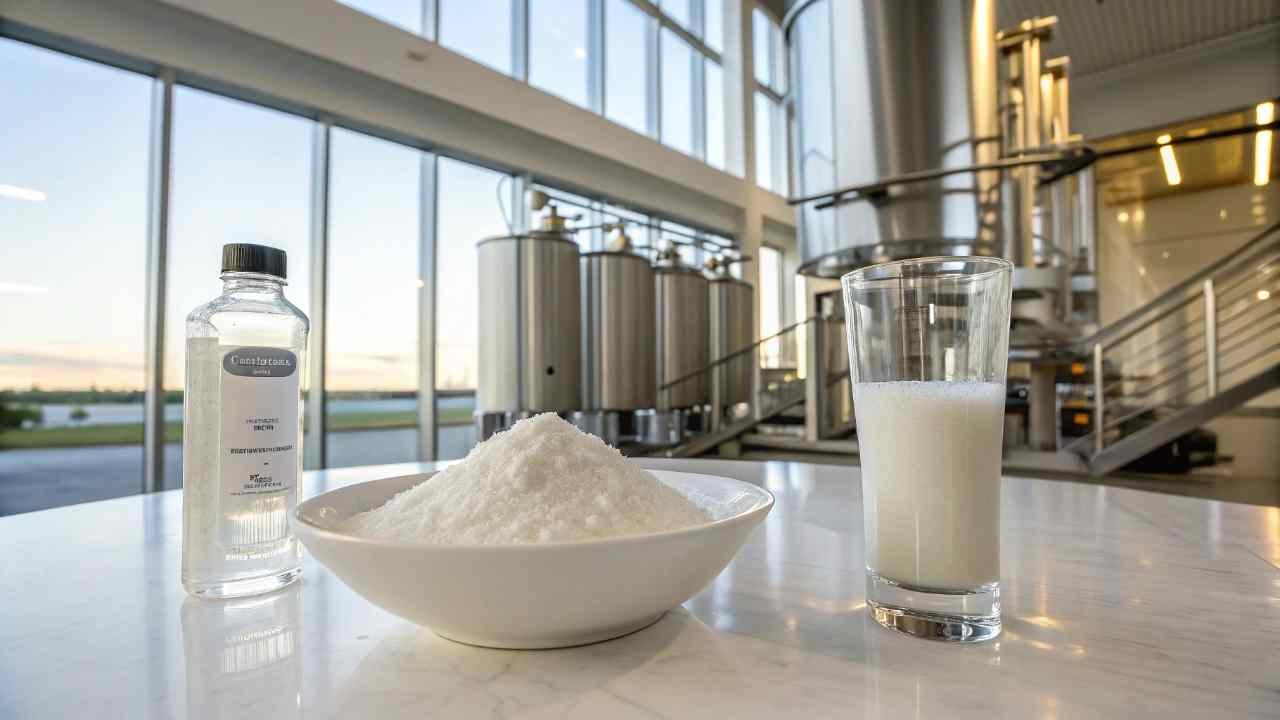
Superior Taste and Substitution Power
I see that Reb M is the new standard for "Zero Sugar" products. In the past, Reb A was the main choice. But Reb A has a technical limit. If you use too much, the taste becomes bitter. Reb M is different. It is a rare glycoside found in the Stevia leaf. It has a very clean finish. I visit the labs in our partner factories to test these profiles. We find that Reb M allows food scientists to remove sugar completely. This is very important for my clients in Europe and the USA. They want a product that tastes like sugar but has zero calories.
The supply of Reb M used to be very low. It makes up less than 1% of the Stevia leaf. This made it very expensive. But new technology has changed the market. I act as your technical gatekeeper to ensure the Reb M you buy is high purity. We check the HPLC reports to verify the glycoside content. Many large beverage brands now specify Reb M in their recipes. It helps them avoid the "diet" taste that consumers dislike. I help my clients source this grade to stay ahead of the competition. Using Reb M can increase your retail price because the quality is much higher than standard Stevia.
Comparison: Reb A vs. Reb M Performance
| Feature | Rebaudioside A (Reb A) | Rebaudioside M (Reb M) | FINETECH's Technical View |
|---|---|---|---|
| Taste Profile | Bitter aftertaste at high levels | Clean, sugar-like taste | Reb M is better for "Zero" lines |
| Sweetness Intensity | 200x - 250x of sugar | 200x - 300x of sugar | Both are very potent |
| Aftertaste | Licorice / Metallic | None / Very low | Reb M removes the "diet" feel |
| Cost | Cost-effective | Premium | Reb M price is dropping now |
| Abundance in Leaf | High (~10%) | Very Low (<1%) | Requires bio-tech for volume |
| Best Application | Partial sugar reduction | 100% sugar replacement | Reb M is the top quality choice |
How is biotechnology influencing Stevia production technology?
High costs for rare glycosides limit your profit margins. Traditional extraction is often too expensive for mass-market Reb M. Biotechnology now makes these premium sweeteners affordable for your large-scale production needs.
Biotechnology, including enzymatic biotransformation and fermentation, allows manufacturers to produce Reb M from more common Stevia components. This process increases the yield, reduces environmental waste, and significantly lowers the market price for high-purity Stevia extracts compared to traditional leaf extraction.
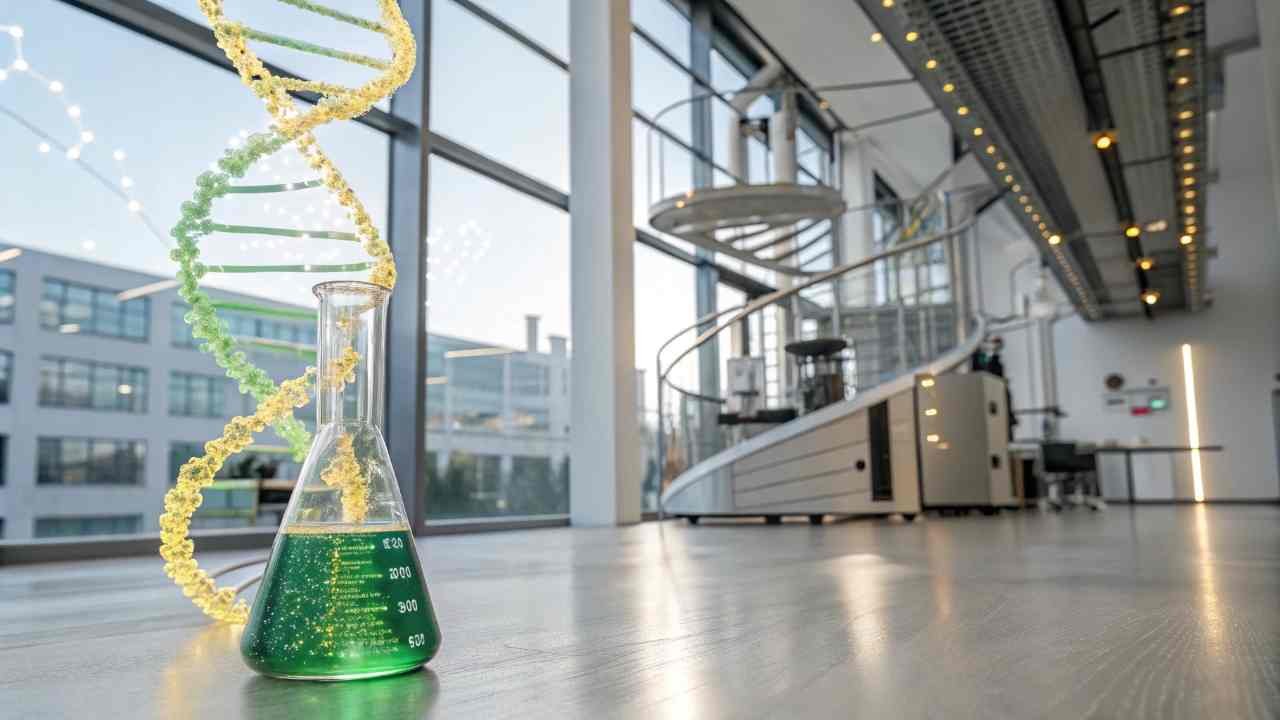
From Extraction to Bio-manufacturing
I see that the way we make Stevia is changing fast. For many years, we only used water extraction from the leaf. This is good for Reb A. But it is not efficient for Reb M because the leaf has so little of it. Now, factories use enzymes. They take common Reb A and use natural enzymes to turn it into Reb M. I visit these high-tech plants in China to audit their processes. This method is called "Enzymatic Biotransformation1." It is still considered natural and non-GMO by most global standards. This tech is the reason why Reb M prices have dropped by over 50% in the last few years.
Some factories also use fermentation. They use yeast to grow Stevia glycosides in a tank. This is like brewing beer. It does not require large fields of plants. I act as your strategic office to find the most reliable producers using these methods. These bio-tech methods are very clean. They use less water and land than traditional farming. For my B2B clients in Europe, this "Sustainability2" factor is very important. I check the technical data sheets to ensure the final powder is identical to the leaf extract. This innovation ensures that even the best Stevia grades are now available for wholesale at competitive prices.
Evolution of Stevia Production Methods
| Method | Process Type | Main Benefit | FINETECH's Strategy |
|---|---|---|---|
| Traditional Extraction | Water & Filtration | 100% Leaf-derived | Best for "Natural" labeling |
| Enzymatic Conversion | Enzyme Catalysis | High Reb M yield | Best for price and taste |
| Fermentation | Yeast-based | Sustainable / Scalable | Future of mass production |
| Hybrid Method | Mix of methods | Balanced cost | Common for bulk wholesale |
| Solvent Extraction | Old method | Very cheap | Avoid due to residue risks |
| Adsorption Resin | Purification step | High purity Reb A | Standard for industrial grades |
Which regions show the fastest growth in Stevia consumption?
Missing out on high-growth markets means losing to your competitors. You need to know where demand is surging to plan your export strategy. I identify the top regions driving the Stevia market.
Southeast Asia and the Middle East show the fastest growth in Stevia consumption. This is driven by new sugar taxes in Saudi Arabia and the UAE, plus a rising middle class in Indonesia and Vietnam seeking healthy, low-calorie food and beverage options.
Emerging Hubs of Sweetener Demand
I see that the Middle East is a major growth driver. Countries like Saudi Arabia, the UAE, and Qatar have introduced high taxes on sugary drinks. This forces beverage manufacturers to change their recipes. They are moving to Stevia very quickly. I manage the supply for many traders in this region. They need high-purity Reb A 97% to keep their sodas tasting great while avoiding the tax. I also see that the "Halal" certification is a must-have here. I ensure all our partner factories in China have valid Halal certs to meet this specific regional demand.
Southeast Asia is the second big growth zone. In Indonesia and Vietnam, people are becoming more health-conscious. They want to reduce sugar to prevent diabetes. I visit many exhibitions in this region. I see that local food brands are adding Stevia to everything from coffee to snacks. The "Low MOQ" and "Fast Delivery" features I offer are very popular here. I act as your logistics partner to move cargo from China to these ports in just 10 to 15 days. By targeting these fast-growing regions, you can find new buyers who are desperate for a reliable Stevia supply to meet local laws.
| Region | Growth Driver | Primary Product Need | FINETECH's Market View |
|---|---|---|---|
| Middle East | Sugar Taxes (UAE/KSA) | High Purity Reb A / Reb M | Very fast volume growth |
| Southeast Asia | Health Awareness | Cost-effective Reb A 95% | High demand for beverages |
| Europe | Clean Label Trends | Organic / Reb M | Focus on premium quality |
| Russia | Food Processing | Industrial Stevia Blends | Steady wholesale demand |
| North America | Natural Trends | Reb M / Fermented Stevia | Mature but high-value |
| China | Domestic Policy | General Glycosides | Huge production base |
How are regulatory changes affecting the global Stevia market?
Compliance failures cause customs seizures and legal fines. Changing regulations can catch your business unprepared. I track these shifts so you can maintain a safe and legal supply chain for your food additives.
Regulatory changes are expanding the market by approving new Stevia production methods like fermentation. Stricter labeling laws and national sugar taxes worldwide also force manufacturers to adopt Stevia. This avoids higher costs and helps them bypass "high sugar" health warnings on retail packaging.

Compliance and Global Food Standards
I see that regulations are the "invisible hand" of the sweetener market. For example, the European Food Safety Authority (EFSA) recently approved more types of Stevia production. This opened the door for bio-tech Stevia in the EU. I act as your documentation manager to ensure your COAs match these new rules. If your paperwork is old, your cargo will stay at the port. I also monitor the "Sugar Tax3" laws. Over 50 countries now have these taxes. This is the biggest reason why my B2B clients are switching from sugar to Stevia. It is a financial decision made necessary by the law.
Labeling is another technical area. Governments now want "Front-of-Pack" labels that show high sugar content. This scares consumers away. Stevia allows you to remove the "High Sugar" warning. I visit our partner factories to ensure they follow JECFA4 (Joint Expert Committee on Food Additives) standards. This is the global benchmark. I also check that our Stevia meets the USP or FCC requirements. By staying compliant with these moving regulations, I protect my clients from legal risks. You can sell your Stevia-based products in any major market, from Germany to Korea, with full confidence in your supply chain safety.
| Regulation Type | Impact on Industry | Stevia Role | FINETECH's Compliance Tip |
|---|---|---|---|
| Sugar Tax | Increases beverage costs | Reduces total tax bill | Switch to Reb A for savings |
| Labeling Laws | Health warnings on packs | Keeps labels clean/healthy | Use Reb M for 0-sugar |
| Approval of Tech | Lower production costs | Allows Reb M at bulk price | Check bio-tech certs |
| Purity Standards | Higher quality baseline | Standardizes 95% TSG | Always check HPLC reports |
| Halal/Kosher | Market access barrier | Mandatory for specific zones | Verify religious certs annually |
| Safety Audits | Strict traceabilty | Prevents contamination | Audit factory HACCP logs |
What innovations are expected to shape future Stevia applications?
Using the same old ingredients leads to product stagnation. Your competitors are already looking at new ways to use Stevia. I reveal the technical innovations that will transform your industry and expand your product range.
Future innovations include Stevia-based flavor modifiers, synergistic blends with natural sweeteners like monk fruit, and new applications in pharmaceuticals and personal care. These advancements focus on improving mouthfeel and expanding the "natural" label appeal to more diverse food and non-food categories.

Beyond Simple Sweetening
I see that "Flavor Modification" is the next big thing. Stevia is not just for sweetness anymore. At low levels, it acts as a "Flavor Enhancer." It can make fruit flavors taste more intense or mask the bitter taste of pea protein. I work with factories in China that are developing these "Stevia Modifiers." They help my clients in the plant-based milk and protein powder industries. This technical innovation allows you to use Stevia in products where it was not possible before. I act as your strategic partner to bring these new samples to your R&D lab for testing.
Another trend is the "Sweetener Blend." I see more manufacturers mixing Stevia with Monk Fruit or Erythritol5. This creates a "Sweetness Synergy." The blend often tastes better and has a better mouthfeel than Stevia alone. I manage the sourcing for these multi-additive loads. We also see Stevia moving into the pharmaceutical world. It is used to sweeten cough syrups and chewable vitamins for children. Since it does not cause tooth decay, it is also perfect for toothpaste and mouthwash. I visit these specialized plants to ensure they meet pharma-grade standards. These new applications will keep the global demand for Stevia growing for many years.
| Innovation Area | Technical Development | Potential Impact |
|---|---|---|
| Flavor Modifiers | Low-dose glycosides | Enhances natural flavors |
| Synergy Blends | Stevia + Monk Fruit | Best sugar-like taste |
| Pharmaceuticals | Pharma-grade Stevia | Natural taste for medicine |
| Personal Care | Anti-cavity sweetness | Toothpaste and mouthwash |
| Animal Feed | Palatability enhancers | Better feed intake for livestock |
| Alcoholic Drinks | Low-sugar mixers | Healthier cocktail options |
Conclusion
The global Stevia market is rapidly evolving toward Reb M popularity, bio-tech production, and new regional growth hubs. I manage these trends at FINETECH to ensure your B2B supply stays ahead of the competition.
-
PubMed Central – Academic research on the enzymatic conversion processes used to produce high-purity rare glycosides like Reb M. ↩
-
Food Business News – An article exploring how sweetener suppliers are meeting modern sustainability targets and reducing environmental impact. ↩
-
World Bank – Comprehensive FAQ regarding the global implementation of taxes on sugar-sweetened beverages and their impact on public health. ↩
-
World Health Organization – Information on the Joint FAO/WHO Expert Committee on Food Additives (JECFA), the international body that evaluates the safety of food additives. ↩
-
Healthline – A look at the characteristics and safety of erythritol, a sugar alcohol frequently blended with stevia to improve taste and texture. ↩