
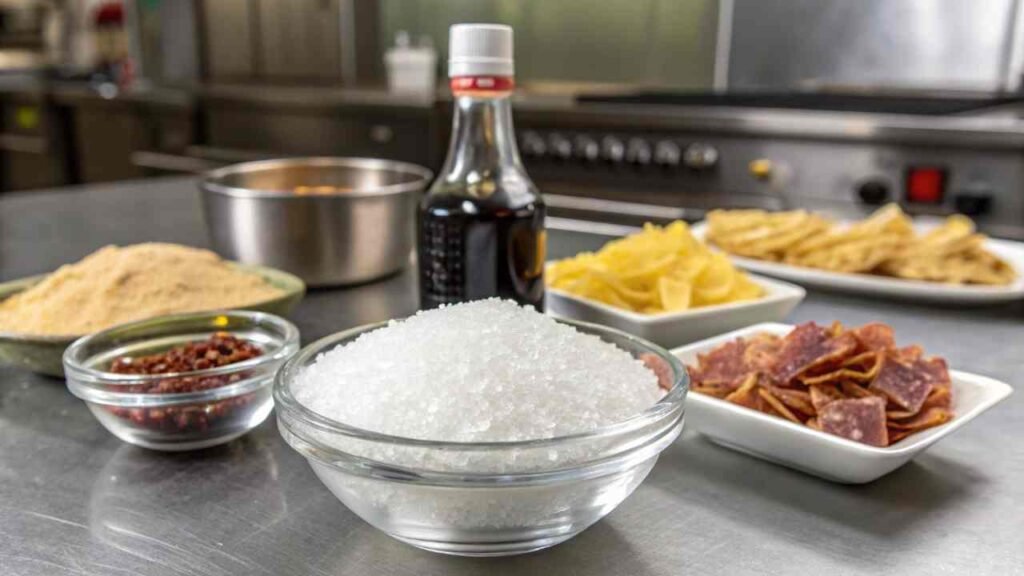
Dull food products lead to poor sales and lost customers. This flavor gap ruins your brand reputation. I explain how MSG solves this by boosting taste across various food categories.
MSG (Monosodium Glutamate) is primarily used in the food industry to enhance "umami" flavor. Its main applications include seasonings, snacks, canned soups, frozen meals, and processed meats. It acts as a flavor stabilizer, allowing manufacturers to reduce sodium while maintaining a rich, savory taste profile for global consumers.
I manage factory selection and quality oversight for my B2B clients at FINETECH. I want to share the technical facts about MSG applications so you can stock the right product for your local food manufacturers.
Why is MSG widely used in food processing?
Unstable flavors make your brand look cheap and inconsistent. This ruins customer loyalty in a competitive market. I explain why MSG is the standard technical tool for flavor stability in production.
MSG is widely used because it is a cost-effective flavor enhancer that provides a consistent umami profile. It stabilizes tastes during high-heat processing and long shelf storage. Additionally, it helps manufacturers reduce total sodium content by up to 40% without sacrificing the palatability of the final product.

The Technical Logic of Flavor Stability
I see that many food manufacturers struggle with "flavor fade." When food is heated at high temperatures in a factory, natural flavors often break down. MSG1 is a technical solution to this problem. It is chemically stable at standard cooking temperatures. It does not disappear during boiling or baking. This makes it a reliable choice for large-scale production. I prioritize sourcing high-purity MSG for my clients because purity directly affects this stability. If the MSG contains impurities, it might react with other ingredients. Pure Monosodium Glutamate stays neutral while boosting the "savory" notes.
Another major driver is sodium reduction2. Many governments in the Middle East and Southeast Asia are pushing for lower salt in food. MSG contains only about 12% sodium, while table salt contains 39%. By using a small amount of MSG, a factory can use much less salt. The result is a product that tastes salty and savory but has much less total sodium. This is a massive selling point for modern health-conscious brands. I act as your strategic partner to provide the technical specs that help your buyers meet these new health regulations. MSG is not just a flavor booster; it is a tool for product reformulation.
MSG vs. Other Flavor Enhancers
| Feature | MSG (Monosodium Glutamate) | Yeast Extract | I+G (Nucleotides) | HVP (Protein) |
|---|---|---|---|---|
| Primary Taste | Pure Umami | Meaty / Savory | Intense Umami | Savory / Salty |
| Heat Stability | Very High | Moderate | High | Moderate |
| Cost Efficiency | High (Cheapest) | Low | Low (Expensive) | Moderate |
| Sodium Content | ~12% | Variable | Low | High |
| Clarity in Liquid | Clear | Cloudy | Clear | Cloudy |
| Best Use Case | Bulk Seasoning | Natural Labeling | Synergy with MSG | Bouillon Cubes |
Which food products use MSG most often?
Guessing which ingredients your customers need leads to dead stock in your warehouse. This wastes your capital. I identify the top food products using MSG so you can plan your inventory.
MSG is most frequently used in savory snacks, instant noodles, processed meats like sausages, and canned goods. It is also a core ingredient in industrial seasoning blends, bouillon cubes, and fermented sauces, where it provides the foundational savory depth required for mass-market appeal across global markets.
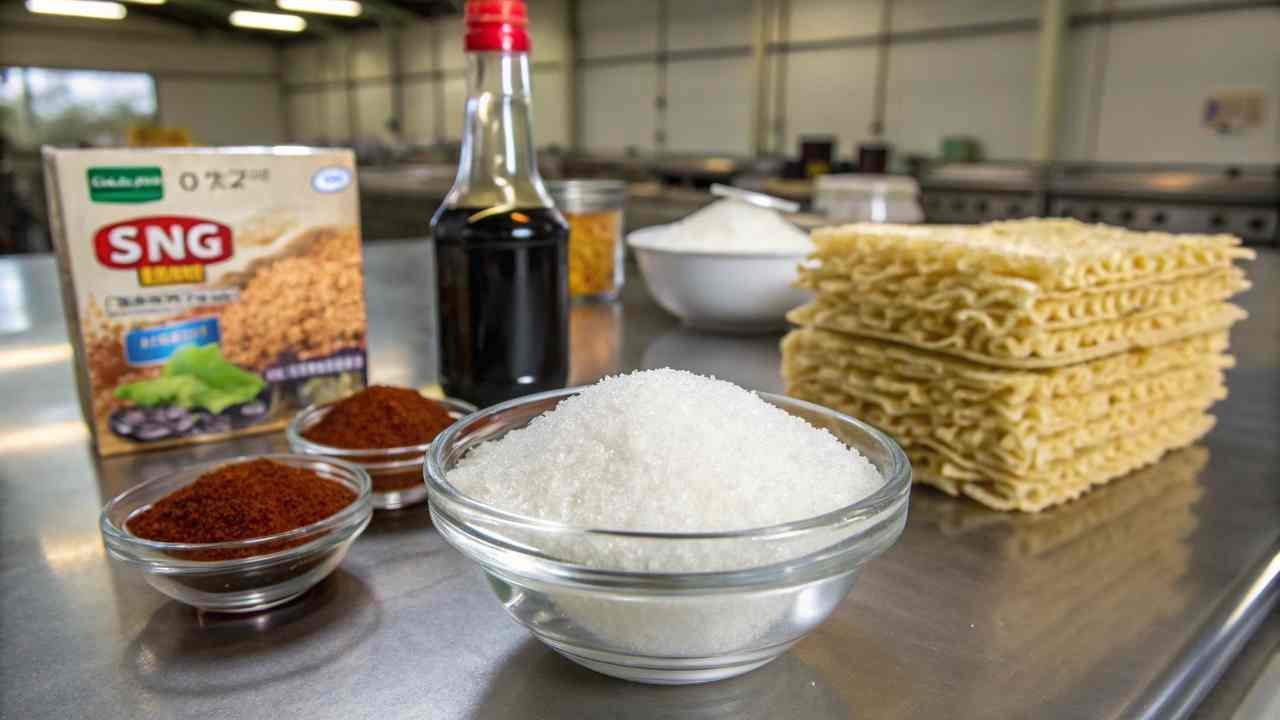
Categorizing High-Demand Applications
I see that the snack industry3 is the biggest buyer of bulk MSG. Think about potato chips or corn snacks. These products need an intense "burst" of flavor. MSG helps the seasoning powder stick to the chip and stay flavorful. I supply different mesh sizes for this purpose. Large crystals are good for clear soups, but fine powder (60-80 mesh) is better for coating snacks. If the mesh size is wrong, the seasoning will fall off the chip. I visit the factories to check their sieving equipment to ensure you get the exact size your snack-making clients need.
The processed meat4 industry is the second major user. In my work with buyers in Southeast Asia and Europe, I see MSG used in sausages, hams, and deli meats. Meat processing often involves adding water and binders to lower costs. This dilutes the natural meat flavor. MSG brings that flavor back. It makes the meat taste "meatier" even when the actual meat content is lower. This is a technical fact of the "Value" meat market. I also see high demand in the sauce industry. Soy sauce and oyster sauce manufacturers use MSG to reach the "Grade A" savory level without waiting years for natural fermentation. This speeds up their production cycle and saves them money.
MSG Usage Rates by Category
| Food Category | Typical Dosage (%) | Product Form | FINETECH's Sourcing Tip |
|---|---|---|---|
| Savory Snacks | 0.1% - 0.5% | Fine Powder (80 Mesh) | Focus on dust-free grades |
| Instant Noodles | 0.5% - 0.8% | Small Crystal | Check for fast solubility |
| Canned Soups | 0.1% - 0.2% | Small Crystal | Ensure high clarity |
| Processed Meats | 0.2% - 0.4% | Small Crystal | Audit for heavy metals |
| Seasoning Blends | 5.0% - 15.0% | Various Meshes | Check for anti-caking |
| Frozen Dinners | 0.1% - 0.3% | Large Crystal | Monitor freeze-thaw stability |
How does MSG improve flavor in food products?
Weak flavor profiles drive consumers to your competitors' products. This loss of market share is permanent. I explain the technical mechanism of how MSG transforms flavor to help you sell its benefits to buyers.
MSG improves flavor by stimulating specific glutamate receptors on the tongue, creating the "umami" or savory taste. It rounds out sharp flavors, balances sweetness and saltiness, and enhances the natural protein taste in meat and vegetable dishes during the industrial cooking and canning processes.
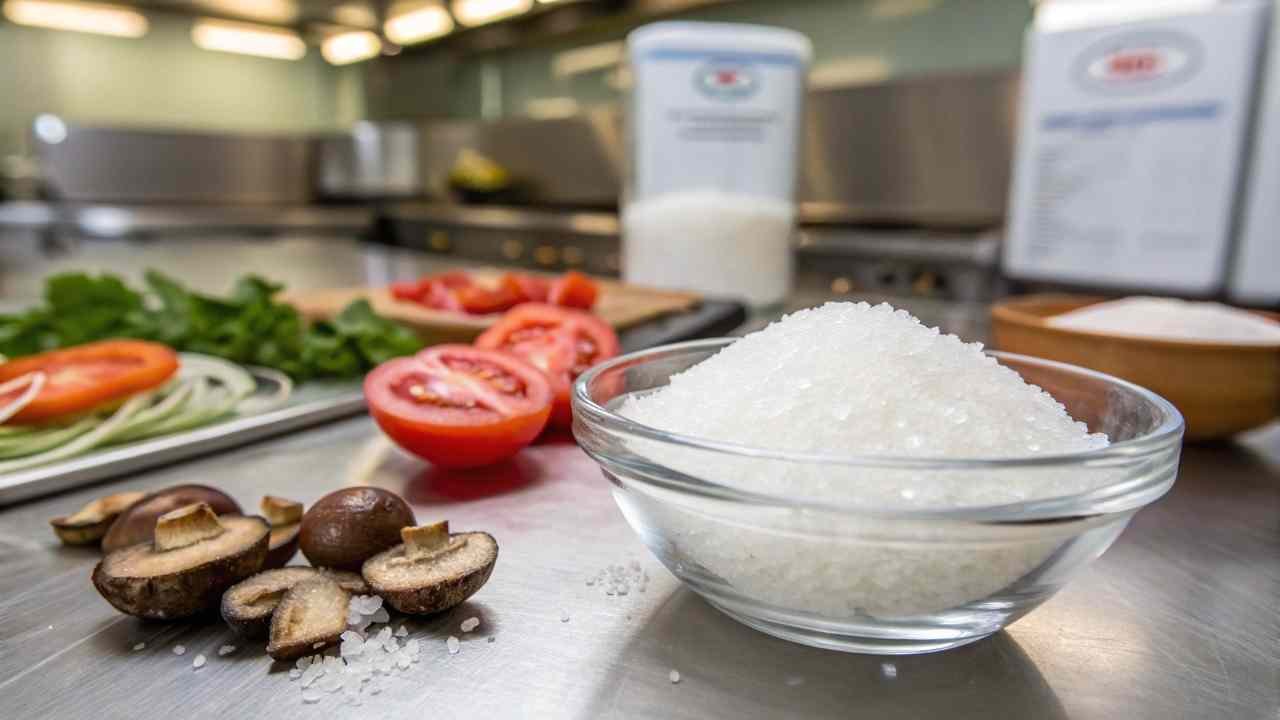
The Science of Umami Synergy
I want you to understand that MSG does not just add one taste; it changes the whole flavor profile. It has a "Synergistic Effect" with other ingredients. For example, when MSG is mixed with salt, the savory taste is much stronger than if you used them separately. I see this a lot in the bouillon cube industry. Manufacturers mix MSG with salt and nucleotides (I+G). This combination creates a "Flavor Explosion" at a very low cost. I manage the sourcing of all these additives so you can offer a complete flavor solution to your customers.
MSG also "rounds out" flavors. If a sauce is too acidic or too bitter, a small amount of MSG can balance it. It removes the "harsh edges" of the taste. This is a technical requirement for high-quality processed foods. In vegetable-based products, MSG adds a richness that is usually missing. For my clients in the plant-based meat sector, MSG is essential. It helps pea or soy proteins taste like real beef or chicken. I visit the R&D centers of my partner factories to see how they test these applications. This ensures that the MSG I ship to you has the correct chemical profile to perform this flavor magic.
Flavor Interaction Matrix
| Taste Element | Interaction with MSG | Resulting Effect | Industry Application |
|---|---|---|---|
| Salt (Sodium) | Synergistic | Enhances saltiness | Sodium-reduced soups |
| Sour (Acid) | Balancing | Reduces sharpness | Tomato-based sauces |
| Bitter | Masking | Lowers bitterness | Vegetable juices |
| Sweet | Neutral | No major change | Sweet & Savory snacks |
| Umami | Potentiating | Deepens richness | Meat and broths |
Is MSG suitable for instant food applications?
Processed food often tastes metallic or bland after factory dehydration. This poor quality kills repeat purchases from consumers. I explain why MSG is the best technical choice for the fast-growing instant food sector.
Yes, MSG is highly suitable for instant food because it remains stable during high-heat sterilization and long shelf lives. It is essential for instant noodles, frozen dinners, and dehydrated soups, where it replaces the natural flavor lost during the industrial drying or freezing processes.
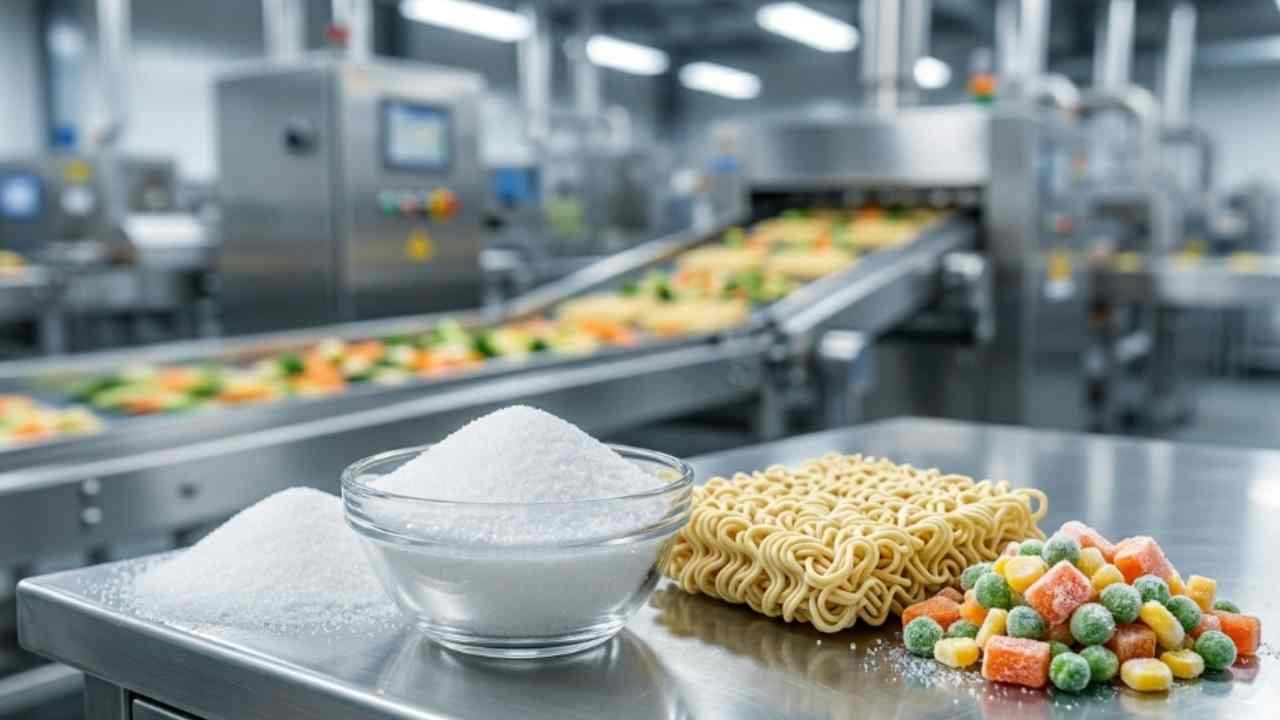
Stability in Extreme Processing
I see that the instant food market is growing fast in Southeast Asia and the Middle East. These products face "Extreme Processing." For example, instant noodles5 are fried or air-dried at high heat. Then they sit on a shelf for 12 months. Natural flavors like meat or herbs often lose their strength during this time. MSG does not. It is a very stable molecule. I supply the seasoning factories that make the little packets inside the noodle bags. They need MSG that does not "cake" or turn into a block inside the small foil pouch. I act as your quality gatekeeper to ensure the moisture levels are very low for this application.
Frozen foods6 also need MSG. When food is frozen and then microwaved, the texture and flavor can change. MSG helps maintain a "Freshly Cooked" taste. It works well with frozen proteins and vegetables. I prioritize factories that use automated crystallization to make MSG. This results in very clean, clear crystals that dissolve instantly when the consumer adds hot water. Whether it is a frozen pizza or a cup of soup, MSG ensures the first bite tastes as good as the last. I oversee the production to ensure the "Dissolution Rate" is fast enough for instant applications. This is a technical detail that makes your product superior to cheap alternatives.
Instant Food Technical Requirements
| Requirement | Technical Detail | Why it Matters | FINETECH's Role |
|---|---|---|---|
| Solubility | Instant in hot water | Consumer convenience | Test dissolution speed |
| Heat Stability | Stable at > 100°C | Factory sterilization | Monitor assay after heating |
| Shelf Life | 24 - 36 Months | Global distribution | Check storage stability |
| Caking Resistance | < 0.2% Moisture | Pouch packing machines | Verify drying logs |
| Color Clarity | Clear in broth | Visual appeal | Use whiteness meter |
Which industries create the highest MSG demand?
Focusing on the wrong market segment limits your wholesale volume and prevents scaling. This stagnation hurts your long-term profit. I identify the industries with the highest demand to help you target large-scale B2B buyers.
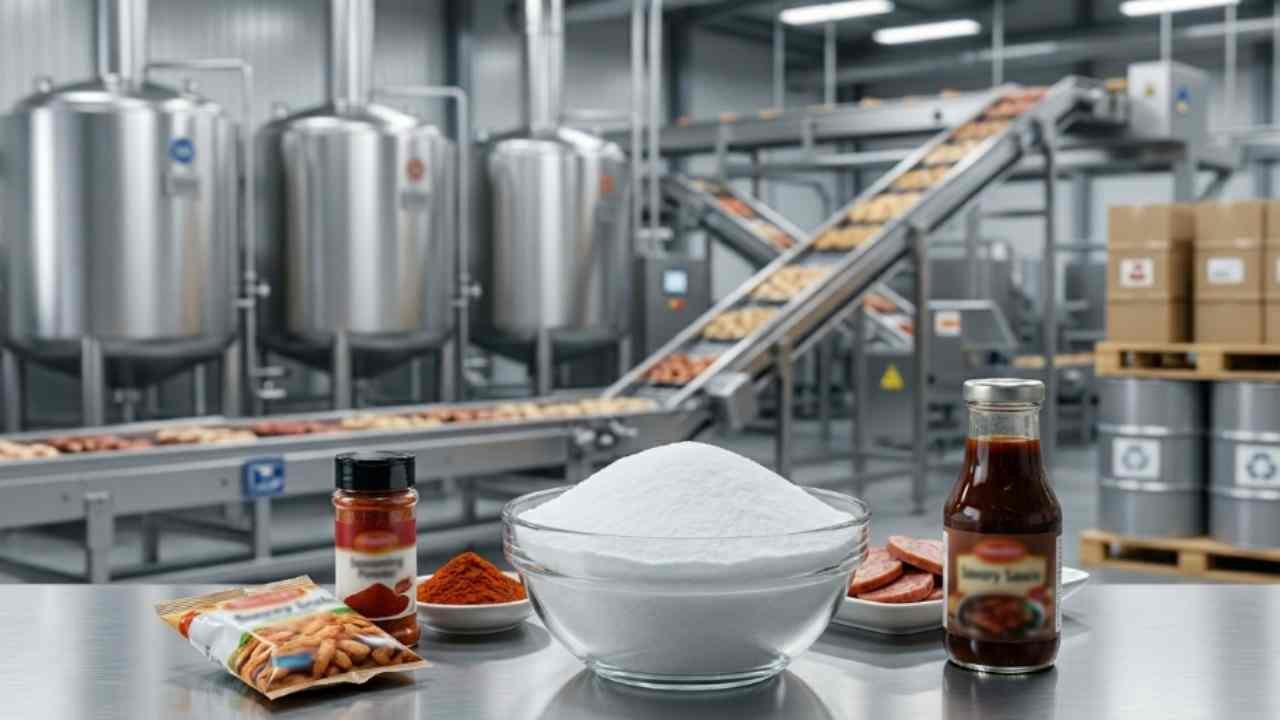
The largest demand for MSG comes from the industrial seasoning, snacks, and ready-to-eat (RTE) meal sectors. The foodservice industry, including restaurants and catering, also accounts for significant volume, followed by the processed meat and fermented sauce industries globally.
Targeting the Big Buyers
I see that the "Industrial Seasoning" sector is the hidden giant in our business. These companies don't make final food; they make the "Flavor Bases" for other brands. They buy MSG by the hundreds of tons. They mix it with salt, sugar, and spices to make "All-Purpose Seasoning." For my clients in the Middle East, these seasoning blenders are the best customers. They need a stable supply and a competitive price. I manage the factory selection in China to get you the lowest cost for these bulk buyers. We focus on 25kg bags which are the industry standard for easy handling in these plants.
The "Foodservice" industry is the second giant. This includes large restaurant chains and catering companies. They use MSG in their central kitchens to ensure every branch tastes the same. This is about "Consistency." I supply wholesalers who sell directly to these hotel and restaurant groups. They often want "Private Label7" packaging. I can arrange for the MSG to be packed in your brand name at the factory. This builds your brand equity while I handle the quality and logistics in China. By targeting these high-volume sectors, you can scale your business quickly. I act as your strategic office in China to ensure you have the capacity to meet their massive needs.
Industry Demand and Requirement Table
| Industry | Demand Volume | Key Requirement | FINETECH's Strategy |
|---|---|---|---|
| Seasoning Blenders | Very High | Lowest Price / Consistency | Annual volume contracts |
| Snack Manufacturers | High | Fine Powder / Adhesion | Custom mesh sizing |
| Noodle Producers | High | Fast Solubility | High-purity small crystals |
| Meat Processors | Moderate | Safety / Heavy Metal Specs | Audit BRC/ISO certs |
| Foodservice Groups | Moderate | Private Labeling | OEM packaging services |
| Fermented Sauces | Moderate | Purity / Clarity | Monitor assay levels |
Conclusion
MSG is a versatile flavor tool essential for snacks, instant foods, and meat processing globally. I manage high-quality sourcing at FINETECH to ensure your business meets these industrial needs profitably.
-
International Glutamate Information Service – Providing science-based information about MSG, its global production, and safety assessments. ↩
-
World Health Organization (WHO) – Fact sheet on salt reduction strategies and health goals related to global sodium intake management. ↩
-
Mordor Intelligence – Comprehensive market analysis and technical forecast for the global snack food industry. ↩
-
Meatingplace – A dedicated resource for professionals in the meat and poultry processing industry, covering technology and market trends. ↩
-
World Instant Noodles Association – Global market data and production standards for the instant noodle industry across various regions. ↩
-
American Frozen Food Institute (AFFI) – Industry association providing resources on the safety, quality, and manufacturing of frozen food products. ↩
-
PLMA – The Private Label Manufacturers Association, offering insights into the development and branding of store-brand products for wholesalers and retailers. ↩