
Unstable supply and poor quality destroy your profits. These risks threaten your business safety. I provide expert management to protect your Vitamin B3 trade from failure and financial loss.
Vitamin B3 trade risks include chemical purity failures, supply chain disruptions due to Chinese environmental audits, and price volatility from raw material shortages. Buyers must manage quality through strict COA audits and mitigate financial risks with fixed-price contracts and secure logistics to ensure stable procurement.
I want to show you the technical facts about reducing risks to keep your Vitamin B3 supply chain stable and profitable.
What Quality Risks Exist in Vitamin B3 (Niacin) Procurement?
Off-spec Niacin leads to product recalls and health fines. These errors ruin your brand. I check every batch to ensure you receive 99% pure, safe Vitamin B3 every time for your business.
Quality risks involve assay levels below 99%, heavy metal contamination like Lead or Arsenic, and moisture-induced caking. Improper synthesis can leave residual solvents, while poor storage during sea transit leads to physical clumping, making the powder unusable for food or pharmaceutical manufacturing processes.

Technical Specification and Safety Risks
I see quality as the highest risk in the Vitamin B3 market. Purity is a precise requirement. If the assay level1 is even 0.5% lower than the standard, it might fail in your formula. I check the HPLC reports for every batch. It must stay between 99.0% and 101.0%. High moisture levels are another physical risk. If the water content is above 1.0%, the powder will clump. This clumping makes it impossible to use in your automated mixing machines. I also look at the color of the crystals. Vitamin B3 should be a vibrant white. If it looks dull or yellowish, it means the product is old or was made with poor raw materials. I oversee the packaging to ensure we use double PE liners to block all moisture during shipping.
Heavy metal contamination is a serious legal and health risk. Lead and arsenic must be below very strict limits. Standards like USP or FCC require lead to be less than 2 mg/kg. If your supplier has poor lab equipment, they might miss these impurities. This leads to legal fines in your home country. I personally review the COA for every batch to ensure these toxic metals are almost zero. For my buyers in Europe and the Middle East, I also check for residual solvents from the chemical synthesis. These must meet international health standards. My oversight ensures that no unsafe material reaches your factory. I focus on technical precision to protect your brand from quality failure.
Quality Risk Assessment Matrix
| Risk Factor | Technical Limit | Business Impact | Mitigation |
|---|---|---|---|
| Purity (Assay) | 99.0% - 101.0% | Nutritional failure | HPLC batch testing |
| Lead (Pb) | < 2 ppm | Legal recall / Health risk | Atomic absorption test |
| Moisture | Max 1.0% | Caking / Machine clogging | Double PE heat-sealed liners |
| Mesh Size | Consistent | Poor blending in recipes | Sieve analysis oversight |
| Residual Solvents | Meet USP/BP | Safety non-compliance | Gas Chromatography test |
How Can Contracts Reduce Vitamin B3 (Niacin) Trade Risk?
Vague agreements leave you unprotected when shipments go wrong. This loss hurts your capital. I use technical contracts to ensure your rights and product standards are always secured for your procurement.
Contracts reduce risk by defining exact chemical specifications, delivery timelines, and penalty clauses for delays. They clarify legal liabilities and use Incoterms like CIF or FOB to assign responsibility for insurance and shipping, ensuring both parties follow a professional and enforceable trade framework.

Protecting Your Business with Precise Agreements
I ensure that every proforma invoice I send has a detailed specification sheet. You should not just write "Vitamin B3." You must include the assay level and the specific mesh size. The contract must state that the goods must match the agreed sample exactly. If the bulk order is different, the supplier must be responsible for a replacement. This technical detail prevents arguments later. I suggest buyers2 also include a limit for heavy metals and microbial counts. These clauses force the factory to take your quality needs seriously. It is the best way to get consistent material for every shipment. I also add a clause for "retainer samples." We keep a sample from every batch for two years as evidence for any future audits.
Managing logistics risk is also part of a good contract. Late shipments ruin your production schedule. A good contract should have a clear delivery date. I suggest adding a penalty clause for delays. For example, if the cargo is late by more than two weeks, the supplier pays a small discount. This encourages the factory in China to prioritize your order. You should also define the Incoterm3 clearly. If you use CIF, I handle the insurance for you. This protects you if the container gets damaged at sea. Payment terms are also part of your safety. I usually suggest a 30% deposit and 70% against the Bill of Lading. This means you only pay the balance when the goods are safely on the ship.
Essential Contract Clauses for Buyers
| Clause Category | Purpose | Why It Protects You |
|---|---|---|
| Tech Specification | Defines assay and impurities | Ensures product works in recipe |
| Quality Guarantee | Replacement for off-spec goods | Protects against financial loss |
| Delivery Schedule | Set shipping and arrival dates | Prevents production stops |
| Incoterms (CIF/FOB) | Assigns cost and risk points | No hidden logistics fees |
| Lab Verification | Defines third-party testing | Provides objective quality proof |
How Do Currency Changes Affect Vitamin B3 (Niacin) Costs?
Shifting exchange rates can double your procurement costs overnight. This volatility ruins your budget. I help you manage currency risk to keep your prices stable and competitive in your local market.
Vitamin B3 is priced in USD but produced in CNY. If the Yuan strengthens, factory costs rise, leading to higher USD prices. Buyers use fixed-price annual contracts or early deposits to hedge against these currency fluctuations and protect their profit margins from unexpected price drops.

Managing the USD/CNY Relationship
I see that most international Vitamin B3 trade uses US Dollars. But the factories in China pay for their raw materials and labor in Chinese Yuan (CNY). If the Yuan gets stronger against the Dollar, the factory needs more Dollars to cover their costs. They will then raise the price for you. This can happen very fast. I track the exchange rate every morning at my office. I tell my regular buyers if the Yuan is about to rise. This allows them to pay their balance early to lock in a better rate. Understanding these financial cycles is a key part of my service to wholesalers4 in Southeast Asia and Europe. It helps you keep your procurement budget safe from currency shocks.
Strategic financial planning is the best tool for buyers. One of the best ways to avoid currency risk is a long-term contract with a fixed price. I help my clients sign 6-month or 12-month deals. We agree on a price in US Dollars for a certain volume. Even if the exchange rate changes, your price stays the same. This makes your budgeting very easy. You can tell your own customers exactly what the price will be for the whole year. Also, talk to your bank about "Forward Contracts." This is a way to buy Dollars at a fixed rate for a future date. It removes the gamble of the currency market. I act as your office in China to manage these financial risks with the factory directly.
Currency Risk and Price Impact Table
| Scenario | CNY Direction | USD Price Effect | Recommended Action |
|---|---|---|---|
| Stronger Yuan | Appreciation | Prices Rise | Pay deposit early / Lock price |
| Weaker Yuan | Depreciation | Prices Drop | Buy small lots / Wait for bottom |
| Stable Market | Flat | Stable Pricing | Standard procurement |
| Volatile Market | Unpredictable | Fluctuating Costs | Sign long-term fixed contract |
| Energy Hike | Upward Pressure | Sharp Price Hike | Stockpile safety inventory |
How Can Buyers Avoid Supply Disruptions of Vitamin B3 (Niacin)?
Sudden factory shutdowns in China stop your production lines. This crisis loses you customers. I build a resilient supply network to ensure you never run out of Vitamin B3 for your business.
Buyers avoid disruptions by monitoring Chinese environmental policies and maintaining a 60-day safety stock. Partnering with managed exporters who use multiple production hubs ensures supply even when one region faces power limits or government audits that shut down local manufacturing plants.
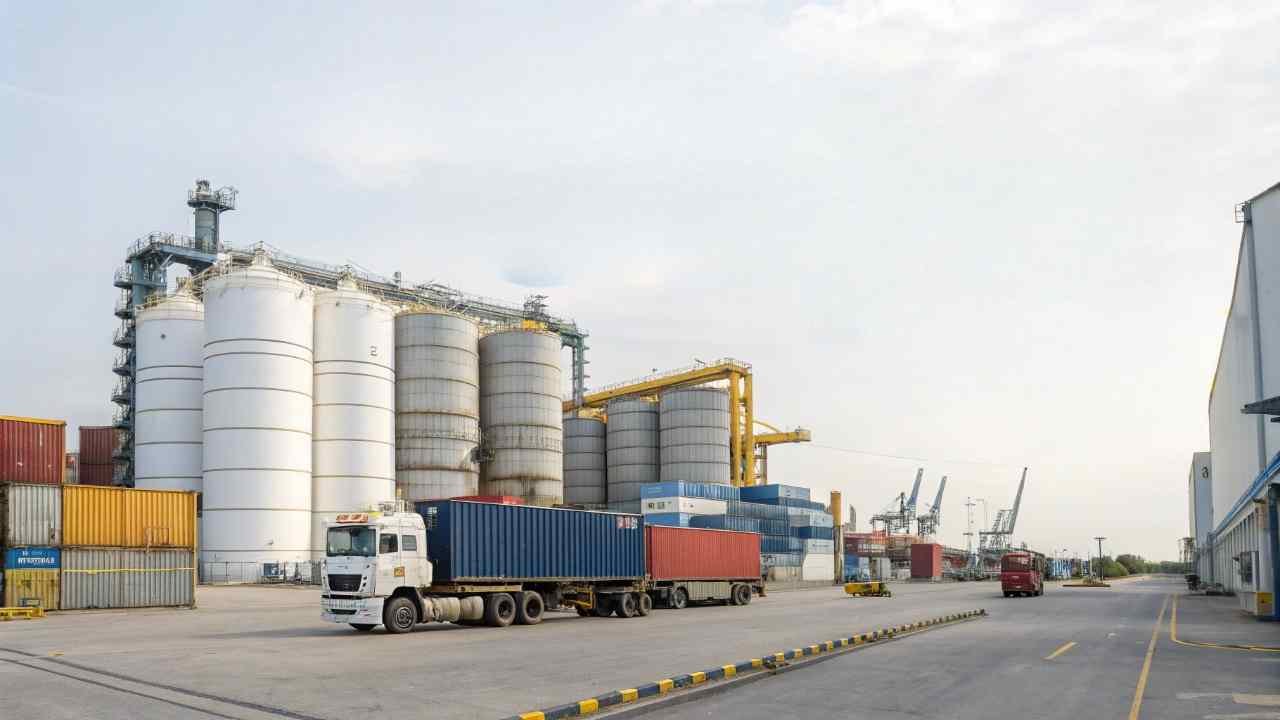
Navigating Policy and Seasonal Cycles
I observe that the Chinese government often performs environmental audits. These can shut down factories in one province for weeks. If your only supplier is in that province, you are in trouble. I stay in touch with factory managers in Hubei and Jiangsu to know when these audits are coming. I tell my clients to buy extra stock three months before the Chinese New Year. During this holiday, all production and ports stop for two weeks. If you do not plan for this, you will have no stock in March. I manage these schedules for my buyers in the Middle East and Southeast Asia to ensure their warehouse is always full during these peak periods.
Lead time management is a technical requirement for safety. You must know your lead times exactly. For Southeast Asia, the shipping takes two weeks. For the Middle East or Europe, it takes four to six weeks. I suggest you keep at least 60 days of usage as a safety stock. This buffer protects you from port strikes or vessel delays. I help my clients calculate their "Reorder Point." This means when your stock hits a certain level, you place the next order immediately. This system removes the emotion from buying. It ensures you have a continuous flow of fresh Vitamin B3. I oversee the production dates to make sure you always receive batches with a long shelf life.
Supply Continuity Checklist
| Disruption Type | Primary Cause | Early Warning Signal | Prevention Step |
|---|---|---|---|
| Environmental | Government audits | Pollution alerts in China | Diversify factory regions |
| Seasonal | Chinese New Year | Calendar dates | Buy 3 months stock in Nov |
| Power Limits | Energy shortages | Coal price spikes | Use integrated factories |
| Logistics | Port congestion | Shipping line reports | Book vessels 3 weeks early |
| Technical | Batch failure | Delayed COA release | Multiple source approval |
How Does Supplier Diversification Protect Vitamin B3 (Niacin) Supply?
Relying on a single factory is a dangerous gamble. If they fail, your business dies. I manage a network of top-tier producers to protect your supply from single-point failure and ensure reliability.
Supplier diversification protects you from single-point failure by spreading orders across different Chinese provinces. If one region faces power limits or audits, other factories can fill the gap. This strategy maintains supply continuity and gives you stronger leverage on quality and pricing in the market.

Spreading Regional Risk and Leverage
I always tell my clients that "all eggs in one basket" is a bad idea. In China, different provinces have different rules for energy use. In the winter, some areas might have power limits to save heating fuel. If your only supplier is in an area with a power cut, your order will be late. I work with factories in Hubei, Jiangsu, and Shandong. These regions are far apart. It is very rare for all of them to have problems at the same time. I handle the shifting of production so your supply chain5 never stops. This diversification is a major benefit of working with a professional managed exporter. It gives you the security of a large company.
Different factories also have different strengths. Some are excellent at making pharma-grade Niacinamide with 100% purity. Others are better at mass-producing food-grade 99% powder at a lower price. By using several suppliers, I can find the best match for your specific needs. I can also compare prices between different manufacturers every month. This competition keeps the price fair for you. You get the best quality without the risk of a single factory raising prices suddenly. I manage the quality standards across all these factories so the material you receive is always consistent. This strategic sourcing gives you a competitive edge in your local market. I focus on building a network that supports your long-term growth.
Benefits of a Diversified Supplier Base
| Feature | Single Source | Diversified Base (FINETECH) | Value to Buyer |
|---|---|---|---|
| Supply Security | Low | Very High | No out-of-stock events |
| Price Power | Low | High | Competitive unit cost |
| Quality Range | Limited | Broad | Access to all grades |
| Crisis Response | Slow | Fast | Immediate alternative found |
| Tech Support | Single View | Multi-Factory Expert | Best application advice |
Conclusion
Managing Vitamin B3 trade risks requires strict quality oversight, technical contracts, and supplier diversification. I manage these details at FINETECH to ensure your procurement is safe, stable, and profitable.
-
Waters Corp – Technical application notes for technical personnel on using HPLC and chromatography to verify assay level and chemical purity. ↩
-
CIPS – Professional resource for buyers explaining how to manage procurement organizations and assess supplier reliability. ↩
-
International Chamber of Commerce (ICC) – Official rules for Incoterm standards used to define trade orientation and shipping liabilities in global trade. ↩
-
Investopedia – Explaining the business model and role of wholesalers within the industrial supply chain for food enterprises. ↩
-
Supply Chain Management Review – Leading trade resource for professionals focused on managing global logistics and optimizing a resilient supply chain. ↩