

Sourcing bulk benfotiamine without understanding global production centers, raw intermediate constraints, transport hazards, and capacity fluctuations leads to supply ruptures, price volatility, and compromised product shelf life.
Analyzing the global benfotiamine supply market requires identifying Chinese and Indian export leaders, evaluating raw intermediate bottlenecks, monitoring centralized factory utilization and maintenance schedules, planning temperature-controlled logistics, and implementing diversified dual-sourcing and forward-contracting procurement models.
Successfully manufacturing premium dietary supplements and metabolic health products requires a disciplined approach to managing raw material supply chains. Sourcing managers must evaluate physical production capacities and global geopolitical trade factors to protect their formulations from active delivery disruptions and sudden cost inflations. Sourcing partners like FINETECH simplify factory checks, verify production compliance, and secure competitive pricing directly in China to guarantee bulk deliveries. This guide explains what factors are affecting the global benfotiamine supply market.
Which Countries Are Leading Benfotiamin Production and Export?
Concentrating procurement in unverified regions increases vulnerability to localized factory shutdowns and customs delays. Evaluating global manufacturing geography minimizes structural import bottlenecks.
China is the dominant global producer and exporter of bulk benfotiamine, supported by large-scale chemical industrial zones, while India serves as a key secondary exporter of pharmaceutical-grade formulations.
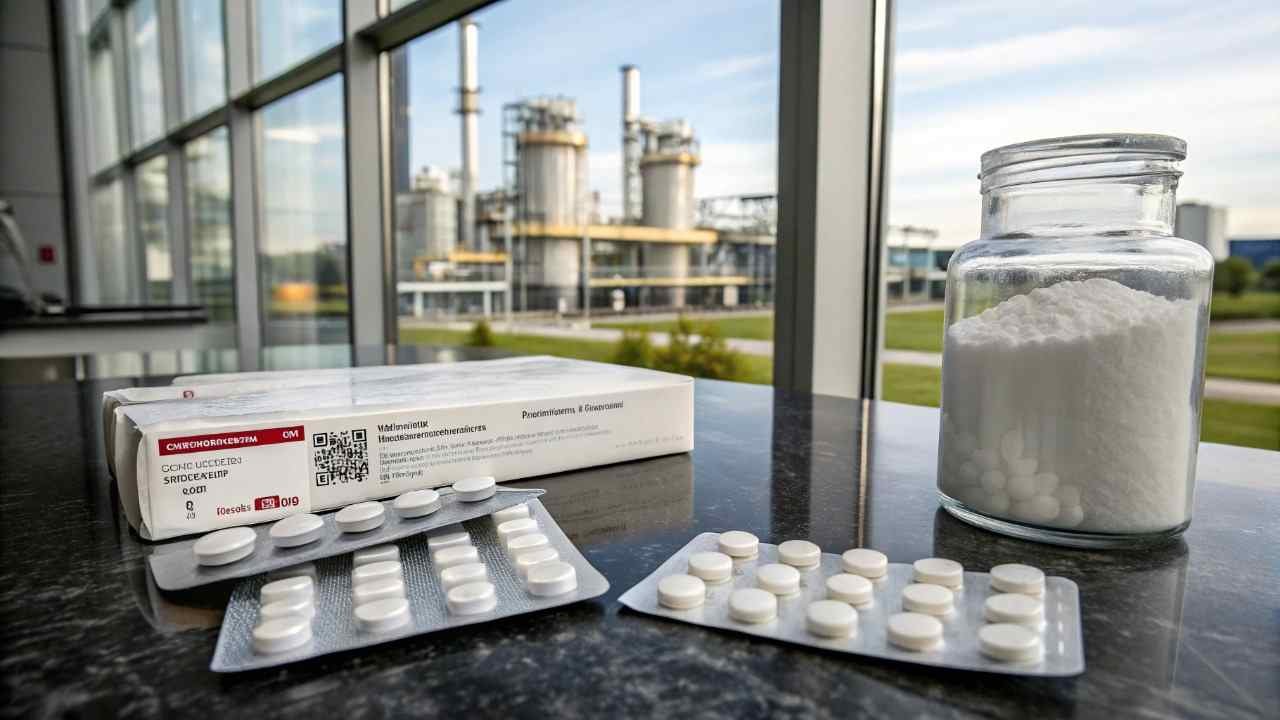
Dive Deeper into Chinese Mass-Production Dominance and Indian Formulation Hubs
The global manufacturing and export market for benfotiamine—a premium, lipid-soluble vitamin B1 derivative—is highly concentrated, with a small number of key countries driving the entire supply chain. China is the undisputed leader in the production and export of bulk raw materials, accounting for the vast majority of the global active pharmaceutical ingredient (API)1 and food-grade benfotiamine supply. Chinese manufacturers leverage highly integrated chemical industrial zones, low utility overheads, and advanced synthesis infrastructures to achieve unparalleled economies of scale.
India has emerged as a significant secondary hub, focusing primarily on pharmaceutical-grade formulations and value-added exports. Indian manufacturers often import crude intermediates from China and refine them to meet strict Western pharmacopeia monographs2. While high-end, branded manufacturing also occurs in Europe and Japan, these facilities primarily serve specialized domestic markets due to high labor and utility costs. Sourcing partners like FINETECH help global buyers navigate this concentrated geography by auditing top-tier factories in both China and India, verifying their compliance with international standards, and securing competitive pricing directly from the primary sources of production.
| Key Exporting Country | Primary Production Focus | Market Volume Share | Key Sourcing Advantage |
|---|---|---|---|
| China | Bulk API & raw intermediates | High (World volume leader) | Strongest cost competitiveness |
| India | Pharmaceutical-grade refining | Moderate (Formulation focus) | Strict regulatory compliance |
| Germany | Specialized clinical-grade | Low (High-end niche) | Advanced process IP safety |
| Japan | High-purity pharmaceutical | Low (Localized domestic) | Superior quality standards |
How Can Buyers Build a Reliable Benfotiamin Supply Chain?
Sourcing specialty nutrients through unvetted spot-market brokers risks receiving degraded batches with low fat-solubility. Structured supplier verification secures raw material pipelines.
Buyers build a reliable supply chain by auditing GMP-certified factories, executing pre-shipment third-party laboratory analysis to verify S-benzoyl purity, and employing experienced local agents to manage logistics.

Dive Deeper into GMP Supplier Audits, Chromatographic Verifications, and Local Representative Support
Constructing a resilient and reliable supply chain for benfotiamine requires buyers to transition away from high-risk spot-market purchasing toward structured, verified supplier relationships. Because benfotiamine is a specialty nutrient with unique fat-soluble characteristics, any compromise in the synthesis process can lead to poor bioabsorption. The foundational step in building a secure supply chain is conducting rigorous facility audits of prospective manufacturers. Buyers must verify that the factory operates under strict Good Manufacturing Practices (GMP)3 and holds active international food safety certifications, such as FSSC 22000 or ISO 22000.
Additionally, buyers must establish independent testing protocols. Every batch must be verified through High-Performance Liquid Chromatography (HPLC)4 to confirm that the active substance assay matches the strict USP monographic range of ninety-eight to one hundred and two percent. Working with a specialized sourcing company is essential for managing these quality controls. Sourcing partners like FINETECH provide this critical on-the-ground representation in China. They physically audit cleanrooms, coordinate pre-shipment laboratory analysis to verify low-odor and low-moisture criteria, confirm that local factories hold active certifications, and manage transport logistics—protecting the buyer's raw material pipeline from unexpected quality or delivery failures.
| Supply Chain Component | Verification Standard | Key Operational Step | Sourcing Safety Outcome |
|---|---|---|---|
| Supplier Vetting | GMP / FSSC 22000 compliant | Physical ground facility audit | Guarantees clean room synthesis |
| Purity Control | 98.0% to 102.0% active assay | Independent pre-shipment HPLC | Prevents degraded molecules |
| Contaminant Vetting | GC-MS solvent analysis | Audit residual pyridine levels | Ensures safe chemical extraction |
| Logistics Control | Sealed double PE liners | Pack with high-capacity desiccant | Prevents transit moisture caking |
What Supply Challenges Should Importers Consider When Buying Benfotiamin?
Ignoring chemical precursor bottlenecks and shipping moisture hazards during transit causes surprise cargo caking and active ingredient degradation.
Key supply challenges include raw precursor bottlenecks, strict seasonal environmental audits in primary chemical zones, and hydrolytic degradation caused by excessive moisture and heat exposure during maritime transport.
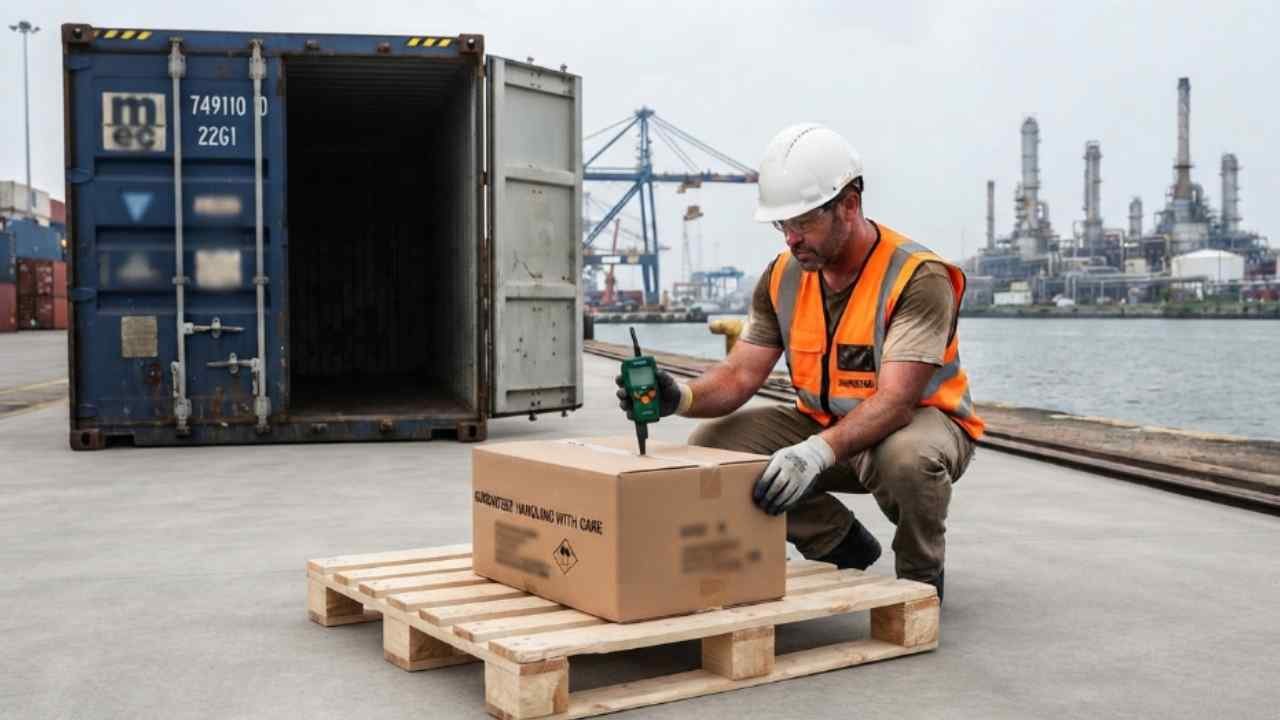
Dive Deeper into Precursor Volatilities, Hydrolytic Degradation, and Environmental Audits
Importers sourcing bulk benfotiamine must navigate several complex supply challenges to ensure product quality and delivery consistency. The primary challenge is raw material precursor volatility. The chemical synthesis of benfotiamine relies on critical intermediates, including thiamine hydrochloride5, phosphorus oxychloride, and benzoyl chloride. If any of these precursor markets experience localized energy rationing, environmental shutdowns, or raw material shortages, the primary benfotiamine factories are forced to reduce their utilization rates, leading to immediate market allocations.
Environmental regulations in major manufacturing hubs also pose a significant supply risk. In China, strict government audits and carbon-reduction policies frequently force chemical plants to suspend operations during high-pollution seasons or winter heating periods. Furthermore, transport-related degradation represents a severe hazard during maritime transit. Because benfotiamine is sensitive to moisture and heat, exposure to high temperatures inside shipping containers can trigger hydrolytic degradation of the S-benzoyl group, causing the compound to revert to standard thiamine monophosphate. Sourcing partners like FINETECH help importers mitigate these challenges by implementing strict moisture-barrier packaging standards, organizing temperature-controlled shipping logistics, and tracking real-time environmental policies in China to build sufficient inventory buffers.
| Sourcing Challenge | Underlying Root Cause | Impact on Sourcing Line | Sourcing Action Required |
|---|---|---|---|
| Precursor Shortage | High cost of thiamine & KOH | Extended lead times, cost spikes | Lock in forward raw materials |
| Environmental Audits | Government emission controls | Sudden factory operating halts | Keep 3 months of buffer stock |
| Hydrolysis in Transit | High container humidity & heat | Potency loss, chemical decay | Require vacuum-sealed double bags |
| Trade Barriers | Anti-dumping duties & tariffs | Inflated landed costs per drum | Verify tariff compliance routes |
How Does Production Capacity Influence Benfotiamin Availability?
Overlooking factory utilization rates and maintenance schedules in highly consolidated chemical zones leads to sudden supply allocations and price spikes.
Because benfotiamine synthesis is concentrated in a few specialized chemical plants, any capacity constraints, energy rationing, or routine summer maintenance shutdowns instantly reduce global availability and inflate spot-market prices.

Dive Deeper into Plant Consolidation, Energy Rationing, and Maintenance Turnarounds
Because the synthesis of benfotiamine is a highly specialized chemical process requiring advanced pressure equipment, automated temperature controls, and rigorous safety protocols, the global production capacity is consolidated within a few key chemical plants. This high level of consolidation means that the global availability and spot pricing of benfotiamine are dependent on the utilization rates of these centralized facilities. When major factories operate at high capacities, global supply remains stable, and market prices soften.
However, any localized disruption at a primary facility can trigger immediate supply contractions. For instance, routine annual maintenance turnarounds, which typically occur during the summer months of July and August and last for several weeks, temporarily halt production and reduce spot availability. Regional energy rationing or localized raw material bottlenecks also force manufacturers to lower their utilization rates, causing lead times to extend from weeks to months and spot prices to spike. Sourcing partners like FINETECH mitigate these capacity risks by closely monitoring the operating status of major Chinese chemical plants, providing buyers with real-time market intelligence to help them secure allocations before seasonal shutdowns or energy-related price increases take effect.
| Capacity Factor | Operational State | Impact on Spot Pricing | Impact on Sourcing Lead Times |
|---|---|---|---|
| High Utilization | Stable manufacturing (90%+) | Flat/Stable baseline prices | 2 to 4 weeks (Fast shipment) |
| Summer Maintenance | Scheduled annual shutdowns | Rising spot pricing waves | 6 to 8 weeks (Delayed queue) |
| Energy Rationing | Restricted local power grids | Sharp price increases | 8 to 12 weeks (Severe backlog) |
| Plant Consolidated | Concentrated supply base | Susceptible to sudden spikes | Requires priority partner status |
What Sourcing Strategies Help Ensure Stable Benfotiamin Supply?
Relying purely on spot-market transactions during global supply contractions leaves buyers vulnerable to severe volume shortages. Structured procurement programs safeguard long-term material pipelines.
Strategic sourcing models include establishing geographic dual-sourcing, locking in volume-hedging forward contracts, maintaining off-season safety buffers, and leveraging ground-level sourcing agencies to secure priority factory allocations.

Dive Deeper into Dual-Sourcing, Forward Contracting, and Regional Safety Buffers
To protect their production lines from the price volatility and supply disruptions characteristic of the chemical raw material market, global procurement teams must implement a structured, multi-tiered sourcing strategy. Relying solely on spot-market transactions exposes dietary supplement brands to extreme price peaks and unexpected delivery delays. A primary strategy for ensuring supply stability is implementing a dual-sourcing model. By balancing high-volume, cost-effective contracts with primary Chinese manufacturers alongside secondary agreements with Indian or European compliant API suppliers, buyers maintain cost competitiveness while establishing a critical geographic safety net.
Additionally, buyers should utilize forward contracting to lock in volume allocations and fixed pricing during off-season periods when factory operating rates are stable. Maintaining a three-to-six-month safety buffer of raw material in climate-controlled regional warehouses further insulates production lines from shipping bottlenecks or environmental shutdowns. Sourcing partners like FINETECH facilitate these strategic procurement programs. By representing buyers directly in China, they manage annual volume negotiations, physically audit factory inventories to confirm batch consistency, and verify that all shipments comply with strict international regulatory standards, protecting the buyer's specialty nutrient supply chain.
| Strategic Action Plan | Operational step | Sourcing Benefit | Sourcing Safety Outcome |
|---|---|---|---|
| Dual-Sourcing Model | Blend Chinese & Indian lines | Geographical diversification | Mitigates local factory shutdowns |
| Forward Contracting | Pre-book off-season volumes | Locks in competitive pricing | Avoids peak summer spot price waves |
| Warehouse Buffers | Hold 3-6 months safety stock | Insulates cleanroom lines | Prevents shipping bottleneck halts |
| Ground Agency Audit | Partner with local inspectors | Direct physical factory checks | Guarantees FSSC-compliant cargo |
Conclusion
The global benfotiamine supply market is shaped by dominant Chinese chemical production centers, strict regulatory compliance audits to ensure ninety-eight to one hundred and two percent active assays, raw precursor and environmental restrictions, highly centralized plant capacities, and the implementation of forward contracts managed by experienced ground-level sourcing partners.
-
This official US FDA guidance (ICH Q7) covers Good Manufacturing Practice requirements for active pharmaceutical ingredients, detailing facilities, process controls, and validation standards. ↩
-
This U.S. Pharmacopeia (USP) page presents resources, quality standards, and monograph development pipelines for herbal medicines and dietary ingredients. ↩
-
This FDA portal outlines Current Good Manufacturing Practice (CGMP) regulations, outlining operational mandates for facilities, equipment, and document controls. ↩
-
This educational primer from Waters Corporation explains the operational mechanisms, instrument configurations, and quantitation methods of liquid chromatography (HPLC). ↩
-
This PubChem record details the chemical composition, physical properties, synonyms, and nutritional applications of thiamine hydrochloride (vitamin B1). ↩