
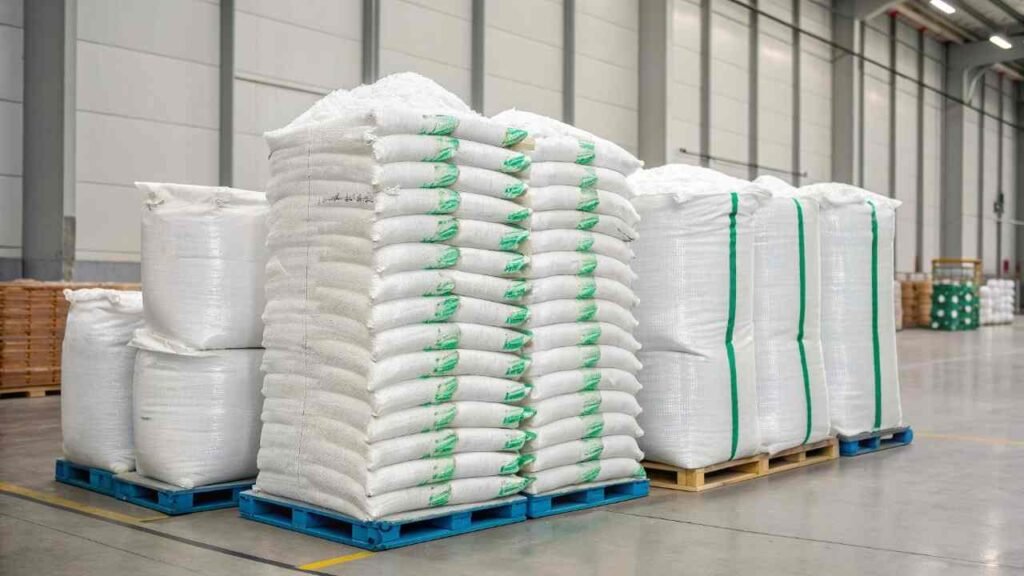
Want to place a small order, but suppliers demand huge quantities? This high barrier to entry stops you from testing new suppliers or managing your inventory flexibly.
The typical MOQ for Potassium Sorbate for export is one full pallet (1,000 kg). However, flexible suppliers can offer lower MOQs (500 kg) for trial orders, while a Full Container Load (20,000 kg) achieves the best pricing and logistical efficiency.
One of the first questions a new client asks concerns my Minimum Order Quantity (MOQ). For a professional buyer, it is a matter of flexibility, risk management, and economics. The MOQ is not an arbitrary number; it reflects the real-world costs of production and logistics. Understanding the “why” behind the MOQ is key to a smart negotiation.
Why Do Suppliers Set MOQ for Potassium Sorbate?
Are you frustrated by high MOQs that seem designed to shut out your business unless it is a massive order? This can feel like an arbitrary and unfair barrier.
Suppliers set MOQs to cover the high fixed costs of production, packaging, and export documentation. A minimum quantity is required to make a single production batch and an international shipment economically viable, ensuring the business can operate profitably.
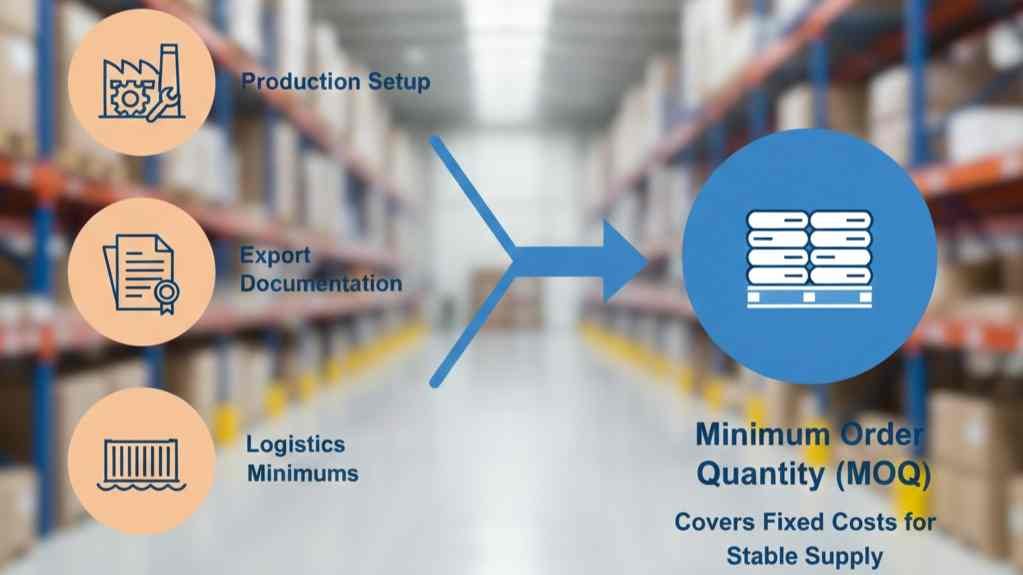
An MOQ exists because of fixed costs1. Every production run has setup costs, and every export shipment has fixed costs for documentation and administration. Spreading these costs over a tiny order would make the per-kilogram price extremely high. The typical MOQ of one pallet (1,000 kg)2 is the point where these fixed costs become reasonable and the shipment becomes logistically efficient.
Fixed Costs per Kilogram vs. Order Size:
| Cost Component | 100 kg Order (High per kg) | 1,000 kg Order (Lower per kg) |
|---|---|---|
| Production Setup | Very High | Low |
| Documentation & Admin | Very High | Low |
| Logistics Minimum Charges | High | Optimized |
| Total Fixed Cost per kg | Very High | Reasonable |
How Can Buyers Negotiate Lower MOQ for Potassium Sorbate?
Do you need a smaller quantity to test a new supplier, but their 1,000 kg MOQ is just too high? This forces you to either take a big risk or not try at all.
Buyers can negotiate lower MOQs by demonstrating strong future potential, offering to pay a higher per-kilogram price to cover the supplier's fixed costs, or consolidating their order with other products from the same supplier to create an efficient overall shipment.

While my standard MOQ is one pallet, I am always flexible for a serious potential partner. The three best ways to negotiate a lower MOQ are: 1) Show your long-term potential by framing the small order as a trial for future, larger business. 2) Offer to pay a price premium on the smaller quantity to compensate for the lower efficiency. 3) Consolidate the order with other products you need from me to create a larger, more efficient total shipment.
Effective MOQ Negotiation Strategies:
| Strategy | How It Works | Likelihood of Success |
|---|---|---|
| Show Future Potential | Frame the small order as a "trial for a larger contract." | High (for relationship-focused suppliers like me). |
| Offer a Higher Price | Directly compensate the supplier for their inefficiency. | Very High (this is a direct business solution). |
| Consolidate Products | Create a larger, more efficient total order. | High (if I supply other products you need). |
How Does MOQ Affect Potassium Sorbate Pricing?
Are you wondering why the price for a small order is so much higher per kilogram? It can feel like you are being penalized just for not being a giant corporation.
MOQ has a direct, inverse relationship with pricing. Higher order volumes allow the high fixed costs of production and logistics to be spread over more kilograms, resulting in a significantly lower per-unit cost. The largest price drop occurs when moving from LCL to FCL.
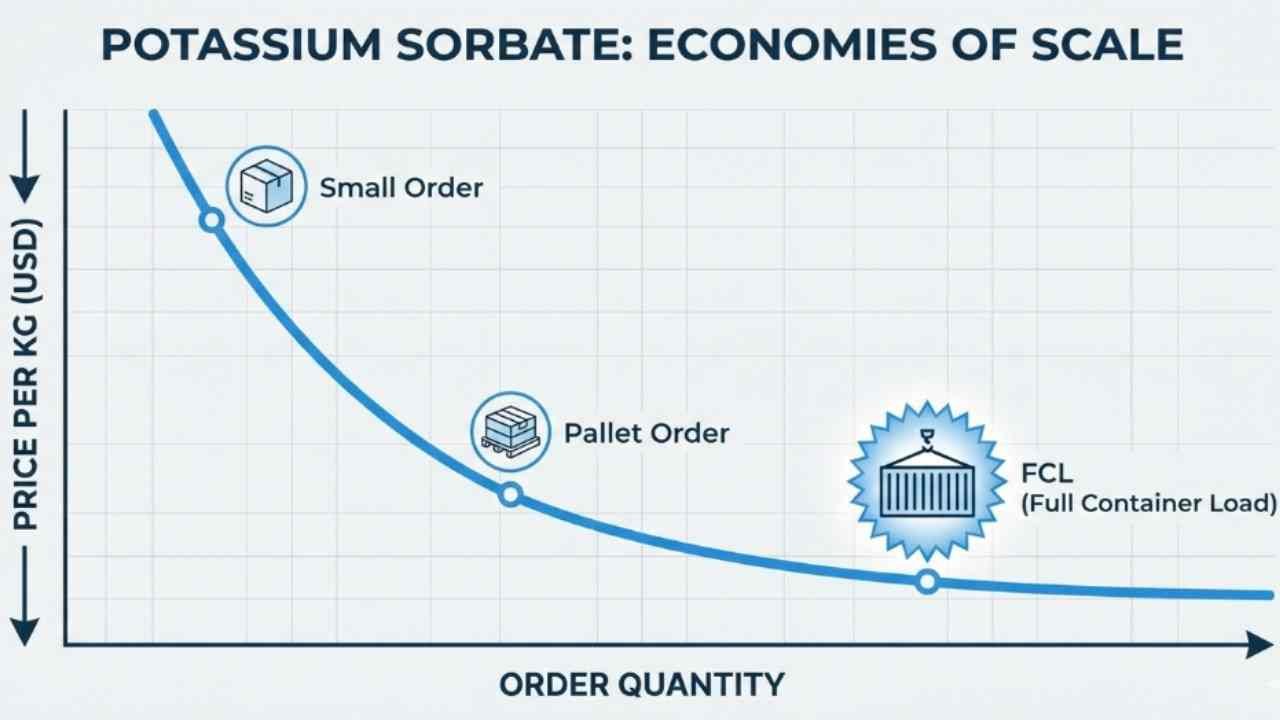
The relationship between MOQ and price is simple: the more you buy, the cheaper the price per unit. This is due to economies of scale3. Larger orders spread fixed costs over more kilograms. The biggest price drop happens when you move from LCL (Less than Container Load) to FCL (Full Container Load), which is 20 tons. The FCL freight cost per kilogram is dramatically lower, a saving I pass directly to my clients.
Illustrative Pricing Tiers:
| Order Quantity (kg) | Shipping Method | Price / kg (Example) | Why the Price is Different |
|---|---|---|---|
| 500 | LCL | $3.50 | High fixed costs, inefficient LCL shipping. |
| 1,000 | LCL | $3.20 | More efficient pallet unit. |
| 20,000 | FCL | $2.80 | Maximum volume discount + massive FCL freight savings. |
What MOQ Is Suitable for Trial Potassium Sorbate Orders?
You need to test a new supplier's quality before committing to a large contract, but a 1,000 kg MOQ feels like too big a risk for a first-time purchase.
A suitable MOQ for a formal trial order is typically one full pallet (1,000 kg). However, a flexible supplier should be willing to support a smaller initial trial of 250-500 kg for a serious potential partner, often at a slightly higher per-kilogram price.
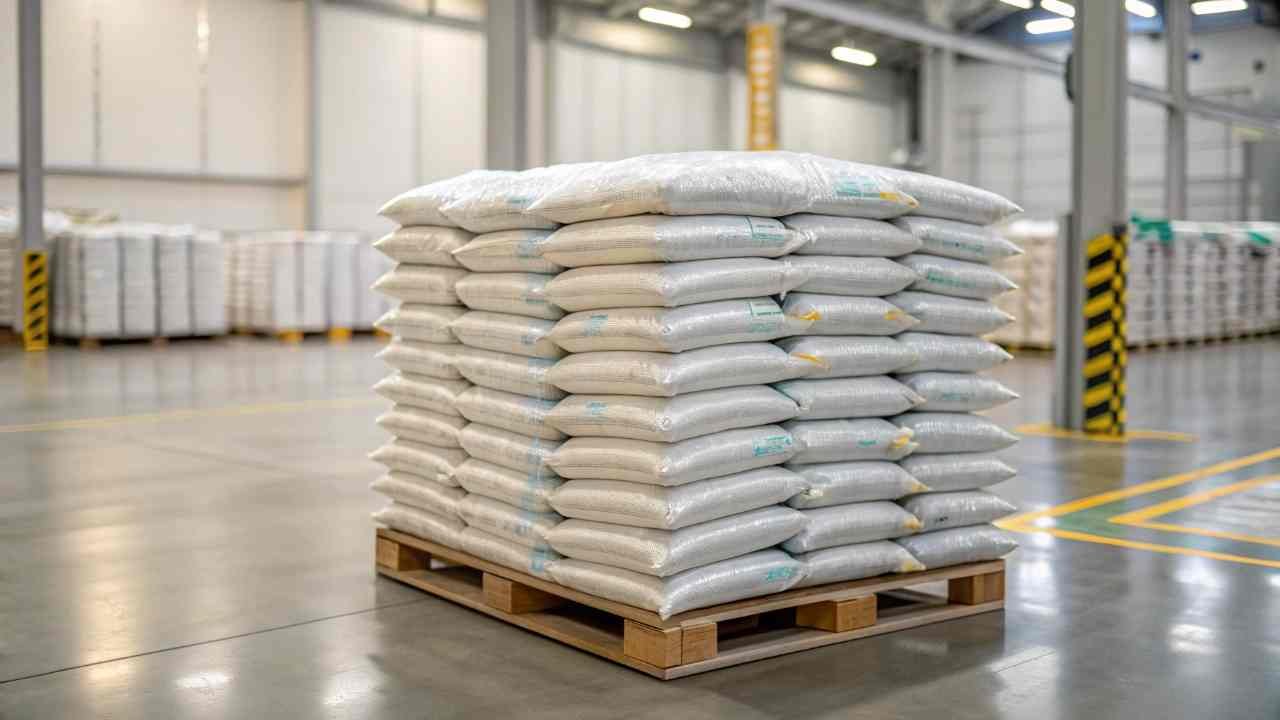
The ideal trial order is large enough for a real factory test but small enough to manage risk. The standard is one pallet (1,000 kg). This is logistically efficient and gives you plenty of material for a full production trial. However, as a flexible partner, I am always willing to discuss a smaller trial of 250-500 kg for a serious new client. This lowers your initial risk while still allowing us to build a professional relationship.
Trial Order Size Comparison:
| Trial Size (kg) | Pros for the Buyer | Cons for the Buyer |
|---|---|---|
| 250 | Very low financial risk, easy to handle. | Highest per-kg cost, less efficient shipping. |
| 500 | A good balance of low risk and sufficient volume for testing. | Still has a price premium over a full pallet. |
| 1,000 | Best per-kg price for a trial, logistically efficient. | Higher initial financial commitment. |
When Does Higher MOQ Benefit Potassium Sorbate Buyers?
A high MOQ often seems like a disadvantage. You feel forced to tie up your cash and warehouse space in more inventory than you immediately need.
A higher MOQ, specifically a Full Container Load (20,000 kg), provides three major benefits to buyers: it unlocks the absolute lowest possible landed cost, it improves your own operational efficiency, and it dramatically enhances your supply chain security by creating a large safety stock.
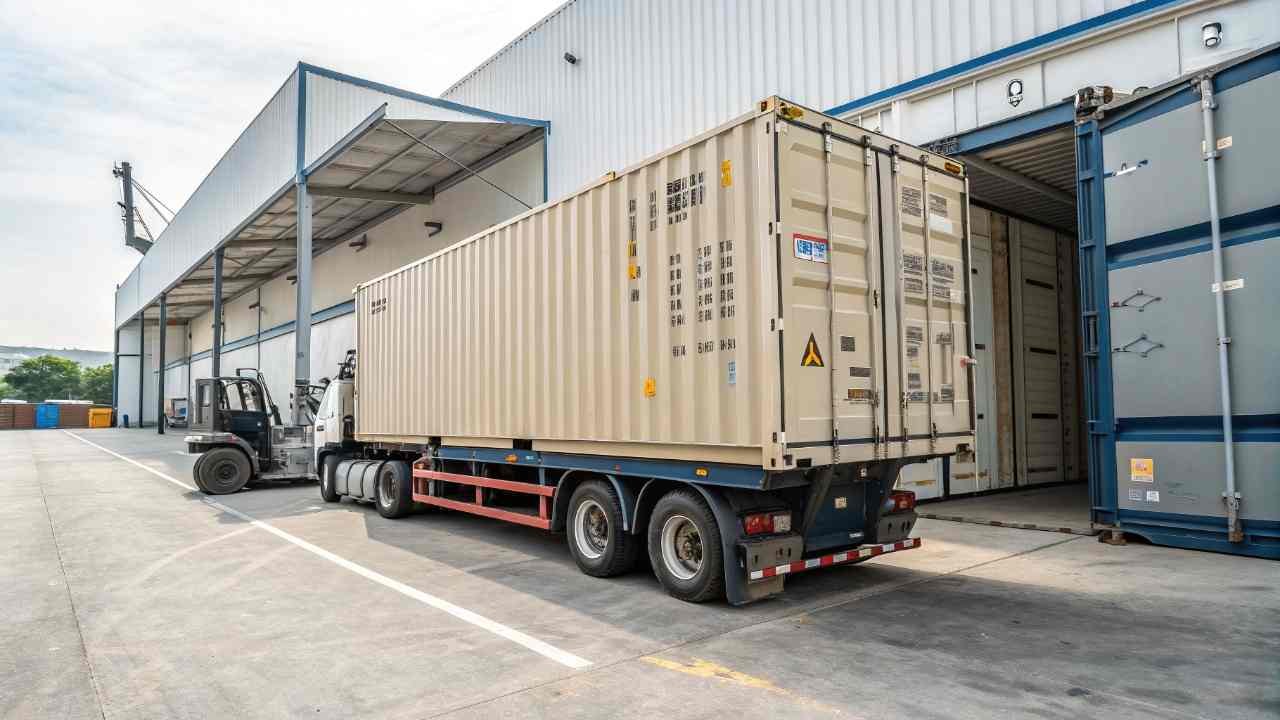
For a large buyer, a higher MOQ (a Full Container Load) is a powerful strategic advantage. First, it gives you the lowest possible landed cost4 by maximizing volume discounts and FCL freight savings. Second, it improves your operational efficiency5 with one order, one payment, and one customs clearance for a large volume. Third, and most importantly, it enhances your supply chain security by automatically creating a large on-site safety stock, making your production resilient to delays.
Key Benefits of a Full Container Load (20-ton MOQ):
| Benefit | Description | Strategic Impact on Your Business |
|---|---|---|
| Lowest Landed Cost | FCL freight savings + maximum volume discount. | Improves profit margins and increases your competitiveness. |
| Operational Efficiency | One order, one payment, one customs clearance. | Reduces administrative overhead and simplifies operations. |
| Supply Chain Security | Creates a large on-site safety stock. | Makes your production resilient to disruptions and delays. |
Conclusion
MOQ is not a barrier; it is a reflection of economic reality. Understanding it allows you to negotiate smartly and make strategic decisions that lower your costs and secure your supply.
-
Understanding fixed costs is crucial for businesses to manage expenses and set competitive prices. ↩
-
Exploring this concept helps businesses optimize their supply chain and understand cost efficiency. ↩
-
Understanding economies of scale can help you grasp how bulk purchasing can lead to significant cost savings. ↩
-
Understanding landed costs can help you optimize your shipping expenses and improve profitability. ↩
-
Exploring strategies for operational efficiency can lead to significant cost savings and streamlined processes. ↩