
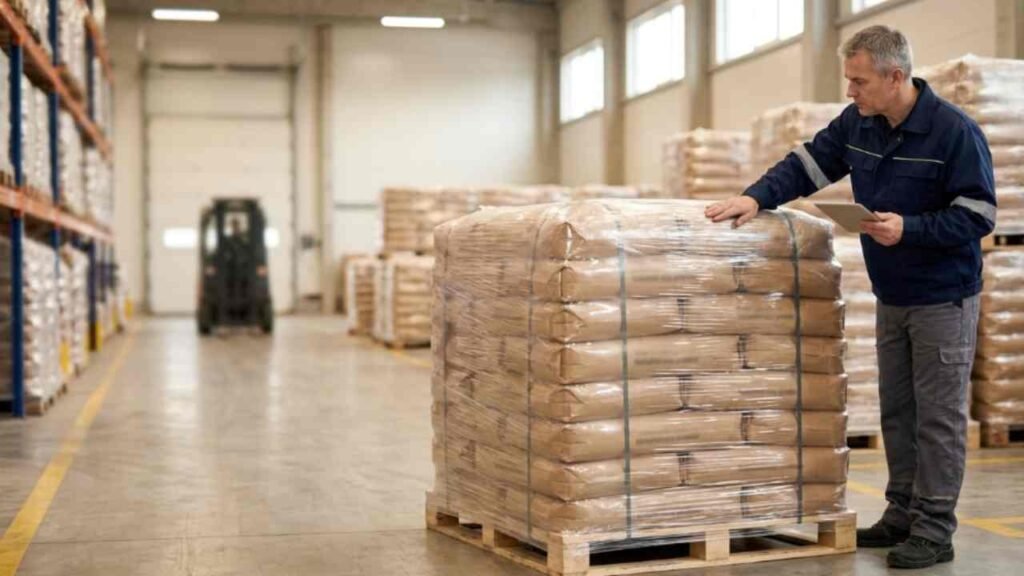
Damaged packaging leads to moisture contamination and massive financial loss. These logistics errors stop your production lines immediately. I show you how professional packaging protects your soy protein cargo during export.
The best packaging for Isolated Soy Protein export includes 20kg or 25kg multi-wall Kraft paper bags with food-grade PE inner liners. These bags must be palletized, shrink-wrapped, and fitted with corner protectors to prevent moisture, tearing, and contamination during long-distance sea or rail transit to international markets.
I manage factory selection and oversee production for my B2B clients at FINETECH. I visit Chinese plants to audit their packing lines because your brand safety depends on technical accuracy. I want to share the technical facts about Isolated Soy Protein (ISP) packaging so you can secure your supply chain and protect your profit margins.
What packaging sizes are commonly used for bulk Isolated soy protein shipments?
Using the wrong bag size increases your labor costs and slows down your mixing line. Inefficient packaging also wastes your warehouse space. I detail the standard sizes for international bulk trade.
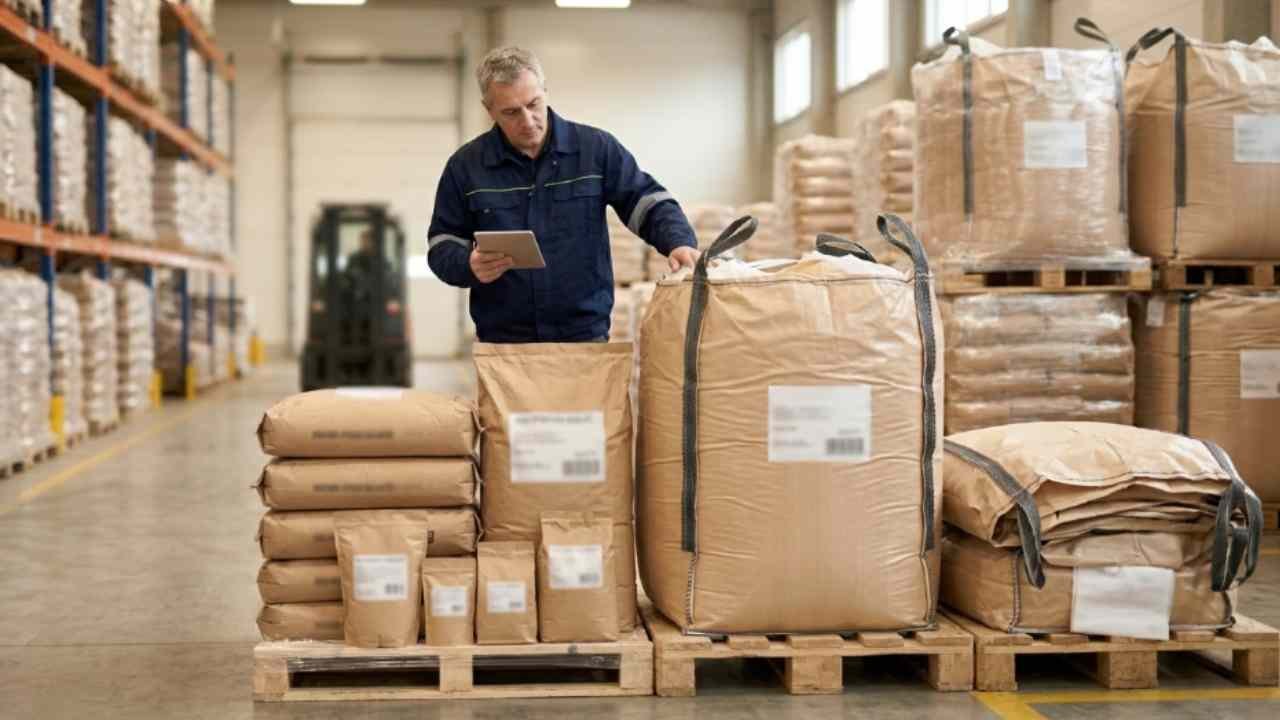
Isolated Soy Protein is primarily shipped in 20kg or 25kg bags. Most global manufacturers use 20kg bags to match standard recipe measurements. Large industrial users may request 500kg to 1,000kg jumbo bags for high-volume automated production lines to reduce manual handling time and packaging waste.
Dive Deeper into Packaging Dimensions
I see that the 20kg bag is the most popular choice for my clients in Southeast Asia and the Middle East. Most food factories build their recipes around 20kg units. This makes it easy for workers to dump one full bag into the mixer without weighing it again. I act as your strategic office to ensure the factory uses high-quality Kraft paper. This paper must have at least three layers to resist bursting. If a bag breaks in the container, it creates a mess and wastes your money. I visit the packing area to check the bag strength before any order is filled. I want to see that the bags can survive being stacked 10 layers high on a pallet.
Jumbo bags, or FIBCs1, are a different technical solution. These are used by massive meat processing plants or beverage factories. One jumbo bag can hold 500kg to 1,000kg of protein. These bags require forklifts and special unloading equipment. I prioritize these for my largest wholesale clients who want to save on labor costs. However, jumbo bags have a risk. If the outer fabric tears, you lose a huge amount of product at once. I ensure that jumbo bags for export always have an extra-thick internal liner. I also check the "Loop Strength" of the bag. The loops must be strong enough to stay safe during sea transit. I use these technical checks to pick the best packing format for your specific warehouse setup.
Standard Export Packaging Comparison
| Packaging Type | Standard Weight | Material | Best For | FINETECH's Quality Tip |
|---|---|---|---|---|
| Small Bulk Bag | 20 kg | Multi-wall Kraft | Manual mixing lines | Check for heat-sealed liners |
| Standard Bag | 25 kg | Multi-wall Kraft | General wholesale | Verify bag burst strength |
| Jumbo Bag (FIBC) | 500 kg | Woven PP + PE | Automated factories | Check loop safety factor |
| Super Jumbo | 1,000 kg | Woven PP + PE | High-volume buyers | Ensure pallet stability |
| Retail Ready | 1 kg - 5 kg | Foil / Stand-up | Direct distribution | Audit seal integrity |
| Samples | 500g - 1kg | Foil pouch | Quality testing | Use vacuum sealing |
Why are moisture-proof liners important for Isolated soy protein packaging?
Humidity turns high-quality protein into hard, moldy clumps. This damage makes the product unusable for food production and ruins your reputation. I explain how moisture-proof liners act as your first line of defense.
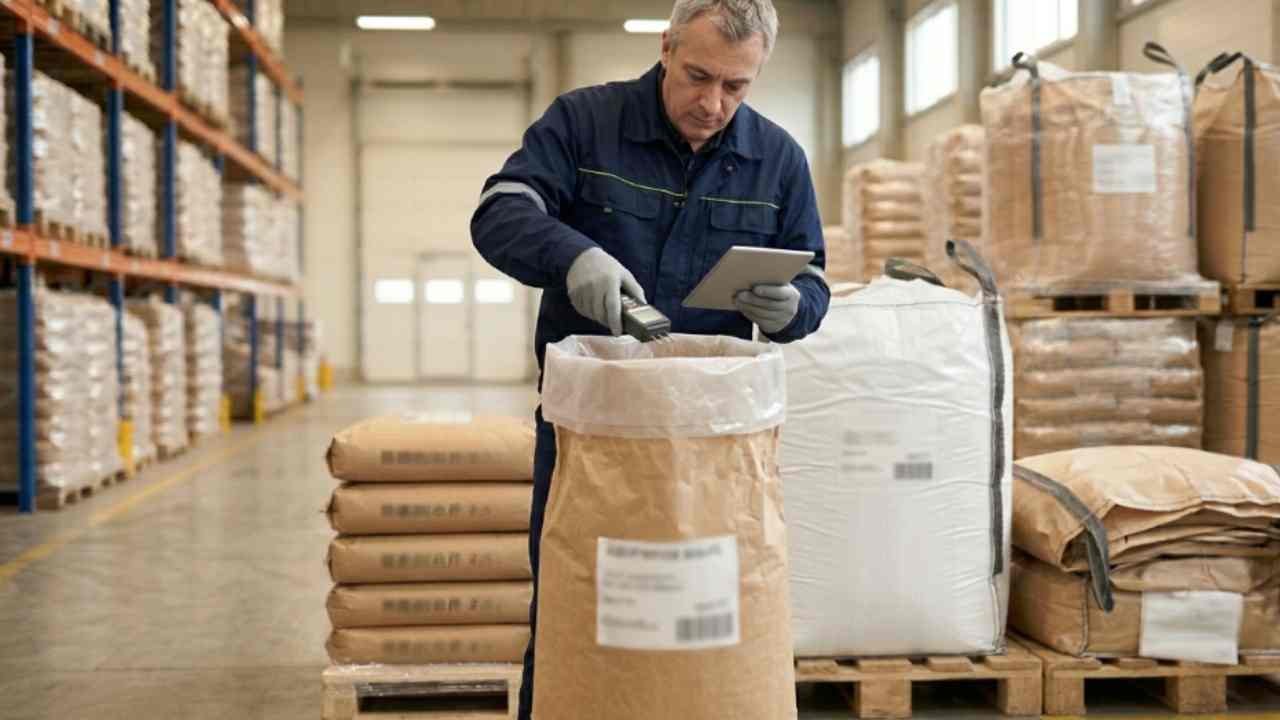
Moisture-proof liners are essential because soy protein is hygroscopic and attracts water from the air. Food-grade Polyethylene (PE) liners prevent humidity, odors, and bacteria from entering the bag. This preserves the protein’s gelling and emulsification properties during humid sea transit through tropical shipping routes.
Dive Deeper into Liner Technology
I see that "Moisture" is the biggest enemy of soy protein. Isolated Soy Protein is a very fine powder. It has a large surface area that sucks up water. If the moisture level rises above 7%, bacteria can grow. I act as your technical eyes to check the thickness of the PE liners. A standard liner should be at least 0.05mm to 0.08mm thick. If the liner is too thin, it will get tiny holes during shipping. This allows the sea air to enter the bag. I visit the factories to oversee the sealing process. I prefer heat-sealing over just tying the bag with a string. Heat-sealing creates a 100% airtight barrier.
The liner also protects the protein from odors. Soy protein is neutral in flavor, but it can absorb smells from the shipping container. If the container previously held chemicals or strong-smelling wood, the protein will taste bad. I ensure the PE liners are made from "Virgin" food-grade material. This means the plastic has no smell of its own. I also check for "Anti-Static" properties in the liner. Static electricity can make the powder stick to the plastic. This makes it hard to empty the bag completely. By focusing on these technical details, I ensure that the 20 tons of protein you receive is just as fresh as the day it was made.
| Liner Feature | Technical Requirement | FINETECH's Verification | Benefit to Buyer |
|---|---|---|---|
| Material | Virgin Food-Grade PE | Check MSDS of plastic | Safety and no odors |
| Thickness | 50 - 80 Microns | Micrometer test | High puncture resistance |
| Seal Method | Heat-Sealing | Visual inspection | 100% moisture barrier |
| Oxygen Barrier | Low permeability | Review lab data | Prevents protein oxidation |
| Anti-Static | Surface treatment | Touch test | Easy to empty bag |
| Color | Clear or Blue | Visual check | Easy to see impurities |
How does packaging affect the shelf life of Isolated soy protein?
Poor sealing exposes protein to oxygen and light, causing rancidity and bad smells. This shortens the shelf life and ruins your inventory value. I show you the link between professional packaging and product stability.
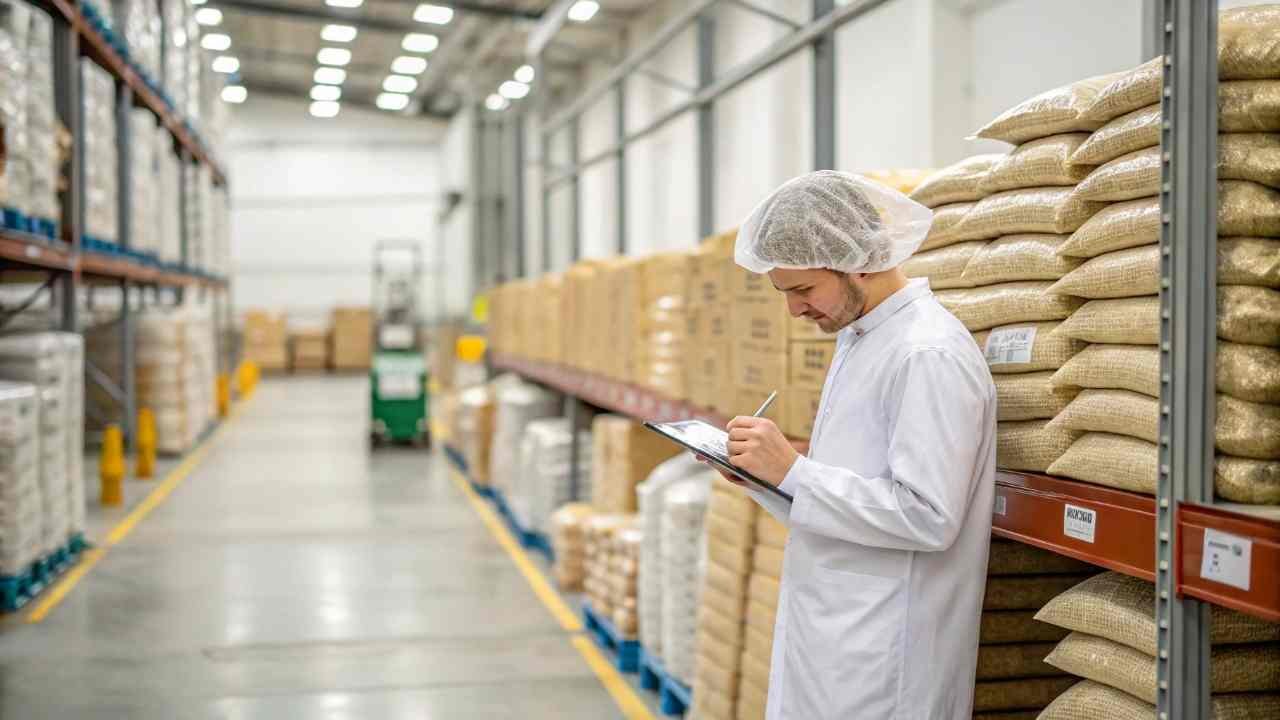
High-quality packaging extends Isolated Soy Protein shelf life to 24 months. Multi-layer Kraft paper blocks light, while sealed PE liners prevent oxidation. This protective barrier maintains the chemical purity, neutral flavor, and functional performance of the protein until it reaches the final food manufacturer.
Dive Deeper into Shelf Life Factors
I see that shelf life is a technical promise to your customers. If the packaging fails, the protein fails. Isolated Soy Protein contains a very small amount of fat. If oxygen gets into the bag, this fat can turn rancid. This creates a "painty" or "cardboard" taste in your final food product. I act as your strategic office to ensure the Kraft paper bags are "Light-Proof." Light can trigger chemical reactions that break down the protein. I prioritize bags with at least three layers of heavy-duty paper. This creates a dark environment for the powder. I also monitor the "Oxygen Transmission Rate2" (OTR) of the liners.
Another factor is "Microbial Stability." If the bag is not sealed well, spores from the air can enter. In a warm warehouse, these spores can turn into mold. I visit the factories to audit their "Clean-Room" packing area. The air in the packing room must be filtered. This ensures that the air trapped inside the bag is clean. I also check the moisture content of the protein before it is packed. It must be below 7%. I use these technical markers to guarantee a 2-year shelf life for my wholesale clients. This allows you to buy in bulk and store the product without worrying about quality loss. I provide the lab reports to prove the stability of every batch we ship.
| Factor | Packaging Solution | FINETECH's Oversight | Result |
|---|---|---|---|
| Oxidation | Sealed PE Liners | Check seal integrity | Prevents rancid smells |
| Light Exposure | Multi-wall Kraft Paper | Count paper layers | Maintains neutral color |
| Humidity | Thick plastic barrier | Measure liner thickness | Prevents clumping |
| Bacteria | Clean-room packing | Audit HEPA filter logs | Zero mold growth |
| Pests | Reinforced outer bag | Inspect bag material | Prevents insect entry |
| Odors | Odorless virgin PE | Smell test liners | Pure flavor profile |
What labeling information is required for Isolated soy protein exports?
Incorrect labels lead to customs seizures and expensive port delays. Missing information can stop your cargo from entering the market entirely. I list the mandatory technical details for global compliance and smooth clearance.
Mandatory export labels include the product name (Isolated Soy Protein), batch number, production and expiry dates, net weight, and manufacturer details. For international trade, labels must also specify GMO status, allergen warnings (Soy), Halal or Kosher certifications, and storage instructions in the required destination language.
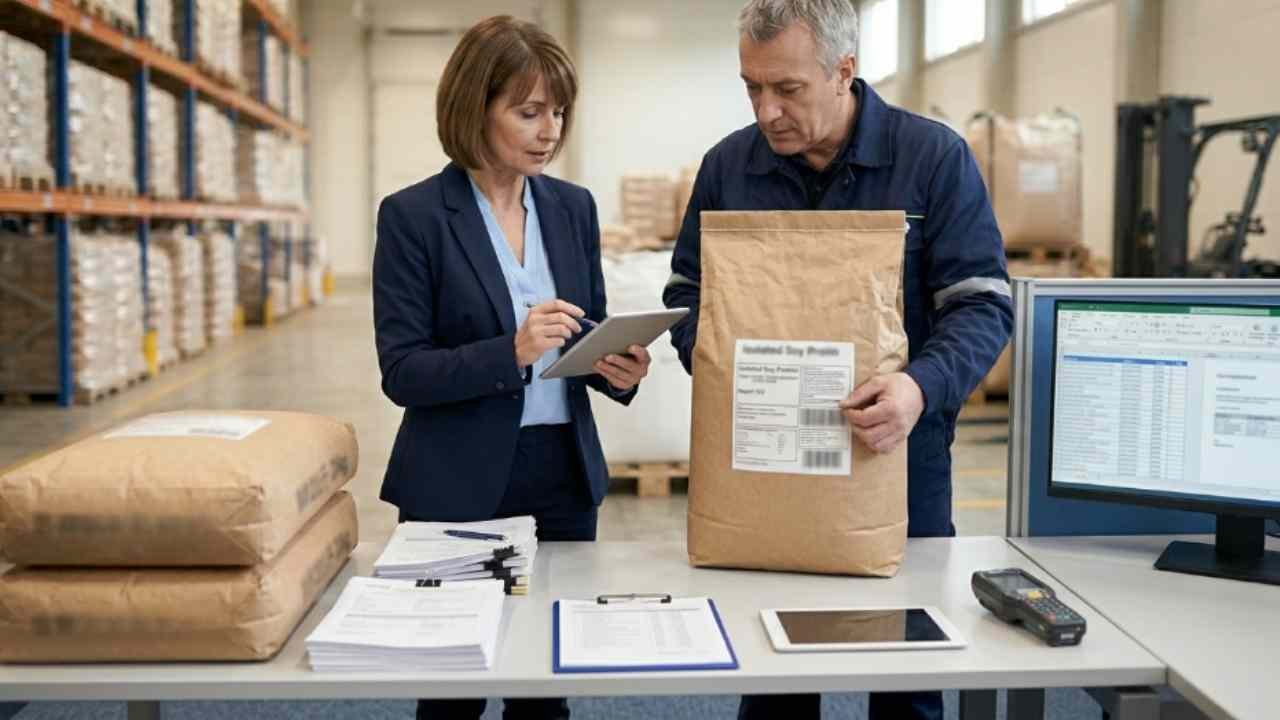
Dive Deeper into Labeling Standards
I see that "Labels" are a legal requirement that varies by country. For my clients in the Middle East, we must include the Halal logo and sometimes an Arabic translation. For European clients, the "Non-GMO" claim is the most important part. I act as your technical coordinator to check the label design before the factory starts printing. I want to see that the font is clear and the ink does not smudge. If the batch number is unreadable, you lose your traceability. I ensure that every bag has a unique batch number that matches the Certificate of Analysis (COA). This link is vital for food safety audits in your country.
Allergen warnings3 are another critical technical detail. Since the product is 100% soy, the label must clearly state "Contains Soy." This is a law in almost every country. I also check the storage instructions. The label must say "Store in a cool, dry place." I also ensure the "Net Weight" is accurate. Customs officers often weigh bags to check for fraud. I visit the factory to check their scales. The scale must be calibrated every day. I use these checks to ensure your cargo passes through customs without any fines or delays. I also help you prepare the "Shipping Marks" for the pallets. These marks help the warehouse workers find your cargo quickly in a busy port.
| Label Detail | Requirement | FINETECH's Verification | Why It Matters |
|---|---|---|---|
| Product Name | Isolated Soy Protein | Check for clear font | Identifies the cargo |
| Batch Number | Unique per production | Match with COA report | Essential for recalls |
| Dates | Pro. and Exp. Dates | Check the 2-year limit | Ensures fresh stock |
| GMO Status | Non-GMO or GMO | Verify IP certification | Vital for EU markets |
| Allergen | Contains Soy | Bold or underlined text | Legal safety requirement |
| Certs | Halal / Kosher / ISO | Check logo validity | Access to religious markets |
How should Isolated soy protein be stored before international distribution?
Improper storage at the port or warehouse ruins the product before it even ships. Heat and dampness destroy protein quality silently over time. I explain the technical storage rules for protecting your bulk protein investment.
Isolated Soy Protein must be stored in a cool, dry, and well-ventilated warehouse with temperatures below 25°C and humidity under 60%. Bags should be stored on pallets off the floor to prevent moisture absorption and kept away from strong odors, direct sunlight, and potential pests.
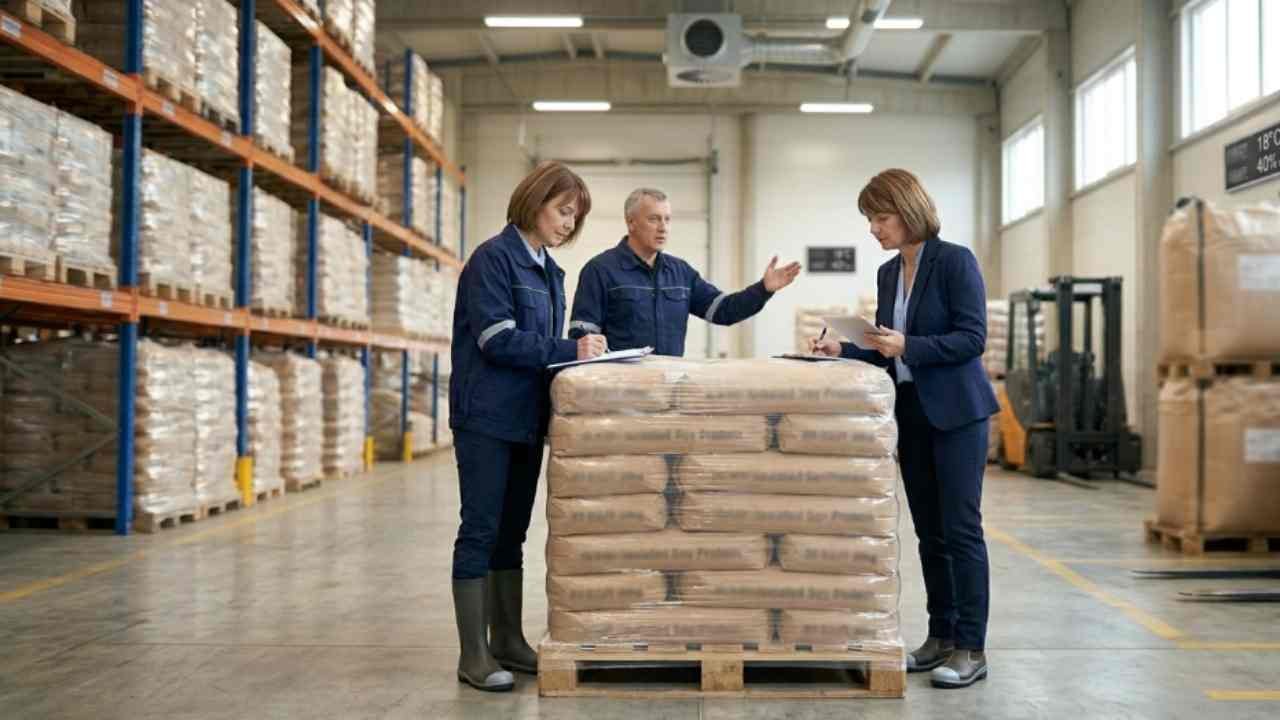
Dive Deeper into Storage Science
I see that "Storage" is the final step where quality can fail. Even the best bag cannot protect the protein if it sits in a hot, wet warehouse for months. I act as your technical partner to audit the factory's storage area. I want to see a clean concrete floor and a high ceiling for good air flow. The bags must never touch the walls. This "Air Gap" prevents moisture from moving from the wall to the bag. I also check the "First-In, First-Out4" (FIFO) system. The factory must ship the oldest batch first. I verify the production dates on the pallets to ensure you get the longest possible shelf life.
Palletizing is a key part of storage. I insist that my clients use high-quality pallets. For export, we use heat-treated wood pallets with the IPPC5 stamp. This is a technical requirement to prevent the spread of wood-boring insects. I also oversee the "Shrink-Wrapping" process. We use multiple layers of plastic film to tie the bags to the pallet. This makes the pallet stable. If a pallet leans, the bags can fall and tear. I also suggest using "Slip Sheets" between the pallet and the first layer of bags. This provides one more barrier against moisture from the floor. I use these storage protocols to keep your protein in "Top Quality" condition until the moment it is loaded into the container.
| Storage Condition | Technical Limit | FINETECH's Audit Step | Risk of Failure |
|---|---|---|---|
| Temperature | < 25° Celsius | Check thermometer logs | Protein denaturation |
| Humidity | < 60% Relative | Audit hygrometer data | Clumping and mold |
| Pallet Type | IPPC Heat-Treated | Look for the stamp | Customs rejection |
| Floor Gap | Min 10 cm | Check pallet height | Dampness from ground |
| Wall Gap | Min 30 cm | Measure the space | Poor air circulation |
| Odors | Zero chemical smell | Walk-through sniff test | Flavor contamination |
Conclusion
Professional packaging, moisture-proof liners, and strict storage protocols are essential for maintaining Isolated Soy Protein quality during export. I manage these technical logistics at FINETECH to ensure your bulk shipments arrive safe and ready.
-
Wikipedia – Detailed overview of Flexible Intermediate Bulk Containers (FIBCs), covering safety classifications, structural parameters, and mechanical handling specifications. ↩
-
Wikipedia – Technical analysis of Oxygen Transmission Rate (OTR), describing the standard test methods (ASTM D3985) and measurement protocols for plastic barriers. ↩
-
US FDA – Public information resource detailing regulatory requirements for allergen warning declarations on consumer food labels, highlighting common allergen sources like soy. ↩
-
Investopedia – Explanatory guide detailing the First-In, First-Out (FIFO) method, showcasing its applications in operational inventory logistics to preserve freshness and minimize perishability risks. ↩
-
International Plant Protection Convention (IPPC) – Official international standards page outlining ISPM 15 protocols for phytosanitary regulation of wood packaging materials in international transport. ↩