

Importing contaminated or low-purity amino acids leads to failed consumer formulation assays and severe regulatory penalties. Sourcing blindly increases commercial risks. Verifying chemical standards protects bulk cargo quality.
Buyers must check amino acid quality standards by verifying HPLC active assays, specific optical rotation to confirm L-isomer purity, limits on heavy metals and residual solvents, and compliance with USP, EP, or AJI pharmacopoeia monographs.
Successful commercial operations require a disciplined approach to reviewing chemical parameters before dispatching bulk cargo. Sourcing managers must evaluate analytical reports to ensure formulation compliance. Sourcing partners like FINETECH simplify factory checks, verify production compliance, and secure competitive pricing directly in China to guarantee bulk deliveries. This guide explains the key quality standards to check.
How Is Amino Acid Series Quality Tested Before Delivery?
Accepting shipments without pre-delivery checks can lead to importing inactive isomers and contaminated powders. Relying on paper claims increases batch failure risk. Implementing advanced laboratory verification ensures potency.
Quality is tested before delivery using High-Performance Liquid Chromatography (HPLC) for active assays, polarimetry for optical rotation, Karl Fischer titration for moisture control, and Inductively Coupled Plasma Mass Spectrometry (ICP-MS) for heavy metal detection.
Dive Deeper into Chiral Polarimetry and Chromatographic Testing
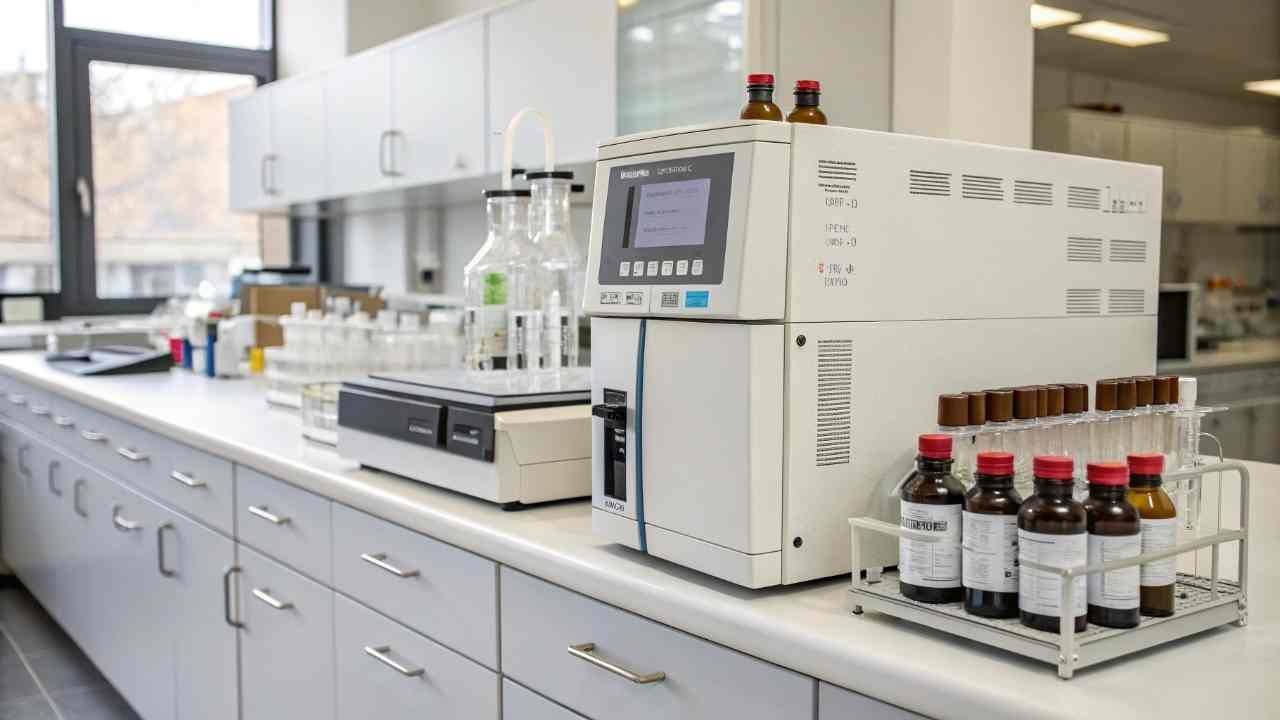
Modern chemical manufacturing requires rigorous instrument-based testing to verify raw material purity before cargo dispatch. The primary testing method is High-Performance Liquid Chromatography (HPLC)1, which separates the target amino acid from process impurities and degradation byproducts. By comparing peak areas against certified reference materials, technicians calculate the exact active percentage. Furthermore, because amino acids exist in stereoisomeric forms, chiral HPLC or polarimetry is essential to check optical rotation. Since biological systems primarily utilize L-amino acids, polarimetry measures how the chemical rotates polarized light. This test confirms the stereocenter purity and ensures the absence of inactive D-isomers.
In addition to optical testing, laboratories run Karl Fischer titration to measure exact moisture content (loss on drying). Excess water in dry powder can cause hydrolytic degradation and promote microbial growth. For safety, laboratories operate Inductively Coupled Plasma Mass Spectrometry (ICP-MS) to detect trace heavy metals2 like lead, arsenic, cadmium, and mercury. Thin-Layer Chromatography (TLC) is also utilized to check for ninhydrin-positive substances, ensuring no foreign nitrogenous compounds are present. Sourcing partners like FINETECH oversee these laboratory tests in China, reviewing raw chromatograms to ensure that every export batch satisfies USP, EP, or AJI standards.
| Analytical Test Type | Target Parameter Tested | Laboratory Equipment | Minimum Acceptable Standard |
|---|---|---|---|
| Active Assay | Percent amino acid purity | HPLC chromatograph | 98.5% to 101.5% (dry basis) |
| Stereo Purity | Specific optical rotation | Digital polarimeter | Must match AJI/USP monograph |
| Moisture Check | Loss on drying (LOD) | Karl Fischer titrator | Typically below 0.5% maximum |
| Heavy Metals | Lead, arsenic, cadmium | ICP-MS spectrometer | Below strict ppm safety limits |
What Specifications Should Buyers Confirm Before Purchasing Amino Acid Series?
Ordering raw ingredients without matching precise chemical limits can cause manufacturing blockages and regulatory failures in destination markets. Unmatched specifications waste capital. Confirming technical parameters prevents formulation errors.
Buyers must confirm the active assay percentage on a dried basis, specific optical rotation range, residue on ignition (sulfated ash limits), pH value, and physical state parameters such as mesh size and bulk density.
Dive Deeper into Mesh Sizes and Sulfated Ash Limits
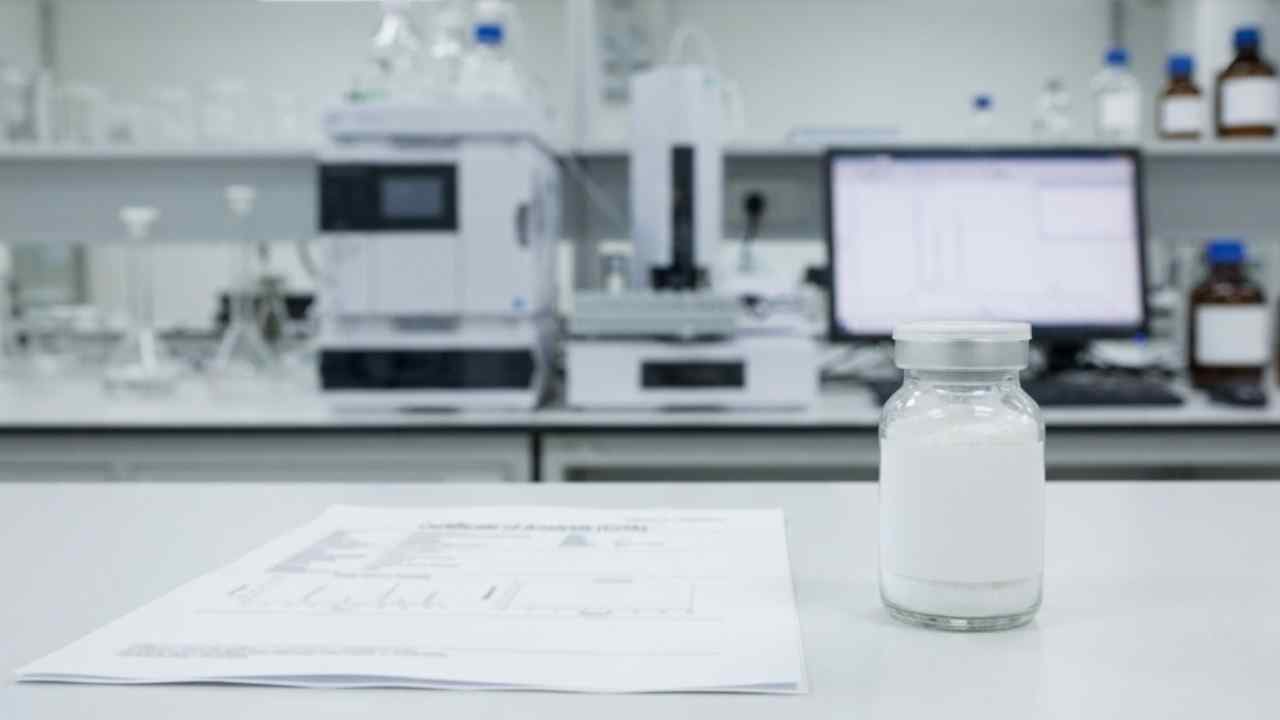
Confirming detailed product specifications on the Certificate of Analysis (COA) is a fundamental step to secure manufacturing compatibility. Buyers should first verify the active assay limits, which must fall within the ninety-eight point five percent to one hundred and one point five percent range on a dried basis. The next critical parameter is the specific optical rotation, which acts as a chemical fingerprint proving L-form biological activity. Any deviation in this value indicates batch contamination or isomerization.
Additionally, buyers must check the residue on ignition (sulfated ash limits), which measures inorganic impurities left after burning the sample. This value must remain below zero point one percent for pharmaceutical-grade ingredients3. The pH value of the dissolved solution must also be confirmed, as it influences the solubility and stability of the amino acid in final liquid formulations. For dry blending lines, physical specifications are equally important. Importers must define the mesh size (particle size distribution) and bulk density to ensure the powder flows smoothly through automatic hoppers without segregating or dusting. Sourcing partners like FINETECH help buyers map these technical limits, verifying that Chinese suppliers deliver specifications matching the exact requirements of final consumer products.
| COA Specification | Technical Parameter | Quality Significance | Industrial Target Limit |
|---|---|---|---|
| Assay (Dried Basis) | Active amino acid content | Ensures correct product dosage | 98.5% to 101.5% |
| Specific Rotation | L-isomer purity | Confirms biological activity | Specific to each amino acid |
| Residue on Ignition | Inorganic minerals | Measures mineral contamination | Below 0.1% maximum |
| Mesh Size | Particle size distribution | Controls powder flowability | Custom (e.g., 80 to 100 mesh) |
How Do Suppliers Ensure Consistent Amino Acid Series Quality?
Relying on manual production steps leads to high variance between batches and failed product quality checks. Uncontrolled manufacturing processes compromise quality. Automated process control secures consistent purity.
Suppliers ensure consistent quality by utilizing automated bioreactor controls for temperature, pH, and dissolved oxygen, executing strict cleaning-in-place (CIP) protocols, and maintaining traceability from vegetable feedstocks to finalized crystal powder.
Dive Deeper into Automated Fermentation and Downstream Crystallization
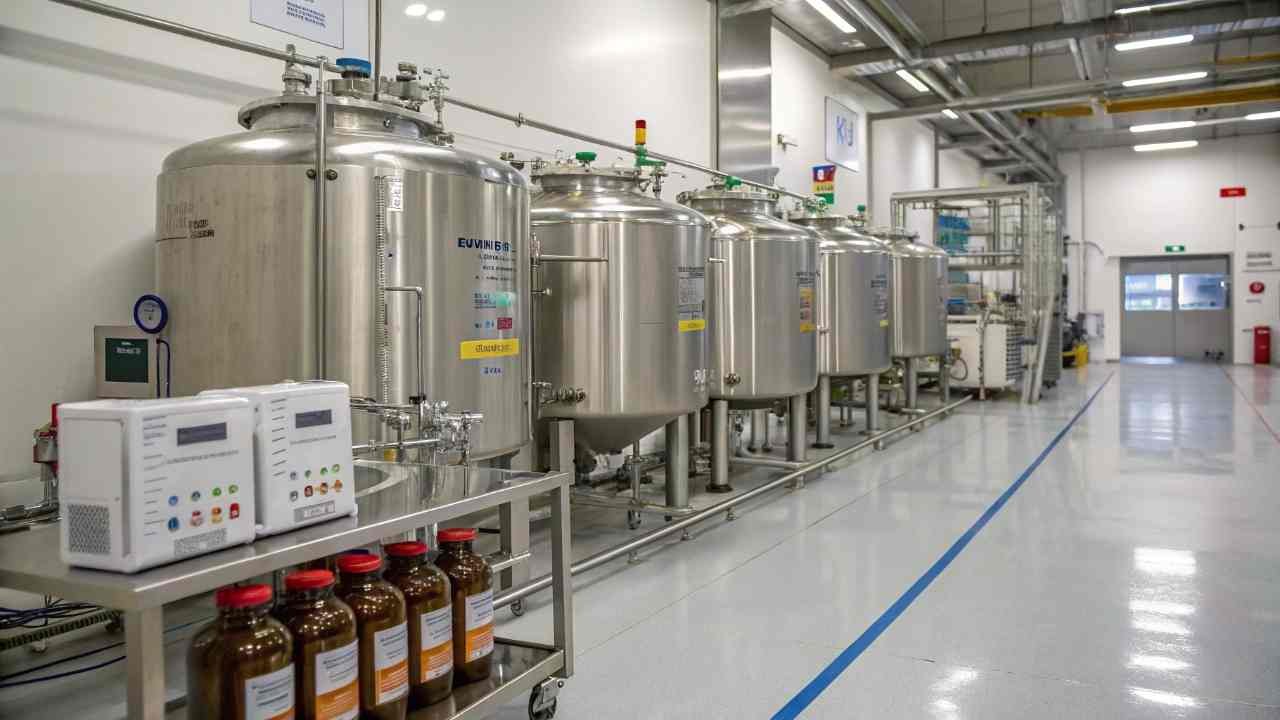
Maintaining batch-to-batch consistency in large-scale amino acid production requires advanced engineering and standardized manufacturing practices. Because commercial amino acids are primarily produced through microbial fermentation, the bioreactor environment must be controlled precisely. Modern factories utilize automated distributed control systems (DCS) to monitor critical variables like temperature, pH, dissolved oxygen, and nutrient feeding rates in real time. Any minor fluctuation in these parameters can alter bacterial metabolism, leading to unwanted organic acid byproducts and low fermentation yields.
Once fermentation is complete, downstream processing must be highly standardized to ensure purity. Factories implement multi-stage filtration, membrane separation, and cleanroom crystallization. The recrystallization stage is particularly sensitive, as temperature cooling rates dictate crystal size, flowability, and bulk density. Furthermore, manufacturers execute automated cleaning-in-place (CIP) and sanitation cycles between batches to prevent cross-contamination in shared equipment lines. Traceability is maintained throughout the process, linking every finished drum of powder back to the specific batch of glucose or corn starch feedstocks. Sourcing partners like FINETECH audit these manufacturing protocols directly in China, checking automated records and cleanroom logs to confirm that the supplier can deliver consistent, high-purity cargo.
| Production Stage | Control Mechanism | Technology Utilized | Target Sourcing Benefit |
|---|---|---|---|
| Fermentation | Automated bioreactor logs | DCS control sensors | Maximizes active metabolic yield |
| Downstream Filtration | Membrane separation | Microfiltration systems | Eliminates bacterial cell residues |
| Crystallization | Temperature rate cooling | Crystallization vessels | Stabilizes particle size & density |
| Sanitation | Cleaning-in-place (CIP) | Automated spray nozzles | Eliminates batch cross-contamination |
What Documents Can Verify Amino Acid Series Product Safety?
Shipping bulk powders without complete regulatory paperwork results in customs delays and expensive storage fines at destination ports. Missing safety documentation halts logistics. Verifying active safety records secures clearance.
Safety is verified using batch-specific Certificates of Analysis (COA), safety data sheets (SDS), non-gmo/allergen-free declarations, BSE/TSE-free certificates for animal-free claims, and active third-party safety audits (FAMI-QS, FSSC 22000).

Dive Deeper into Regulatory Paperwork and Allergen Statements
Securing a complete set of technical documents is vital to clear international customs and satisfy national food safety agencies. The foundational document is the Certificate of Analysis (COA), which must display batch-specific laboratory test results rather than standard typical values. Additionally, a detailed Safety Data Sheet (SDS)4 outlining chemical hazards, safe handling procedures, and emergency containment steps is mandatory for industrial transit and warehouse storage.
To meet clean-label requirements, particularly in Europe and North America, importers must secure non-GMO5 and allergen-free declarations. Since fermentation utilizes sugar substrates often derived from corn or sugar beets, a non-GMO statement proves that the feedstock was not genetically modified. For buyers seeking animal-free claims, a BSE/TSE-free certificate is required to prove that no bovine-derived materials were used in the culture medium. Heavy metal and pesticide residue sheets are also required to verify that the active crystals are free from environmental contaminants. Sourcing partners like FINETECH streamline this verification process in China, collecting and verifying registration codes on official databases to ensure that all exported shipments possess fully compliant, authentic documentation before reaching destination customs.
| Document Name | Sourcing Requirement | Critical Data to Verify | Risk of Neglecting |
|---|---|---|---|
| Certificate of Analysis | Batch-specific testing | Optical rotation, active assay | Batch rejection at destination |
| Safety Data Sheet (SDS) | Global GHS standard | Chemical hazards, safety codes | Warehouse and customs delays |
| BSE/TSE-Free Cert | Animal-free verification | No bovine-derived ingredients | Market entry blocks for vegan brands |
| Non-GMO IP Certificate | Traceable sugar feedstock | Identity preservation of crops | Rejection at strict European borders |
Why Is Quality Control Important in Amino Acid Series Supply?
Utilizing unvetted amino acids in human or animal nutrition runs the risk of introducing toxic impurities and causing severe product recalls. Substandard quality control threatens business longevity. Strict quality controls safeguard consumer health.
Quality control is vital to prevent product recalls caused by microbial contamination, ensure accurate nutritional dosages in clinical blends, eliminate trace metal impurities, and satisfy the strict safety standards of international health authorities.
Dive Deeper into Dosage Accuracy and Contaminant Elimination
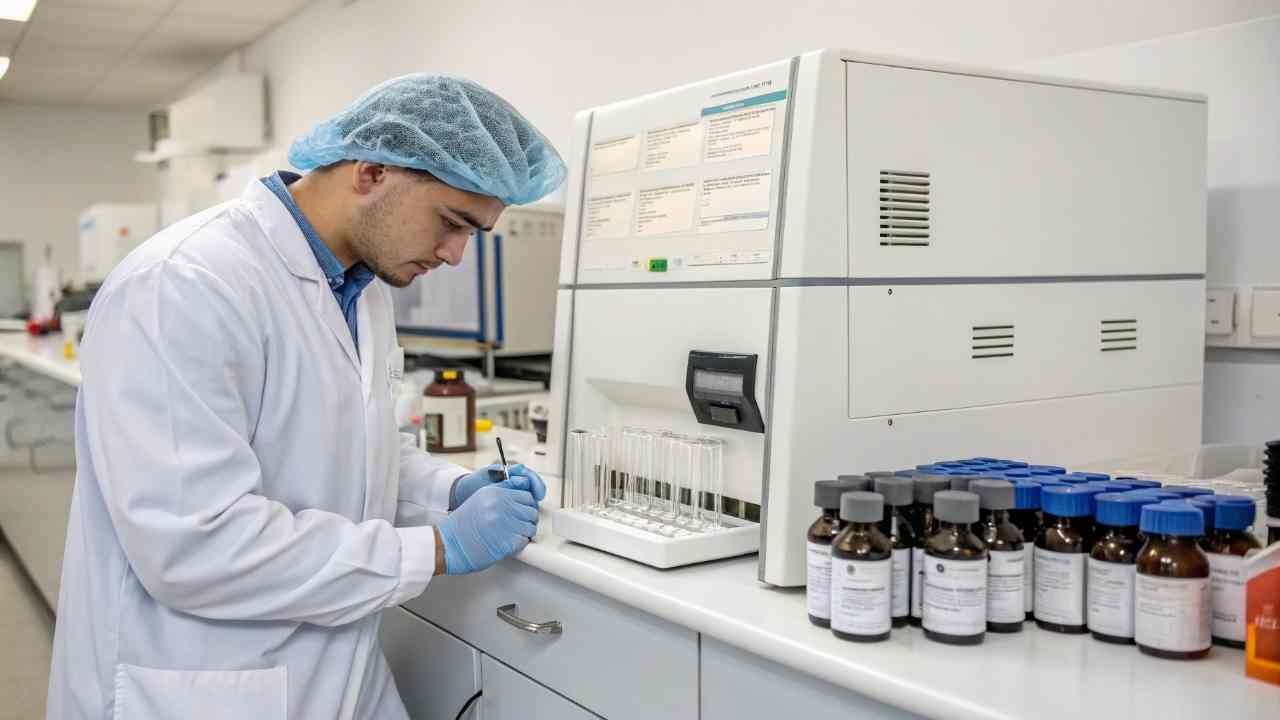
Implementing strict quality control across the chemical supply chain is a critical requirement for manufacturing safe final products. Amino acids are highly active physiological compounds utilized in parenteral nutrition, clinical medical diets, and livestock feed mixes. In clinical and sports nutrition, exact dosage accuracy is essential, as even minor deviations in active concentration can compromise therapeutic efficacy. Robust quality control systems ensure that the active assay remains stable and uniform within every single packaging drum.
Furthermore, quality control is necessary to eliminate trace process contaminants. If filtration or crystallization steps are not monitored carefully, active powders can retain trace ammonium ions, fermentation proteins, or volatile organic solvents, which can cause severe metabolic reactions in sensitive consumers. For feed-grade amino acids like L-Threonine or L-Lysine, quality controls prevent the bioaccumulation of trace heavy metals or agricultural chemicals in the animal feed chain. Sourcing partners like FINETECH manage this critical safety step directly in China. They organize independent third-party laboratory audits, verify cleanroom sanitation protocols, and oversee port-loading procedures, ensuring that importers receive fully compliant, safe, and stable amino acid shipments.
| Quality Risk Area | Primary Quality Control Action | Technical Objective | Sourcing Quality Benefit |
|---|---|---|---|
| Dosage Variance | HPLC active assay monitoring | Maintains precise concentration | Ensures consistent therapeutic effects |
| Pathogen Pollution | Microbial colony plating | Eliminates Salmonella and E. coli | Avoids expensive consumer product recalls |
| Solvent Residues | GC headspace analysis | Evaporates toxic reaction agents | Meets international pharmacopoeia codes |
| Process Impurities | Specific rotation & TLC tests | Verifies stereochemical purity | Prevents metabolic toxicity |
Conclusion
Verifying amino acid quality standards requires confirming active assays via HPLC, checking optical rotation, verifying supplier safety documentation, and utilizing experienced sourcing partners to oversee cleanroom manufacturing in China.
-
Technical application note from Agilent Technologies regarding the validation and use of HPLC for analyzing amino acid composition and purity. ↩
-
Official Codex Alimentarius standard (CXS 193-1995) specifying international regulatory limits for heavy metal contaminants in food. ↩
-
FDA guidance on Current Good Manufacturing Practice (CGMP) and quality systems for pharmaceutical-grade active ingredients. ↩
-
Official OSHA guide on the Hazard Communication Standard requirements for Safety Data Sheets, essential for industrial chemical safety and transport. ↩
-
Official European Commission legislative summary regarding GMO regulations, labeling, and traceability requirements for products entering the EU market. ↩