
Unstable supply and hidden quality defects ruin your manufacturing. These risks drain your capital and destroy client trust. I identify technical risks to protect your Vitamin B9 procurement.
Main risks for Vitamin B9 imports include purity fluctuations (assay < 97%), heavy metal contamination, currency volatility between USD/CNY, and logistics delays. To mitigate these, buyers should use third-party inspections, sign annual fixed-price contracts, and maintain a 60-day safety stock buffer for supply continuity.
I manage factory selection and quality oversight for my B2B clients at FINETECH. I want to explain the technical facts about these risks to help you build a resilient supply chain for your business.
How Can Buyers Avoid Quality Risks in Vitamin B9(Folic Acid)?
Off-spec Folic Acid causes product recalls and legal fines. This failure ruins your brand reputation instantly. I provide strict lab oversight to ensure every batch meets USP standards.
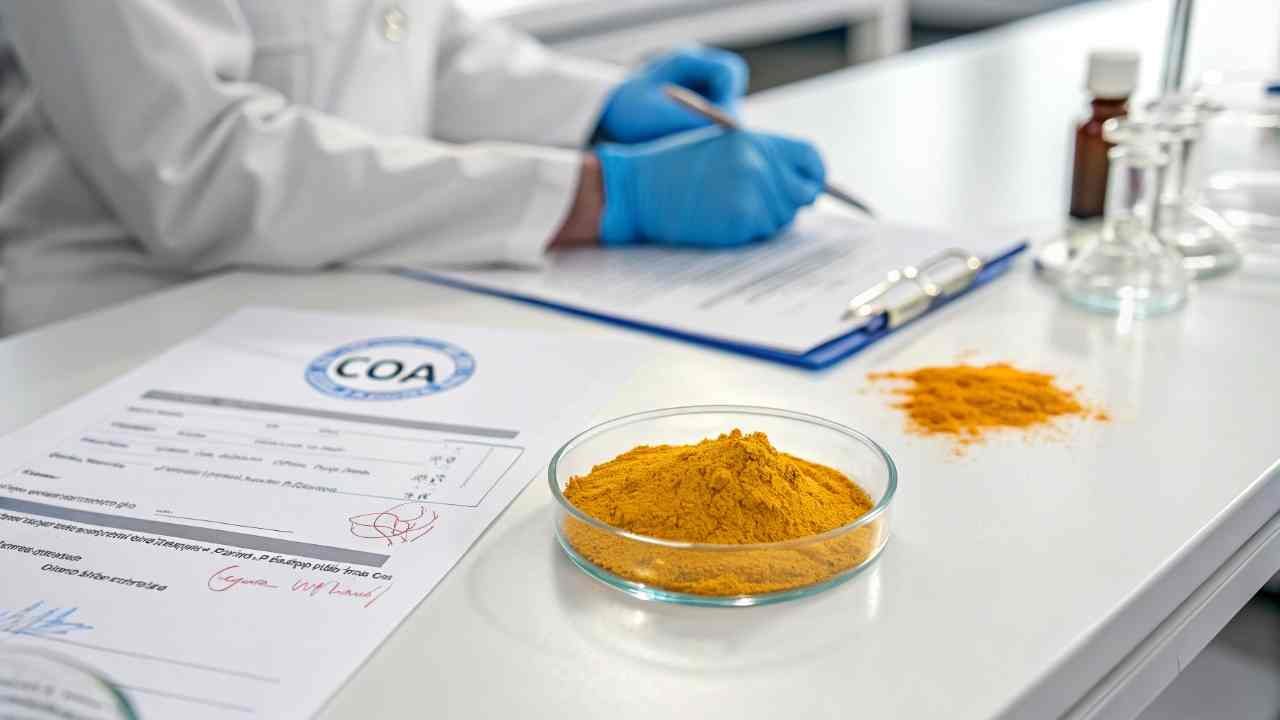
Buyers avoid quality risks by requesting batch-specific COAs and hiring third-party inspectors like SGS for pre-shipment testing. Verifying assay levels (97%-102%), moisture content (max 8.5%), and heavy metal limits (Lead < 2ppm) ensures the material is safe and compliant for food or pharmaceutical use.
Identifying and Verifying Technical Specifications
I see quality as the most critical risk in the Vitamin B9 trade. Folic Acid is a sensitive chemical compound. It must have a bright orange-yellow color. If the powder looks dull or brown, it often indicates oxidation or poor purification. I check the High-Performance Liquid Chromatography (HPLC1) results for every batch. This machine measures the assay level. The standard for USP and BP is 97.0% to 102.0%. If the assay is lower, the nutritional efficacy drops. I also look at the moisture content. Folic Acid naturally holds some water. But if the "Loss on Drying" is too high (above 8.5%), the powder will cake and clump in the 25kg drum. This caking makes it impossible to use in your automated mixing machines.
I also prioritize safety testing for heavy metals. I ensure our partner factories in China use atomic absorption spectroscopy to test for Lead and Arsenic. These must be below 2 parts per million (ppm). If these limits are exceeded, your cargo will be rejected by local health authorities in countries like Indonesia or Saudi Arabia. I act as your technical gatekeeper. I also check the microbial limits. Folic Acid used in food fortification2 must be free from Salmonella and E. coli. I review the lab logs from the factory to confirm these results. Using an independent lab like SGS adds another layer of security. They take a random sample and provide objective proof of quality. This oversight is how I protect your financial investment and consumer health.
Quality Parameters for Vitamin B9
| Parameter | Standard (USP/BP) | Risk if Failed | Eric's Control Method |
|---|---|---|---|
| Assay (Purity) | 97.0% - 102.0% | Nutritional failure | HPLC batch verification |
| Appearance | Orange-yellow powder | Indicates degradation | Visual inspection |
| Moisture (LOD) | Max 8.5% | Physical caking | Drying oven test |
| Heavy Metals (Pb) | < 2 ppm | Legal recall / Poisoning | Atomic absorption |
| Residue on Ignition | Max 0.3% | Chemical impurities | Muffle furnace test |
| Particle Size | 80 - 100 Mesh | Uneven mixing | Sieve analysis |
How Do Currency Fluctuations Affect Vitamin B9(Folic Acid) Trade?
Shifting exchange rates wipe out your profit margins overnight. This financial stress makes budgeting impossible. I monitor currency trends in China to help you time your payments perfectly.
Currency fluctuations between the US Dollar and Chinese Yuan impact Vitamin B9 prices. If the Yuan strengthens, USD-based quotes from Chinese factories rise. Buyers can manage this risk by using fixed-price contracts or paying deposits during favorable rate windows to protect their profit margins.

The Impact of USD/CNY Volatility
I want you to understand that while we trade in US Dollars, the factory costs in China are based on the Yuan (CNY). When the Yuan becomes stronger, the factory receives fewer Yuan for every Dollar you pay. To survive, they must raise the USD price. I track the exchange rate daily at my office. I see how it moves with global trade news. This is a technical risk that many buyers forget to calculate. If you buy at the wrong time, you pay 5% to 10% more for the same material. I help my clients in the Middle East and Southeast Asia by providing "market windows." I tell them when the rate is favorable so they can pay their balance early.
I also use Sinosure3 (China Export & Credit Insurance Corporation) to manage financial risks. Sinosure provides a layer of safety for both parties. If you have a good credit record, I can offer you credit terms. This allows you to manage your cash flow even when the currency market is volatile. You do not have to buy all your stock when the Dollar is weak. You can spread your risk. I also suggest using fixed-price annual contracts. We agree on a USD price for 12 months. I manage the currency risk with the factory. This gives you a stable cost for your local sales. Budget security is the only way to grow a wholesale business in the food additive industry. I act as your financial partner in China.
Currency Scenario and Response Table
| Market Trend | Yuan Movement | USD Price Impact | Recommended Action |
|---|---|---|---|
| Stronger Yuan | Appreciation | Price Increases | Lock price early / Pay now |
| Weaker Yuan | Depreciation | Price Decreases | Wait for bottom / Buy small |
| High Volatility | Rapid Swings | Unpredictable | Sign annual fixed contract |
| Low Interest Rates | Stable | Low Volatility | Standard procurement |
| Trade War News | Uncertainty | Potential Hike | Buy safety stock buffer |
How Can Contracts Protect Vitamin B9(Folic Acid) Buyers?
Vague agreements lead to disputes and lost cargo. You lose money when suppliers fail to deliver quality. I use technical contracts to lock in specifications and delivery deadlines.
Contracts protect buyers by defining exact chemical specifications (USP/BP), fixed pricing, and shipping deadlines. Including penalty clauses for late delivery or off-spec material, and clarifying Incoterms like CIF or FOB, provides a legal framework to ensure supplier accountability and financial security.
Defining Technical Specifications and Performance
I ensure that every Proforma Invoice (PI) I send has a detailed technical appendix. You should not just write "Folic Acid" on your order. You must include the HS code (293629) and the required purity standard. The contract must state that the goods must match the Certificate of Analysis (COA) exactly. If the goods fail a third-party test at the port, the contract defines who pays for the return. This clarity is a technical requirement for safe trade. I also add a clause for "retainer samples." We keep a sample from every batch for three years. This provides traceability. If your customer has a problem in two years, we can test my sample to see if the quality was correct at the time of shipping.
I also manage the delivery timelines in the contract. Late shipments can stop your factory. I include a "Latest Shipping Date" clause. If the factory is late by more than 14 days, the contract should define a penalty. This encourages the producer to prioritize your order. I also clarify the Incoterms4. If we use CIF (Cost, Insurance, and Freight), I handle the marine insurance. This protects your capital if the ship has an accident. I oversee the document preparation to ensure the Bill of Lading and Health Certificate are perfect. One typo on a document can cause a 10-day delay at your customs. My goal is to use a strong contract to make the trade process professional and risk-free.
Essential Contract Clauses for Buyers
| Clause Name | Technical Detail | Strategic Value |
|---|---|---|
| Quality Standard | USP 44 / BP 2023 | Zero ambiguity on purity |
| Inspection Right | Pre-shipment (SGS) | Proof of quality before pay |
| Penalty for Delay | % per week late | Ensures on-time delivery |
| Arbitration | Neutral location | Legal path for disputes |
| Packaging Spec | 25kg Drum / PE Liner | Prevents shipping damage |
| Retainer Sample | 36-month storage | Long-term traceability |
How Does Supplier Diversification Reduce Vitamin B9(Folic Acid) Risk?
Relying on one factory is a dangerous gamble in China. Sudden shutdowns stop your entire supply line. I manage a network of vetted producers to ensure your cargo moves.
Supplier diversification spreads procurement across different Chinese provinces to avoid regional power cuts or environmental audits. Working with multiple vetted factories ensures that if one plant closes, another can fulfill the order, maintaining supply stability and providing better leverage on pricing.
Spreading Regional and Operational Risk
I want you to understand how the Chinese market works. Our factories are located in different chemical parks5. Sometimes a province like Hebei will have a strict environmental audit. All factories in that park must stop for two weeks. If that is your only source, your business stops. I manage this by working with multiple factories in different provinces like Zhejiang and Jiangsu. If one region has a problem, I move the production to another. This is the benefit of a managed exporter. We have the connections that a simple trader does not have. I oversee the quality at every plant to ensure the material is the same. This diversification is your insurance against government policy changes.
Consistency is a technical challenge when using multiple sources. Wholesalers worry that the color or mesh size will change. I solve this by setting a "FINETECH Standard." Every factory I work with must use the same raw materials (like PABA) and the same crystallization process. I visit these plants to check their lab equipment personally. This ensures that the Vitamin B9 you receive always performs the same in your flour or supplements. Diversification also gives us better price power. If one factory raises prices too high, I can move the volume to another. This competition keeps your costs low and your supply stable. I act as your strategic office in China to manage this complex network.
| Diversification Strategy | Action Taken | Risk Mitigated | Business Value |
|---|---|---|---|
| Geographic | Source from 3 provinces | Regional power cuts | Supply continuity |
| Operational | Use 2+ factory groups | Environmental audits | Stable availability |
| Quality | Standardized COA specs | Batch inconsistency | Process reliability |
| Logistics | Use different ports | Port congestion | Faster lead times |
| Financial | Multi-factory credit | Price monopoly | Competitive cost |
How Can Buyers Prepare for Vitamin B9(Folic Acid) Market Volatility?
Unexpected price spikes destroy your annual budget. You end up overpaying for critical ingredients. I provide market data to help you stockpile material before the next price surge.
Buyers prepare for volatility by tracking raw material costs (PABA/Pteridine) and maintaining a 60-day safety stock buffer. Signing 12-month volume contracts and following Chinese production cycles, like the Spring Festival shutdowns, helps secure supply and stable costs during global market fluctuations.
Proactive Inventory and Demand Planning
I suggest you use a systematic ordering plan. You should not buy only when your warehouse is empty. I help my clients calculate their Reorder Point (ROP). This is a technical way to know when to buy. We look at your monthly usage and the lead time from China. If it takes 45 days to deliver, you must order when you still have 60 days of stock. This 15-day buffer is your safety net. It covers ship delays or customs problems. I monitor the market signals for you. If I see raw material prices rising in China, I tell you to buy your stock early. This foresight saves you from the "panic buying" that drives prices even higher.
Seasonal planning is also vital. In China, the whole country stops for the Spring Festival in February. Factories and ports close for two weeks. If you do not have a supplier with a pre-planned inventory, you will have no stock in March. I tell my partners to stockpile material in November. We ship extra containers before the holiday rush. This ensures your supply chain is silent and steady while others are struggling. I also offer annual contracts with fixed prices. This is the ultimate tool against volatility. You know your cost for the next 12 months. I manage the technical logistics and the price risks. By using data and planning, we turn a volatile market into a stable growth opportunity for your business.
| Preparation Step | Best Practice | Frequency | Goal |
|---|---|---|---|
| Safety Stock | Keep 2 months of supply | Permanent | Prevent stockouts |
| Market Monitoring | Read FINETECH reports | Weekly | Spot price trends |
| ROP Alert | Use usage-based ROP | Monthly | Automated procurement |
| Seasonal Buy | Order before November | Yearly | Survive Spring Festival |
| Contract Lock | 12-month fixed volume | Yearly | Budget security |
| Audit Verification | Re-check factory status | Quarterly | Ensure supplier health |
Conclusion
Managing Vitamin B9 risks requires technical oversight, strategic contracts, and proactive planning. I handle these details at FINETECH to keep your business procurement safe, stable, and profitable.
-
Lab Manager – An analytical instrument guide for technical personnel on using technologies like HPLC to ensure the chemical purity of food additives. ↩
-
WHO Food Fortification – The official World Health Organization Q&A on international standards for using food additives to address nutritional gaps. ↩
-
Sinosure (China Export & Credit Insurance Corporation) – The official government-backed agency providing credit insurance to facilitate international trade with China. ↩
-
International Chamber of Commerce (ICC) – The official source for Incoterm rules, which define the responsibilities of buyers and sellers in global trade. ↩
-
Chemistry World – Provides news and analysis on the development and regulation of industrial chemical hubs and chemical manufacturing clusters. ↩