

Are you overwhelmed by the small details of Taurine procurement? Worried that you are missing key information that could be costing your company time and money?
Procurement managers should consider five key areas: Minimum Order Quantities (MOQ), Taurine's long shelf life for inventory planning, sources of market intelligence, the cost-saving power of shipment consolidation, and the essential documents for smooth customs clearance.
As a supplier, I am an extension of my client's procurement team. A sharp Purchasing Director looks at the total picture, not just the price. He wants to optimize inventory, save on logistics, and avoid surprises. This is a strategic approach. Let's break down the key considerations that separate a good buyer from a great one.
What Are the Minimum Order Quantities (MOQ) for Taurine?
Struggling with high per-kilogram costs on small orders? But does a full container feel like too big of a commitment with a new supplier?
The standard industry MOQ for Taurine is typically one full pallet (1,000kg). However, a flexible supplier can offer a smaller trial quantity of 100-200kg for new customers to build trust. The most cost-effective quantity is a Full Container Load (20,000kg).
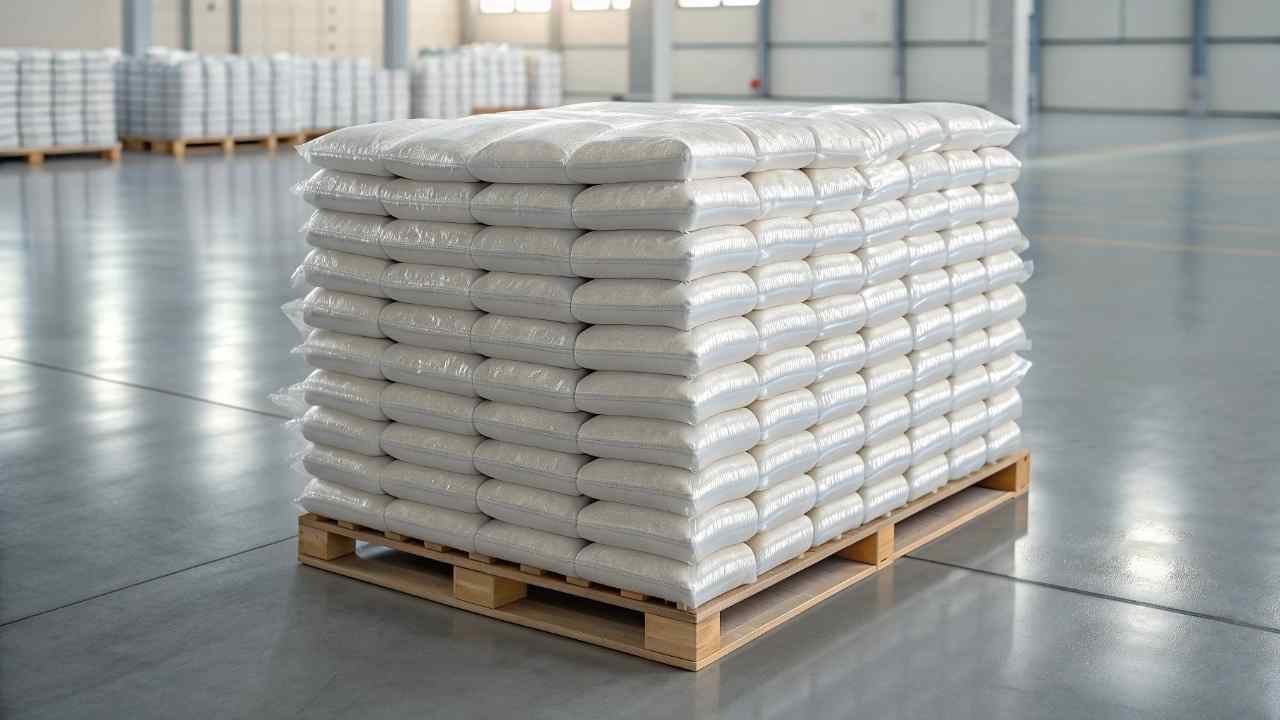
The standard MOQ is one pallet (1,000kg), which is an efficient unit for handling. For the absolute lowest cost, a Full Container Load (FCL) of 20 tons is the best option, as it unlocks maximum volume and freight discounts. However, I understand the need to build trust first. A partnership-focused supplier like FINETECH should always be willing to support a smaller trial order1 of a few hundred kilograms, allowing you to test our quality and service with minimal risk.
MOQ Level Comparison:
| MOQ Level | Typical Quantity | Primary Advantage | Primary Disadvantage |
|---|---|---|---|
| Trial Order | 100 - 500 kg | Low risk, ideal for testing a new supplier. | Highest price and freight cost per kg. |
| Standard Pallet | 1,000 kg | Good balance of price and commitment. | Moderate freight cost per kg. |
| FCL Order | 20,000 kg | Lowest possible price per kg. | Requires large cash outlay and storage. |
How Does Shelf Life Affect Your Taurine Inventory Planning?
Are you worried that holding a large inventory of Taurine will lead to expired and wasted product? This fear can prevent you from making smart, cost-saving bulk purchases.
Taurine has a very long and stable shelf life, typically 2 to 3 years. This stability greatly simplifies inventory planning, allowing you to confidently hold a strategic safety stock. A strict First-In, First-Out (FIFO) system is still essential for proper management.
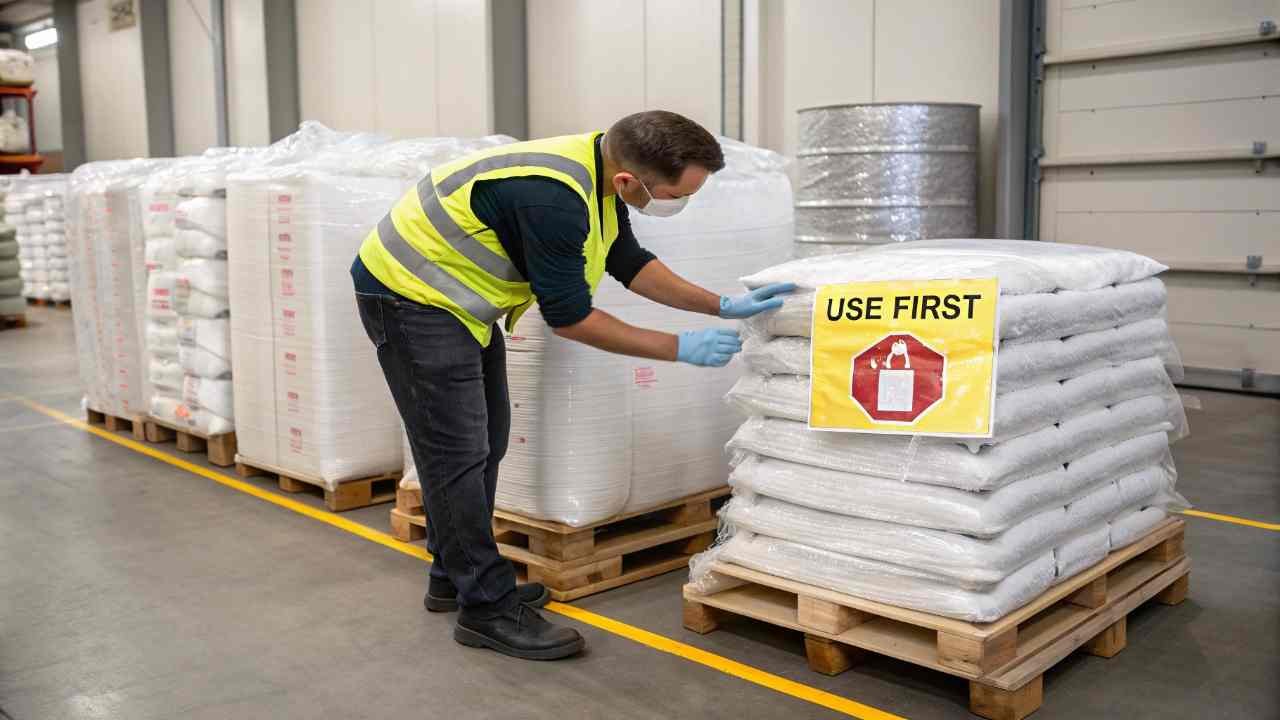
Taurine is an incredibly stable molecule with a shelf life of 2-3 years2. This is a huge advantage for procurement managers. It removes much of the risk associated with holding inventory, allowing you to confidently purchase in bulk to save on costs and maintain a safety stock. While the product is stable, professional management is still required. The golden rule is First-In, First-Out (FIFO)3: always use your oldest stock first. This simple, systematic rotation prevents waste and ensures you are always using product with the maximum remaining shelf life.
Inventory Management Systems:
| System | Principle | Suitability for Food Ingredients (like Taurine) |
|---|---|---|
| FIFO (First-In, First-Out) | Use the oldest stock first. | Essential. The only correct method. |
| LIFO (Last-In, First-Out) | Use the newest stock first. | Unacceptable. Leads to expired stock and waste. |
Where Can You Find the Latest Market Intelligence on Taurine?
Are you making your purchasing decisions in the dark? Reacting to price changes after they have already happened puts you at a competitive disadvantage.
You can find the latest market intelligence from three key sources: specialized B2B industry publications, by tracking the price of key raw materials like ethylene oxide (EO), and most importantly, by developing a strategic partnership with a supplier who acts as your advisor.

To get ahead of the market, you need the right information. You can track raw material prices4 (like ethylene oxide) for long-term cost trends and read industry publications for a general overview. However, the most valuable and actionable intelligence comes from your strategic supplier. As your partner on the ground, my job is to filter the market noise and provide you with real-time insights on factory shutdowns or policy changes, helping you make timely and cost-effective buying decisions.
Sources of Market Intelligence:
| Source | Information Provided | Usefulness |
|---|---|---|
| Raw Material Prices (EO) | Long-term trend in production cost pressure. | Good for long-term strategic planning. |
| Industry Publications | General market news, supply/demand trends. | Good for a macro-level overview. |
| Strategic Supplier | Real-time, actionable insights on specific market events. | The most valuable source for making timely buying decisions. |
How Can Consolidating Shipments Save Costs on Taurine Imports?
Are you paying high freight rates for multiple small shipments of different ingredients? Managing all those separate orders is also a huge drain on your team's time.
Consolidating shipments is a powerful cost-saving strategy. It involves combining multiple products, like Taurine and other additives, from a single supplier into one Full Container Load (FCL) shipment. This drastically reduces the per-kilogram freight cost for every item.
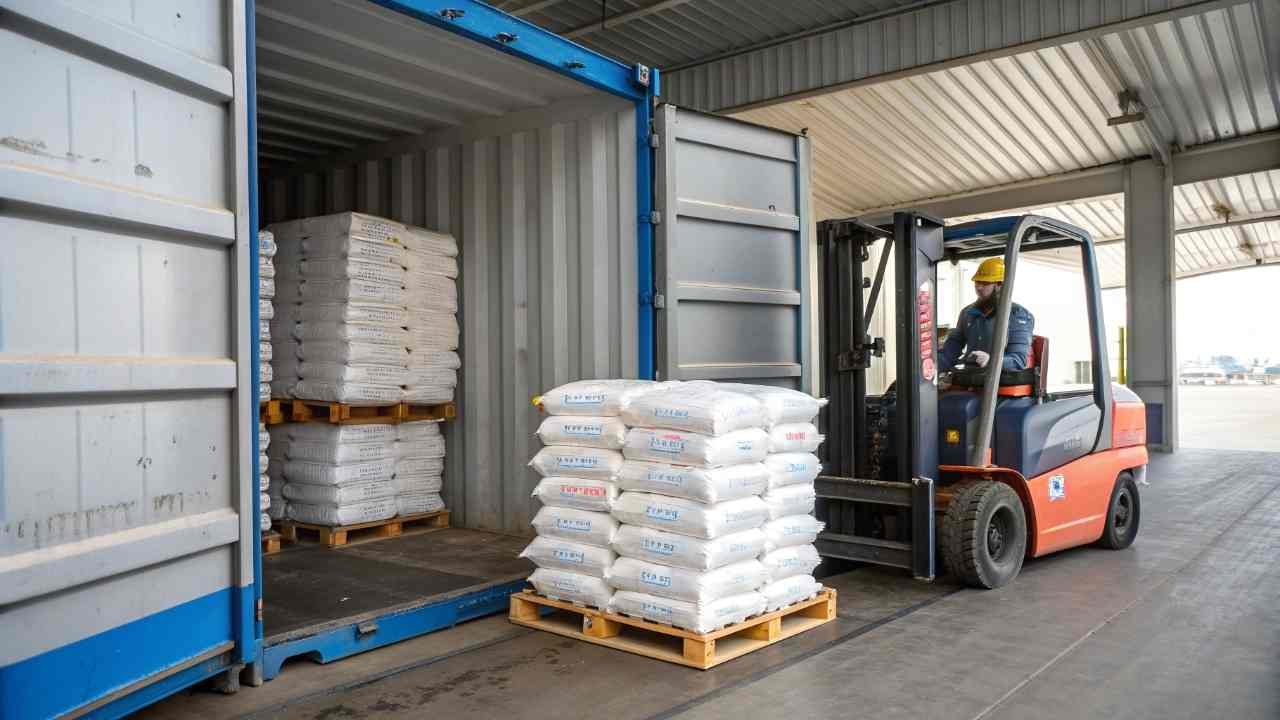
Consolidation is one of the easiest ways to lower your total landed cost. Instead of paying high per-kilogram rates for three separate small LCL shipments, you can work with a supplier like FINETECH to combine your Taurine, Citric Acid, and Vitamin C into one Full Container Load (FCL) shipment5. This allows you to pay a single, low FCL freight rate. It also simplifies your administration, with one set of documents to manage, one customs clearance, and one invoice to pay.
Cost Savings Example:
| Shipping Method | Number of Shipments | Total Freight Cost (Illustrative) | Per-Kilogram Freight Cost |
|---|---|---|---|
| 3 Separate LCL Shipments | 3 | $1,000 + $1,200 + $800 = $3,000 | High |
| 1 Consolidated FCL Shipment | 1 | $2,500 | Lowest |
What Documents Are Necessary for Clearing Customs for Taurine?
Is your shipment stuck at the port because of a documentation problem? This is one of the most frustrating and completely avoidable delays in procurement.
The five essential documents for clearing Taurine through customs are the Commercial Invoice, Packing List, Bill of Lading, a batch-specific Certificate of Analysis (COA), and often a Certificate of Origin. Every document must be 100% accurate and consistent.

To avoid customs delays, the paperwork must be perfect. You need five key documents: the Commercial Invoice (for value), Packing List (for contents), Bill of Lading (for title), Certificate of Analysis (for quality), and a Certificate of Origin (for country of manufacture). The most important rule is that every detail on every document must match perfectly. A single typo can cause a customs hold. A professional supplier guarantees this accuracy.
Key Customs Documents and Their Purpose:
| Document | Its Primary Purpose |
|---|---|
| Commercial Invoice | States the value of the goods for duty and tax calculation. |
| Packing List | Details the physical contents and weights of the shipment. |
| Bill of Lading | Acts as the title to the goods, needed to claim the cargo. |
| COA | Proves the product's quality and specifications. |
| Certificate of Origin | Certifies the country of manufacture for tariff purposes. |
Conclusion
Mastering these five areas of Taurine procurement—MOQ, shelf life, market intel, consolidation, and documentation—will transform you from a simple buyer into a strategic, cost-effective partner for your company.
-
This resource will guide you on effectively negotiating trial orders, ensuring you build trust with suppliers while minimizing risk. ↩
-
Exploring shelf life factors can enhance your procurement strategies and ensure optimal product usage. ↩
-
Understanding FIFO is crucial for effective inventory management, helping to minimize waste and maximize product freshness. ↩
-
Understanding raw material prices is crucial for making informed purchasing decisions and staying competitive. ↩
-
Exploring this link will provide insights into how FCL shipments can save costs and streamline logistics. ↩