
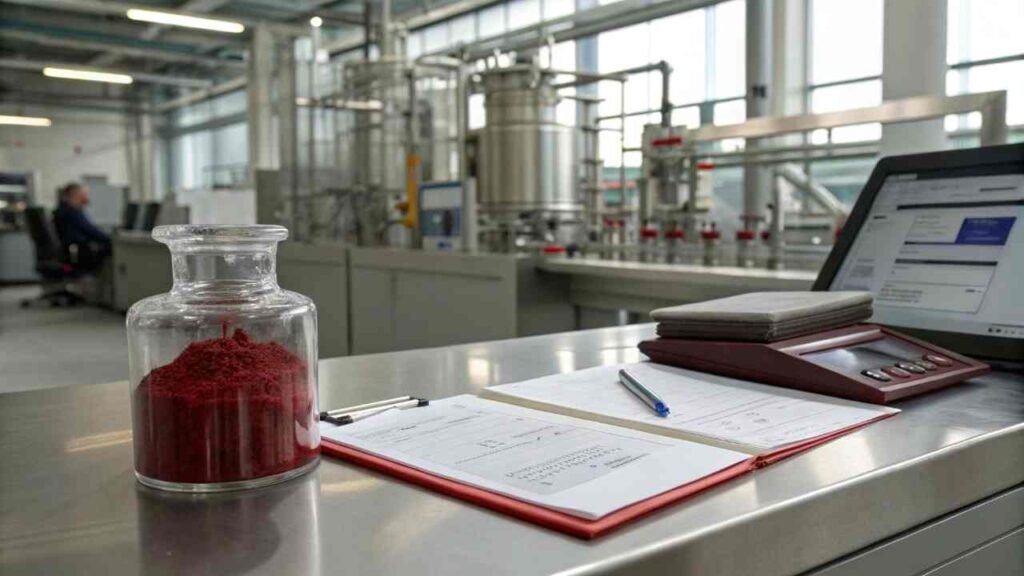
Low-quality Vitamin B12 causes potency failure and customer complaints. This waste ruins your production and brand trust. I identify reliable suppliers to ensure your cargo meets every standard.
A reliable Vitamin B12 supplier must provide GMP, ISO 22000, and HALAL/KOSHER certifications. They should use automated fermentation and chromatography for 99% purity. Verifying batch-specific COAs and physical audits ensures potency, safety, and consistent wholesale supply from top-tier Chinese manufacturers.
I manage factory selection and quality oversight for my B2B clients at FINETECH. I want to explain the technical facts about supplier selection to help you secure a safe and competitive supply chain for your business.
Which certifications are required for Vitamin B12 (Cobalamin) export?
Uncertified material leads to customs rejection and legal fines. This failure stops your sales and drains your capital. I check every document to ensure your imports are 100% legal.
Essential certifications include GMP for manufacturing quality, ISO 22000 for food safety, and HALAL/KOSHER for religious compliance. International exports also require an FAMI-QS for feed-grade material and a valid Health Certificate issued by Chinese customs to pass local inspections.

The Value of International Standards
I see that paperwork is the first wall in international trade. If you buy from a factory without the right papers, your container stays at the port. I only work with factories that hold valid ISO 9001 and ISO 220001 certificates. These papers prove the factory has a management system. They do not just make vitamins. They control every step. For my buyers in the Middle East, HALAL and KOSHER are mandatory. I verify these certificates with the issuing body. I make sure they are not expired. This oversight is a technical requirement for smooth customs clearance in Saudi Arabia or the UAE.
Also, the feed industry has special rules. If you buy Vitamin B12 for animal nutrition, you need FAMI-QS. This is a high-level safety certificate for the feed chain. Many factories say they have it. But I go to the factory and check their audit logs. I also manage the Health Certificate and the Certificate of Origin. These are issued by the GACC (General Administration of Customs of China). One small mistake on these papers can cause a 10-day delay. I ensure the HS code 293626 is correct on all forms. This professional handling is how I protect your business from administrative risks. I act as your office in China to ensure compliance.
Essential Certification Checklist
| Certificate Name | Primary Purpose | Market Requirement | Verification Method |
|---|---|---|---|
| GMP | Manufacturing Safety | Global Standard | On-site audit of clean rooms |
| ISO 22000 | Food Safety Management | Food Industry | Review of hazard control logs |
| HALAL / KOSHER | Religious Compliance | Middle East / SE Asia | Direct check with issuing body |
| FAMI-QS | Feed Safety | Europe / Global Feed | Check certificate validity date |
| GACC Health Cert | Legal Export | Customs Clearance | Match COA with customs data |
| CEP / DMF | Pharma Grade | Pharmaceutical Use | Verify EDQM registration |
How to verify Vitamin B12 (Cobalamin) purity and potency?
Fake or diluted vitamins ruin your supplement formulas. This technical error leads to expensive product recalls. I use high-precision lab testing to verify the assay of every drum.
Verify purity using High-Performance Liquid Chromatography (HPLC) to confirm the 98.5% to 102% assay range. Check the Certificate of Analysis (COA) for specific rotation, moisture content (max 12%), and heavy metal limits (Lead < 2ppm) to ensure total quality and potency.
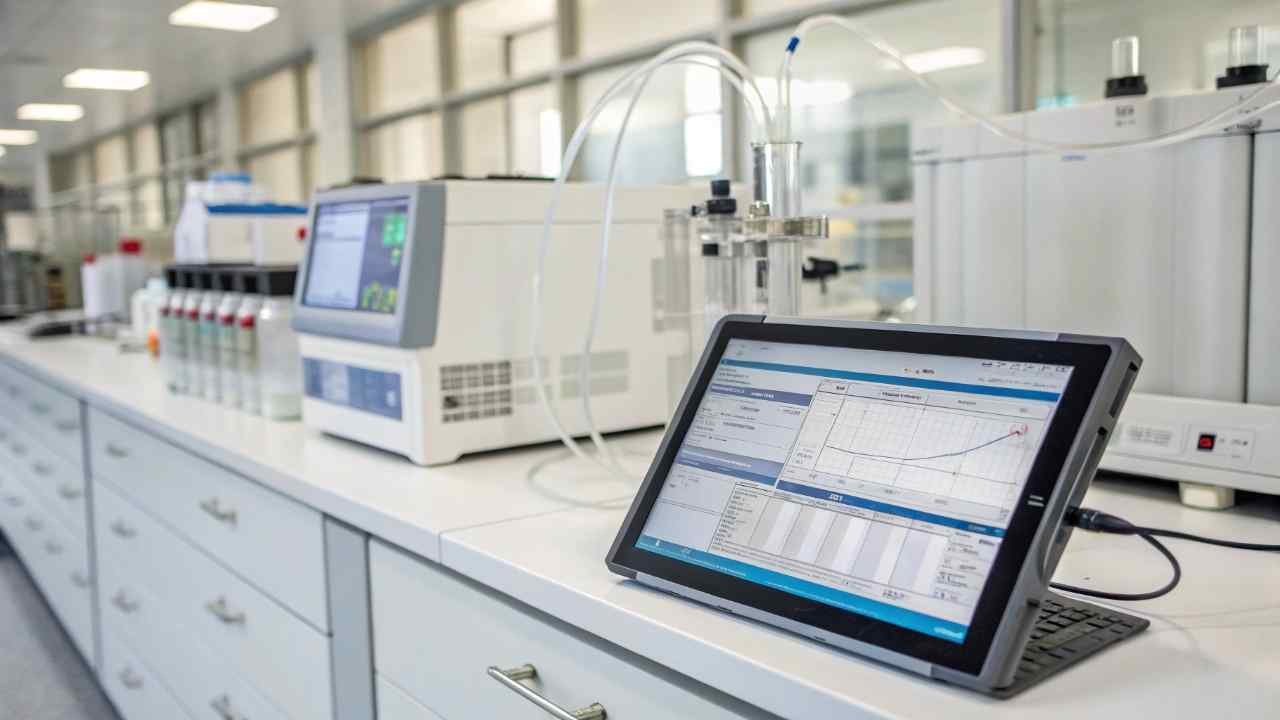
Understanding the Certificate of Analysis (COA)
I want you to know that the COA is a technical promise from the factory. But you must know how to read it. I focus on the "Assay." This tells you the purity. For pure Vitamin B12 (Cyanocobalamin), the standard is 98.5% to 102.0%. If the number is 1% or 0.1%, it is a dilution. This is fine for feed, but you must know what you are buying. I use HPLC2 testing for every batch. This machine separates the vitamin from any impurities. It is the gold standard for testing. I do not accept "titration" results because they are less accurate. My goal is to ensure you get exactly what you pay for.
Specific rotation is another vital test. It proves the "identity" of the vitamin. It shows that the molecule is active Cobalamin. I also look at the moisture level. High moisture makes the powder clump. This clumping ruins your automated mixing machines. I also check for heavy metals. Lead, Arsenic, and Mercury must be below 2 ppm. I use an atomic absorption spectrometer for this. This test ensures the product is safe for human consumption. If a batch fails my internal check, I reject it before it leaves China. This technical oversight is my commitment to your quality standards. I provide a secondary lab report for my wholesale partners.
Technical Specification Comparison (USP vs. BP)
| Specification | USP Standard | BP Standard | Typical Result (FINETECH) |
|---|---|---|---|
| Appearance | Dark Red Crystals | Dark Red Powder | Dark Red Crystalline |
| Identification | UV / Infrared | IR Absorption | Matches Standard |
| Assay (HPLC) | 98.0% - 102.0% | 98.5% - 102.0% | 99.2% |
| Specific Rotation | -59° to -67° | -59° to -66° | -63° |
| Loss on Drying | Max 12.0% | Max 12.0% | 9.5% |
| Heavy Metals | < 20 ppm (Total) | < 10 ppm | < 2 ppm |
What production technologies indicate a high-quality supplier?
Manual production leads to batch inconsistency and contamination. These mistakes cost you money and time. I select factories using automated fermentation and chromatography for the highest Vitamin B12 stability.
High-quality suppliers use large-scale submerged fermentation tanks with automated PH and temperature controls. Advanced column chromatography and multi-step crystallization are essential for reaching 99% purity. Modern spray drying ensures the powder is free-flowing and stable for long-term storage.
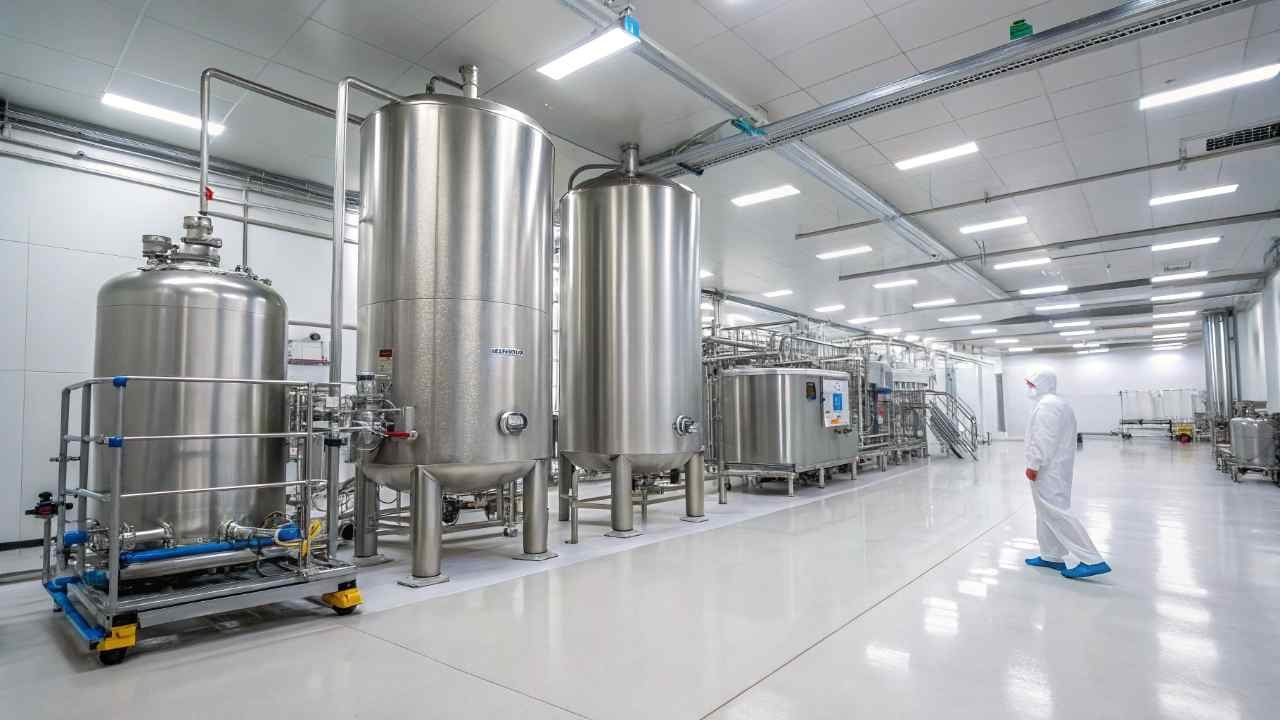
The Power of Automated Fermentation
I see that Vitamin B12 is made by bacteria, not just chemicals. High-quality factories use Pseudomonas denitrificans3. This is a specialized strain. The factory must keep these bacteria happy in giant tanks. They use DCS (Distributed Control Systems) to monitor the air and food in the tank. If the PH moves by 0.1, the computer fixes it. In old factories, a worker does this by hand. Humans make mistakes. Mistakes lead to low yields and impurities. I prioritize factories with full automation. This technology ensures that every batch in your 10-ton order is the same. This consistency is vital for your factory formulas.
After fermentation, the liquid must be cleaned. This is where technology separates the good from the bad. Best factories use column chromatography. This process uses resin to catch the vitamin and let the waste pass. It is more expensive than old precipitation methods, but it makes a much cleaner product. I also check the crystallization step. Controlled cooling makes uniform crystals. These crystals dissolve better in your liquids. I also inspect the drying room. I look for spray dryers that produce a 100-mesh powder. Fine powder mixes better in your flour or feed. I visit these technical facilities to see the machines in person. This is how I ensure a top-tier supply for my buyers.
Manufacturing Technology Evaluation
| Tech Area | Old Technology | High-Quality Tech | Business Impact |
|---|---|---|---|
| Fermentation | Manual Batch | Continuous / DCS | Batch stability |
| Purification | Chemical Precipitation | Column Chromatography | Lower impurities |
| Control System | Analog Gauges | Digital Sensors | Zero human error |
| Drying | Tray Drying | Spray Drying | Free-flowing powder |
| Solvent Recovery | Low recovery | High-efficiency loop | Lower production cost |
| Water Treatment | Basic Filters | Multi-stage WTP | Stable supply (No shutdowns) |
How important is GMP compliance for Vitamin B12 (Cobalamin)?
Poor sanitation in factories leads to bacterial contamination and toxic residues. These risks endanger your consumers and your business. I audit for GMP compliance to ensure total manufacturing safety.
GMP compliance is non-negotiable for Vitamin B12. It ensures the factory maintains sterile fermentation, prevents cross-contamination, and provides full batch traceability. GMP-certified suppliers follow strict sanitation protocols, ensuring that every drum is safe for human or animal consumption according to global standards.
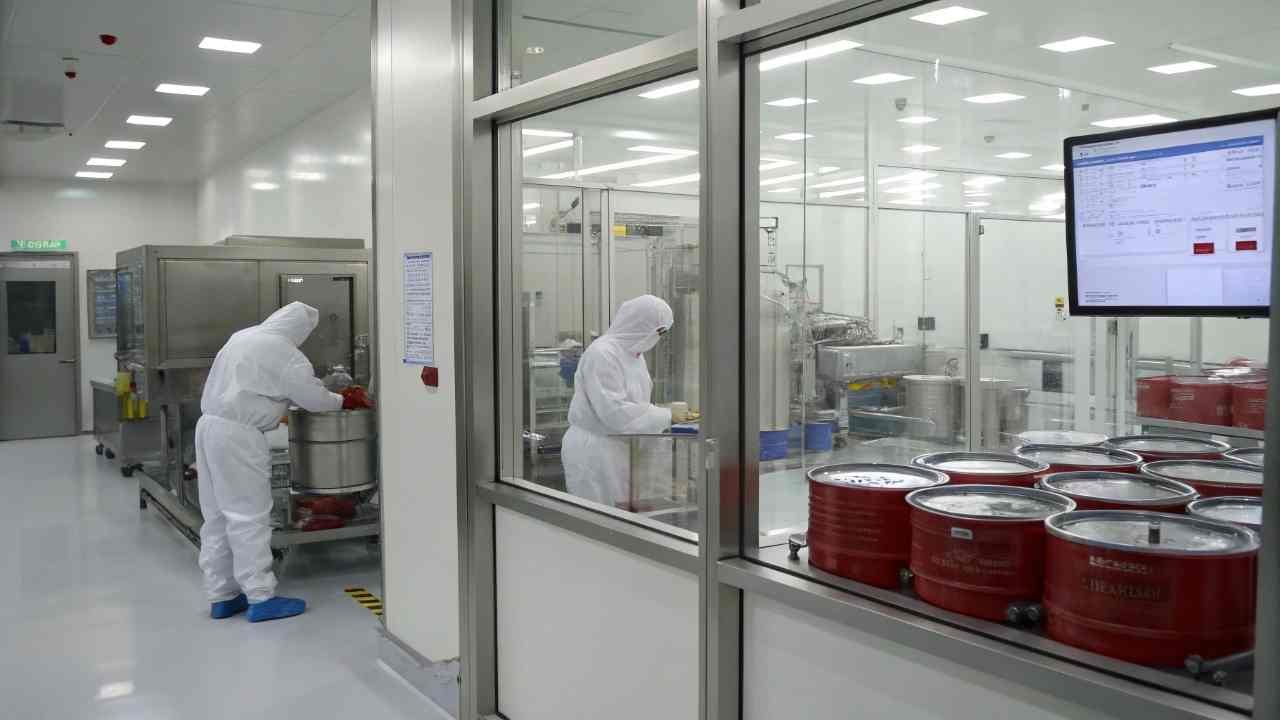
Enforcing Sanitation and Traceability
I want you to understand that GMP4 (Good Manufacturing Practice) is a lifestyle for a good factory. It starts at the gate. Workers must change clothes before entering the production area. I check the air pressure in the "Clean Rooms." The air should flow out, not in. This prevents dust from entering the pure vitamin area. Vitamin B12 is a nutrient for bacteria. If the factory is dirty, the vitamin will grow mold. This is a technical fact. I only select suppliers who have a strict sanitation schedule. I review their cleaning logs. This ensures your cargo is free from Salmonella and E. coli.
Traceability5 is another pillar of GMP. Every drum of Vitamin B12 I ship has a batch number. This number connects to a record at the factory. I can see who was working that day and which raw materials were used. If there is a problem in the future, we can find the cause in minutes. I also check the "Retained Samples." A GMP factory keeps a sample of your batch for three years. If you have a question next year, I can go to the lab and re-test that specific sample. This system protects your capital. It shows that the supplier is professional and responsible. I act as your auditor in China to keep these standards high.
| GMP Pillar | Factory Action | Buyer Protection |
|---|---|---|
| Personnel | Training and uniforms | No human contamination |
| Facilities | Stainless steel / HEPA | Clean production environment |
| Documentation | Batch records | Full supply chain traceability |
| Quality Control | In-house testing | Accurate purity and potency |
| Equipment | Regular calibration | Precise dosing and mixing |
| Audits | Internal and external | Continuous improvement |
What red flags should buyers avoid when sourcing Vitamin B12 (Cobalamin)?
Dishonest suppliers hide quality defects with fake documents. These scams lead to massive financial losses. I identify red flags to protect your procurement from fraud and low-quality material.
Avoid suppliers with extremely low prices, outdated certifications, or inconsistent COAs. Red flags include poor communication, refusal of third-party inspections, and lack of a physical factory address. Secure your supply by choosing partners who offer transparent batch logs and proven export experience in your region.
Identifying Dishonest Market Behavior
I see many "too good to be true" prices in the market. If the global price of Vitamin B12 is $2,000 and someone offers it for $1,500, run away. This is the biggest red flag. They are either selling old stock, or they are selling a lower assay than they say. I also look for "Trade Only" companies that have no office in China. They just buy and sell papers. They never see the goods. I visit the warehouses to see the actual drums. I check the seals. If a supplier refuses to let SGS or Intertek take a sample, they are hiding something. I avoid these people to protect my buyers in Russia and Europe.
Inconsistent documentation is another warning sign. If the font on the COA looks strange, it might be a fake paper. I match the batch number on the drum with the number on the paper. I also look for "Late Shipping." If a supplier always has excuses for delays, their financial health is poor. They might be using your deposit to pay old debts. I only work with financially stable factories. I also check their "Export History." If they have never shipped to your country, they do not know your local laws. I use my experience to find these red flags before you send any money. This foresight is my main service to you.
| Red Flag | Real Meaning | Risk to Buyer |
|---|---|---|
| Suspiciously Low Price | Low assay or old stock | Product recall |
| No On-site Audit | Fake factory or trader | Financial loss |
| Refused Inspection | Hidden quality defects | Customs rejection |
| Outdated Certs | No safety oversight | Legal liability |
| Slow Communication | Poor management | Logistics delays |
| Generic Packaging | Unbranded / Re-packed | Potency loss / Contamination |
Conclusion
Finding a reliable Vitamin B12 supplier requires checking certifications, verifying purity, and auditing factory technology. I manage these technical steps at FINETECH to ensure your business remains safe and profitable.
-
ISO - Official guide to the ISO 22000 standard for food safety management systems in the supply chain. ↩
-
Waters - A technical explanation of High-Performance Liquid Chromatography (HPLC) used for identifying and quantifying components in a mixture. ↩
-
MicrobeWiki - Academic profile of Pseudomonas denitrificans, the primary microorganism used in industrial B12 fermentation. ↩
-
WHO - International standards for Good Manufacturing Practices (GMP) to ensure medicinal products are consistently produced and controlled. ↩
-
GS1 - Global standards for traceability that improve supply chain visibility and product safety from factory to consumer. ↩