
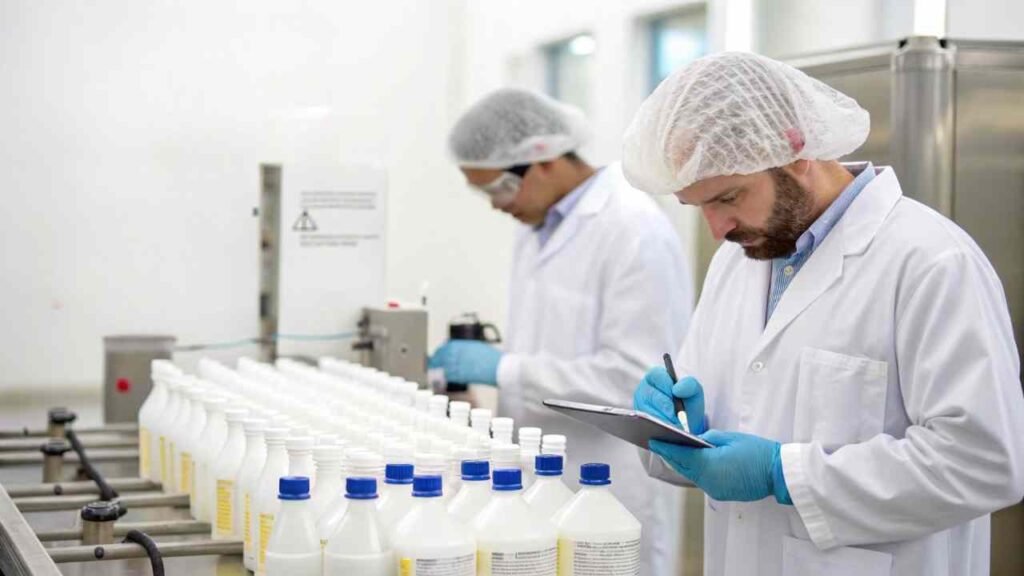
Low-purity Inositol ruins your batch stability and harms your brand trust. Impurities cause chemical reactions that destroy your final product. I show you how high purity ensures your industrial success.
High-purity Inositol is essential because it guarantees chemical stability and meets strict safety standards like USP or NF. It prevents contamination, ensures accurate dosing in energy drinks and infant formula, and maintains the physical integrity of products across the pharmaceutical and nutraceutical sectors globally.
I manage factory audits and oversee production for my B2B clients at FINETECH. I see the technical risks of low-grade additives every day. I want to share the technical facts about Inositol purity so you can protect your brand and your production standards.
What is the difference between food-grade and pharmaceutical-grade Inositol?
Using the wrong grade leads to regulatory fines or product recalls. This confusion wastes your money and your time. I explain the technical gaps between food and pharmaceutical grades.
The main difference lies in purity levels and testing standards. Food-grade Inositol typically meets FCC or national standards with 98% purity. Pharmaceutical-grade must meet USP or EP standards, requiring 99% purity, lower heavy metal limits, and stricter microbial controls for use in medicines.
Technical Standards and Refining
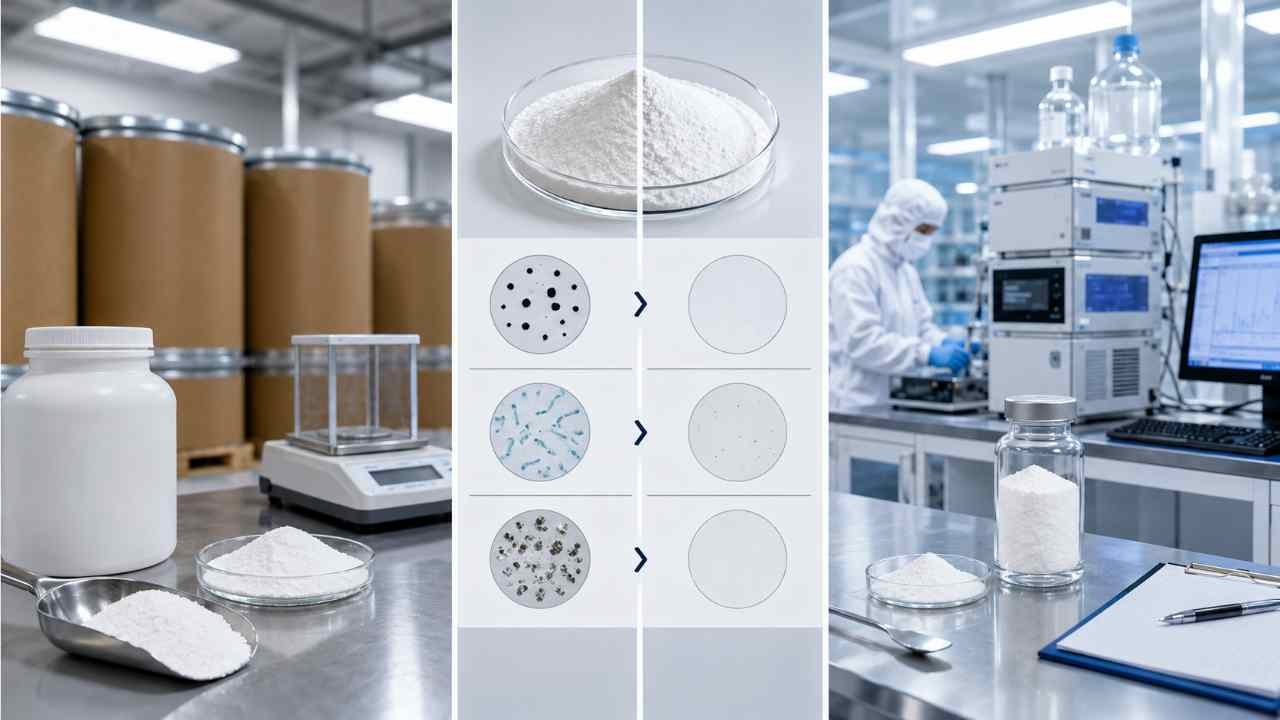
I see that "purity" is not just a number on a paper. It represents the refining process inside the factory. Food-grade Inositol is usually 98% pure. This is fine for many energy drinks or animal feed products. But 98% purity means 2% of the powder is something else. These impurities are often plant residues or minerals from the water. I act as your technical gatekeeper to ensure you do not use food-grade for pharmaceutical needs. Pharma-grade Inositol requires 99% or even 99.5% purity. This extra 1% of refining is very difficult and expensive for the factory to achieve.
Refining for pharma-grade involves extra filtration and crystallization steps. I visit our partner factories in China to check these specific machines. Pharmaceutical standards like USP (United States Pharmacopeia)1 also have much tighter limits on heavy metals. For example, lead (Pb) must be extremely low. I look at the ICP-MS test reports to verify these levels. If you are making medicine or baby formula, you cannot take a risk with food-grade. The microbial limits are also different. Pharma-grade must have almost zero yeast or mold. I prioritize factories that use automated clean rooms for the final packing stage. This prevents dust from entering the drums.
Grade Specification Comparison
| Feature | Food-Grade (FCC/National) | Pharma-Grade (USP/EP) | FINETECH's Strategy |
|---|---|---|---|
| Assay (Purity) | 98.0% - 101.0% | 99.0% - 100.5% | Use 99%+ for pharma |
| Heavy Metals | < 10 ppm | < 5 ppm | Audit via ICP-MS |
| Lead (Pb) | < 2 ppm | < 0.5 ppm | Critical for baby food |
| Loss on Drying | < 0.5% | < 0.2% | Prevents clumping |
| Microbial Count | < 1000 cfu/g | < 100 cfu/g | Prevents spoilage |
| Typical Price | Competitive / Base | 1.2x to 1.5x Base | Value for safety |
How does Inositol purity affect product quality and performance?
Impurities in your Inositol can cause clumping or off-flavors. This ruins the consumer experience and your sales. I show you how purity levels dictate your final product performance.
High purity ensures consistent solubility and chemical inertness. It prevents unwanted reactions with other vitamins or minerals in your formula. This leads to a longer shelf life, better taste profile, and stable physical appearance in drinks, tablets, and powders produced in your factory.
Chemical Stability and Formulation
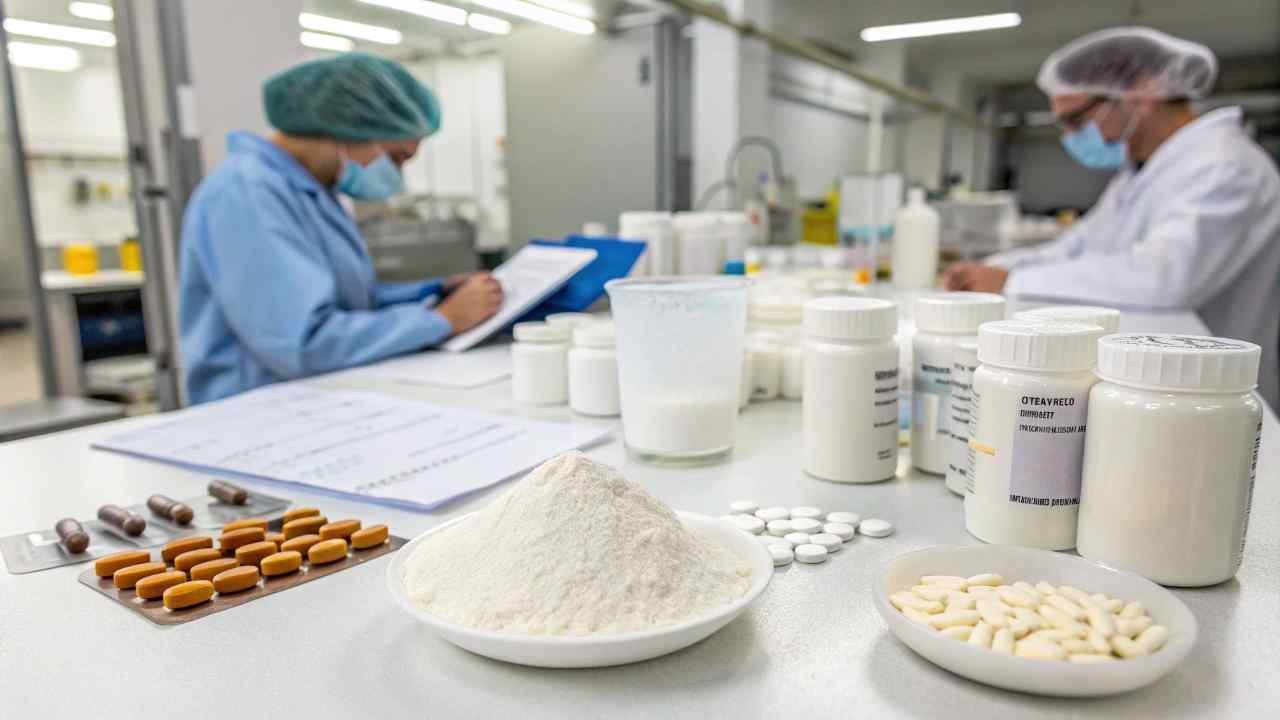
I see that low-purity Inositol often contains traces of moisture or minerals. These small impurities are active. They can react with other ingredients like Vitamin C or B vitamins in your recipe. This causes "color drift." Your white powder might turn yellow or brown on the shelf. This is a disaster for your brand reputation in markets like Saudi Arabia or Indonesia. High-purity Inositol is chemically quiet. It stays stable and does not change the other ingredients. I audit factory logs to ensure the moisture is always below 0.5%. This is the secret to a long shelf life.
Performance also means how the powder behaves in your machines. High-purity Inositol has a very uniform crystal shape. This makes it flow better in your filling machines. If the purity is low, the powder can be "sticky." This causes clumping and blocks your production line. I visit the labs to check the "Specific Rotation2" and "Melting Point." These are technical markers of purity. A narrow melting point range proves the crystals are uniform. This ensures that the Inositol dissolves at the same speed every time. If it dissolves too slowly, your energy drink batch will be inconsistent. I act as your strategic office to ensure the product matches your machine settings.
Purity and Product Performance
| Spec Indicator | Technical Benefit | Factory Result | FINETECH's Check |
|---|---|---|---|
| Low Moisture | No clumping | Smooth machine flow | Check vacuum dryer logs |
| High Assay | Accurate dosing | Consistent potency | Verify via HPLC graphs |
| Clear Color | Pure appearance | Premium brand look | 10% water solution test |
| Low Ash | Chemical inertness | No unwanted reactions | Furnace at 600°C test |
| Narrow MP | Even crystals | Fast dissolution | Melt point analysis |
| Low Odor | Neutral taste | Better flavor profile | Sensory panel audit |
Which industries require high-purity Inositol ingredients?
Using low-grade Inositol in sensitive products is a legal disaster. It puts your license at risk. I identify the sectors where high purity is absolutely mandatory.
The infant formula, pharmaceutical, and high-end nutraceutical industries require the highest purity Inositol. These sectors have zero tolerance for contaminants. Energy drink and animal feed industries also demand reliable purity to ensure consistent dosing and product safety across global export markets.
Sensitive Sectors and Regulatory Pressure
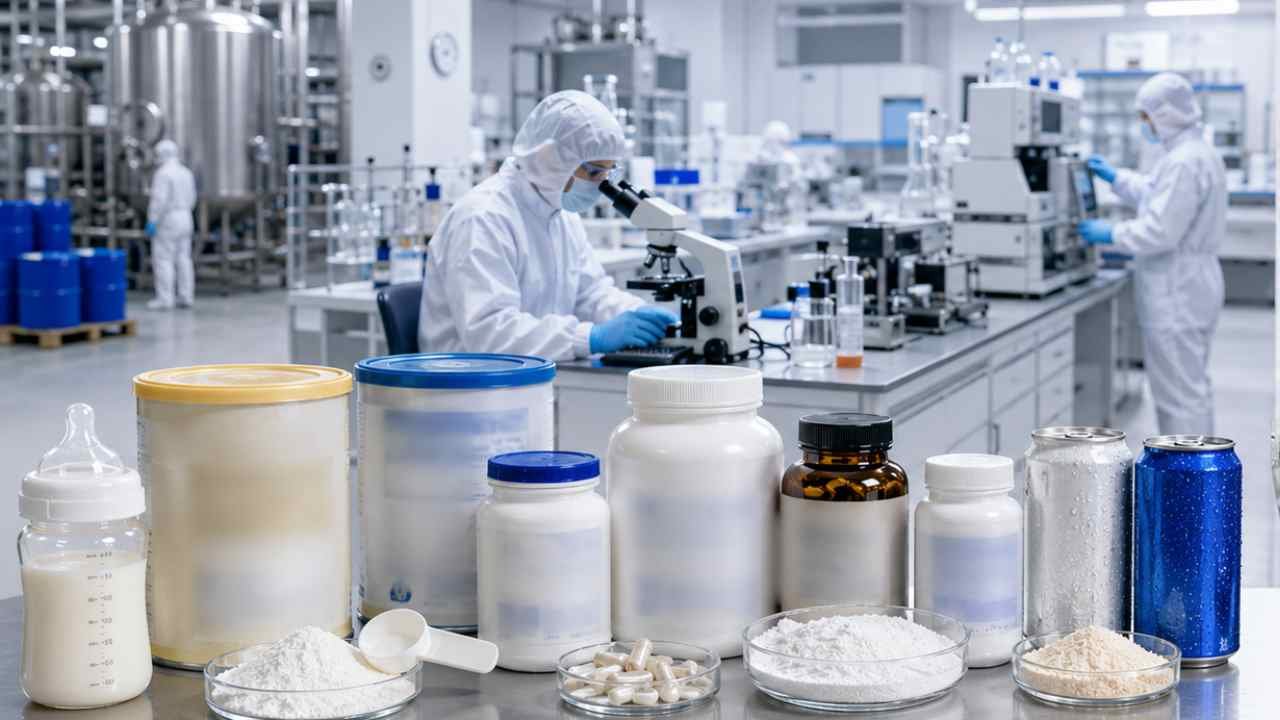
I see the infant formula industry as the most demanding. Babies are very sensitive to heavy metals. In places like Europe and Southeast Asia, the rules for baby food are very strict. You must use Inositol that is nearly 100% pure. I source specialized Inositol for my clients who make baby milk. We check for lead and arsenic at the "parts per billion" level. If the purity is not perfect, the government will stop your sales. I act as your partner in China to find the factories that have specific certificates for infant nutrition. They follow much higher hygiene rules than standard food plants.
The pharmaceutical industry is another big buyer. Inositol is used in many tablets for mental health or liver support. These tablets must dissolve in a very specific way in the human body. Impurities can change this "dissolution rate." I oversee production for pharma traders in Russia and Germany. They need a "Drug Master File3" or high-level GMP certificates. I visit these plants to ensure they track every batch from the raw material to the drum. Even the animal feed industry is getting stricter. High-end fish feed needs pure Inositol to help the fish grow without getting sick. I help you pick the right grade for your specific industry to avoid overpaying or taking risks.
| Industry | Purity Required | Main Driver | FINETECH's Advice |
|---|---|---|---|
| Infant Formula | Ultra-High (99%+) | Baby health safety | Audit heavy metal logs |
| Pharmaceutical | High (99%+) | Drug efficacy | Check GMP certificates |
| Nutraceutical | High (98.5%+) | Consumer trust | Focus on clean label |
| Energy Drinks | Standard (98%+) | Taste and clarity | Ensure fast solubility |
| Animal Feed | Standard (98%+) | Growth performance | Focus on bulk pricing |
| Personal Care | High (99%+) | Skin absorption | Check microbial safety |
How do manufacturers test Inositol purity levels?
Blindly trusting a supplier’s certificate of analysis is a huge risk. Fake data leads to batch failures. I describe the technical lab tests I oversee in Chinese factories.
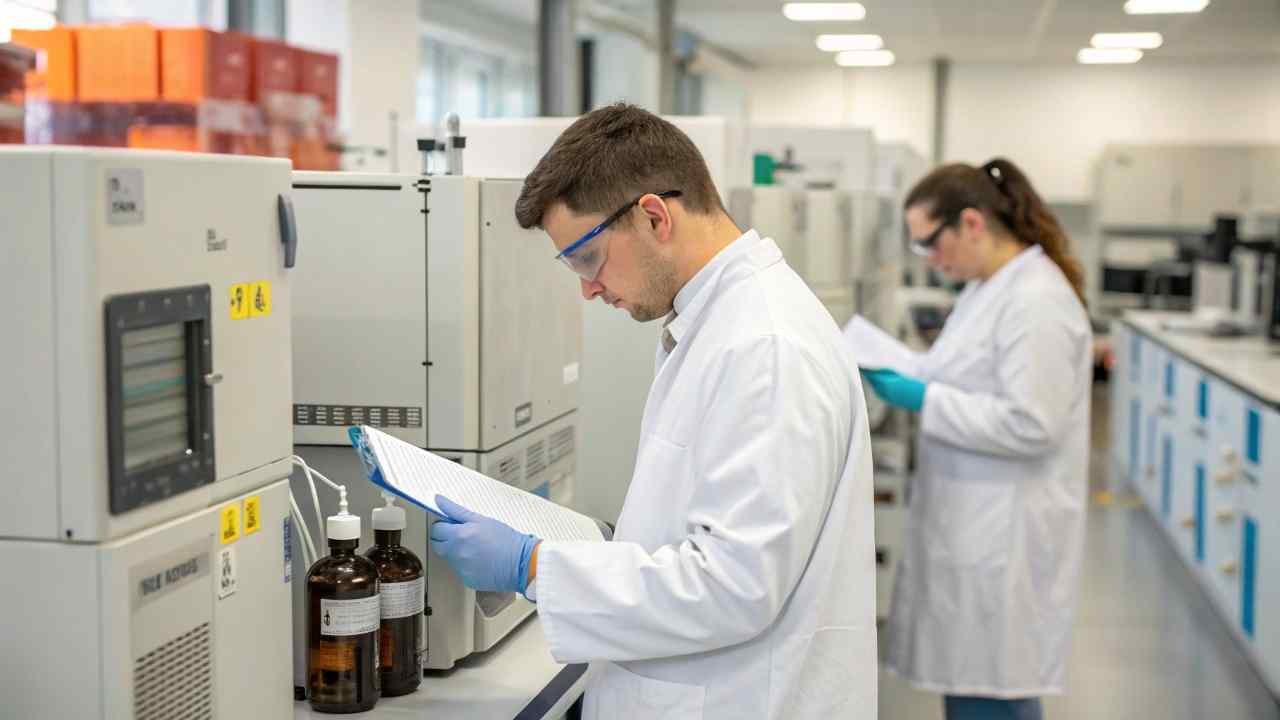
Manufacturers test purity using High-Performance Liquid Chromatography (HPLC) to verify the assay. They also use ICP-MS for heavy metal detection and specialized ovens for loss on drying tests. These methods confirm the product matches USP, NF, or FCC specifications before it is released for export.
Laboratory Equipment and Verification
I see that the laboratory is the heart of a reliable factory. I do not work with factories that have old equipment. The "assay" is the percentage of pure Inositol in the powder. We test this with High-Performance Liquid Chromatography (HPLC)4. This machine separates the Inositol from any impurities. I check the HPLC graphs for my clients. I want to see one sharp peak. If there are many small peaks, it means the product is "dirty." I act as your technical advisor to read these reports. I also look at the "Specific Rotation" test. This proves the Inositol molecule is the correct shape.
Heavy metals are another major check. I prioritize factories that use ICP-MS (Inductively Coupled Plasma Mass Spectrometry). This is a very expensive machine. It can find tiny traces of lead or arsenic. I also check for "Microbial Safety." The lab must have an incubator to grow samples for 3 to 5 days. They check for E. coli, Salmonella, and mold. I oversee these tests to ensure the factory does not take shortcuts. If they ship the goods before the microbial test is finished, I stop the shipment. I also check the "Loss on Drying" in a vacuum oven. This ensures the powder is dry and will not clump in your warehouse in Southeast Asia or the Middle East.
| Test Method | Equipment Used | What It Finds | FINETECH's Verification |
|---|---|---|---|
| HPLC | Chromatography Column | Exact Assay % | Read the peak data |
| ICP-MS | Plasma Spectrometer | Heavy Metal traces | Check Lead/Arsenic ppb |
| Loss on Drying | Vacuum Oven | Moisture content | Monitor oven temp logs |
| Plating | Incubator / Agar | Bacteria and Mold | Check 5-day growth logs |
| MP Analysis | Melting Point App. | Impurity presence | Verify narrow MP range |
| IR Spectrum | Spectrophotometer | Molecular ID | Match with USP standard |
Why is batch consistency important in Inositol production?
Varied quality between shipments forces you to keep changing your recipe. This production drift ruins your efficiency. I explain how batch consistency secures your large-scale manufacturing flow.
Batch consistency ensures that every drum of Inositol performs identically in your machines. It stabilizes your dissolution rates and chemical reactions. This prevents production downtime, reduces the need for constant re-testing, and protects the uniform taste and quality of your global brand.
Homogenization and Standard Operating Procedures
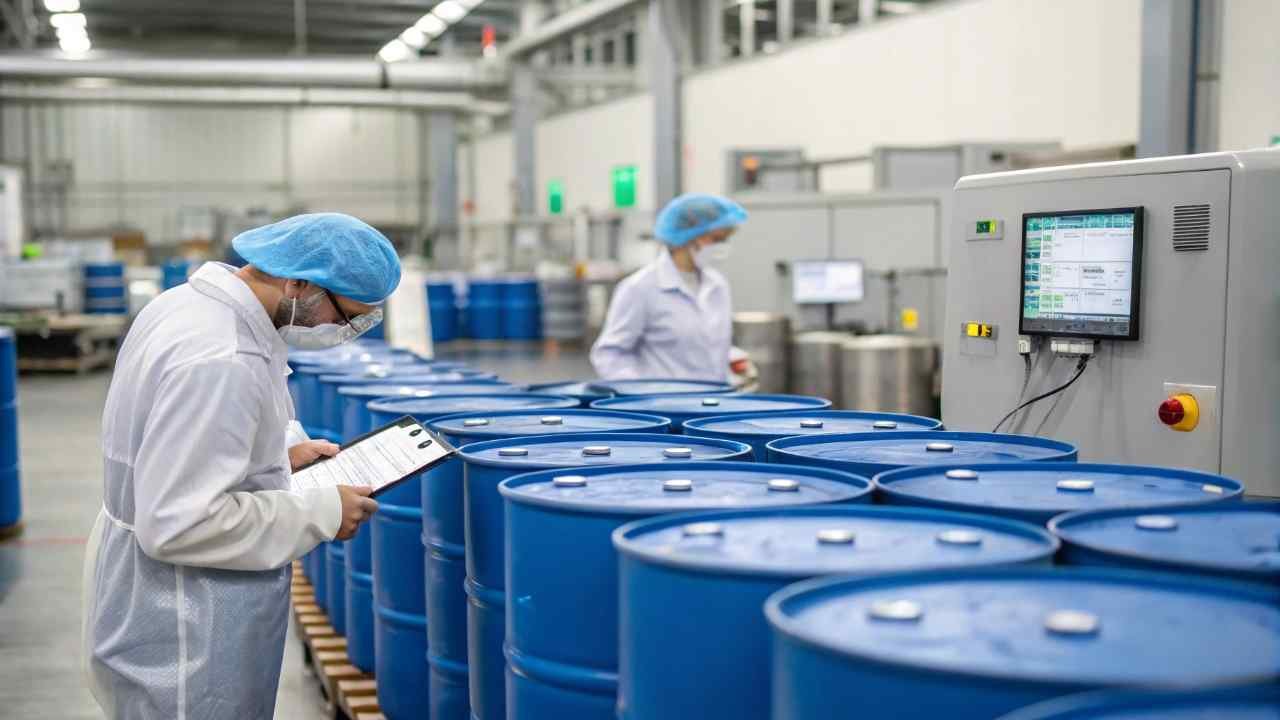
I see that "Consistency" is what my wholesale clients value most. If Batch A is 98% and Batch B is 98.5%, your formula will change. In a large factory, this is a big problem. The machines are set for a specific speed and solubility. I visit the factories to see how they mix the batches. A professional plant uses a "Homogenization Tank." They put several small batches into one giant blender. They mix it for hours to make it uniform. This ensures that the first drum and the last drum in your container are identical. I act as your quality gatekeeper to verify these blending logs.
Standard Operating Procedures (SOPs) are the secret to consistency. I check if the workers follow the same steps every day. If the crystallization time changes, the crystal size changes. This makes the Inositol look different. I track the "Mesh Size5" for my clients. This tells us how fine the powder is. If it varies, your tablets will be different weights. I prioritize factories that have automated DCS (Distributed Control Systems). These computers control the temperature and pH exactly. This removes human error. By ensuring batch consistency, I help you keep your production line running without any expensive stops. This is how I guarantee top quality for my B2B partners in Europe and the Middle East.
| Stability Factor | Technical Method | FINETECH's Strategy | Result for Buyer |
|---|---|---|---|
| Crystal Size | Mesh size control | Sieve analysis check | Uniform tablet weight |
| Purity Level | Automated pH/Temp | Monitor DCS logs | Predictable potency |
| Blending | Homogenization tank | Audit mixing times | Drum-to-drum unity |
| Color | Active carbon filter | Check filtration logs | Premium white appearance |
| Packaging | Automated weighing | Check drum tare weights | Accurate inventory |
| Storage | Humidity control | Monitor warehouse HVAC | Fresh product delivery |
Conclusion
High-purity Inositol and batch consistency are the foundation of safe and efficient industrial production. I manage these technical standards at FINETECH to keep your global supply chain secure and profitable.
-
USP – Official website for the United States Pharmacopeia, providing quality standards for medicines, dietary supplements, and food ingredients. ↩
-
IUPAC Gold Book – The official international chemical definition of Specific Rotation, used as a standard for identifying chiral purity. ↩
-
U.S. FDA – Official guide to Drug Master Files (DMFs), explaining their role in the regulatory submission process for pharmaceutical ingredients. ↩
-
Amrita Virtual Lab – Technical guide on HPLC principles used to separate, identify, and quantify each component in a chemical mixture. ↩
-
Reade Technical Resources – A particle size conversion chart explaining mesh sizes, which is critical for powder blending and tablet manufacturing. ↩