
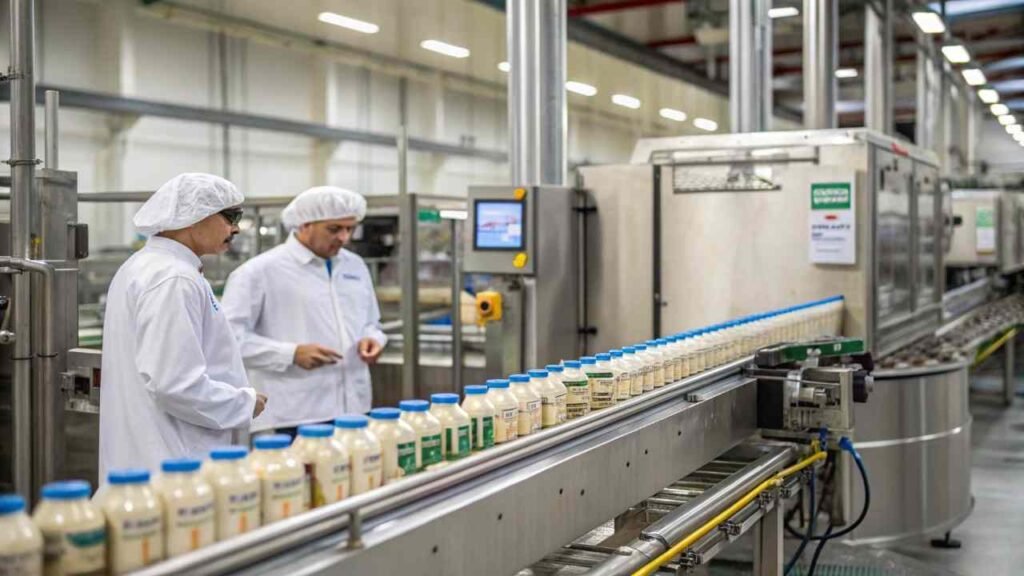
Low-purity protein ruins your food texture and creates bad smells. These defects lead to product recalls and lost customers. I show you how high purity secures your production and profits.
High-purity Isolated Soy Protein (ISP) is essential because it contains over 90% protein, ensuring superior gelling, emulsification, and water-binding. It removes fats and carbohydrates that cause off-flavors and poor solubility. This high concentration guarantees consistent texture, better nutritional labeling, and higher efficiency in food processing lines.
I manage factory selection and oversee production for my B2B clients at FINETECH. I visit Chinese plants to audit their labs because your brand safety depends on technical accuracy. I want to share the technical facts about Isolated Soy Protein (ISP) purity so you can secure your supply chain and protect your brand.
How does protein purity affect Isolated soy protein functionality?
Impurities in your protein cause weak gels and oily separation. This technical failure makes your vegan burgers mushy and your sausages watery. I explain how purity determines functional performance.
Protein purity directly impacts the strength of the protein matrix. High-purity ISP allows for stronger protein-to-protein bonds, which are necessary for firm gelling and stable emulsification. Lower purity means more carbohydrates are present, which interfere with the protein’s ability to trap water and fat during cooking.

Dive Deeper into Protein Functionality
I see that "Purity" is not just a number on a lab report. It is the engine of your food's structure. In my business, we focus on the molecular level. Isolated Soy Protein must have a protein content of 90% or higher. When the purity is high, the protein molecules can unfold and align properly during heating. This creates a dense web that traps water and oil. If the purity drops, you have too many "fillers" like soy fiber or sugars. These fillers get in the way of the protein strands. This is why a 70% concentrate never performs as well as a 90% isolate. I act as your technical eyes to ensure the factory is not diluting your product with lower-grade meal.
Gelling is the most affected trait. In the meat industry, we need a "firm bite." I visit the labs to check the gel strength tests. We use a texture analyzer to apply pressure to a protein gel. A high-purity ISP will resist the pressure and stay firm. A low-purity version will crack and leak water. This is called "Syneresis1." Emulsification is also vital. The protein acts as a bridge between water and oil. If there are too many impurities, this bridge breaks. This causes your product to look oily in the package. I prioritize factories that use advanced ultra-filtration to remove these interfering sugars. This technical oversight ensures your meat alternatives have the perfect texture every time.
Purity vs. Functional Performance
| Purity Level (Assay) | Gelling Strength | Emulsification | Flavor Profile | Best Use Case |
|---|---|---|---|---|
| 90% - 92% (Isolate) | Excellent | High Stability | Neutral / Clean | Meat analogues, Dairy |
| 70% - 80% (Concentrate) | Moderate | Medium | Beany / Cereal | Bakery, Nutrition bars |
| 50% - 60% (Flour) | Poor | Low | Strong Soy Taste | Feed, Low-cost baked goods |
| < 50% (Meal) | None | Minimal | Very Strong | Fermentation, Animal feed |
Which industries require high-purity Isolated soy protein ingredients?
Using the wrong grade of protein leads to recipe failure and customer complaints. You cannot afford to use low-purity ingredients in high-end food products. I identify the industries that demand the highest standards.
Industries like meat alternatives, dairy-free beverages, infant formula, and sports nutrition require high-purity ISP. Meat producers need it for structure. Beverage makers use it for smooth textures without beany smells. Nutrition brands require the 90% assay to meet strict label claims and health regulations.
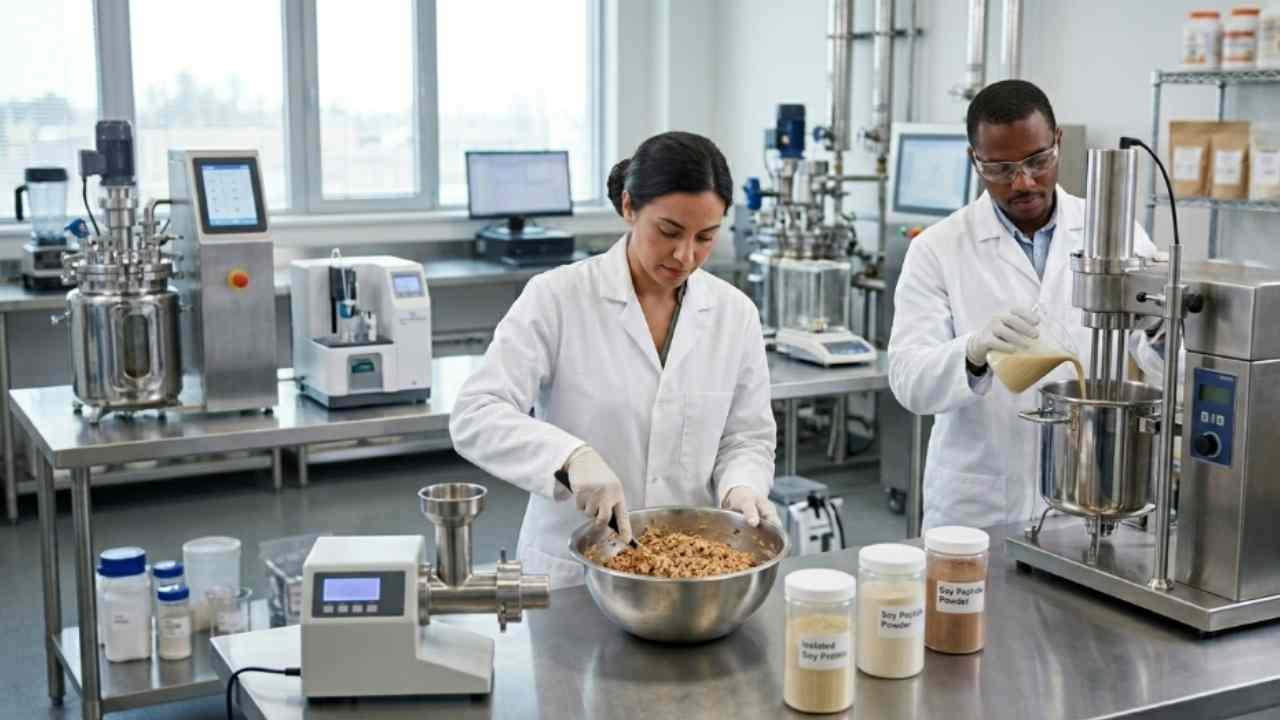
Dive Deeper into Industry Requirements
I see that every industry has a specific technical pain point. In the plant-based meat industry, the goal is to mimic animal muscle. This requires high-purity ISP to create a fibrous texture. I help my clients in Southeast Asia and Europe find "Injection Grade" protein. This grade must be very pure so it can pass through tiny needles without clogging. I visit the factories to ensure the particle size and purity match these high-pressure machines. If the protein is not pure enough, it will block your production line and cause hours of downtime. I act as your strategic office to prevent these mechanical headaches.
The beverage industry is even more strict. If you make a vegan protein shake, the consumer expects a smooth liquid. High-purity ISP is the only option here. Lower grades contain soy carbohydrates that do not dissolve. These particles sink to the bottom of the bottle and create a "sandy" feel in the mouth. I monitor the "Nitrogen Solubility Index" (NSI) for my beverage clients. We look for a 90% protein assay with an NSI above 85. For infant formula, the purity is a safety requirement. We must remove all anti-nutritional factors2. I oversee the lab checks for these factors to ensure the protein is easy for babies to digest. By matching the purity to the industry, I help you avoid waste and protect your brand reputation.
| Industry | Primary Requirement | Why High Purity? | FINETECH's Sourcing Focus |
|---|---|---|---|
| Meat Alternatives | Gelling & Texture | Creates firm, meat-like bite | High gel strength (1000g+) |
| Dairy Alternatives | Solubility & Flavor | Prevents grittiness and smells | High NSI (>85%) |
| Sports Nutrition | Protein Density | Meets 90% label claims | Verify via Kjeldahl method |
| Infant Formula | Digestibility | Removes indigestible sugars | Audit refining process |
| Bakery | Moisture Retention | Improves shelf life | Check water binding capacity |
| Health Supplements | Clean Label | Reduces fat and cholesterol | Verify fat content < 1% |
How do manufacturers test protein content in Isolated soy protein?
False lab reports lead to legal trouble and expensive lawsuits. You must know if your supplier is telling the technical truth. I explain the standard lab tests used to verify protein purity.
Manufacturers test protein content using the Kjeldahl method or Dumas combustion to measure total nitrogen. They multiply the nitrogen result by a factor of 6.25 to calculate the protein percentage. High-purity ISP must reach at least 90% protein on a dry-matter basis to be certified.
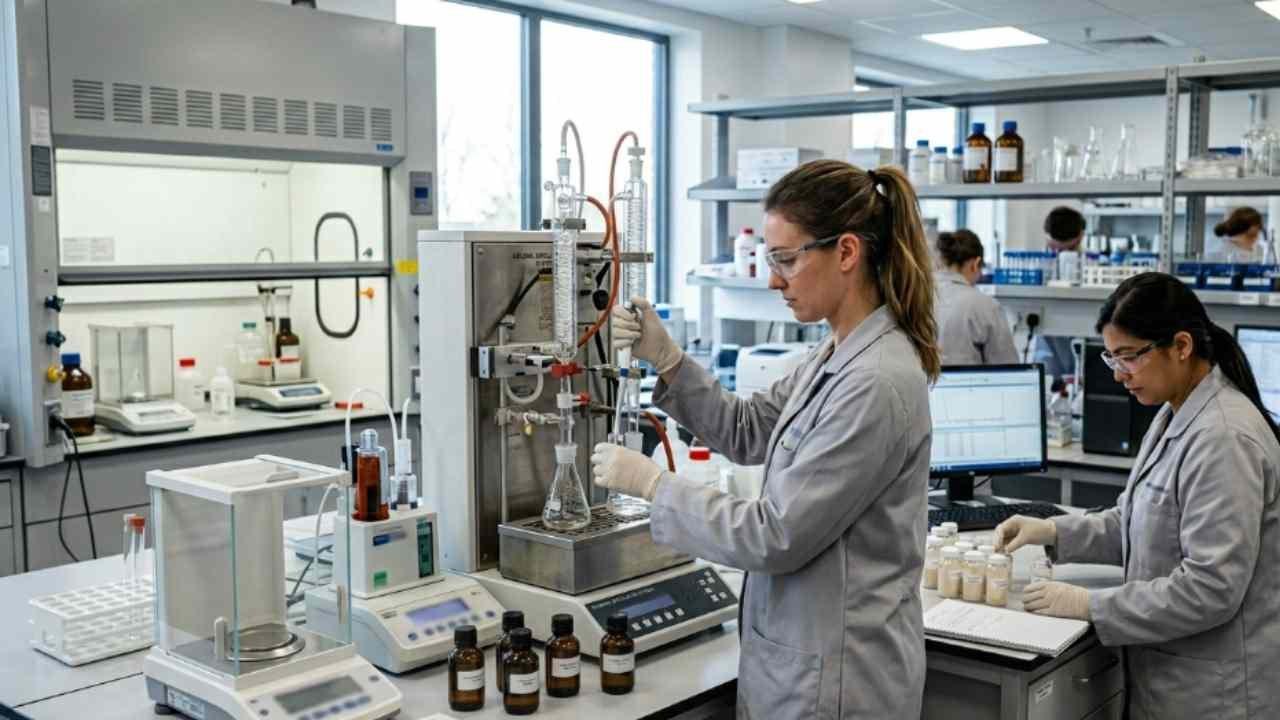
Dive Deeper into Testing Protocols
I see that "Testing" is where many suppliers take shortcuts. The most common method is the Kjeldahl test3. It uses acid to break down the protein and release nitrogen. I visit the factory labs to check their equipment. I want to see that they use the correct 6.25 factor. Some low-quality labs might use a higher factor to make the protein look better than it is. I act as your technical coordinator to verify these "Certificate of Analysis" (COA) documents. I also check if the 90% result is on a "Dry Basis" or "As-Is" basis. This is a very important technical detail.
The "Dry Basis" means the protein content after all water is removed. The "As-Is" basis includes the moisture. Since ISP has about 6% moisture, the "As-Is" number will always be lower. If a supplier tells you it is 90% "As-Is," it is actually a very high-quality product. If they only say "90%," I always ask for the dry-basis lab sheet. I also look for "Dumas4" testing for my high-end clients. This is a faster, modern test that uses combustion. It is more accurate because it does not use chemicals that can be faked. I prioritize factories that use both methods to cross-check their results. This level of technical rigor ensures you get the exact protein density you paid for.
| Testing Method | How It Works | Advantages | FINETECH's View |
|---|---|---|---|
| Kjeldahl Method | Chemical acid digestion | Industry standard for 100 years | Reliable but slow |
| Dumas Method | High-heat combustion | Fast and very precise | Modern and hard to fake |
| NIR (Infrared) | Light reflection | Instant results on the line | Good for quick factory checks |
| Amino Acid Profile | HPLC Separation | Shows true nutritional value | Best for premium supplements |
| Nitrogen Factor | 6.25 Multiplier | Universal calculation | Must be checked on the COA |
| Dry Basis vs As-Is | Moisture correction | Scientific accuracy | Always use Dry Basis for price |
Why is solubility important in Isolated soy protein applications?
Gritty drinks and separated emulsions destroy consumer trust in your food. This technical failure makes your products impossible to sell. I show you why high solubility is a non-negotiable quality requirement.
Solubility is important because it determines how well the protein disperses in a liquid. High solubility is measured by the Nitrogen Solubility Index (NSI). A high NSI ensures a smooth mouthfeel in beverages and allows the protein to react properly with fats and water in meat recipes.

Dive Deeper into Solubility Science
I see that solubility is the "Gatekeeper" of protein performance. If the protein does not dissolve, it cannot form a gel or an emulsion. This is a chemical fact. In my business, we look at the NSI. For a beverage-grade ISP, the NSI should be above 80% or even 90%. I visit the plants to see how they handle the "Neutralization" step. This is where they adjust the pH of the protein. Soy protein is naturally insoluble at a pH of 4.5. Factories must move the pH to 7.0 to make it soluble. I act as your strategic office to check these pH logs. If the factory makes a mistake here, the whole batch will be gritty.
Temperature also plays a role in solubility. Some proteins dissolve well in cold water, while others need heat. I help my B2B clients choose the right grade for their factory setup. If you make cold-mix protein shakes, you need an "Instant" grade ISP. This grade has been specially treated with a small amount of lecithin5 to help it wet out faster. I oversee the testing of these "Dispersibility" rates. We put the powder in water and time how long it takes to disappear. High-purity ISP should disappear in seconds without leaving clumps. I use these technical tests to pick the best factories for my wholesale clients in Southeast Asia and the Middle East.
| Solubility Metric | Target Range | Food Application | Impact of Low Solubility |
|---|---|---|---|
| NSI (Liquid Grade) | 85% - 95% | Soy milk, Drinks | Sedimentation / Sandy taste |
| NSI (Meat Grade) | 70% - 85% | Sausages, Patties | Weak gel / Fat leakage |
| pH Stability | 6.5 - 7.5 | General Food | Sour taste / Poor texture |
| Dispersibility | < 30 seconds | Instant Shakes | Clumping / Clogging |
| Viscosity | Low to Medium | Sauces, Soups | Thin texture / Poor coating |
| Clarity | Opaque White | All Categories | Visual appeal and uniformity |
How does batch consistency influence Isolated soy protein product performance?
Changing your recipe for every shipment wastes your labor and your money. Batch variation ruins your production efficiency and creates an unstable product. I describe why consistency is just as important as purity.
Batch consistency ensures that every drum of protein behaves the same way in your machines. It prevents unexpected changes in viscosity, color, or gel strength. Manufacturers maintain this consistency through automated controls, large-scale homogenization blenders, and strict in-process quality control (IPQC) to minimize human error.

Dive Deeper into Production Consistency
I see that "Consistency" is the mark of a professional factory. In China, some small plants produce different quality every day. This is a disaster for a wholesale buyer. I prioritize factories that use DCS (Distributed Control Systems). This computer system manages the temperature and the flow of the soy milk 24/7. It removes the human element. I visit the control rooms to audit these digital logs. I act as your technical partner to ensure the factory follows a strict "Standard Operating Procedure" (SOP). If the spray-drying temperature changes by 5 degrees, the protein's ability to hold water will change. Consistency is about controlling these small details.
Homogenization is the final technical step for consistency. A factory might produce 5 tons of protein in one shift. If they pack it directly, the first bag might be different from the last bag. I insist that my partner factories use massive blending tanks. They put 10 or 20 tons of protein into one tank and mix it for several hours. This is called "Batch Homogenization." It ensures that the protein assay and the moisture are identical in every single bag in your container. I oversee the "In-Process Quality Control" (IPQC) samples. We take samples every hour during packing. I use this data to prove to my clients that the quality is stable. This professional oversight protects your production line from expensive surprises.
| Consistency Factor | Manufacturing Method | FINETECH's Audit Focus | Benefit to Buyer |
|---|---|---|---|
| Assay Stability | Automated Blending | Check lab reports per batch | No recipe adjustments needed |
| Color Uniformity | Controlled Drying | Visual inspection logs | Consistent final food look |
| Viscosity Control | pH Auto-Adjustment | Audit DCS sensor data | Stable machine performance |
| Particle Size | High-speed Milling | Sieve analysis check | Predictable mixing times |
| Moisture Level | Vacuum Cooling | Test at 105°C | Prevents clumping in storage |
| Microbe Safety | Clean Room Packing | Audit HEPA filter logs | Long shelf life / No recalls |
Conclusion
High-purity Isolated Soy Protein is the foundation of structural integrity, nutritional value, and manufacturing efficiency in the food industry. I manage these technical standards at FINETECH to ensure your bulk supply remains consistent, high-quality, and profitable.
-
Wikipedia – Detailed explanation of syneresis in chemistry, describing the separation of liquid from a gel network. ↩
-
ScienceDirect – Topic compilation discussing antinutritional factors in plants and their impact on digestibility and nutrition. ↩
-
Wikipedia – Technical overview of the Kjeldahl method, used to analyze nitrogen and determine protein levels in organic compounds. ↩
-
Wikipedia – Explanation of the Dumas method, a combustion-based technique for quantitative determination of nitrogen in food testing. ↩
-
Wikipedia – Reference page for lecithin, detailing its chemical structure and functional applications as an instantizing agent in food science. ↩