
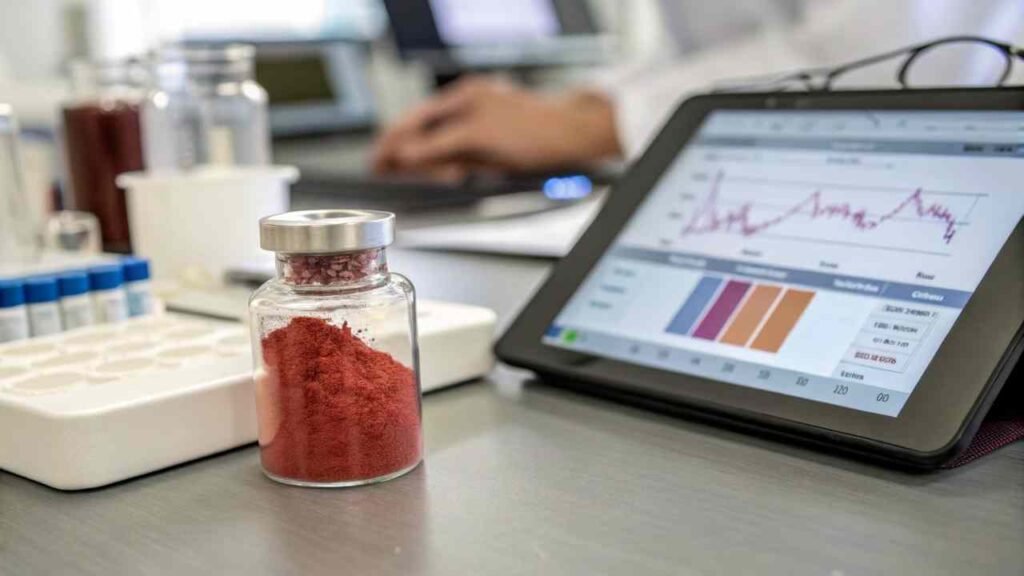
Inconsistent Vitamin B12 quality causes product recalls and legal fines. This failure ruins your brand and drains your capital. I provide strict quality oversight to protect your business.
Quality control is critical for Vitamin B12 to ensure 98.5% to 102.0% purity (HPLC), verify microbial safety, and prevent heavy metal contamination. Strict oversight guarantees that manufacturers meet international regulatory standards like USP or BP, avoiding shipment rejections and massive financial losses.
I manage factory selection and quality oversight for my B2B clients in China. Understanding these technical standards is the only way to evaluate your supplier's reliability for your wholesale business.
How is Vitamin B12 (Cobalamin) tested for purity and stability?
Off-spec Vitamin B12 degrades during storage, leading to low potency. This waste ruins your formulas. I ensure precise lab testing for every batch to guarantee long-term stability.
Vitamin B12 is tested using High-Performance Liquid Chromatography (HPLC) for purity and UV-Vis spectrophotometry for identification. Stability is measured through accelerated aging tests, assessing color, solubility, and assay levels under varying temperatures and humidity to ensure a 36-month shelf life.
Purity Verification and Stability Science
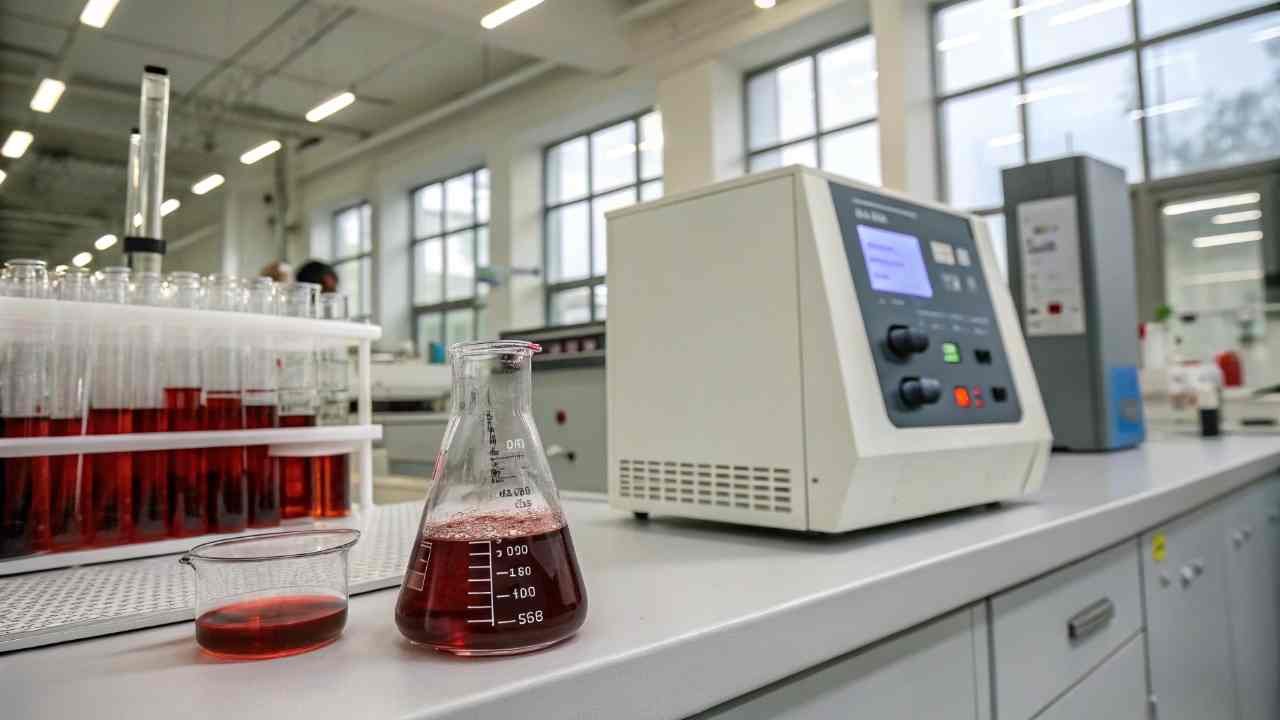
I see that purity is the most important technical fact. We use HPLC to find the exact "Assay" level. The industry standard for pure Cyanocobalamin1 is 98.5% to 102.0%. If the result is 97%, the batch is a failure. I check the HPLC charts for every batch in the factory lab. I look for a single, tall peak on the graph. This peak shows the vitamin is pure. If there are smaller peaks, it means there are impurities from the fermentation process. I also check the "Specific Rotation." This test uses polarized light to confirm the molecule structure. It is a technical requirement for pharmaceutical and high-end food grades.
Stability is another area I monitor closely. Vitamin B12 is sensitive to light and high PH levels. I ensure our partner factories in China perform "Stress Tests2." They put the vitamin in a special chamber with high heat and humidity. They test the assay again after several weeks. This tells us if the product will stay potent for 3 years in your warehouse. I also check the "Loss on Drying." If the powder has more than 12% moisture, it will clump and degrade. I use an infrared moisture analyzer to confirm every drum is dry. This oversight is how I help my buyers in the Middle East and Europe avoid quality complaints.
Comparison of Critical Quality Tests
| Test Parameter | Technical Method | Industry Standard (USP/BP) | Purpose |
|---|---|---|---|
| Assay / Purity | HPLC | 98.5% - 102.0% | Confirm potency |
| Identification | Infrared (IR) | Matches reference | Verify chemical ID |
| Specific Rotation | Polarimetry | -59° to -66° | Structural integrity |
| Loss on Drying | Oven Drying | Max 12.0% | Prevent degradation |
| Color / State | Visual Inspection | Dark Red Crystalline | Purity indicator |
What are common contaminants in Vitamin B12 (Cobalamin)?
Toxic residues and heavy metals in your additives endanger human health. This risk leads to lawsuits and business closure. I identify and eliminate contaminants before your cargo leaves China.
Common contaminants in Vitamin B12 include heavy metals like Lead, Arsenic, and Mercury, which must be below 2ppm. Residual solvents from the extraction process and microbial pathogens like Salmonella or E. coli are also critical contaminants that require negative-test results.
Managing Heavy Metals and Solvents
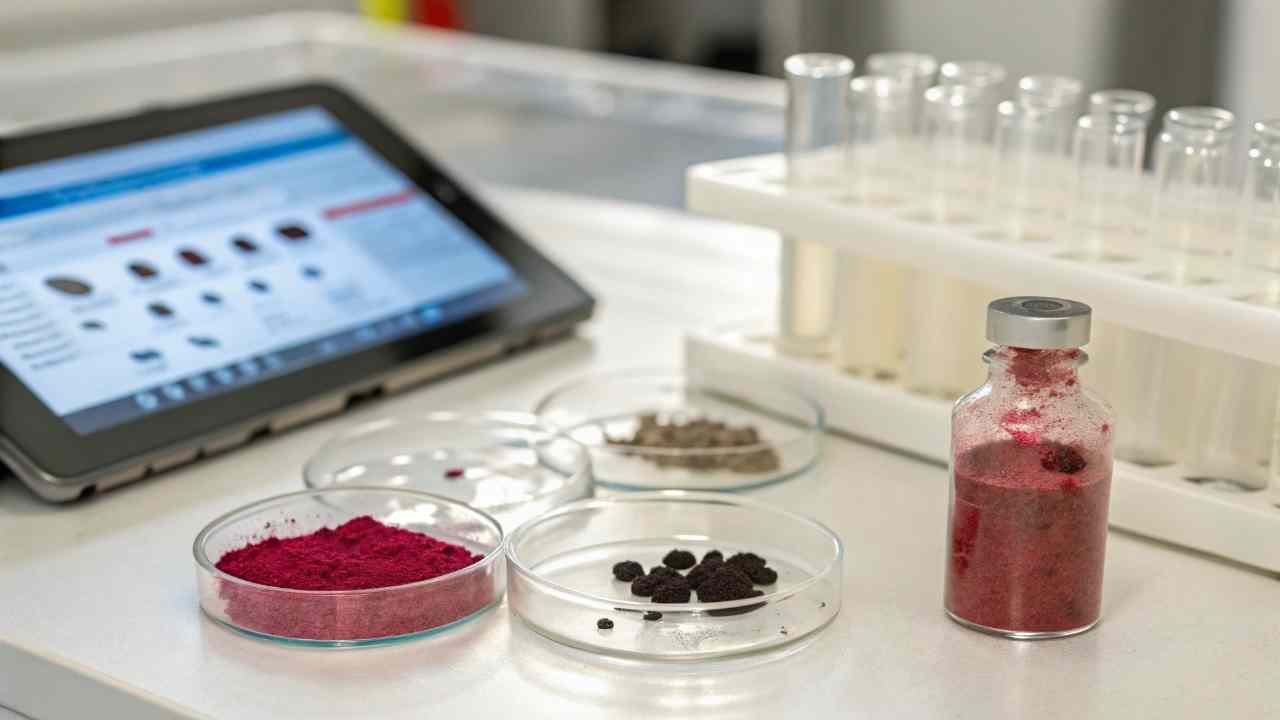
I want you to understand that Vitamin B12 comes from fermentation. This biological process can attract unwanted substances. Heavy metals3 are a big risk. Lead and Arsenic can come from the water or the nutrients used to feed the bacteria. I only work with factories that use multi-stage water filtration. I check their "Atomic Absorption" test results for every batch. The limit for Lead is usually 2 parts per million (ppm). If it is higher, the cargo is dangerous. I also look for Mercury and Cadmium. My buyers in Southeast Asia have strict laws about these metals. I act as your technical gatekeeper to ensure your supply is clean.
Solvent residues are another technical fact I watch. During the purification step, factories use alcohols or other chemicals to extract the vitamin. These must be removed completely. I check the "Residual Solvents" report on the Certificate of Analysis (COA). If the factory does not use a vacuum drying system, the solvents might stay in the powder. This makes the vitamin smell bad and reduces safety. I visit the drying rooms in the factory to see their equipment. I ensure they use low-temperature vacuum drying to protect the vitamin and remove all solvents. This level of detail is how I protect your business reputation and your customers' health.
Contaminant Limits for B2B Trade
| Contaminant Type | Maximum Limit | Test Method | Risk of Failure |
|---|---|---|---|
| Lead (Pb) | < 2 ppm | Atomic Absorption | Toxic / Legal ban |
| Arsenic (As) | < 1 ppm | ICP-MS | Safety recall |
| Mercury (Hg) | < 0.1 ppm | ICP-MS | Nervous system risk |
| Residual Solvents | < 5000 ppm (Ethanol) | Gas Chromatography | Odor / Purity loss |
| Total Plate Count | < 1000 cfu/g | Microbial Plating | Spoilage / Safety |
How do HPLC and microbiological tests ensure Vitamin B12 (Cobalamin) quality?
Guessing the potency of your vitamins is a dangerous gamble. Inaccurate doses fail your lab checks. I use advanced HPLC and microbial audits to verify every drum's quality.
HPLC ensures chemical purity by separating Cobalamin from impurities, while microbiological tests confirm the absence of yeast, mold, and harmful bacteria. These tests provide a technical guarantee that the vitamin is potent, safe, and compliant with USP/BP pharmaceutical standards.
Precision Analysis and Safety Verification
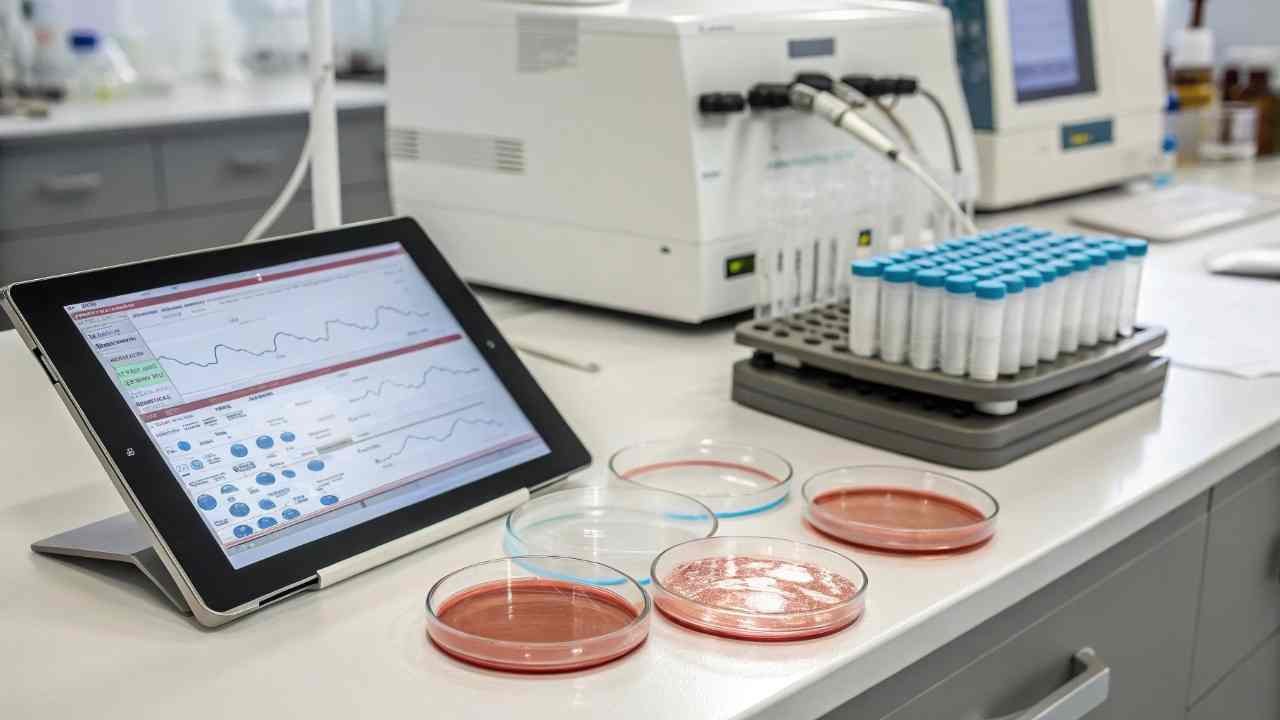
I see that HPLC is the heart of quality control. HPLC stands for High-Performance Liquid Chromatography. It works by pushing a liquid sample through a column at high pressure. The different chemicals in the sample move at different speeds. The machine has a detector that sees when the pure Vitamin B12 comes out. It creates a graph with a "Peak." If the peak is clean and sharp, the vitamin is pure. I review these graphs for my clients in Russia and Germany. I make sure the "Area under the Peak" matches the 99% purity standard. This is the only way to be 100% sure about the potency of your wholesale order.
Microbiological testing is the second pillar of safety. Because Vitamin B12 is made by bacteria, other microbes can grow in the tanks. I look at the "Total Plate Count" (TPC) in the lab logs. This tells us how many total germs are in the powder. It must be very low, usually below 1000 cfu per gram. More importantly, we test for "Pathogens." These are the bad bacteria like E. coli, Salmonella, and Staphylococcus aureus. The result for these must always be "Negative." I check the lab's incubator and their plating records. If a factory has a dirty lab, I do not buy from them. My focus on these technical facts keeps your supply safe from biological risks.
| Test Category | Technical Focus | Main Benefit | Equipment Used |
|---|---|---|---|
| Chemical | Assay / Purity | Guaranteed potency | HPLC / UV-Vis |
| Physical | Particle size / Mesh | Even mixing | Sieve Shaker |
| Biological | Pathogen detection | Consumer safety | Incubator / Agar plates |
| Purity | Related substances | No chemical waste | HPLC |
| Color | Appearance | Visual consistency | Spectrophotometer |
What documentation should accompany Vitamin B12 (Cobalamin) shipments?
Missing or incorrect paperwork stops your container at customs. These delays cost thousands in port fees. I manage all technical documents to ensure smooth international delivery for you.
Essential documents include the Certificate of Analysis (COA), Health Certificate, ISO/GMP certificates, and HALAL/KOSHER permits. International trade also requires a Bill of Lading, Packing List, and Commercial Invoice to confirm batch traceability and meet local regulatory import laws.

Traceability and Customs Compliance
I want you to know that documents are just as important as the vitamin itself. The first paper I check is the COA. It must show the batch number, the production date, and the test results. This batch number must match the label on the 25kg drum. This is called "Traceability4." If there is a problem, we can find the exact production log in the factory. I also manage the "Health Certificate" from the GACC (General Administration of Customs of China). This paper proves the product is safe for export. My buyers in Saudi Arabia and the UAE cannot clear customs without this document. I oversee the application process to ensure it is perfect.
I also handle religious certifications. Many of my clients in Southeast Asia and the Middle East need HALAL or KOSHER certificates. These papers prove that no animal products or prohibited chemicals were used in the factory. I verify these certificates with the issuing bodies like MUI or Star-K. Another thing I check is the HS Code. For Vitamin B12, the code is usually 293626. If the code is wrong on the "Certificate of Origin," you might pay higher import taxes. I act as your office in China to check every word on every paper. This professional oversight prevents expensive delays at your port.
| Document Type | Technical Role | Market Value | Eric's Action |
|---|---|---|---|
| COA | Test result proof | Quality guarantee | Match batch number |
| Health Cert | Safety proof | Customs clearance | Apply via GACC |
| ISO / GMP | Factory standard | Reliability proof | Verify validity |
| HALAL / KOSHER | Religious status | Market access | Check issuing body |
| Packing List | Content proof | Logistics check | Confirm drum count |
How to ensure consistent batch quality of Vitamin B12 (Cobalamin)?
Batch variation ruins your factory's production settings. You get different results every time. I audit factory production logs to ensure every shipment has the exact same technical quality.
Consistent batch quality is ensured by selecting factories with automated DCS fermentation controls and standardized purification steps. Regular physical audits, retainer sample storage, and third-party pre-shipment inspections (SGS/Intertek) verify that every drum matches previous high-quality specifications.
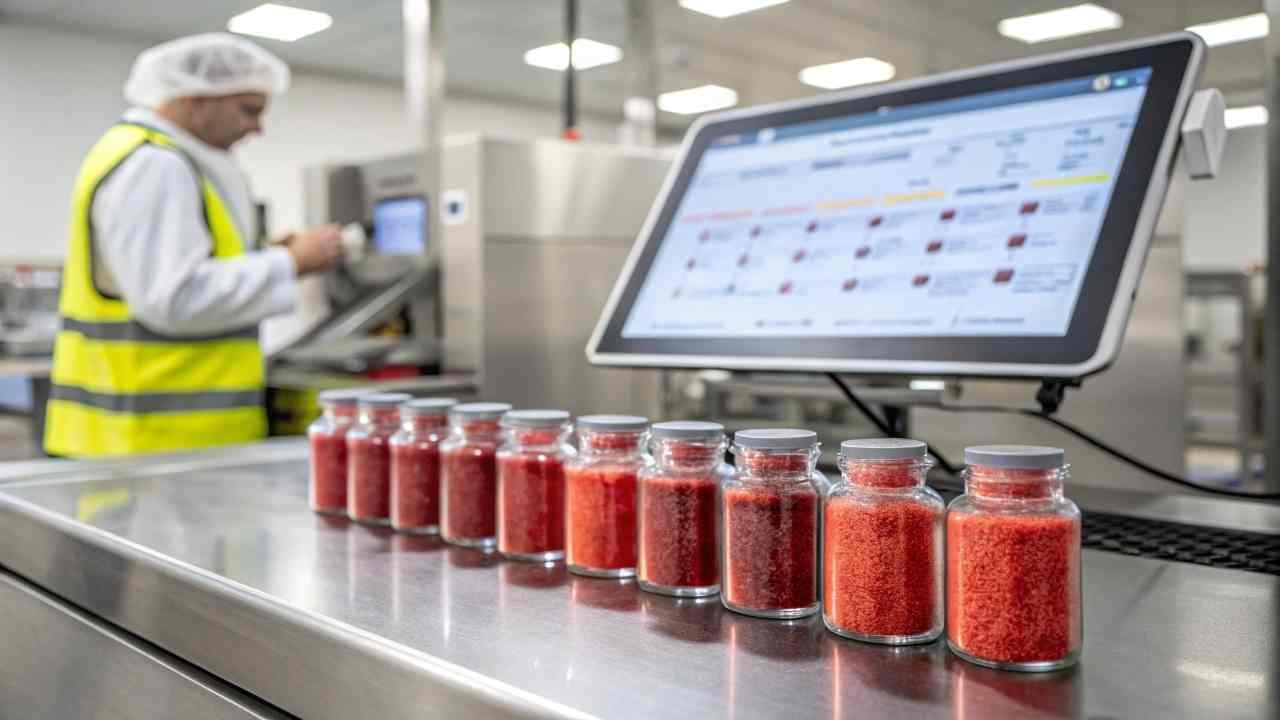
Automation and Physical Audits
I see that "Human Error" is the biggest cause of batch variation. If a worker adds too much sugar or misses a temperature change, the batch will be different. That is why I prioritize factories that use DCS (Distributed Control Systems). This is a giant computer that runs the whole fermentation process. It monitors thousands of sensors 24/7. This ensures that batch #101 is the same as batch #501. I visit our partner factories in China to see these systems in action. I look at their "Standard Operating Procedures" (SOPs). A good factory has a thick book of rules for every worker. This consistency is vital for your manufacturing success.
I also use "Retainer Samples" to protect you. A good factory keeps a 200g sample of your batch for 3 years. If you have a problem later, I can go to the factory and re-test that exact sample. This provides a clear record of quality over time. Also, I suggest "Pre-shipment Inspection5" (PSI). I can hire a third party like SGS to go to the warehouse. They take random samples from your drums and test them in their own lab. This is the ultimate proof of quality before you pay the balance. I manage these logistics and audits to ensure you receive top-quality Vitamin B12 every single time. My goal is to make your procurement process silent and steady.
| Quality Step | Technical Action | Business Result |
|---|---|---|
| DCS Control | Automated fermentation | Batch-to-batch uniformity |
| PSI Inspection | Random SGS sampling | Independent quality proof |
| Retainer Sample | Store 200g for 3 years | Long-term traceability |
| SOP Audit | Check worker manuals | Reduced human error |
| Batch COA | Lab test every lot | Guaranteed assay level |
Conclusion
Quality control for Vitamin B12 requires strict HPLC testing, contaminant monitoring, and professional documentation management. I handle these technical steps at FINETECH to keep your international procurement safe, stable, and profitable.
-
ScienceDirect – Comprehensive overview of Cyanocobalamin, its chemical structure, and its role as the most common form of Vitamin B12. ↩
-
PharmaGuideline – Technical explanation of stability and stress testing protocols used to determine the shelf life of pharmaceutical ingredients. ↩
-
EFSA – Regulatory insights from the European Food Safety Authority regarding the monitoring and risks of metal contaminants in the food chain. ↩
-
GS1 – Global standards for traceability that allow businesses to track products and ensure safety throughout the supply chain. ↩
-
SGS – Description of professional pre-shipment inspection services used to verify product quality and quantity before export. ↩